
By VIJAYALEKSHMY S
“Afoot and lighthearted I take to the open road, / Healthy, free, the world before me, / The long brown path before me, / Leading wherever I choose…” – Walt Whitman.
Travelling has become a way of life for many of us. A trip, to an unseen land is not only an adventure, but also a way to unwind, it rejuvenates you. After months of being confined to our homes and offices, we were looking forward to an exciting tour.
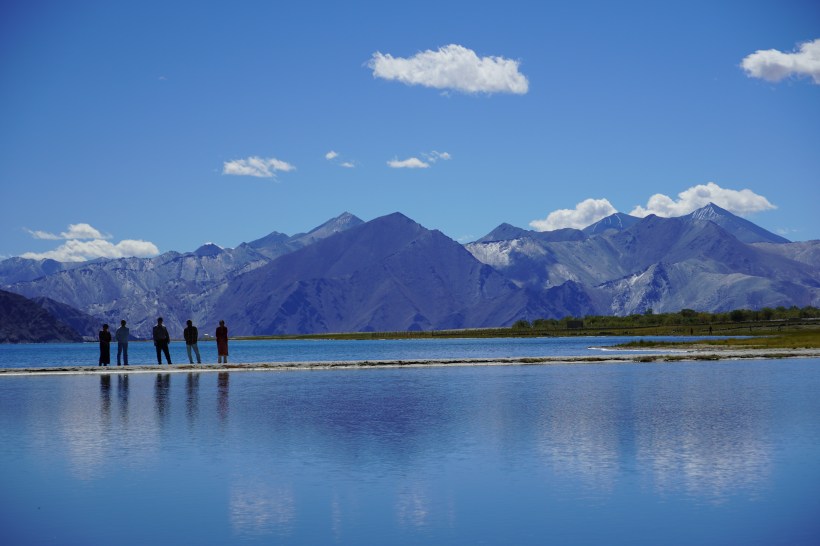
Me and my husband Jayaprakash, along with his friend Ramesh and his wife Rekha began planning a trip to Ladakh, a land famous for its mountains, mountain passes and lakes. When another friend Sandeep came to know about our plans, he was also happy to join in along with his friend Dr. Rehan. We finalized our plans, route map, destinations, vehicles, stay options etc. and finally booked our trip for the third week of August ’22.
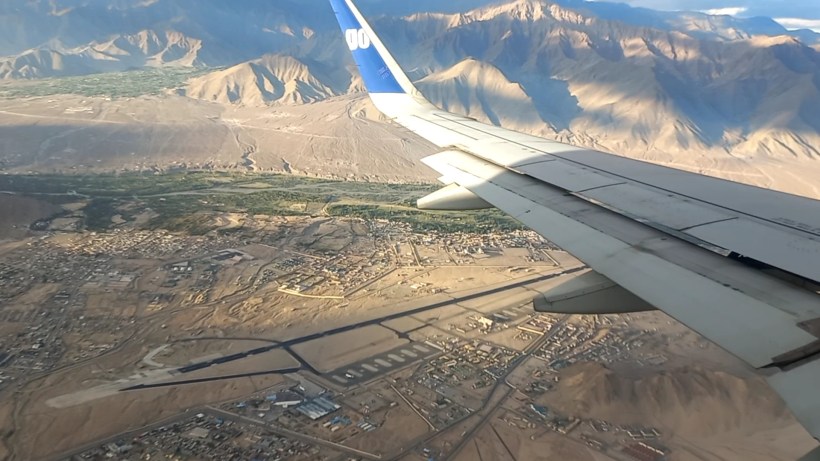
We began our journey from Kochi, reached Leh via New Delhi on the morning of Sunday, 21/08/2022. Sandeep and Dr. Rehan came from Bangalore via Delhi. Ramesh and Rekha, came direct from Mumbai, on the same day.
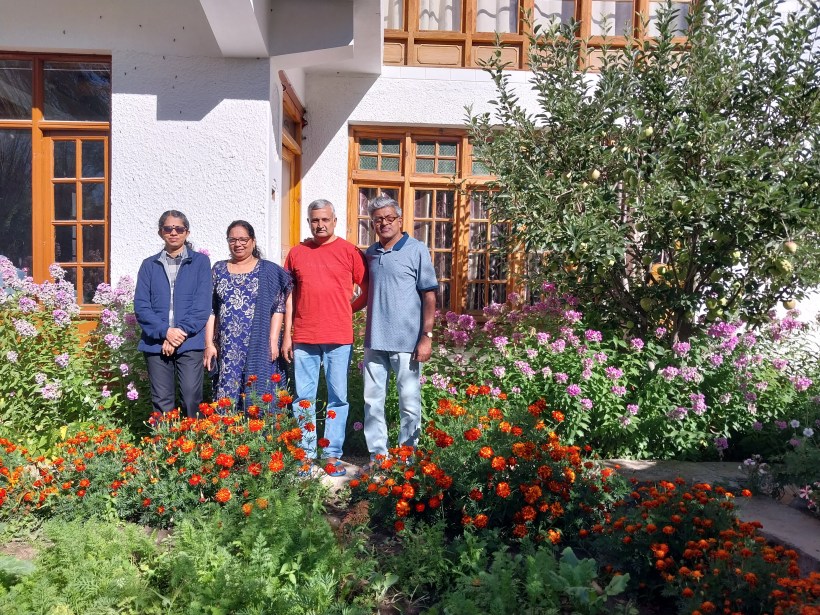
We all met at ‘Jimmy’s Homestay’ at Leh, owned and run by Jigmet Stobgyal and family. After breakfast, we decided to catch up on our sleep.
We woke up by afternoon, had lunch and started planning for the day. The first day in Leh was meant for acclimatization to the high altitude (Leh is situated at 11,500 ft. above sea level) and no activities were planned. But since none of us seemed to have any problem related to altitude sickness, we decided to have a short tour of Leh.
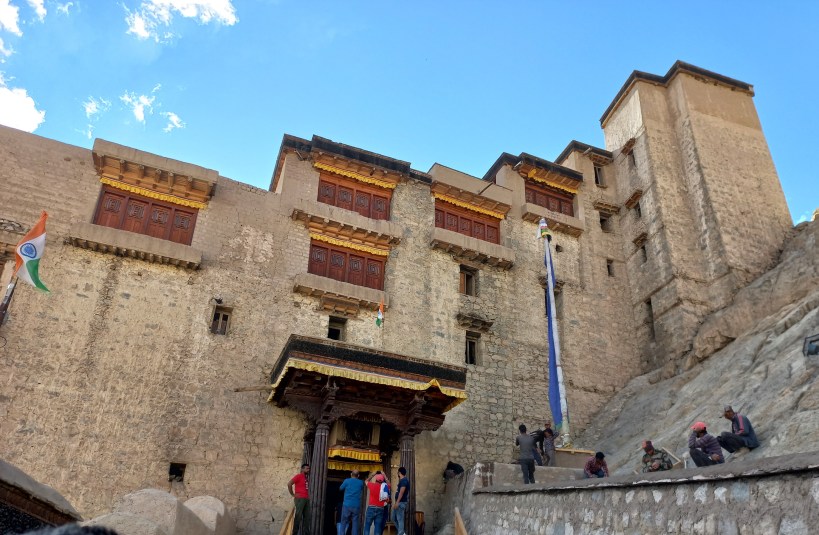
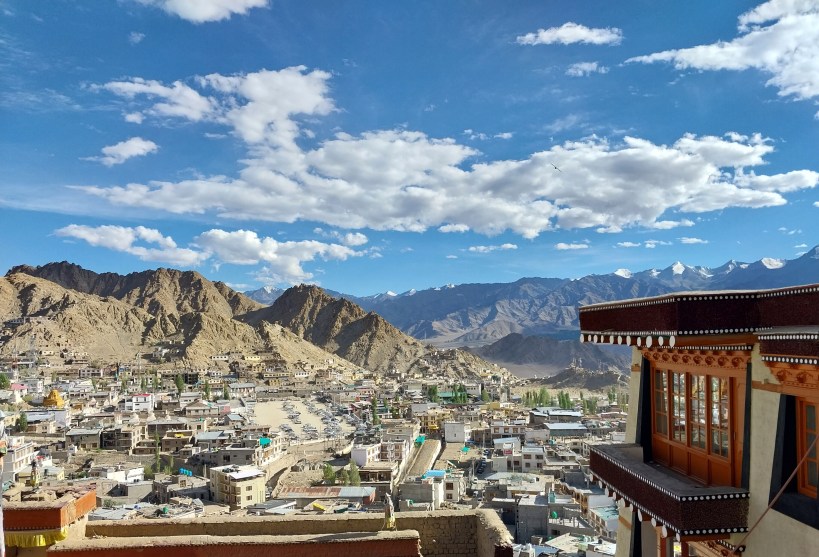
We visited the ancient Leh Palace situated on a hill top. It is famous for its architecture and is an engineering feat of the Namgyal Dynasty. It is made up of stones, sun dried mud bricks, wood of poplar and willow, available in plenty in Leh. It has 9 levels with over a hundred rooms. The Archeological Survey of India declared it a Monument of National Importance in 1982 and restored it to its present glory. Standing atop a hill, the palace provides you with a good view of Leh.
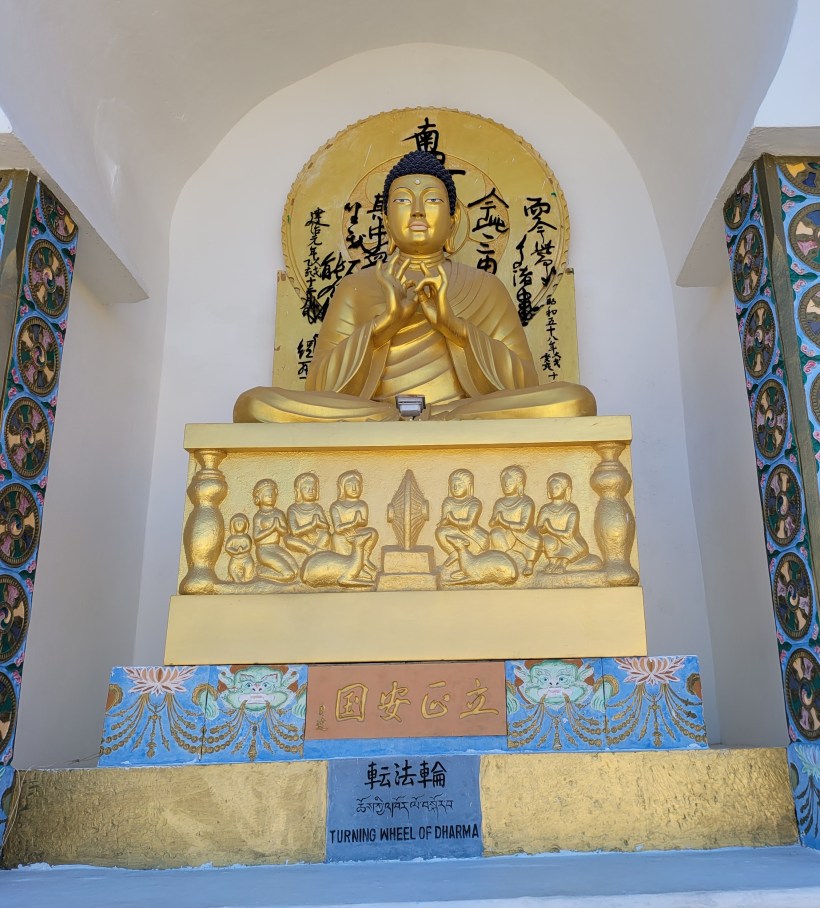
Next, we visited the Shanthi Stupa. The Stupa was built in 1991 by the Japanese Buddhist Bikshu Gyomyo Nakamura. It holds the relics of Buddha at its base that was enshrined by the 14th Dalai Lama. The Stupa is a two level structure. On the first, there is a Dharma Chakra with deers on each side and a central golden coloured Buddha image. On the next level, there are relics depicting the life and death of Buddha and the events of his life.
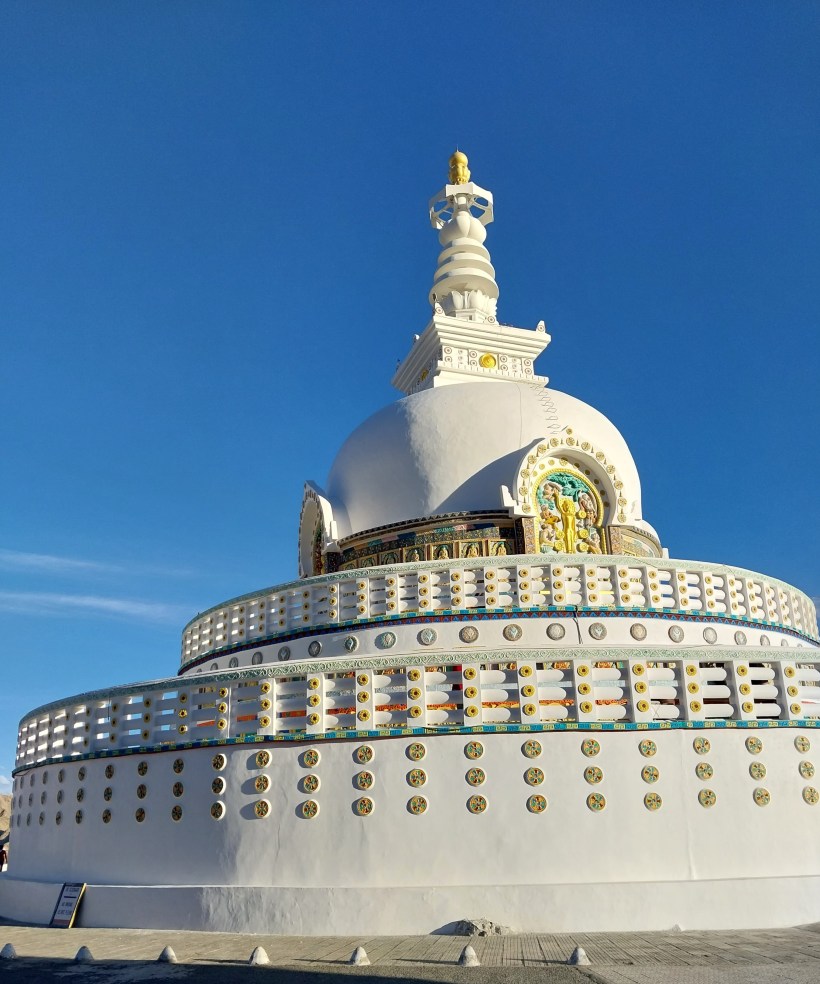
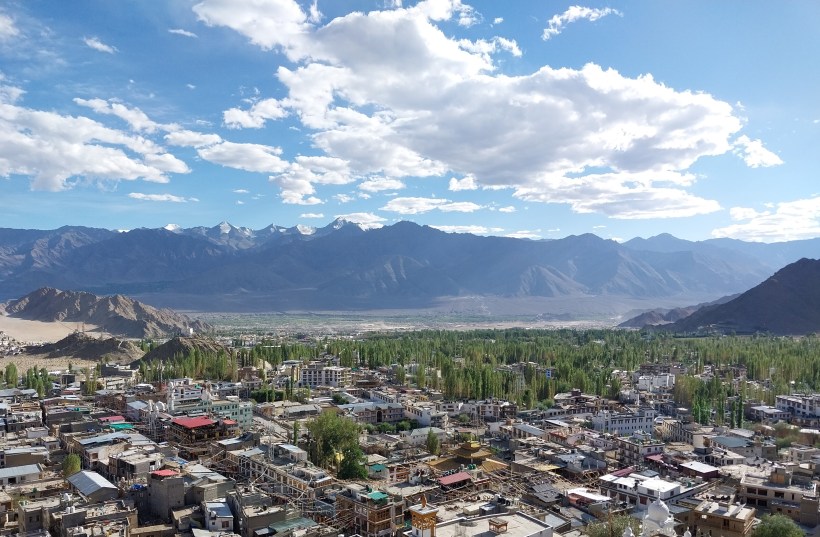
The attraction of Shanthi Stupa to the tourist is not just its beauty or historical importance, but also its strategic location. Situated atop a hill, it gives a bird’s eye view of the town of Leh. So, in spite of the panting and puffing due to the high altitude, we climbed up the hill and what a beautiful sight awaited us. The town of Leh was picture perfect.
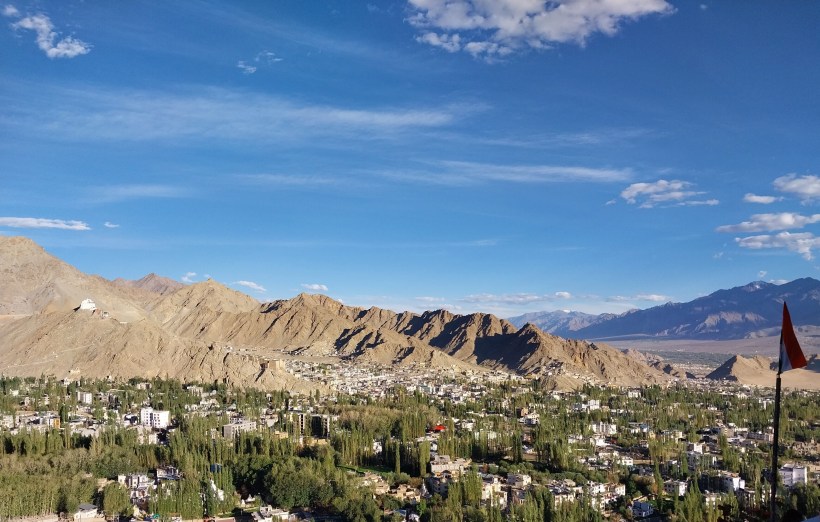
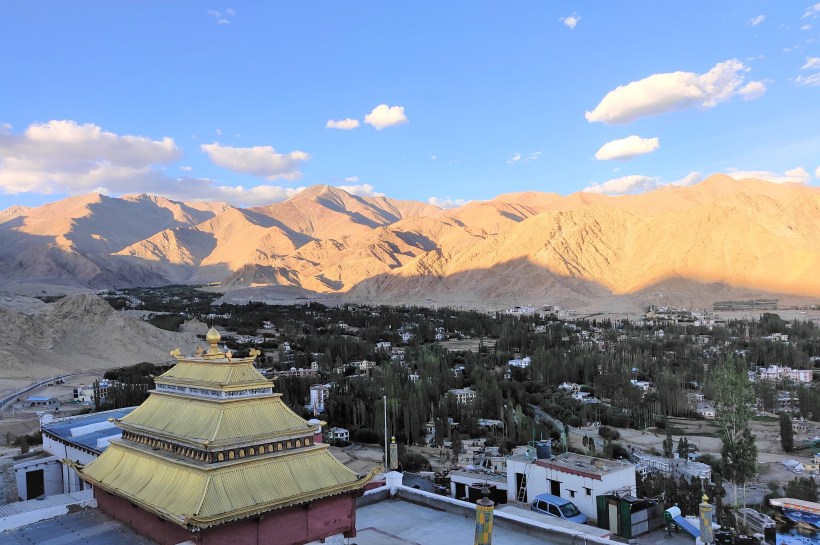
After a tour and photo shoots around Shanthi Stupa, we then proceeded to the Leh market. We did a bit of shopping and then some window shopping. Beautiful Pashmina Shawls and kurtas adorned the windows. Meditation bowls, Prayer wheels, key chains and other trinkets were in plenty. Fruits like apricots and apples were also seen in plenty.
By 8 pm we left the market and walked to `Tibetan Kitchen’, a famous restaurant serving authentic Tibetan food, which we had made up our minds not to miss out on. We gorged on the Mutton dishes, grilled trout and their very own bread. We went back to Jimmy’s Homestay and had a sound sleep.
Day 2 : Leh to Lamayuru and back
Waking up to a fine morning at Jimmy’s Homestay, you look out of the window and can see the mountains in the background against the clear blue sky, the apple trees in the orchard and beautiful flowers in the garden. Jimmy has quite a nice patch of veggies too – broccoli, cabbage, palak, potato and onions to mention a few.
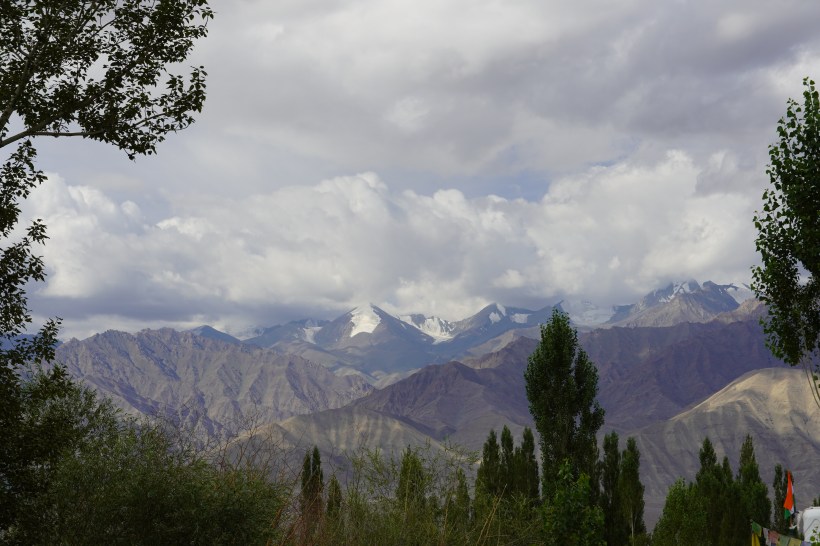

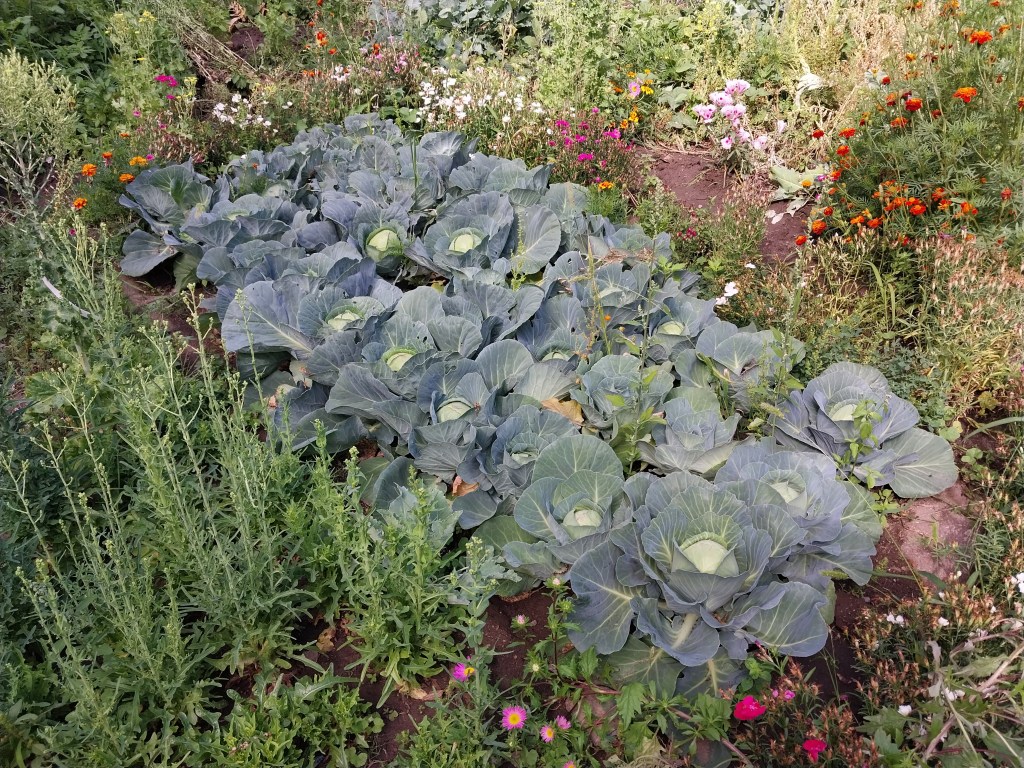
On day 2, we intended to visit Lamayuru, the Moon land, Pathar Saheb Gurudwara and Indus Zanskar Confluence.
For the whole of our Ladakh tour, our driver and guide was Jigmet Handang, aka Jimmy, who later became our dear friend. He was a hard working Ladakhi, polite and always with a helping hand. His ambition was to join the Indian Army, but he had to cut short his studies due to his father’s demise during his college days and so chose his present profession – tourist guide and driver. Rekha, brought up in Maharashtra, was fluent in Hindi and Jimmy enjoyed talking to her. Rekha got all sorts of information about Jimmy, his family and the hardships in the life of an average Ladakhi, from him. He also talked about the time of the Chinese incursion, the advantages and disadvantages of making Ladakh a union territory and we were surprised how politically aware he was.
We sighted the River Indus (Sindhu) on our way and most of our journey thereafter was along the banks of the Indus. We were reminded of the famous Indus Valley Civilization learnt in our history classes.
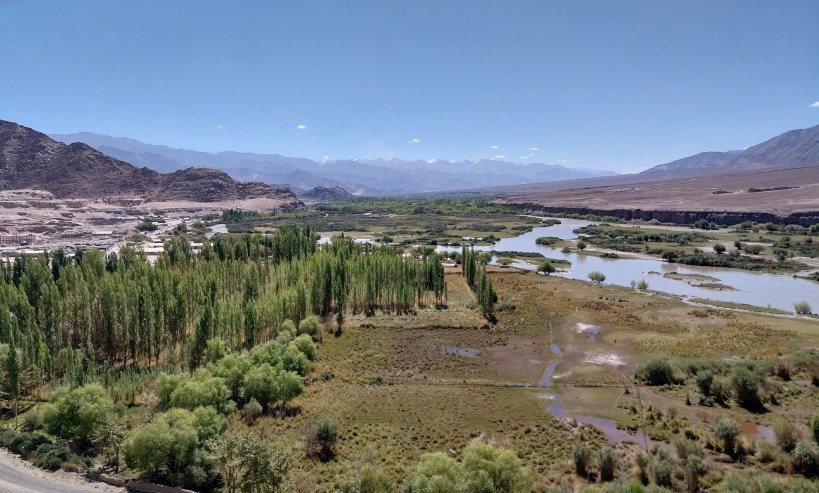
We came upon the Guphuks View Point, one of the most frequently visited viewpoints situated on the side of the Leh – Kargil Highway. Here, one gets a beautiful panoramic view of the River Indus, Spituk Monastery, Stok Village and Pharka village. After enjoying the views and taking some pictures, we continued our journey.
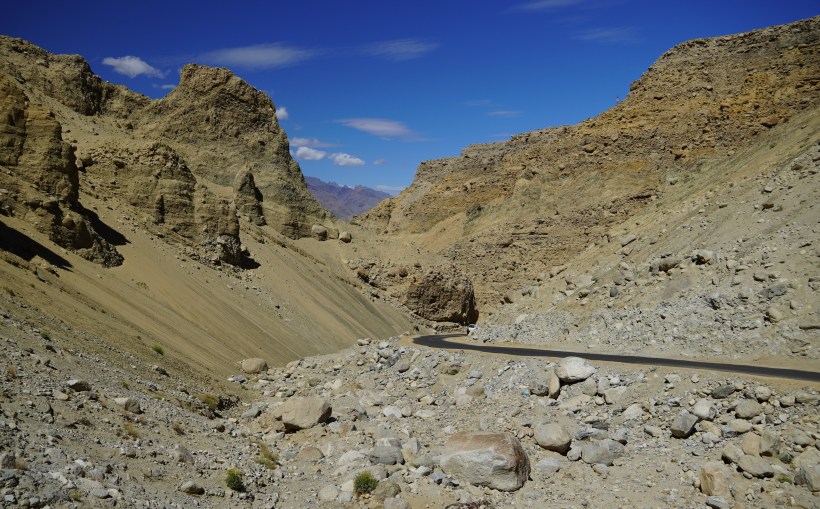
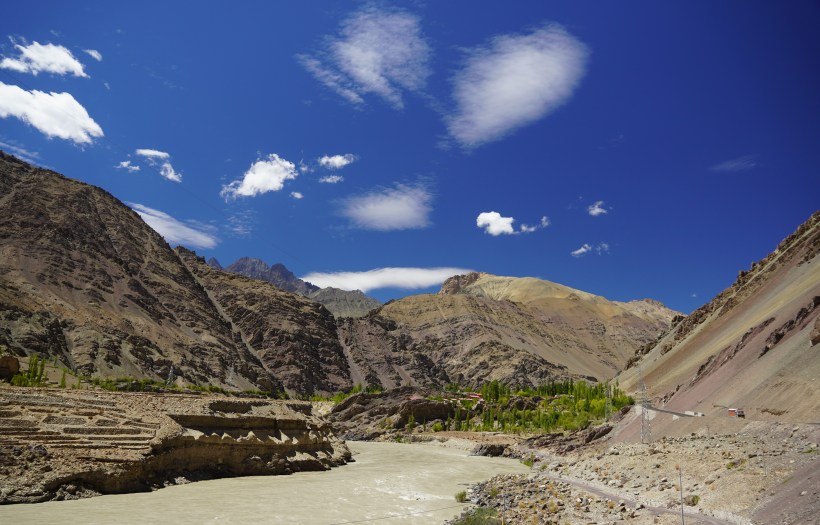
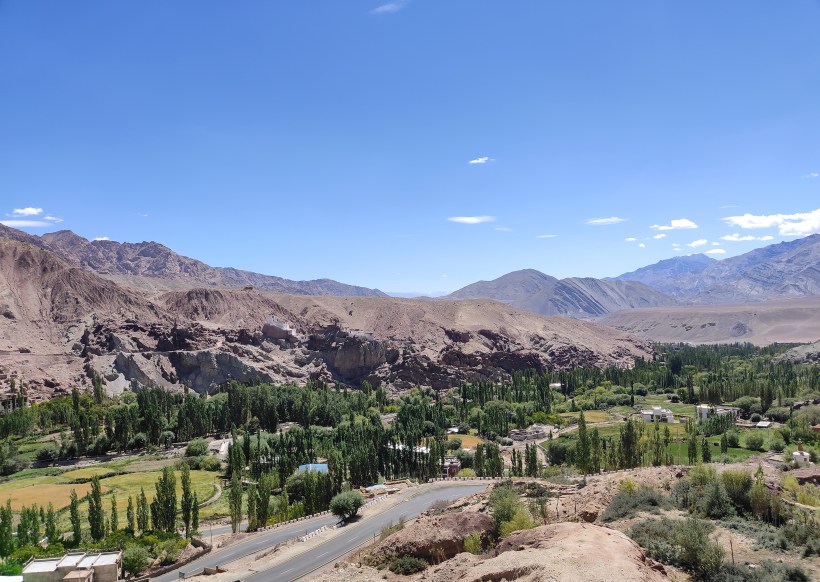
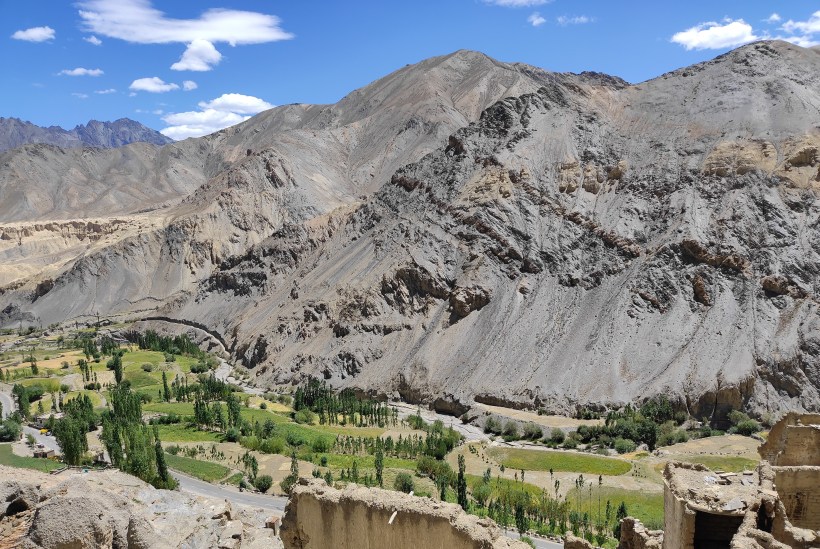
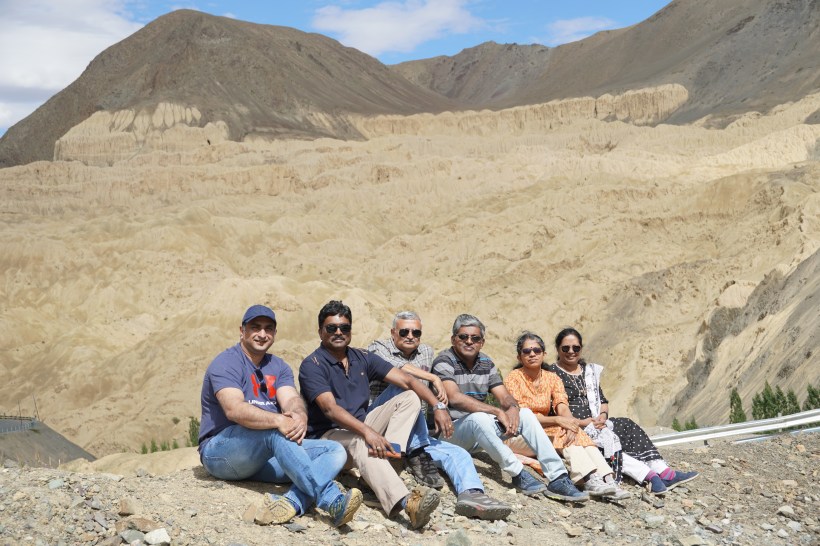
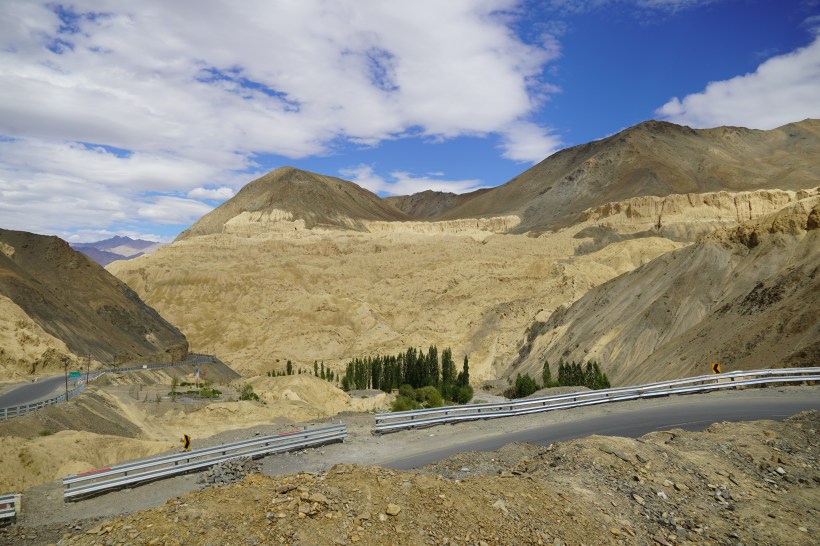
As we proceeded through the highway, the landscape changed dramatically and the mountains surprised us with the changes in colour and pattern. As we reached Lamayuru, the rocks changed colour to white – and hence the name Moon land.
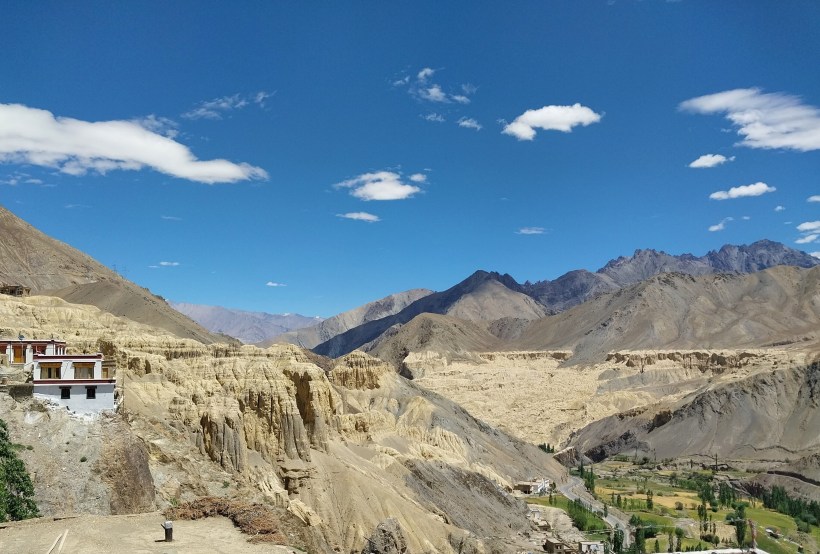
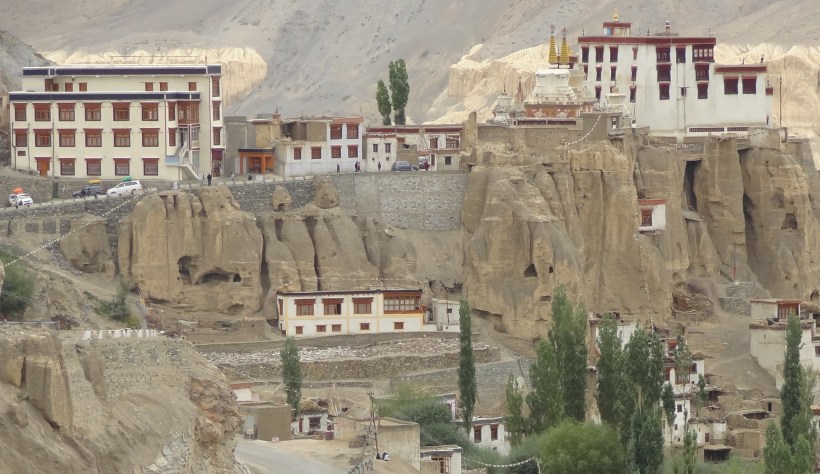
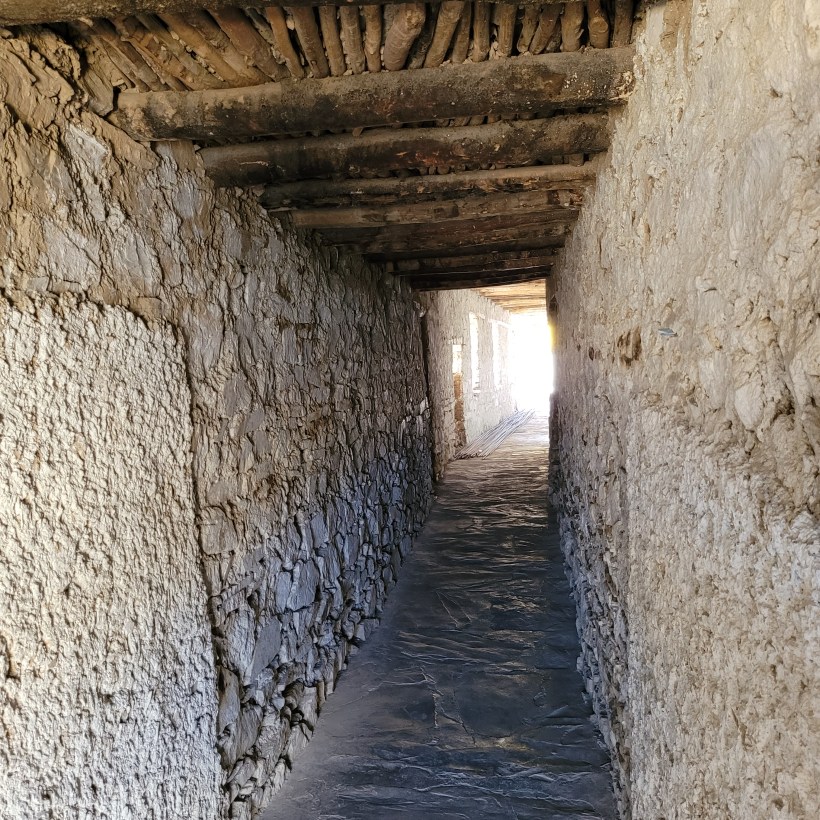
Later, we visited the Lamayuru Gonpa (Monastery), built in the 11th century. There is a story behind the making of the Monastery. It is said that once the whole valley was under a lake. Nimagon, an Arahat prayed thus “May a Gonpa be founded in this place” He made water offerings to the Naga Serpant Spirits of the water and caused the lake’s water to drain out. The grain of corn offered to the water spirits mysteriously grew into the shape of a Yung dung (Swastika). When a monastery was later founded here, it was called the Yung dung Gonpa.
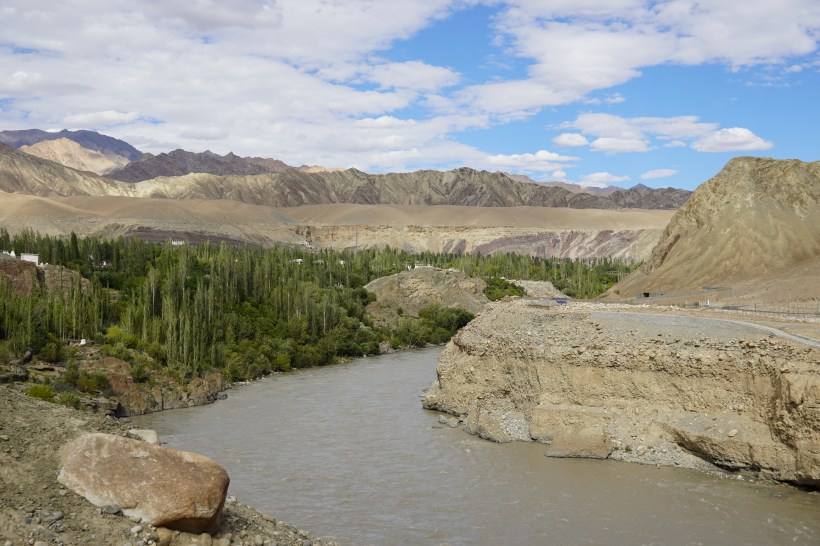
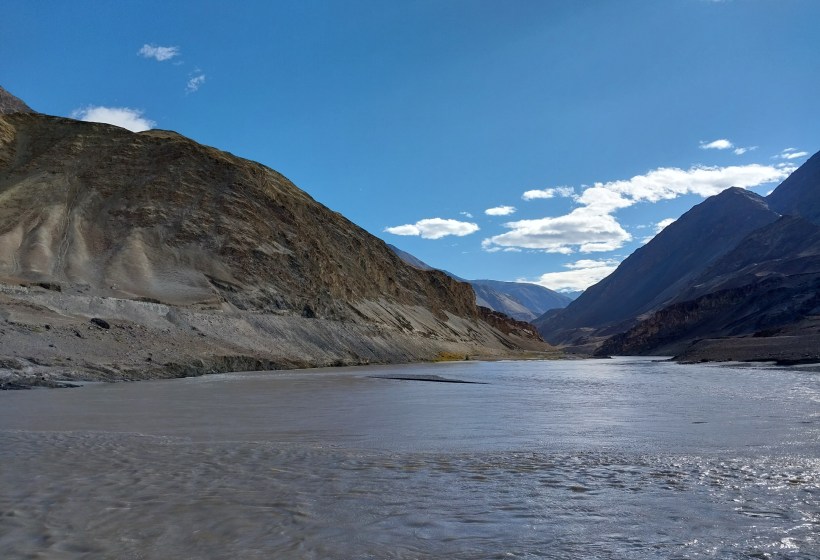
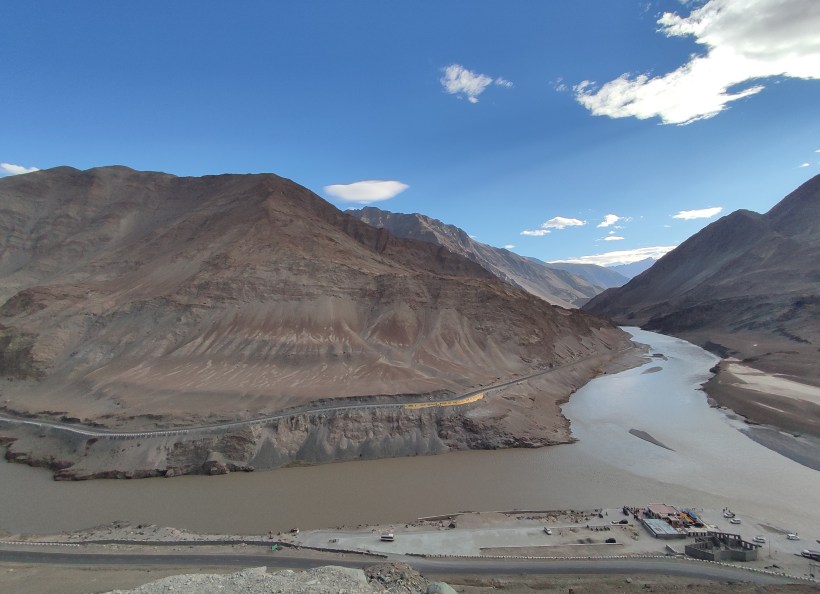
Our next stop was Sangam, located at Nimmu on the Srinagar – Leh highway. It’s a confluence of the two rivers, Indus and Zanskar. Zanskar with its muddy waters comes from Zanskar valley of Ladakh and meets with the blue waters of the Indus at Sangam and it is a beautiful sight to behold. It is also a spot for river rafting.
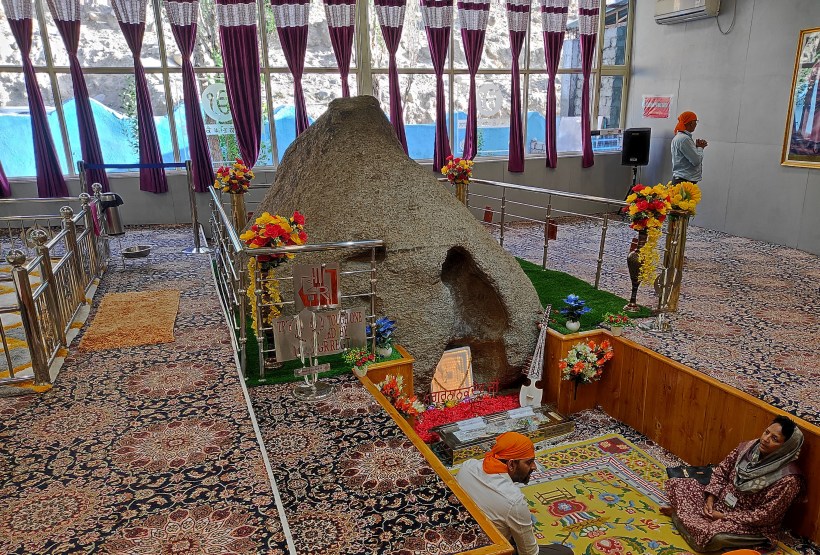
On our way back we also visited Pathar Saheb Gurudwara, a Sikh shrine maintained by the Indian Army. It is said that Guru Nanak tamed a wicked demon in Leh; who tried to kill him with a boulder (`Pathar’ in Hindi) rolled down from a mountain. The boulder miraculously turned soft and the demon realized that the Guru was a holy disciple of God. The demon later became his follower and the place where the boulder fell became the Gurudwara Pathar Saheb. Devotees can see the Holy Boulder inside the Gurudwara Complex. The Army serves hot Tea and snacks to the visitors here.
We returned to Leh by evening, had a hot supper from Jimmy’s and then retired for the day.
Day 3 : Leh to Hunder
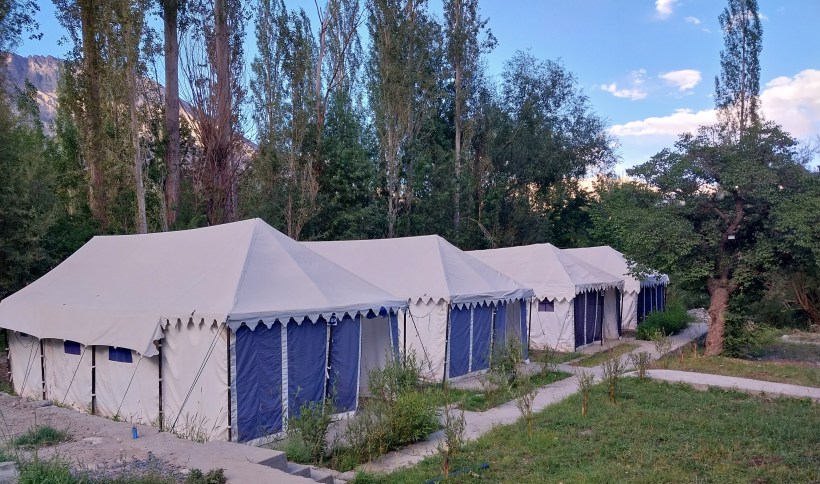
On day 3, we set out to Hunder in Nubra Valley. We planned to stay in tents, quite close to nature, without the comforts of a hotel room or homestay.
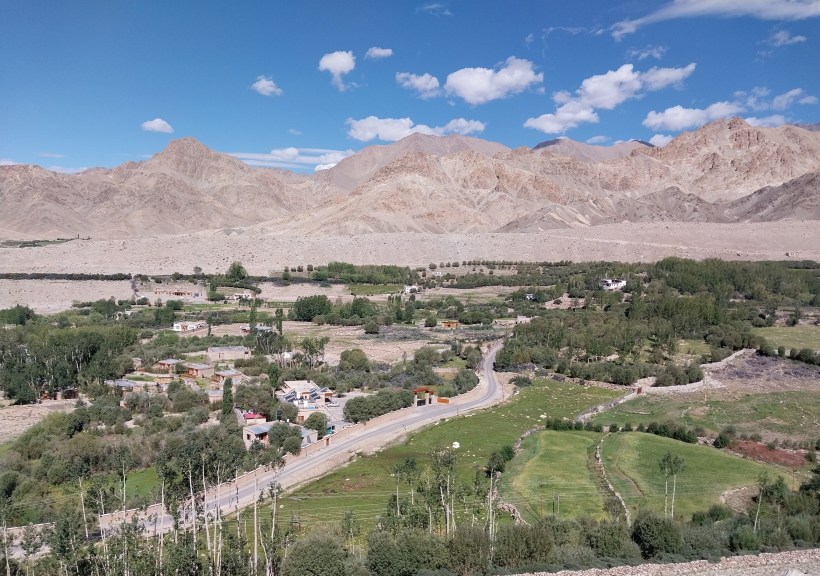
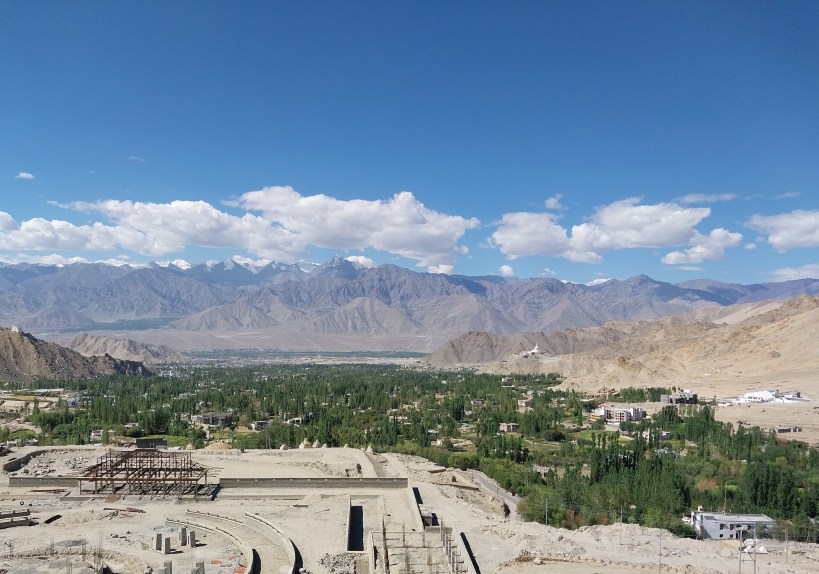
Leaving Leh, we were climbing up the winding roads, and at every turn as we looked back, the land left behind looked more and more beautiful. So naturally, we stopped several times and got some beautiful snaps.
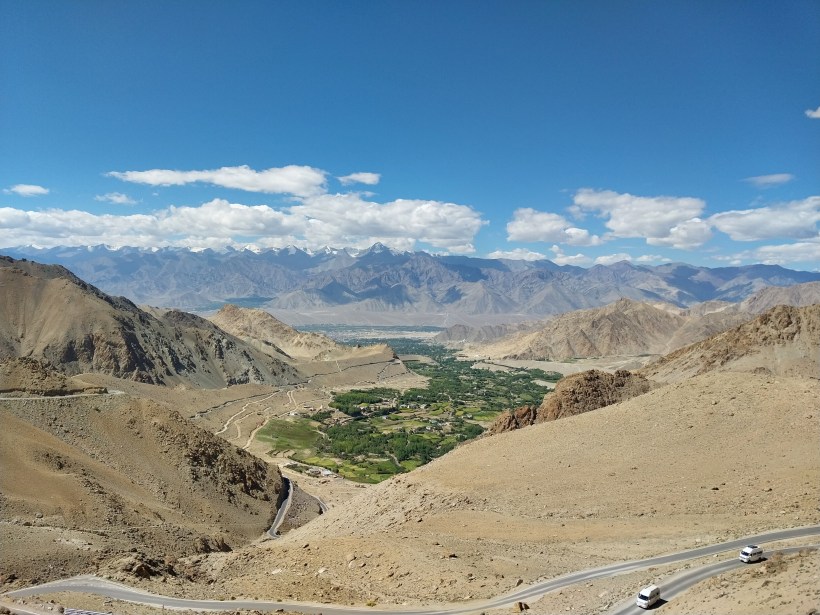
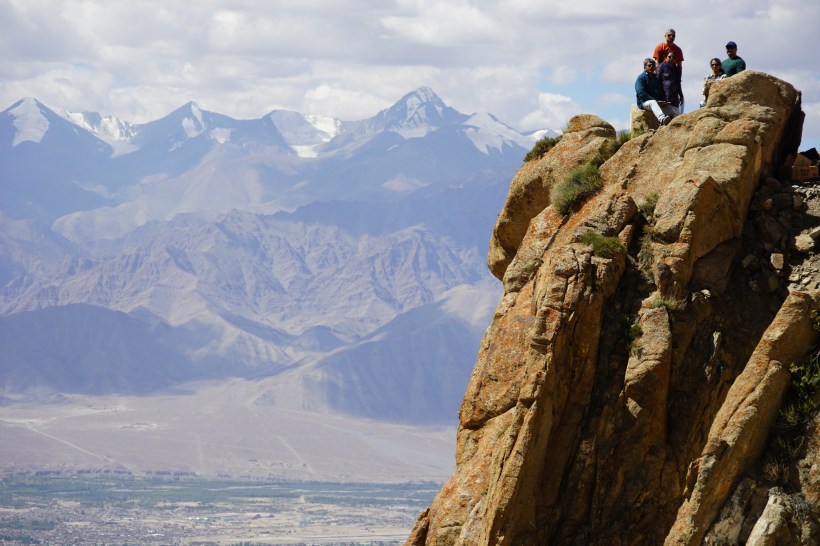
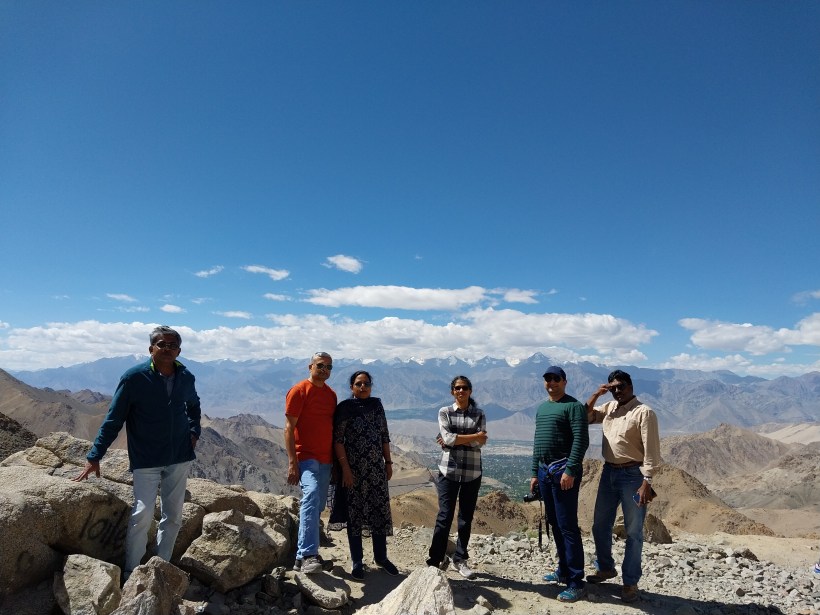
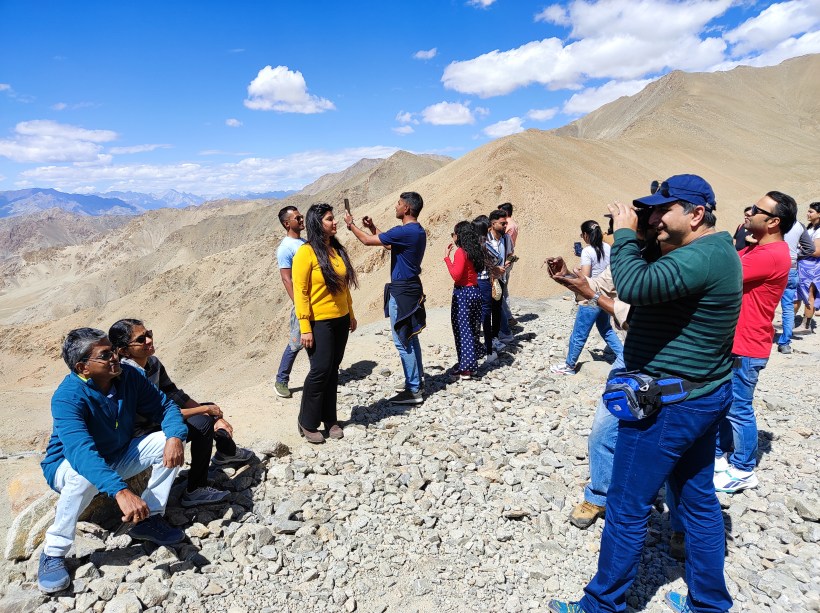
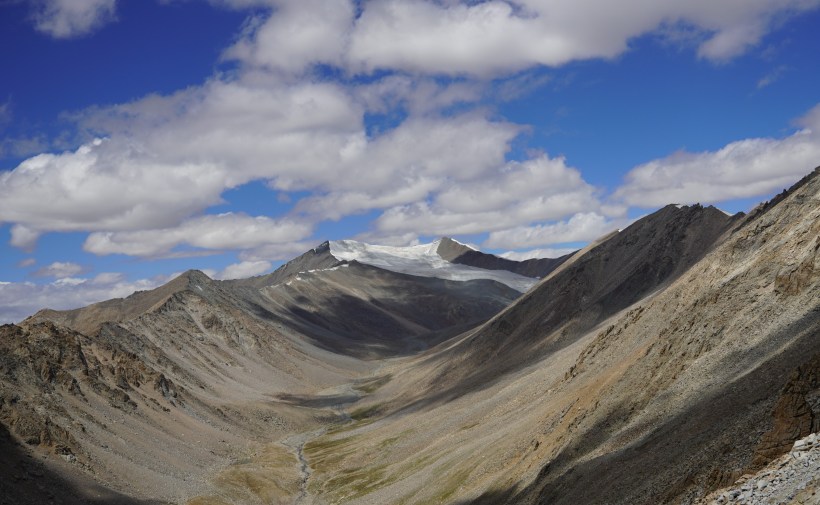
On the way was Khardung La, a mountain pass situated at 17,982 feet above sea level, and previously known as the highest motorable road in the world. For the locals, Khardung La is a sacred place where two heavenly Gods reside; they pray and offer prayer flags to the Gods.
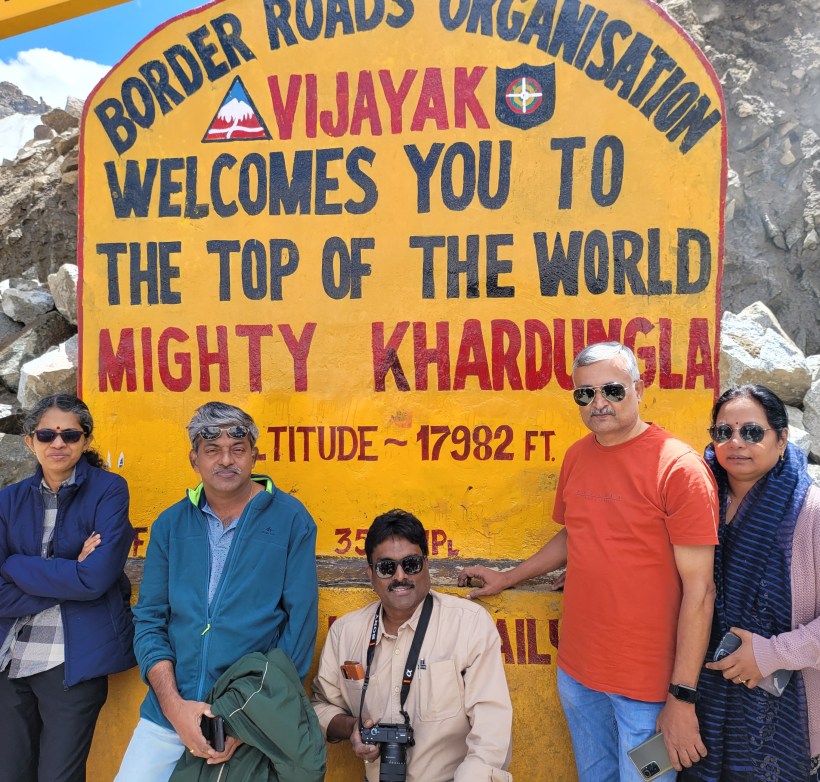
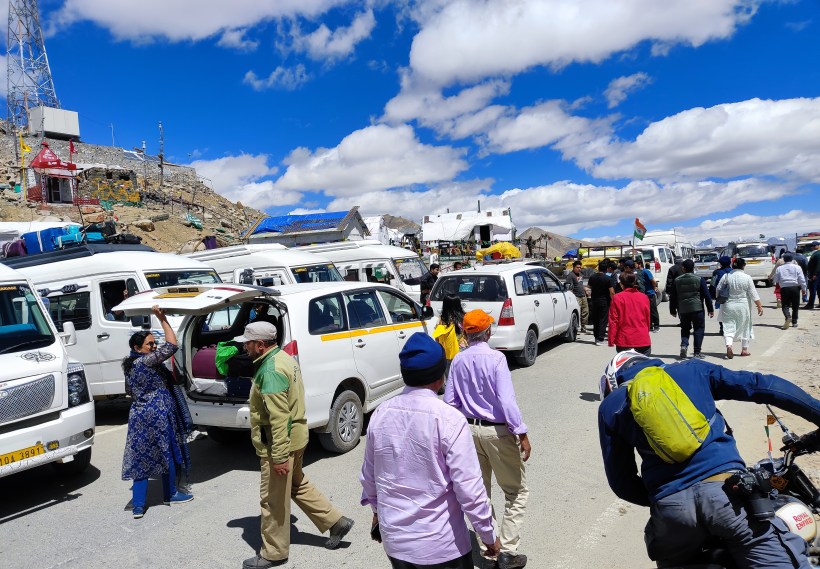
As the `Siachen Tuskers’ say, “Ladakh is the land of barren passes so high, only the best of friends or the fiercest of enemies would want to visit us”. The Army and BRO (Border Roads Organization) had put up the most creative and catchy, and at times quirky captions all the way. As usual, they were meant for the safety of the travellers, but some were indicative of the work put in by the Indian Army and BRO – in such harsh climates and such harsh country. They also reminded us of their bravery and sacrifice in both war and peace.
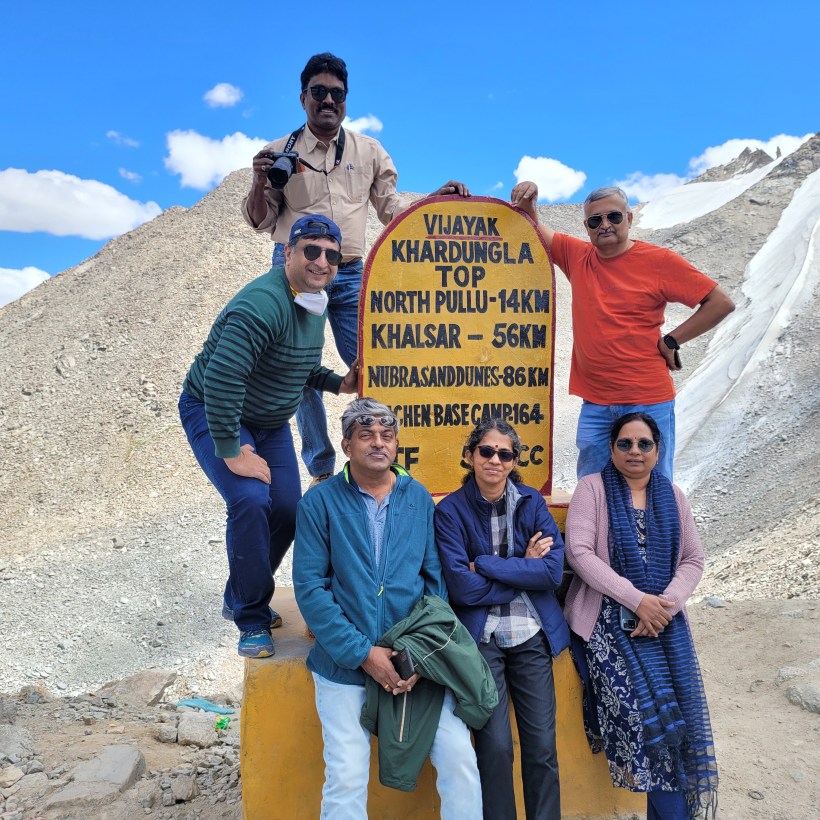
We spent only about half an hour at Khardung La, considering the adverse effects of high altitude.
Today, we were travelling along the banks of the Shyok river. The scenery was so captivating that we kept halting time and again to click pictures.
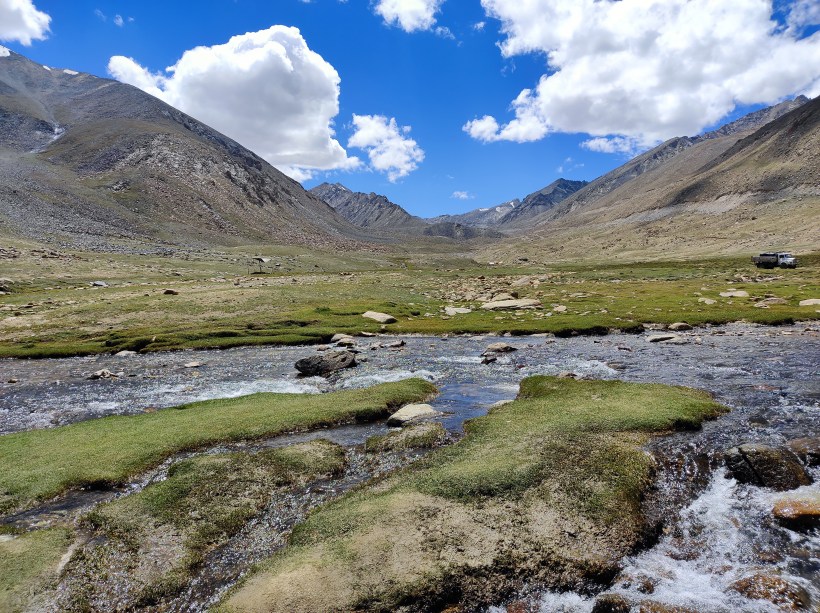
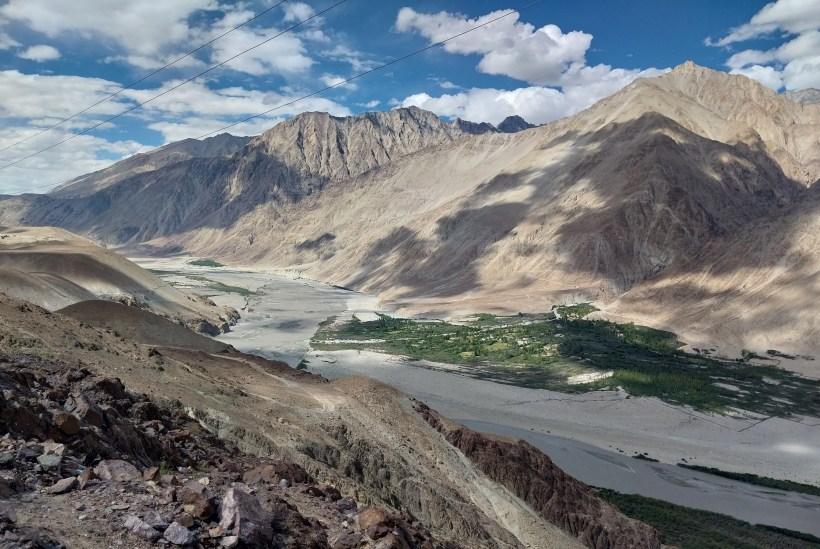
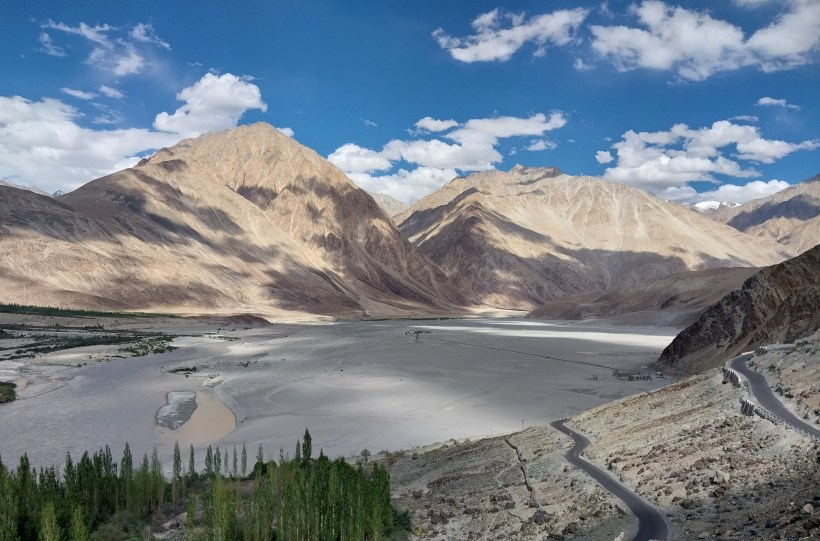
We visited Diskit Monastery, again situated on a hill. A magnificent statue of Buddha – “Maitreya Buddha” – sits in the monastery gazing over the Nubra valley and blessing its inhabitants. The Monastery offers a panoramic view of the Nubra Valley. The Nubra Valley is also famous for its Apricots.
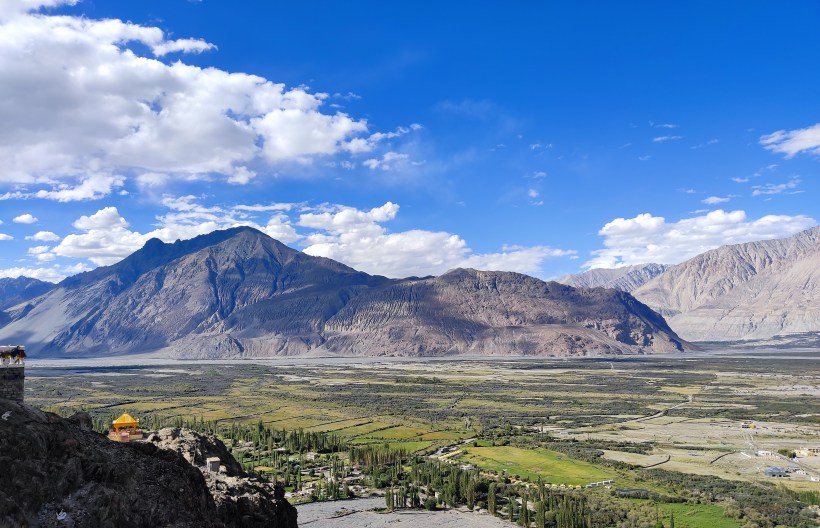
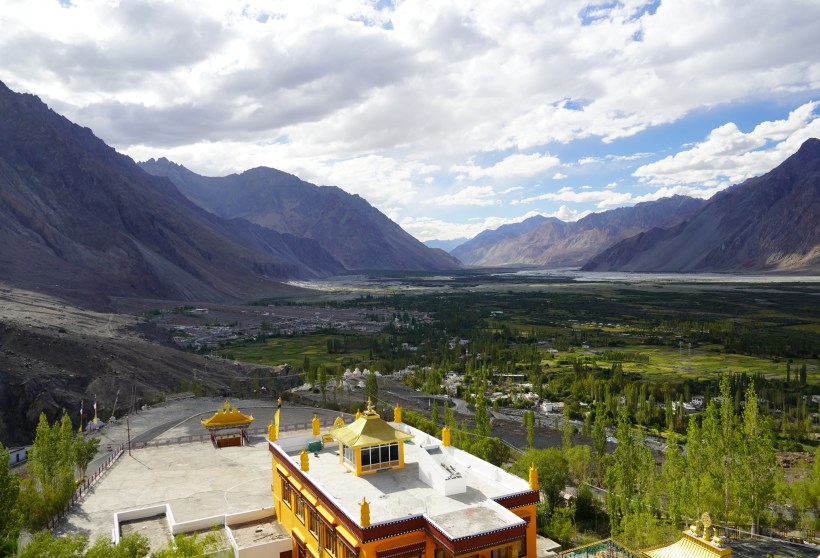
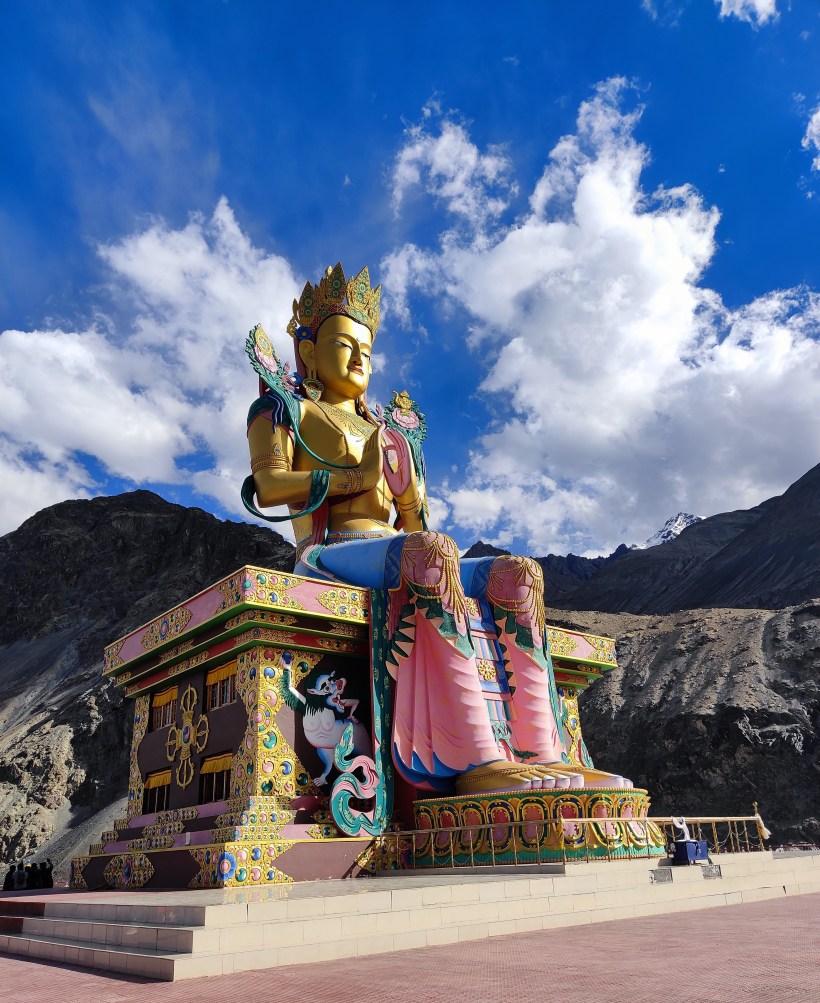
Finally we entered Hunder Village and we were ready for our stay in the tents at ‘Julley World Camp’. Despite the cold temperatures and restricted hot water supply, we thoroughly enjoyed the camping experience.
Day 4 : Hunder to Turtuk and back
After a light breakfast – the usual fare of Bread Toast, Omlette, Aloo Paratha – we began our journey at 9.15 AM from our camp site. We travelled through the smooth roads cut through the rough mountains by the BRO.
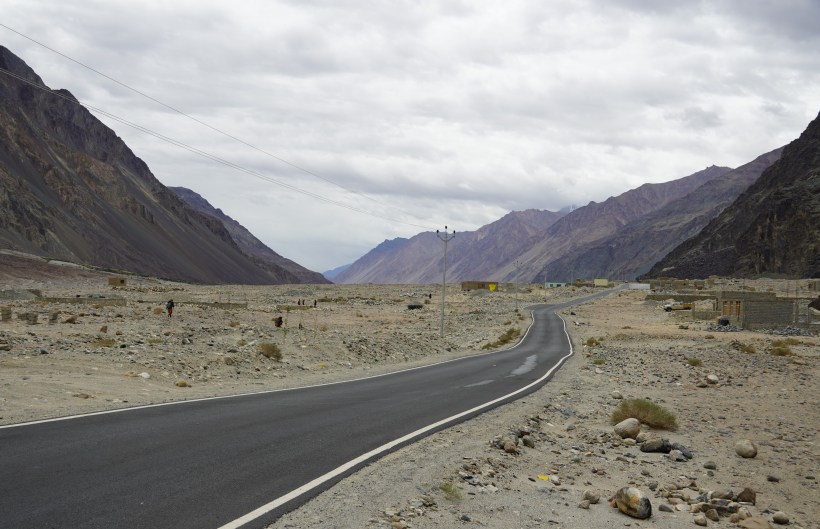
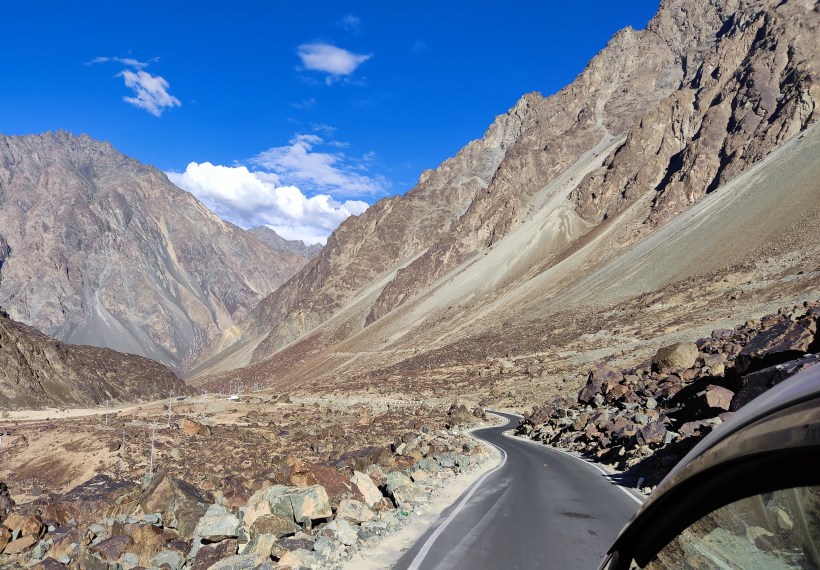
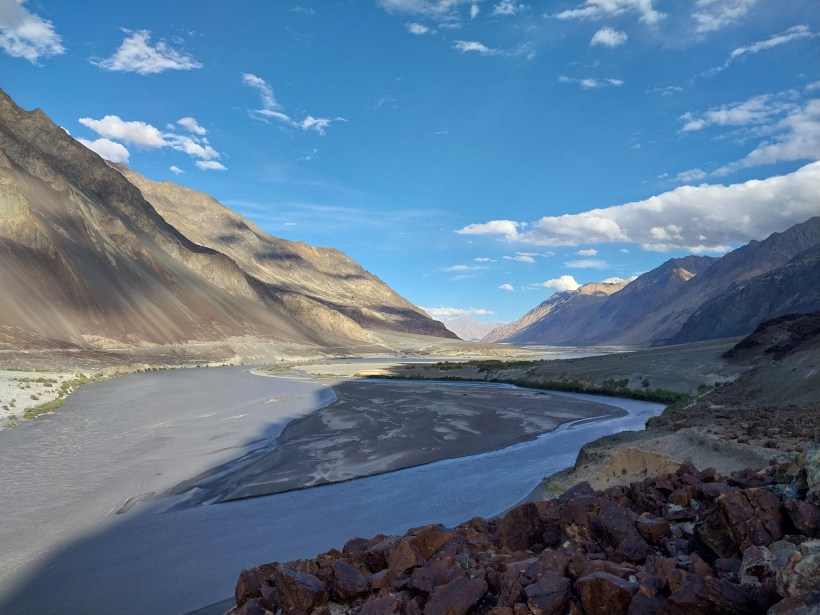
On one side were the majestic mountains and rocks and boulders in different colours, patterns and formations which only the Great Artist could have painted. On the other side was the waters of Shyok River, at times still, at times turbulent.
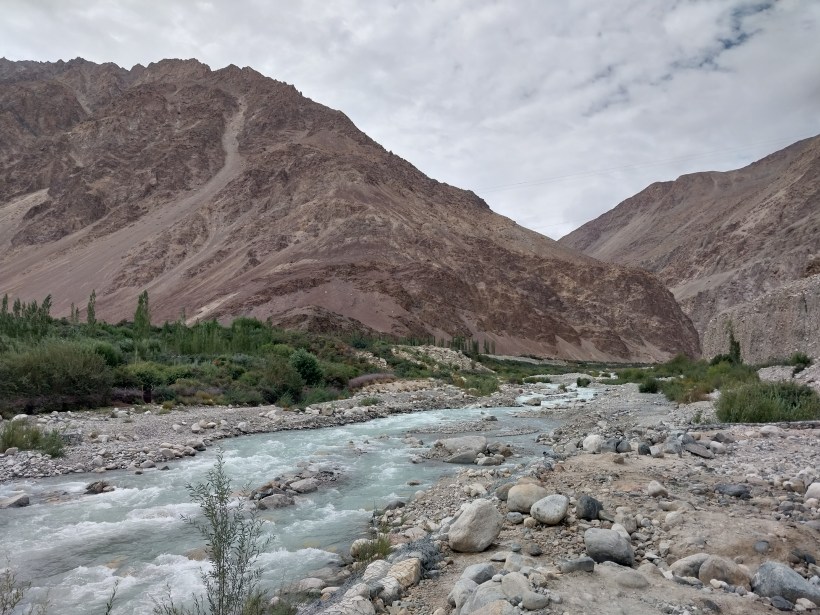
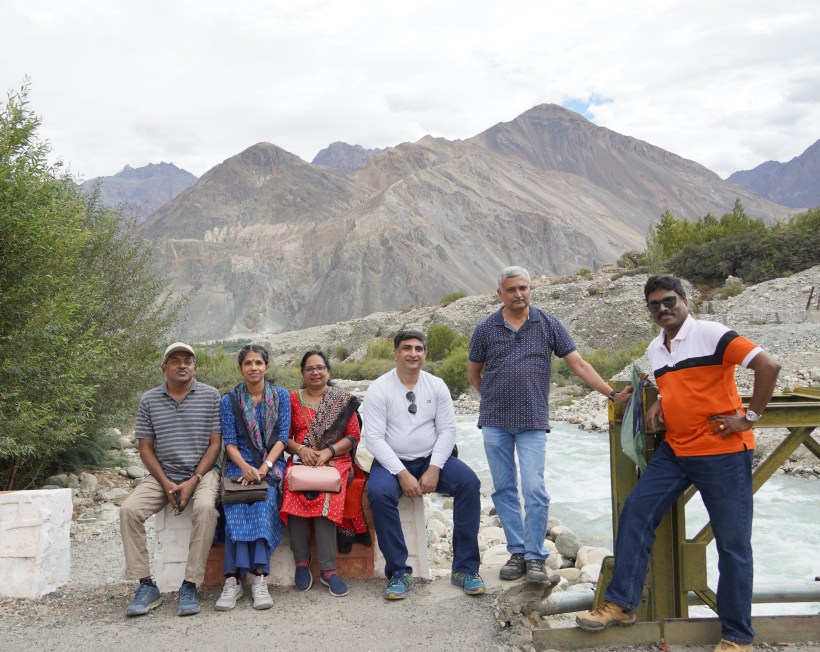
The Army regiment of `Siachen Warriors’ has their transit camp at a place called Thoise. The Indian Air Force also has their base with an Air Strip (claimed to be the highest in the world) for access to Siachen. There was also a military hospital. We were told that the natives had given their land for free to the Army / Air Force to set up their camps. The Army too is always ready to serve the people; like to airlift a patient to the nearest hospital at Chandigarh or Srinagar, in case of an emergency.
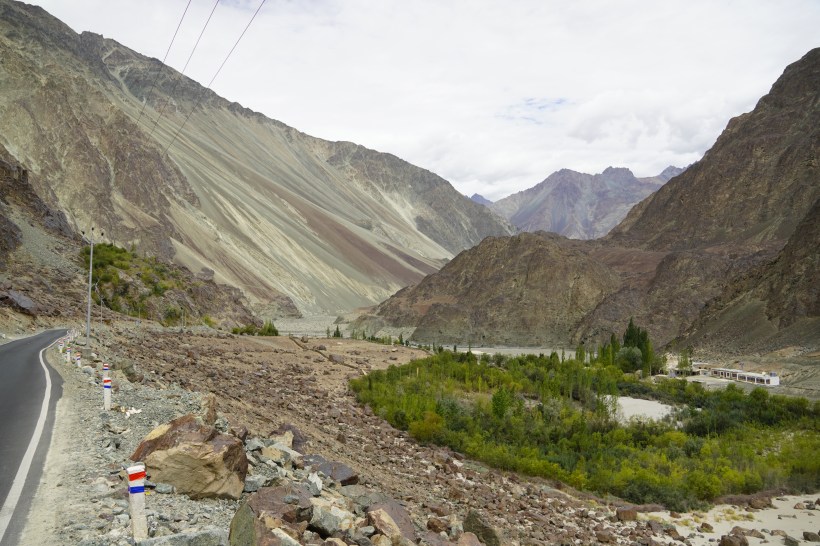
We travelled through the many scenic spots – river beds with fine sand, tough water crossings and also some areas where there were no roads at all – just rocks and pebbles. The Army Convoys always had the right of the way, and we gladly gave way for the convoys, like the rest of the travellers.
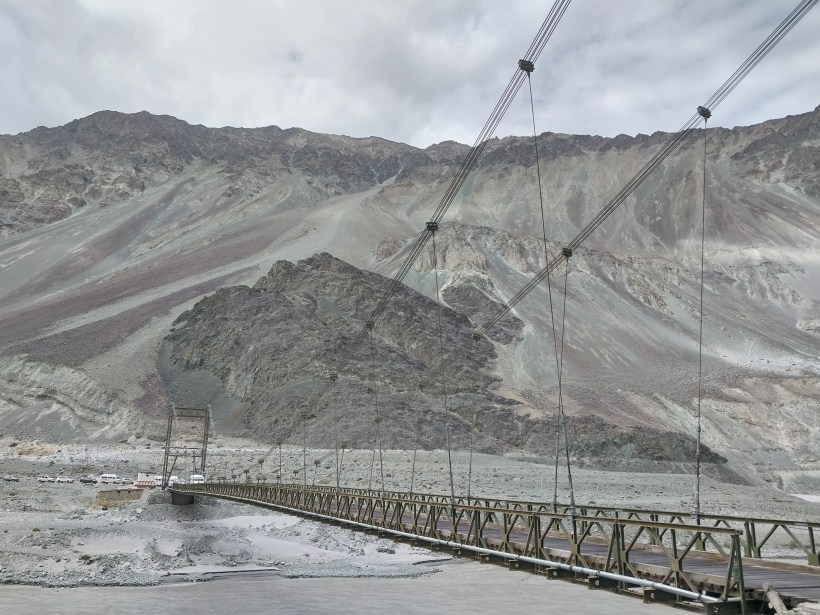
Eventually, we came to Turtuk on the Indo – Pak Border. There is an Army check post before we enter the last Indian village Thang. As we queued up along with others to get our permit, we met a soldier from Tamilnadu. The moment he saw us, he enquired whether we were from Tamilnadu. We informed him we were quite close by, from Kerala. Rehan fluent in Tamil, struck up a conversation with him in Tamil and the boy (he was just a boy) was all smiles. So far away from home, it is nice to hear your mother tongue, and our soldier was delighted. There were plenty of items at the Army’s Snacks Counter like apricot preserve, samosas, tea and ice cream for the hungry. We bought a few things, got our permit, bid good bye to our soldiers and continued towards Thang village.
Before 1971, Thang and Pharnu were twin villages. But all of a sudden, on the intervening night of 16th and 17th December of 1971, when the Indo – Pak war ended, these villages were separated by LOC, thereby breaking families, children from their parents, husbands from their wives.
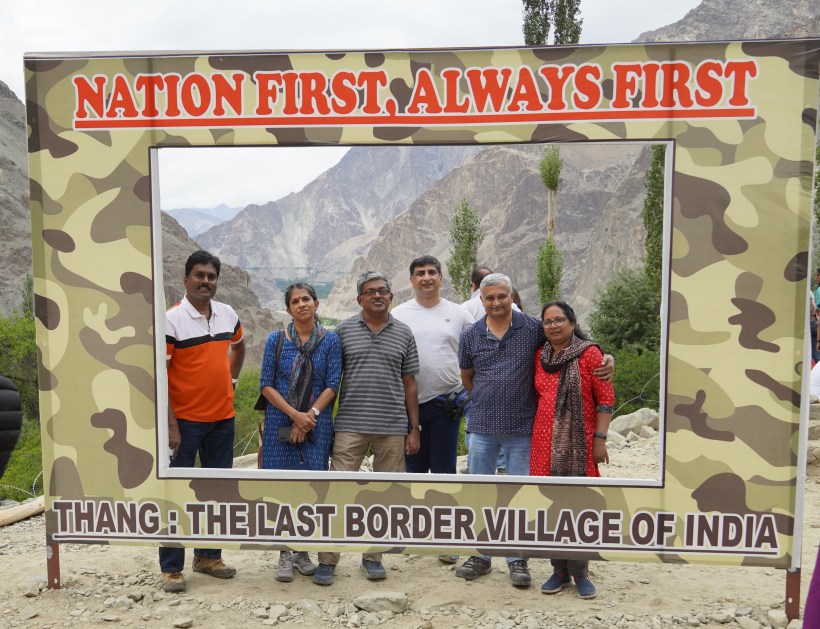
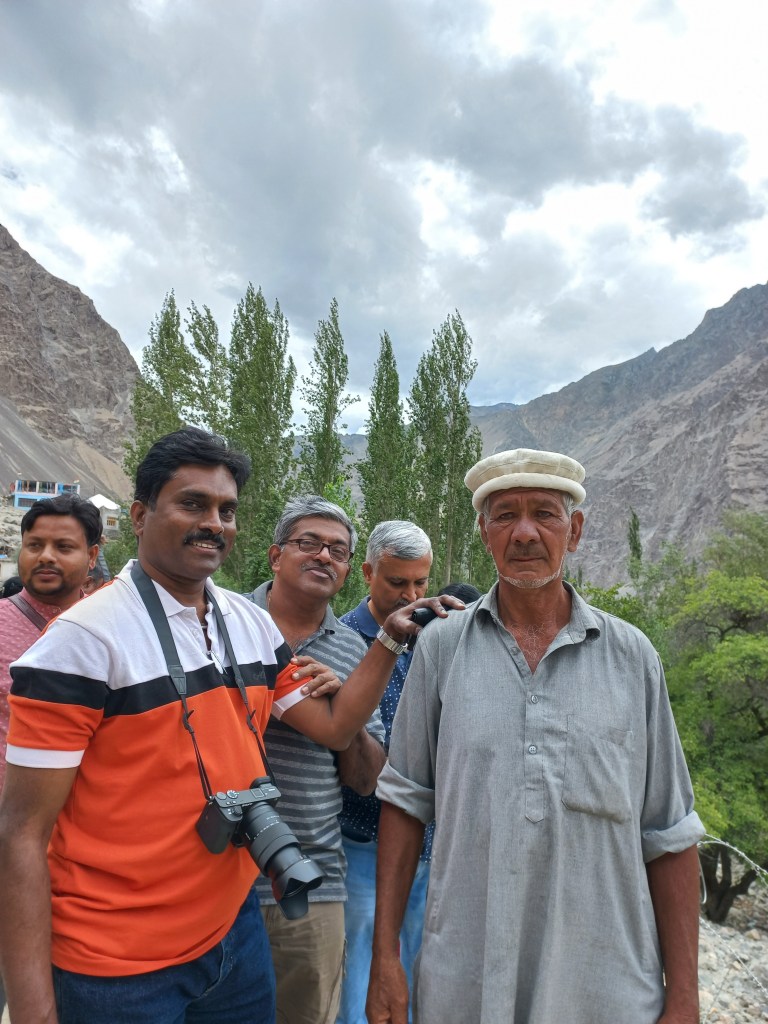
An old native of Thang Village regaled us with stories of the separation. We listened to the stories and later inspected the village across the border (no different from our Indian village) through our binoculars.
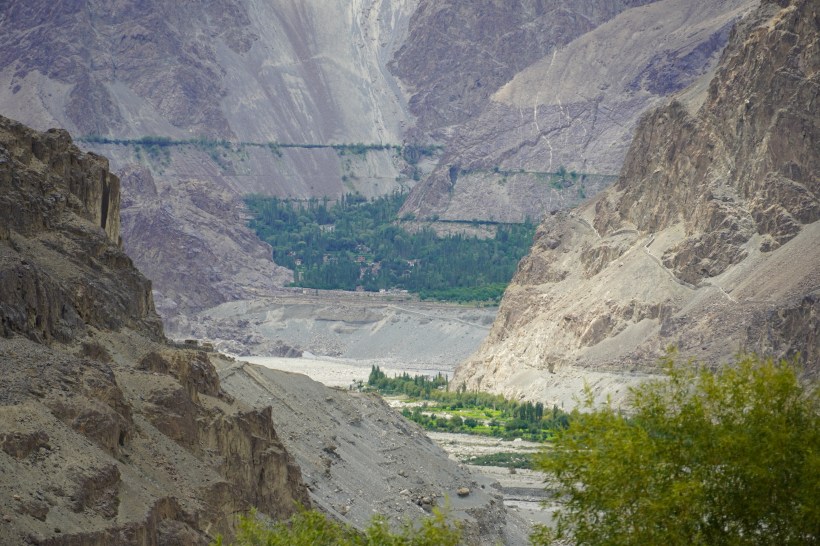
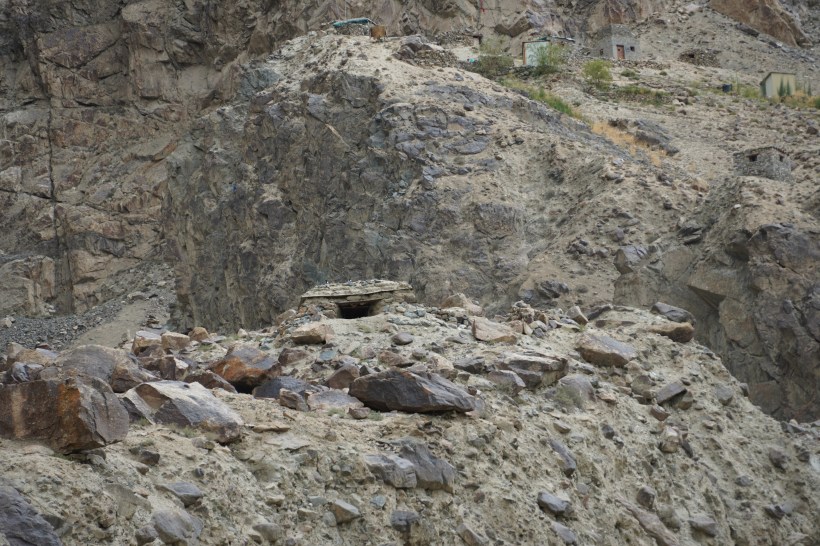
We also saw the Army bunkers on the mountain slopes, reminding us of how our army remains vigilant even during peaceful times to protect our borders.
We returned to Turtuk village to enjoy the food at the famous “Balti Kitchen”. We had to climb up again for 15 minutes to reach there, but it was worth the effort. In fact, Balti Kitchen is a must visit spot for anyone visiting Turtuk village.
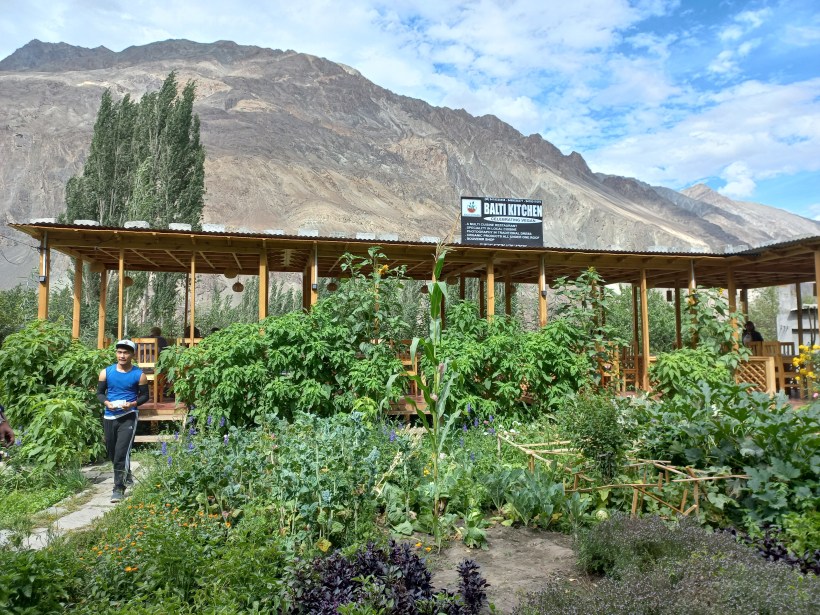
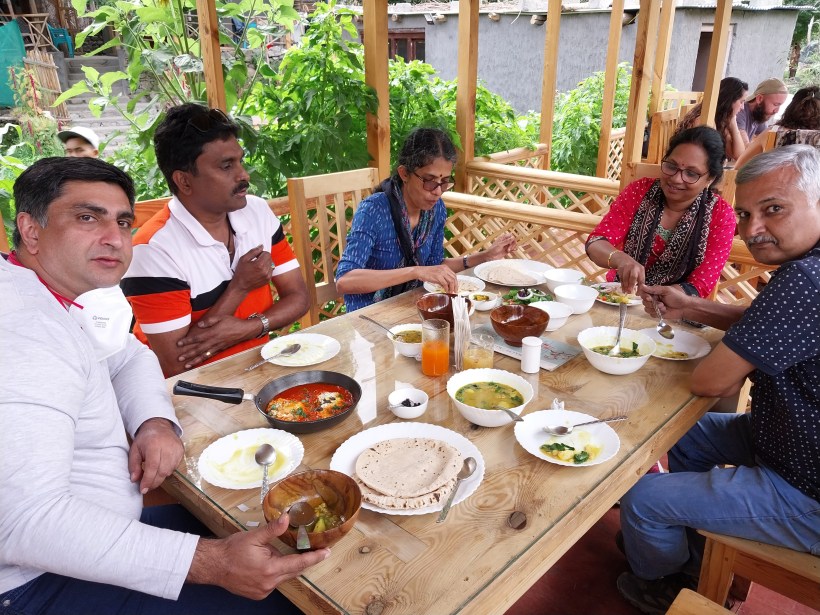
They serve authentic Balti cuisine of the Balti tribe. They are famous for the vegan, gluten free, but very tasty dishes prepared from vegetables grown organically in the backyard. It was started by Rahim Khan and Hajira Khan in 2015 to introduce the rich food history of Baltistan to the rest of the world. We ordered some of the exotic dishes including Moskot, Baleh, Vegetable Sizzler, Shakshuka (served in pan), Lasagna and to keep it simple, Indian Thali and local fruit juices. We thoroughly enjoyed it all.
On our way back to our tents, we visited the famous Sand Dunes of Hunder. Ride on the double humped Bactrian Camels is a major attraction there.
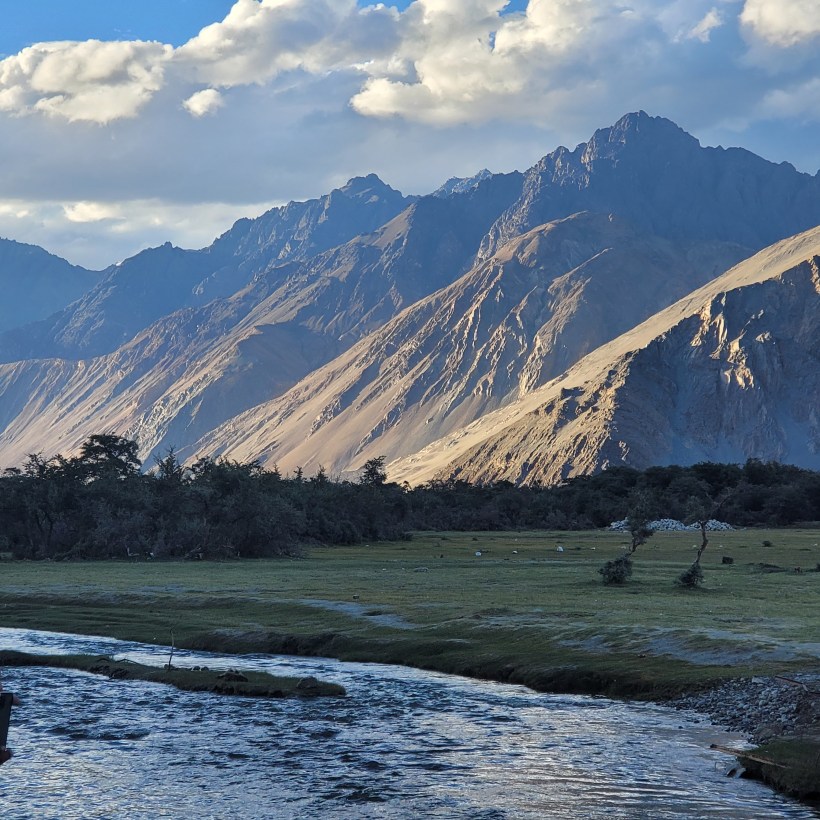
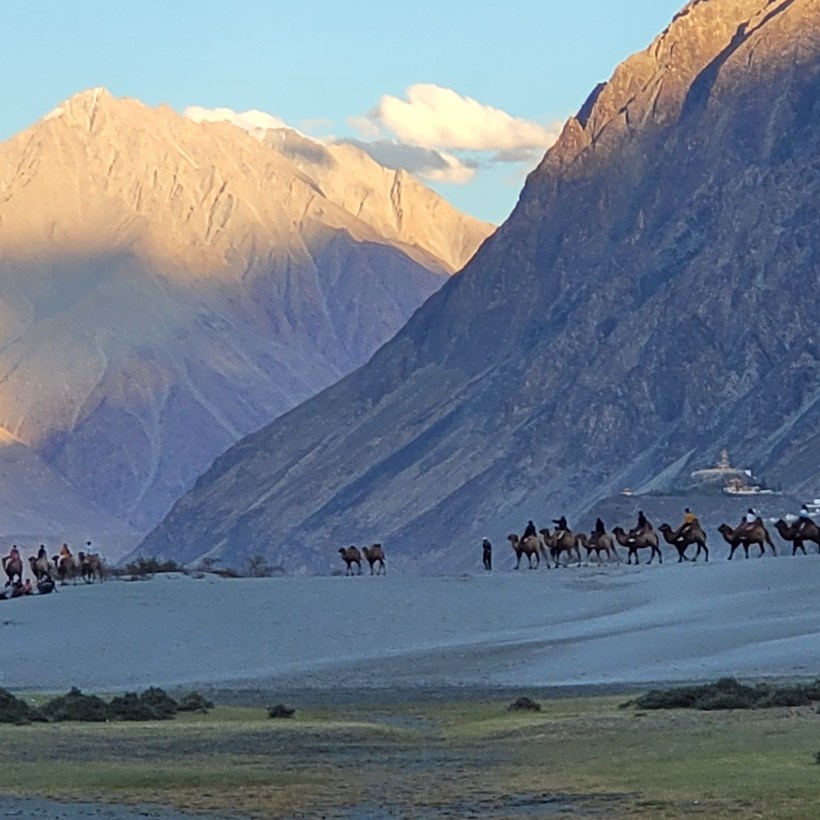
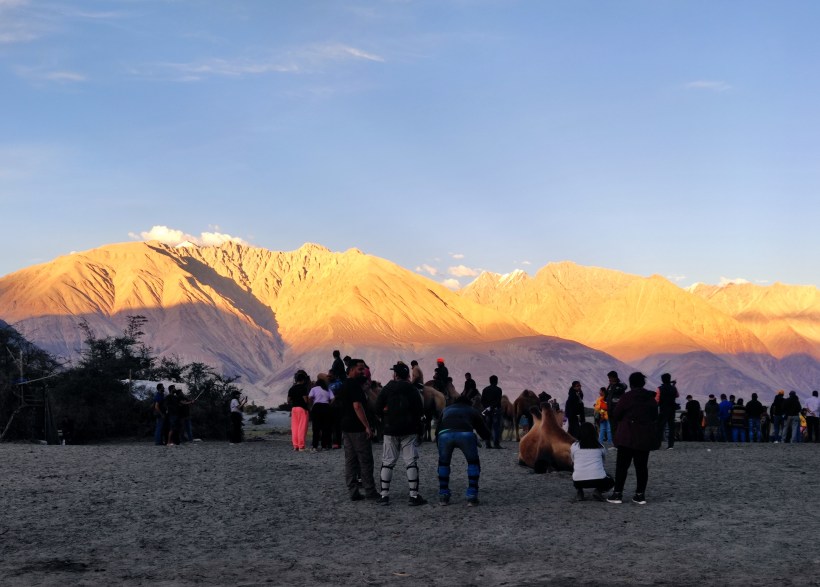
Some of us enjoyed a half an hour ride on the camels and had a good view of the landscape. Motor bikes were also available for rides on assigned tracks on the sand dunes. After a long day, we returned to our camp site, had dinner and hit the bed.
To be continued ….. Part 2
 Nostalgia EE 84
Well covered with superb photos .💐
LikeLike
Very nice Viji. Beautiful photos and very nice description. Lots of greenery. I wa under the impression that Leh and Ladak is full of stones and mountains.
LikeLike