
By JAYAPRAKASH P
We, three hard-core travellers from CET (Joseph Andrews – 82EC, Suresh Kumar SP – 84ME & Jayaprakash P – 84EE) have decided to team up and organize off-beat, carefully-curated travels to popular and not-so popular destinations. We have chosen this as a hobby, after our retirement, to utilize our experience and continue with our passion in a way beneficial to others as well. The key focus of the tours will be on local culture, history, unique terrains and wildlife. We have recently completed the first trip in the series to New Zealand successfully, during the second half of April 2024, to the satisfaction of all travellers.
New Zealand is an island country in the South Pacific Ocean comprising of two main islands – the North and South Islands – and a number of small islands, some of them far away. New Zealand is blessed with natural beauty and more importantly, the people living there respect nature and take utmost care to protect what nature has given them in abundance.
We started our journey from Bangalore on 15th April, 2024 and landed in Auckland on 16th April, with a transit stop at Singapore. New Zealand has very strict biosecurity procedures at their airports to prevent the introduction of harmful pests and diseases to their country. All risk goods (plant or animal products) must be declared or disposed of in marked amnesty bins at the airports. We were well prepared for this and hence, Immigration and Bio-Security checks were completed without any difficulty.
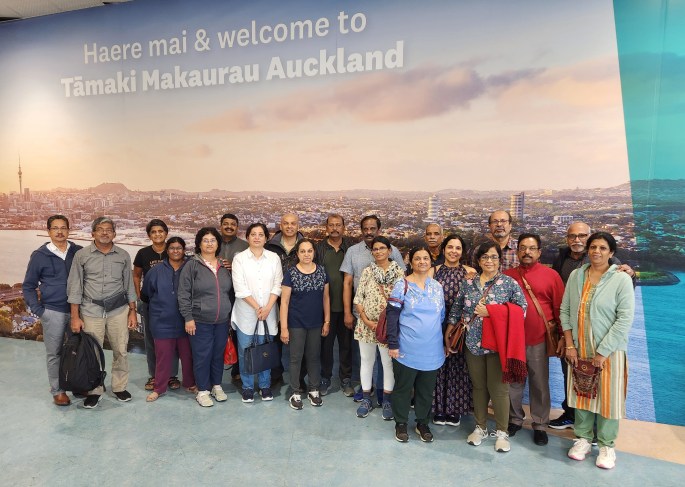
The representative of the Tour Company greeted us at the arrival hall and guided us to the Tourist Coach waiting for us at the parking area. We were later dropped at the Skycity Hotel after a short visit to the Cornwall Park, on the way.
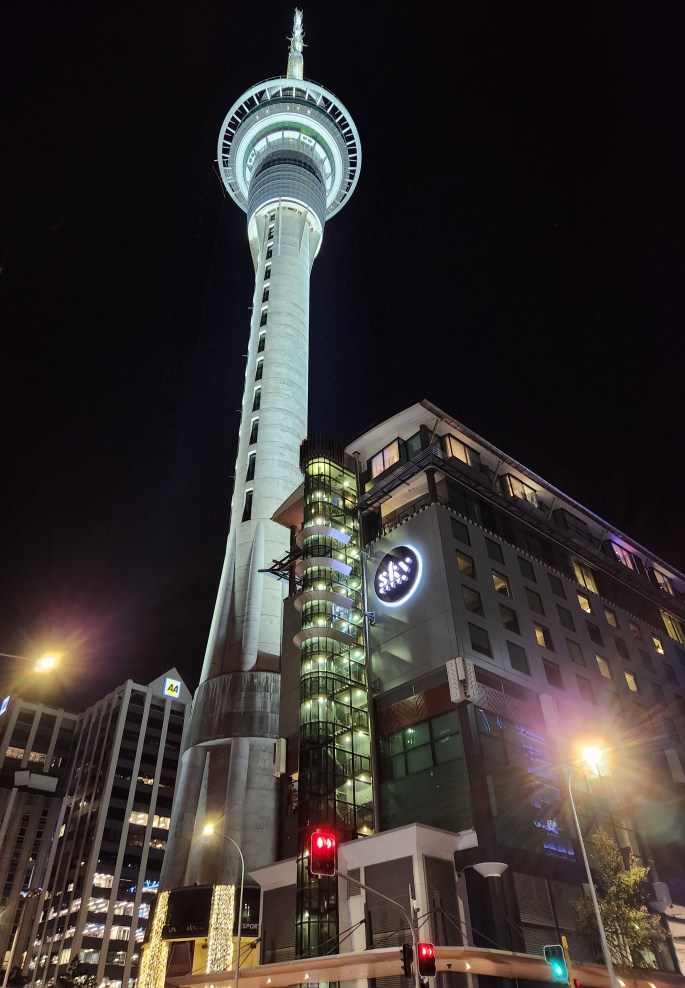
The Sky Tower is one of the most recognizable landmarks in the city of Auckland. Built in 1997, with a height of about 225 m, this is the second tallest free-standing structure in the Southern Hemisphere. For entertainment, there is a Casino and Mall at the basement, a revolving restaurant at the top along with a sky deck for panoramic views of the city.
The next day morning, we set out for a day tour of Auckland, travelling through the city centre.
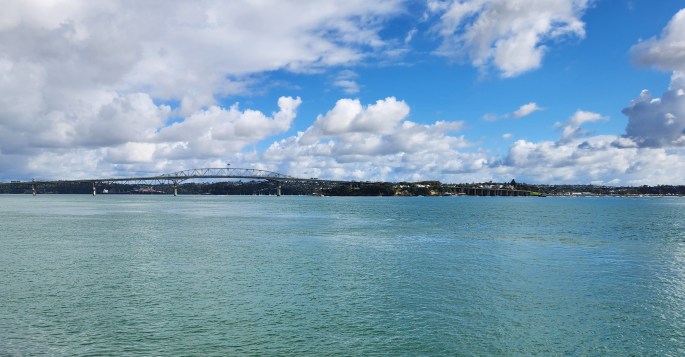
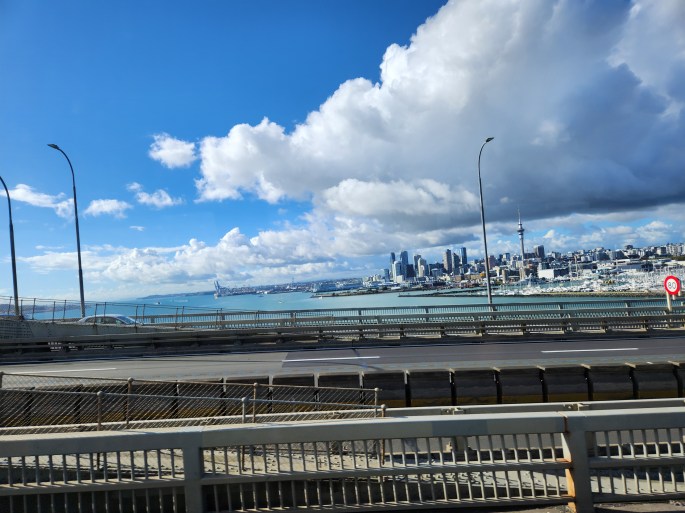
We started with the Auckland Harbour Bridge, which is yet another landmark of Auckland, connecting the main city to the North Shore. The Bridge offers stunning views of the City. The bridge was originally opened in 1959, with four more lanes added in 1968-69.
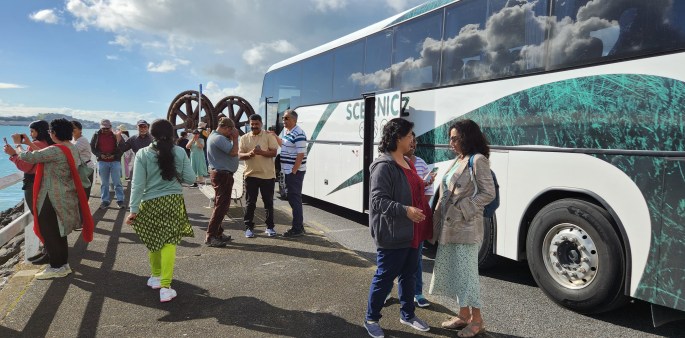
We took the scenic waterfront route of Tamaki Drive to Michael Joseph Savage Memorial Park. Named after one of New Zealand’s most revered Prime Ministers, the Park, with its gardens and tranquil atmosphere offers a spectacular view.
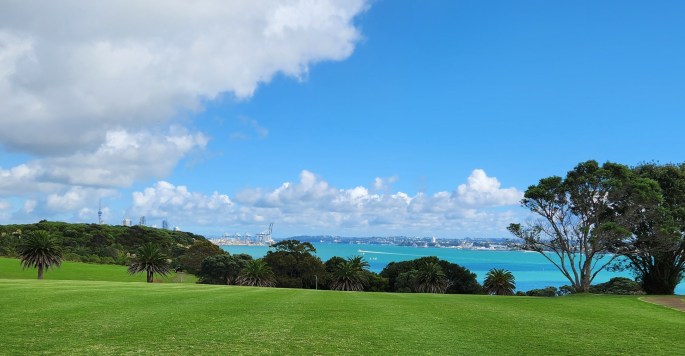
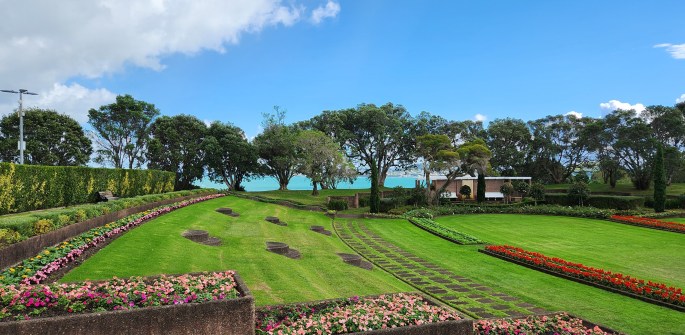
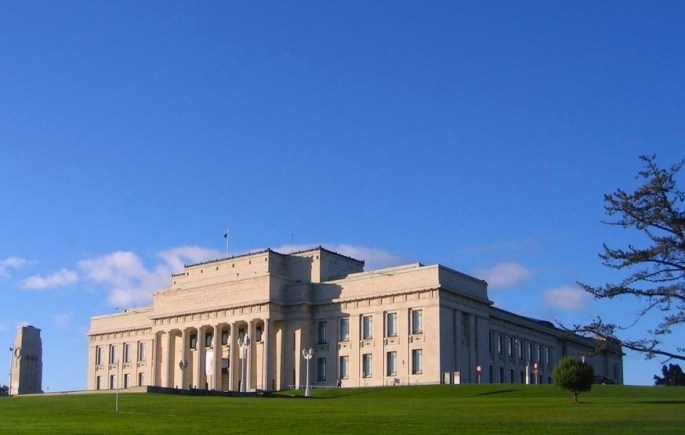
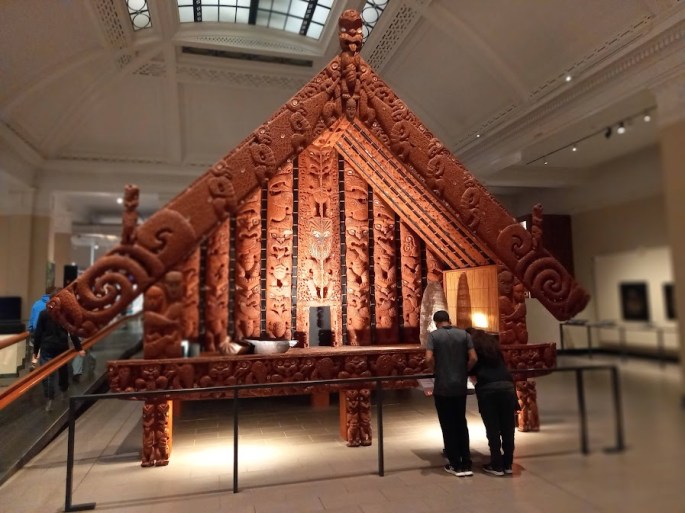
Auckland Domain is the city’s oldest and the largest park, developed around an extinct volcano. Auckland War Museum, beautifully set in the park, tells the story of New Zealand, its place in the Pacific and its people. The extensive Museum hosts a number of significant Maori and Pacific exhibits.
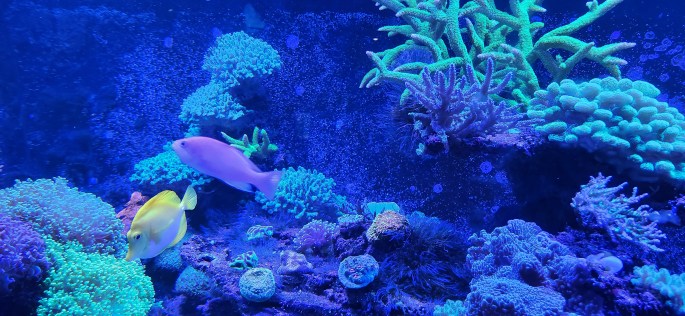
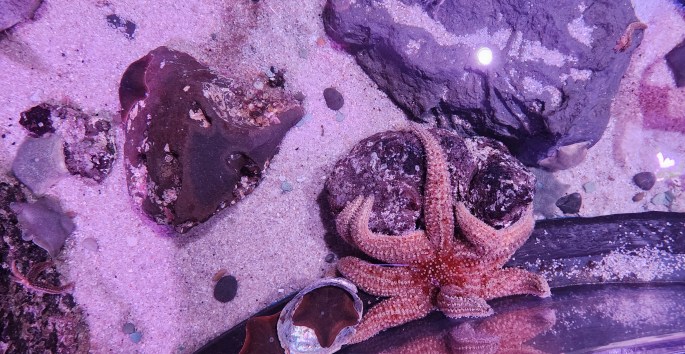
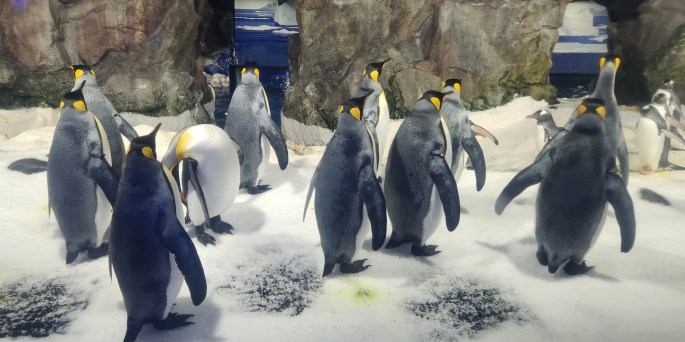
The next attraction was Kelly Tarlton’s Sea Life Aquarium, located on the Auckland waterfront. The main features of Kelly Tarlton’s Antarctic Encounter and Underwater World are the 110-metre long acrylic tunnel offering great views of Sharks and other marine creatures, Penguins strutting on snow and ice etc. One special feature of the aquarium is that it is located fully underground.
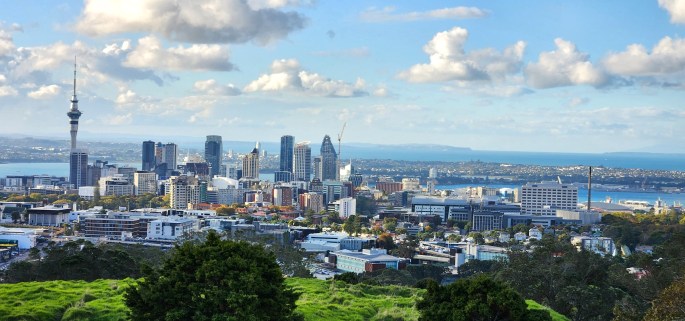
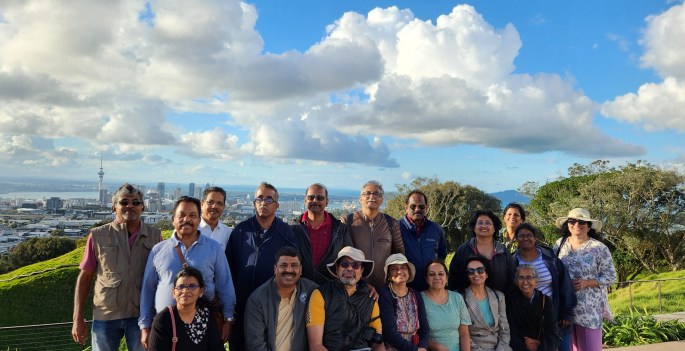
The last destination of the day was Mount Eden / Maungawhau, named after George Eden, the first Earl of Auckland. Maungawhau was a part of the volcanic field, with a bowl like 50 m deep crater.
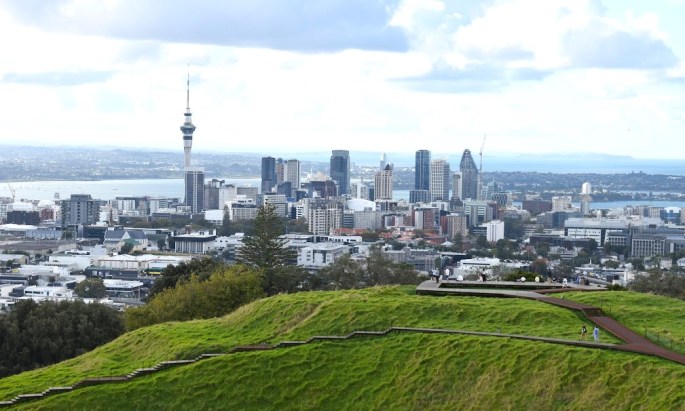
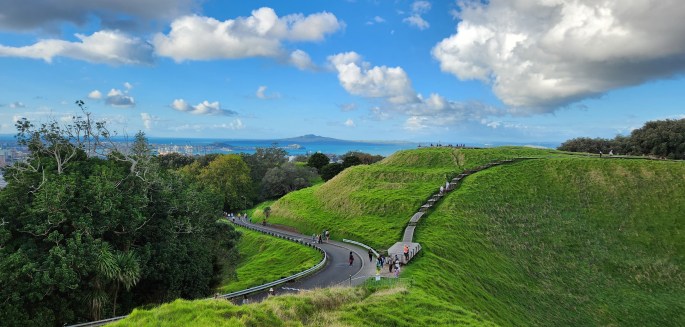
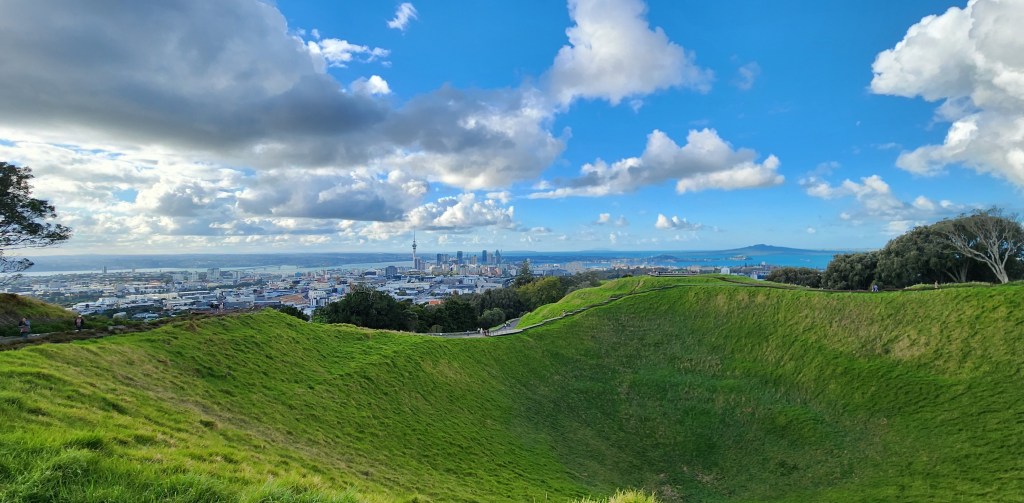
Mount Eden offers a panoramic outlook over the picturesque Eastern Bays, Auckland city and the Waitemata Harbour.
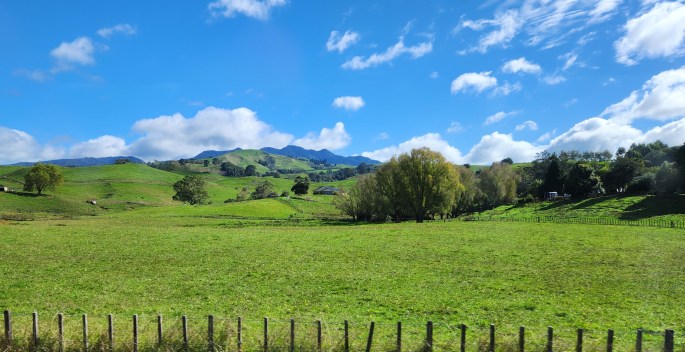
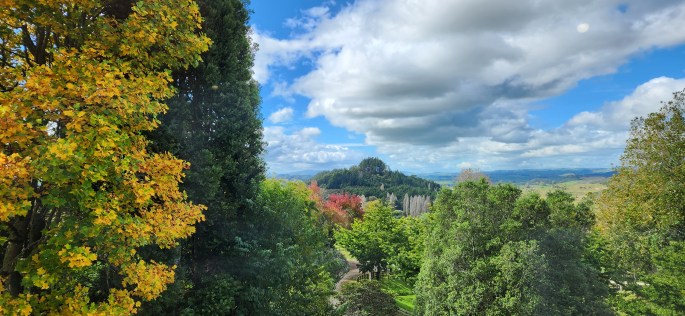
On 18th April we checked out from the hotel after breakfast and started the journey to our next destination, Waitomo. Leaving the city behind, we travelled through lush green countryside for about 3 hours to reach Waitomo and had our Buffet BBQ lunch at Roselands Garden Resort.
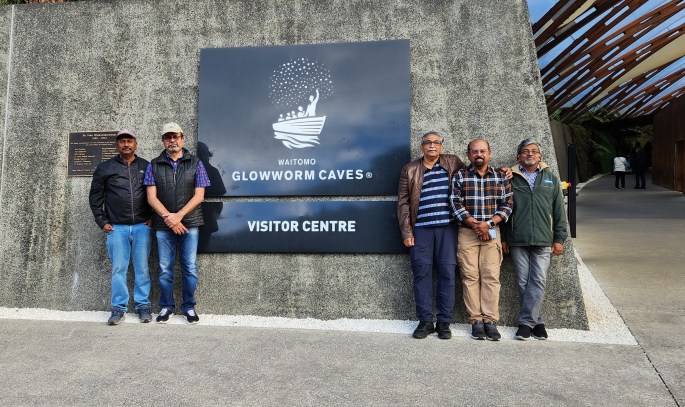
Waitomo Glow worm Caves are one of the best natural attractions of New Zealand, which facilitates a 20 minutes’ walk through delicate cave formations, listening to the history narrated by the experienced tour guide. The stunning experience ends with a boat ride on an underground river, through caves illuminated with millions of glow worms, unique to New Zealand. (Photography is not permitted inside the caves)
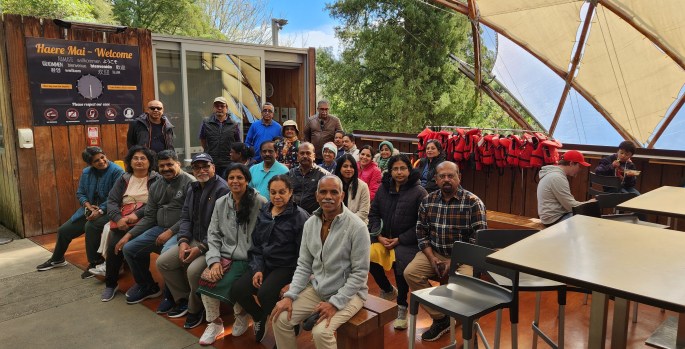
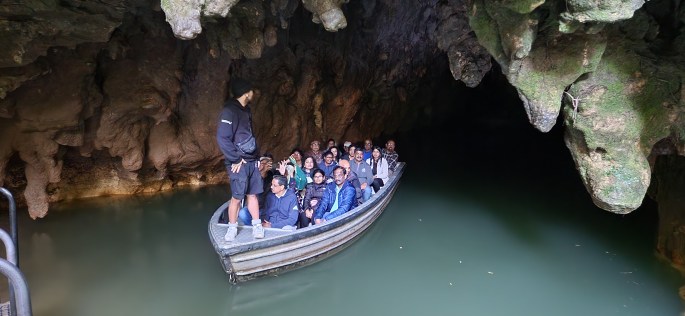
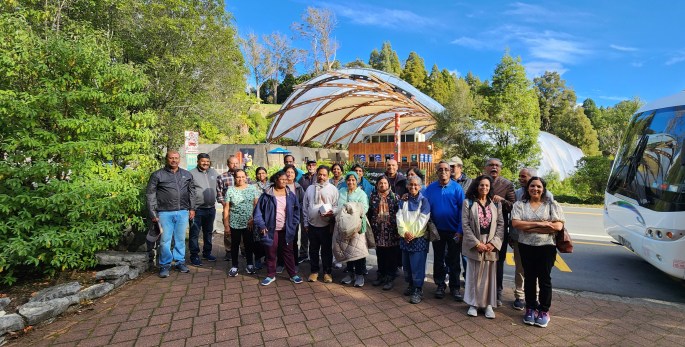
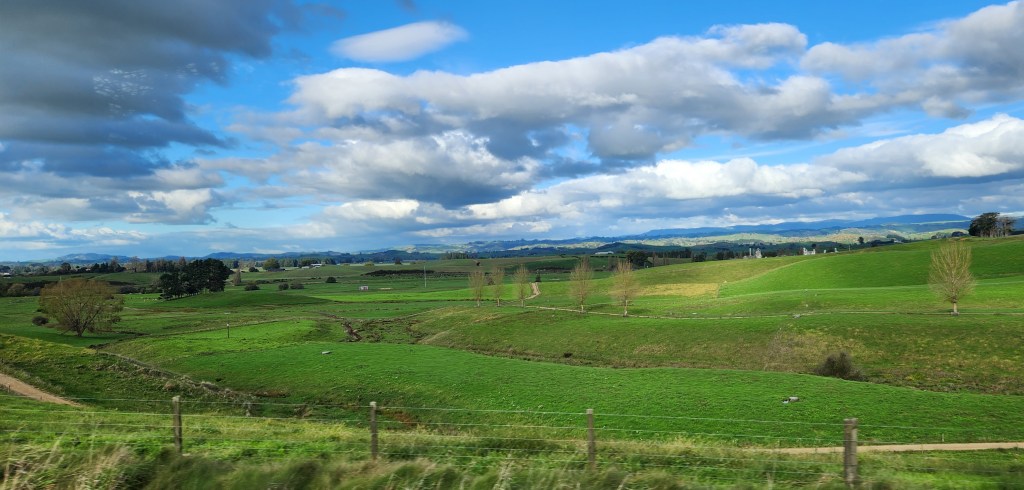
The 3-hour journey from Waitomo to Rotorua was through farmlands and mild forests.
The moment you enter the small town of Rotorua, you will notice this is a destination like no other – full of steaming vents, spouting geysers and bubbling mud pools. Rotorua is the main centre of geothermal activity in New Zealand, and also its Maori culture. Our accommodation was arranged at Sudima Lakeside Hotel, right on the shore of Lake Rotorua.
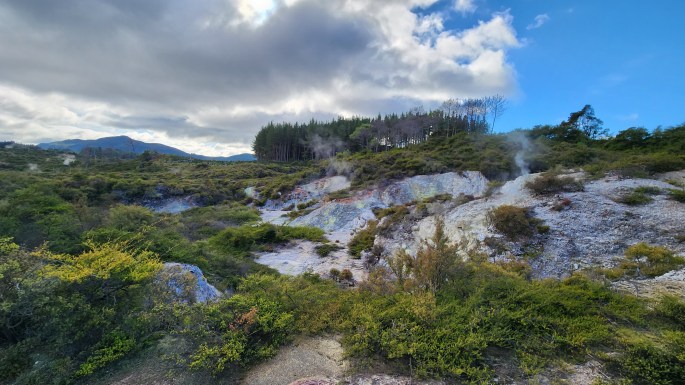
Wai-o-Tapu Geothermal Wonderland is one of the most extensive geothermal systems in New Zealand.
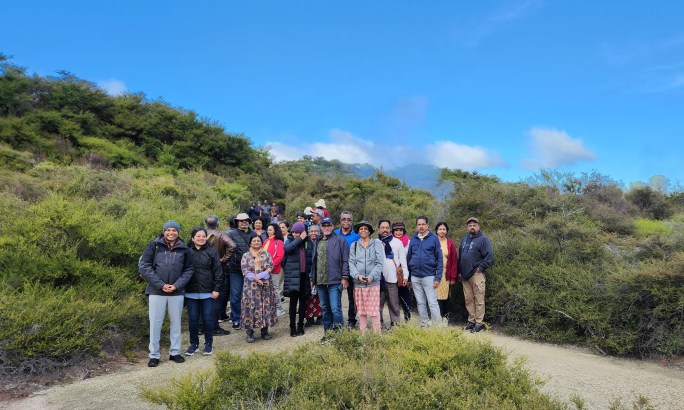
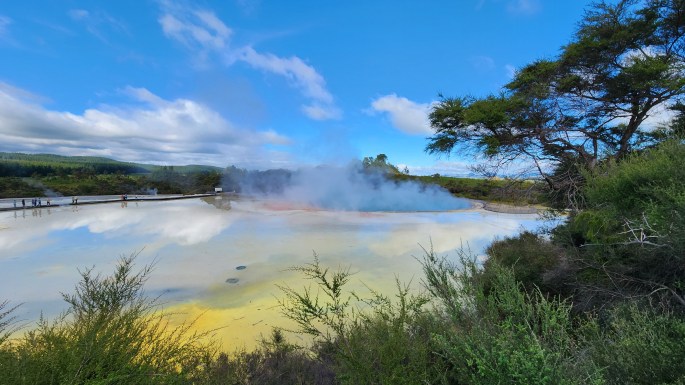
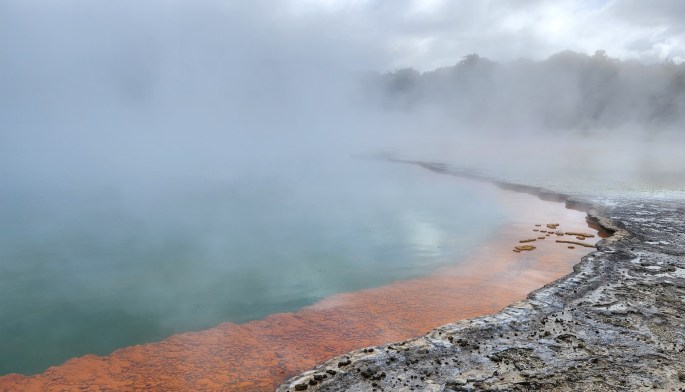
The well-laid out pathways through the sprawling landscape offer a feast for the senses, through innumerable colours and unique geothermal features. The Champagne Pool, which had bubbling hot water spewing from a 62-metre crater is the chief attraction of the place.
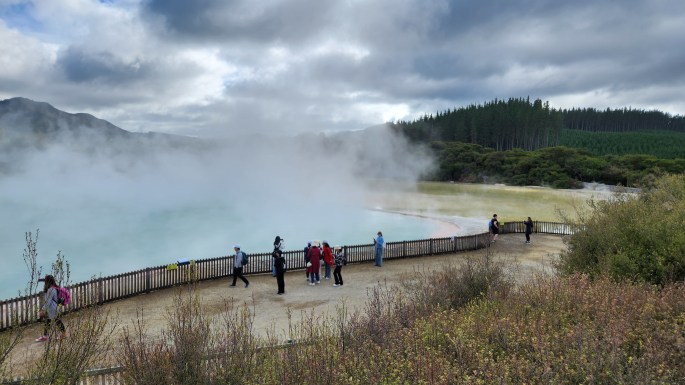
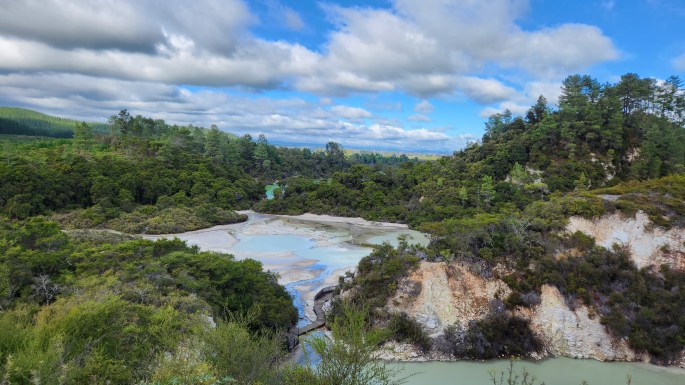
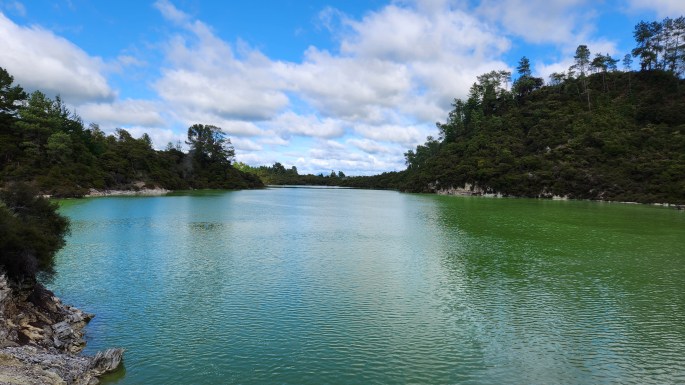
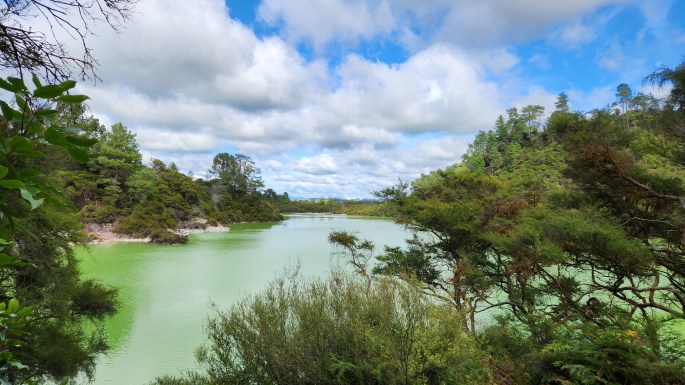
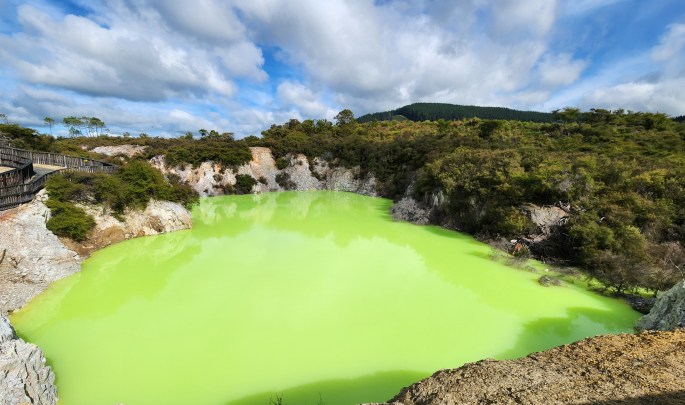
The longest pathway leads to a beautiful lake with a unique green colour.
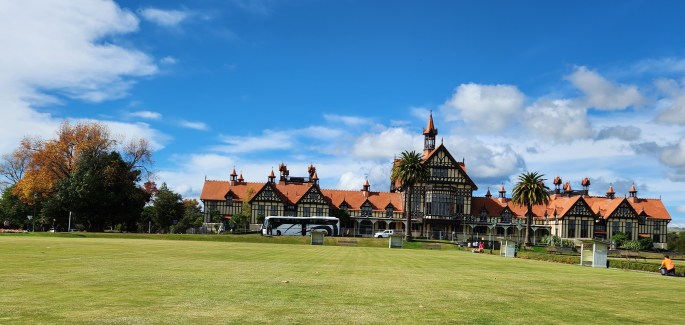
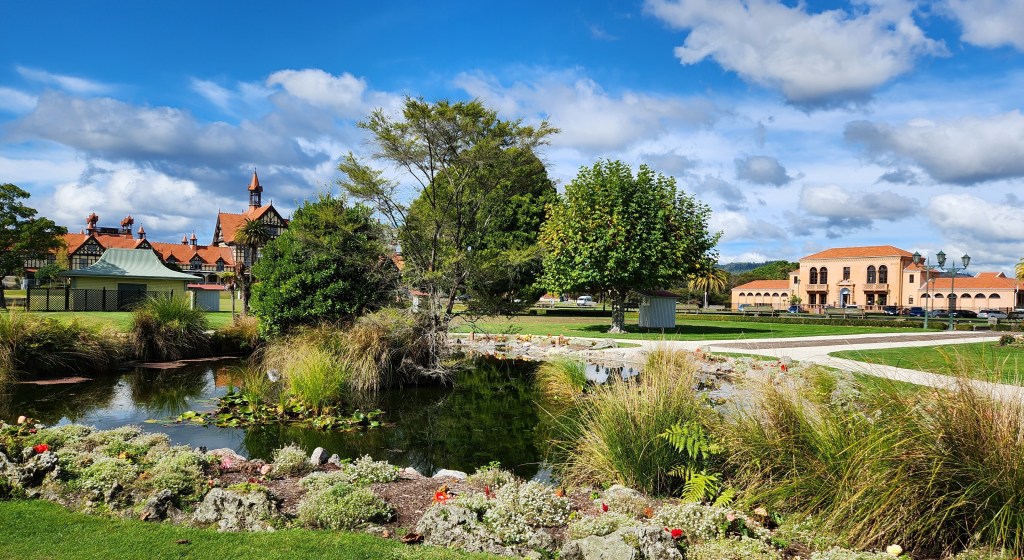
Rotorua Museum (which is currently closed for repair of damage due to earthquake) is an exquisitely beautiful building in Rotorua.
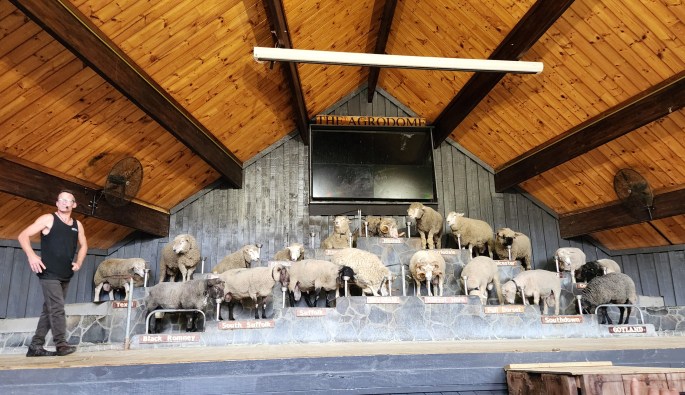
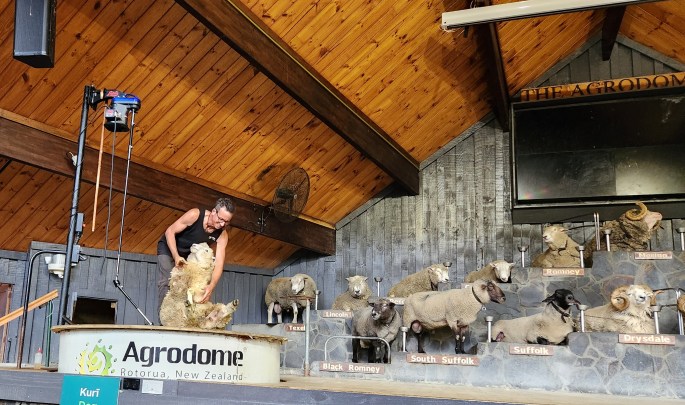
Agrodome is a farm theme park in Rotorua, which showcases a wide variety of sheep, including the pricey Merino sheep, complete with a sheep-shearing exhibition.
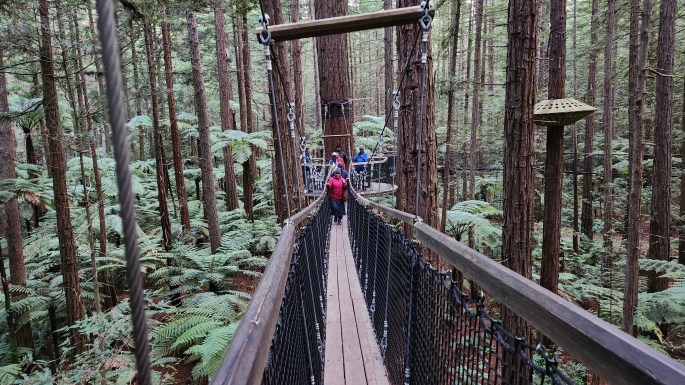
Redwood Tree Walk offers an adventurous walk on a 700-metre walkway, made up of suspension bridges and platforms, high above the ground. The lights among the trees come on at 6 pm, providing a beautiful spectacle.
After an exciting day of sightseeing, we returned to our hotel by 7 PM.
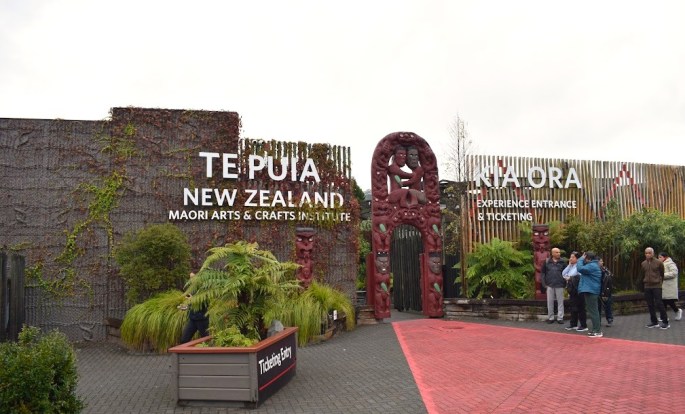
The next day morning, we visited Te Puia in the Whakarawera area of Rotorua. Te Puia is capable of providing a good insight into the Maori culture. It houses the NZ Maori Arts and Crafts Institute, where hand-picked students are trained in Wood carving, Stones/Jade carving and Weaving.
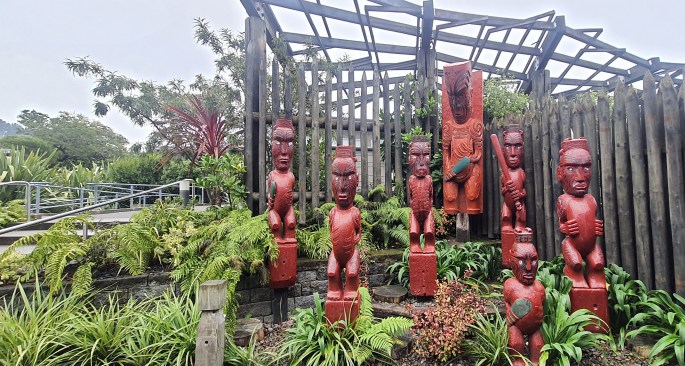
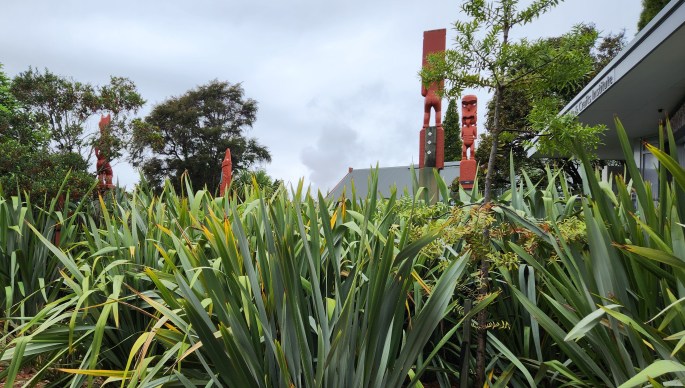
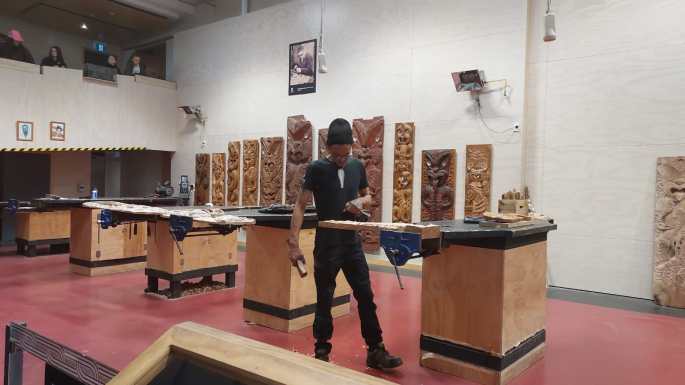
It has the added attractions of a Kiwi Conservation Centre, Mud pools and the famous Pohatu Geyser, which erupts to 30 meters, several times in the day.
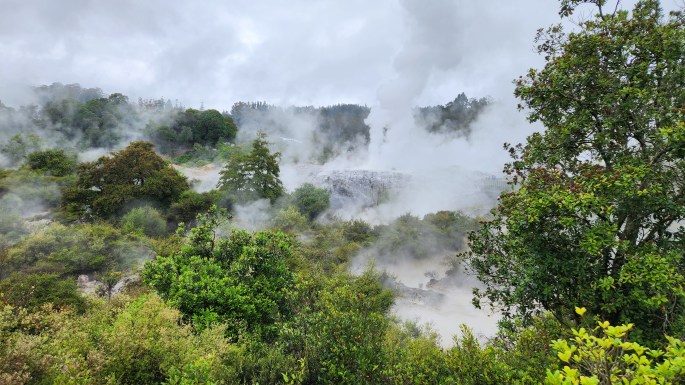
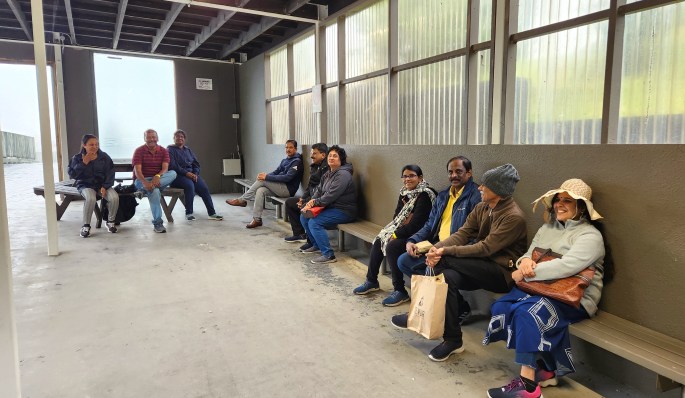
The highlight of the place is a 30-minute Cultural Program, which showcases the traditional welcome, Hakka war dance, and other song & dance routines.
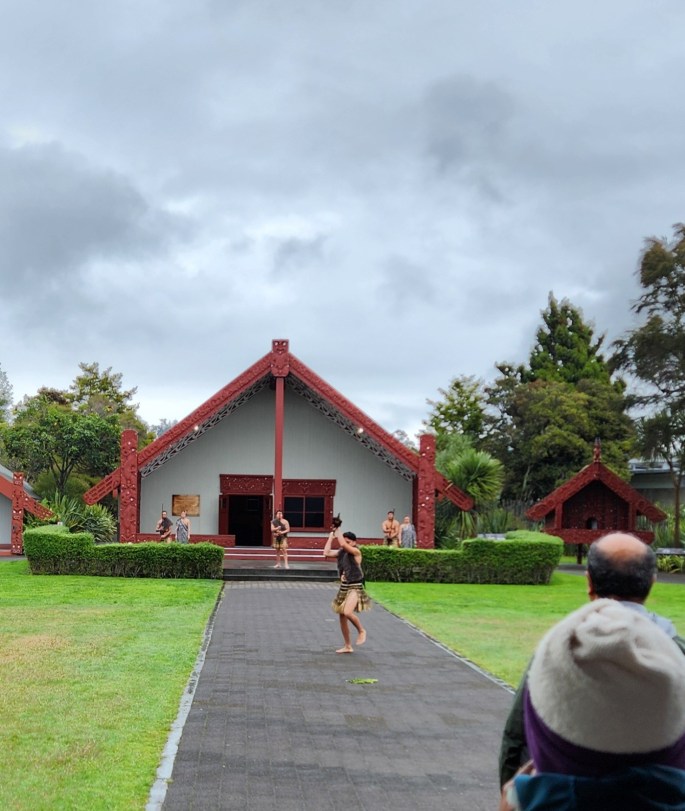
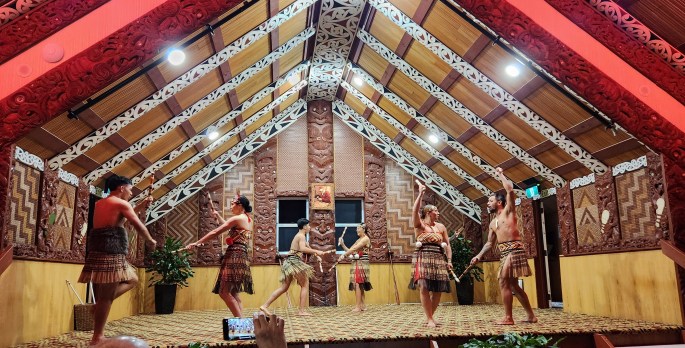
A traditional Hangi buffet lunch/dinner (with dishes prepared in Maori style, using geothermal heat) can also be enjoyed at Te Puia.
After a scenic 20 minutes drive from Rotorua town, we reached Buried Village of Te Wairoa, which showcases the stories of the 1886 Tarawera volcanic eruption that buried the entire villages of Moura and Te Ariki. There were no survivors from amongst those people residing at these villages.

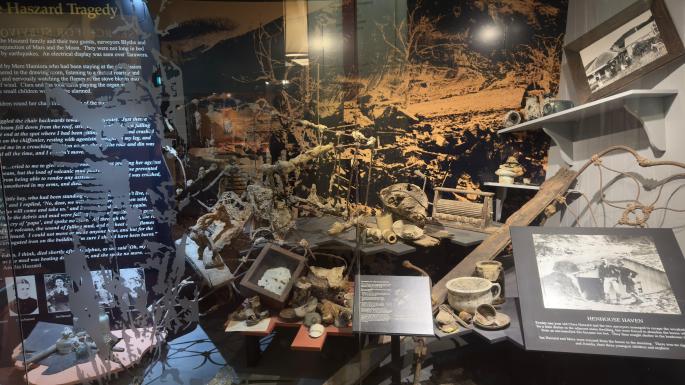
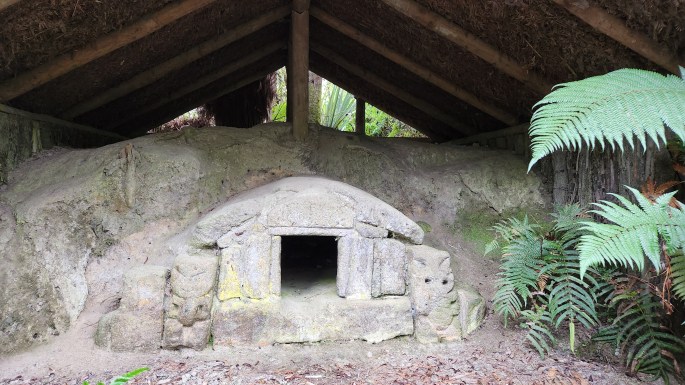
We returned to our hotel in the evening and spent some time shopping in the little town before leaving North Island. Our flight from Auckland to Queenstown was scheduled for the next day.
To be continued…… Part 2
 Nostalgia EE 84