
By JAYAPRAKASH P
In January, 2015, our team of CET friends started discussions about the next major trip after the wonderful Ladakh Drive (done in 2013). All of us wanted to experience the Himalayan Mountains again. After a few rounds of discussions, the destination was finalized – Arunachal Pradesh.
Arunachal Pradesh, the land of dawn-lit-mountains, is the largest of the North Eastern states of India and it shares international borders with Bhutan, China and Myanmar. Route planning for the Arunachal Drive was a challenge. Roads were mostly bad, almost all single lane and entirely mountain territory from the time you enter the state to the time you exit. After some research, we decided to cover the following places and prepared a 12 day plan accordingly.
- Mechuka (The remote mountain village in West Siang District, close to the Tibetan border)
- Along (Aalo) & Pasighat (Two major towns in Arunachal)
- Kibithoo (The Eastern most point of India, reachable by road)
- Namdapha National Park (A biodiversity hotspot in the Eastern Himalayas)
- Pangsau Pass (On the India – Myanmar border)
Our plan was to book suitable flights to Dibrugarh, pick up vehicles from there, complete our itinerary in Arunachal, return to Dibrugarh and fly back. Dates were finalized, flights, vehicles and accommodations were booked, permits were taken and we were ready to go. The plan was to start from Bangalore on 3rd April and return on the 14th.
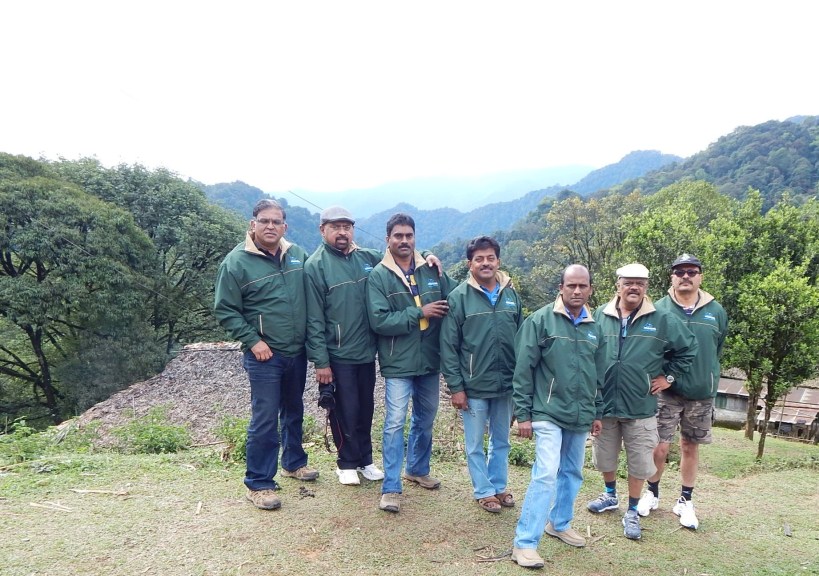
Two of the team members were from Kerala and all the other five from Bangalore. The two members from Kerala reached Bangalore on 2nd April, so that the full team could board the Jet Airways flight from Bangalore to Dibrugarh through Calcutta on 3rd April.
Day 1 : April 3, 2015 : Bangalore – Likabali
In the evening of 2nd April, we received a message from Jet Airways that our flight from Bangalore to Calcutta has been cancelled due to some technical issues of the aircraft. Upon enquiry, the airlines informed that the decision for alternate arrangements or refunds can be confirmed only by the next day morning. After the initial confusion, we immediately decided to use the contacts of two of our friends, one working with Air India (a fellow traveller) and the other an Airport Director. The immediate intervention of these two friends avoided a big set back to the trip and we could reach Dibrugarh on 3rd April itself, through alternate flights. Four members could board the Air India flight from Bangalore to Calcutta and get the same connection flight to Dibrugarh which we had already booked. For the remaining three members, Jet Airways arranged seats for Bangalore – Delhi and Delhi – Dibrugarh sectors so that they could reach the destination, with a delay of just about 90 minutes. We were extremely lucky, the timely help of our friends and the availability of alternate flights saved our trip.
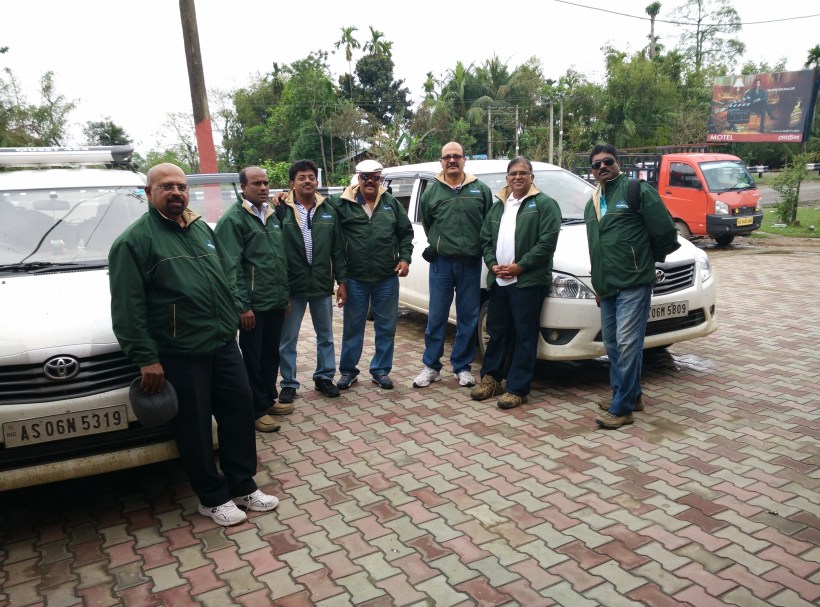
We started from Dibrugarh at about 3.45 PM in two Toyota Innova cars, almost 2 hours behind schedule. We managed to reach the ferry to cross the river Brahmaputra by about 5 PM.
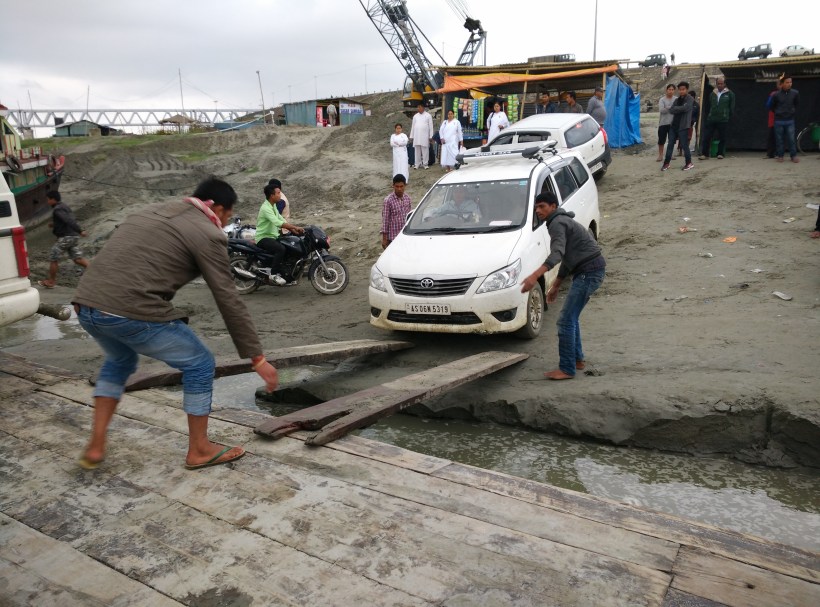
Taking the cars on board the ferry was tricky, with the use of narrow wooden planks, but the expert boat staff, could manage it with the limited resources. It was a great relief – we were on board the ferry with the cars and the trip was ON.
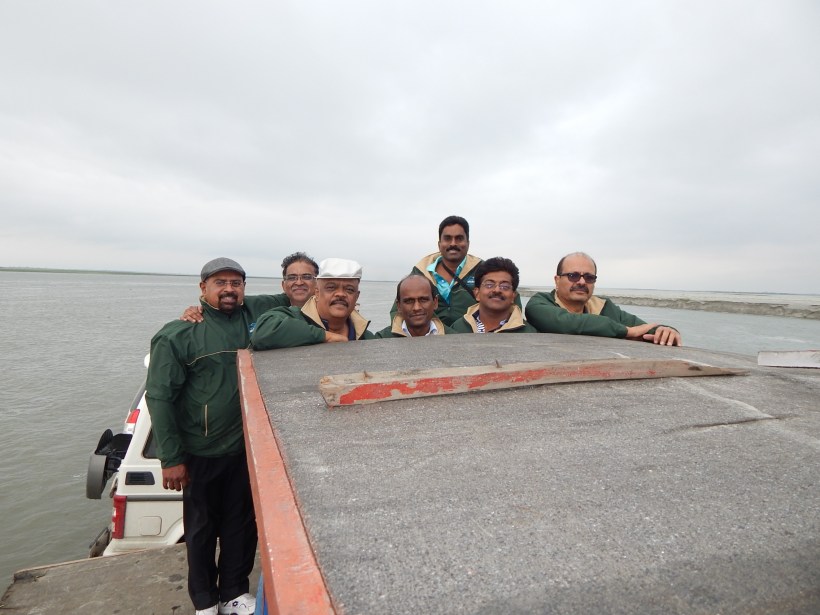
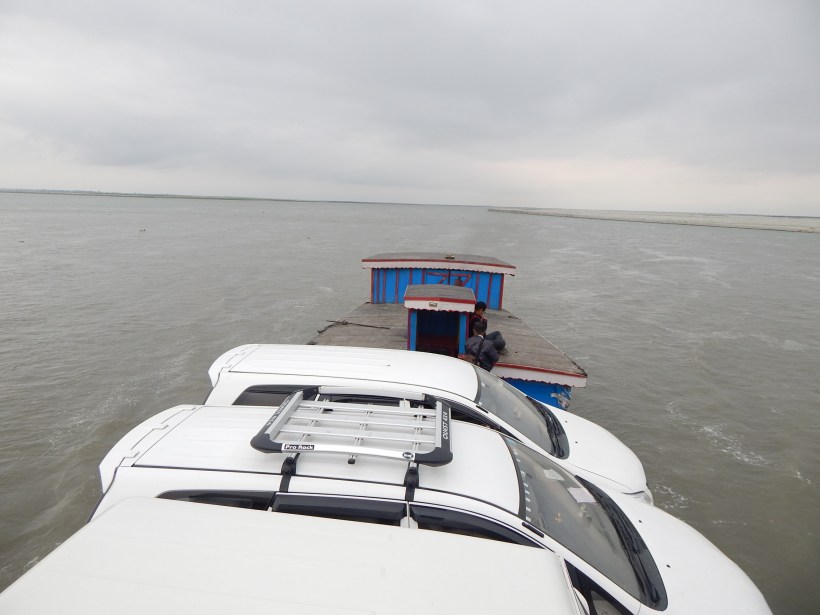
The mighty Brahmaputra looked like a lake and the boat calmly cruised along, providing us wonderful views all around. We could also see the somewhat abandoned pillars erected across the river, for the multi-crore bridge project, which was going on at a very slow pace.
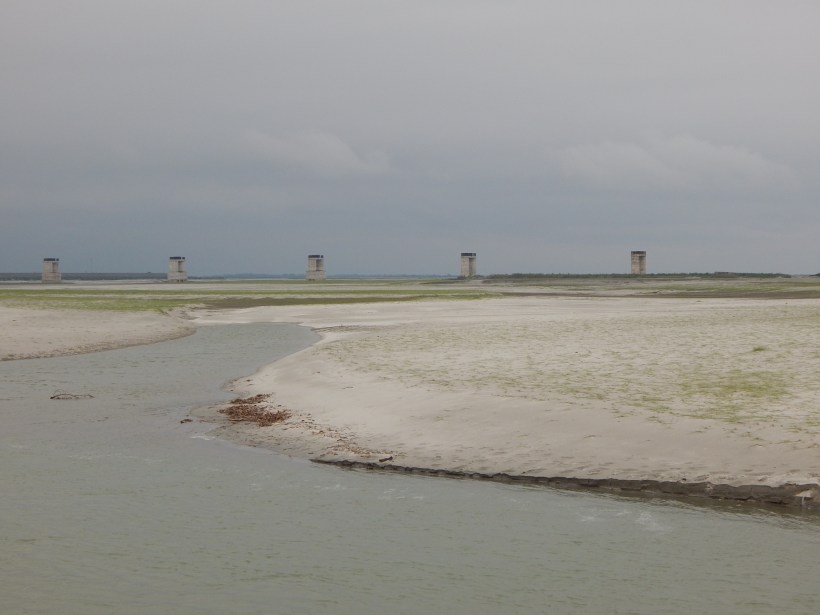
The ferry took about 45 minutes to reach the other side and it took another half an hour to bring the cars to the road.
Our accommodation for the day had been booked at the Government Guest House at Likabali, and we reached there by about 7.30 PM. Soon after the dinner, we set the morning alarms on our phones and retired early, since we had a long journey planned for the next day.
Day 2 : April 4, 2015 : Likabali – Basar – Along (Aalo) – Mechuka (335 kM)
Likabali in Assam is at the foothills of the mountain ranges of Arunachal. We managed to start our journey from Likabali before 5 AM. At the border check post, our Permits were verified and we entered Arunachal Pradesh, at dawn.
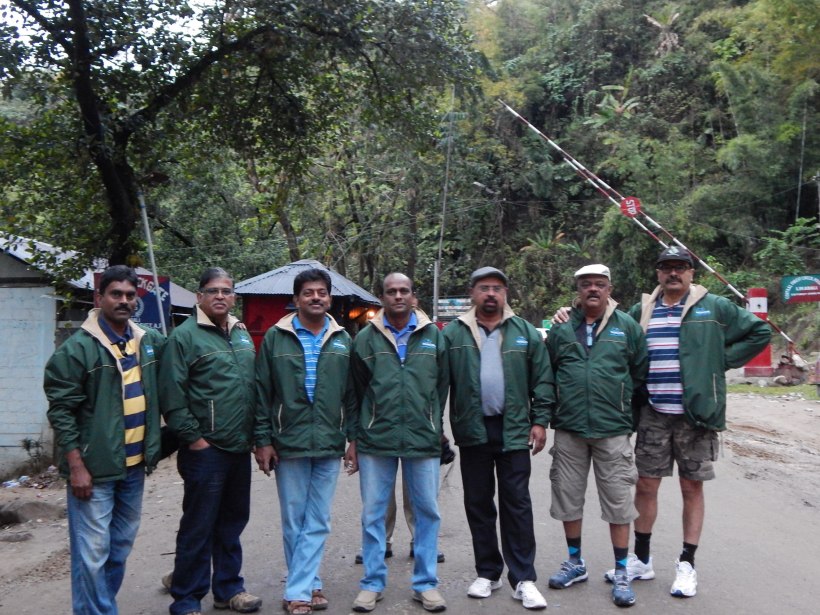
From here on, we travelled through mountain paths all along, all single lanes, with numerous hairpin bends and almost no shoulder for the road in most places. But to compensate for the bad roads, the region was extremely scenic, with mountains, green forests and beautiful streams.
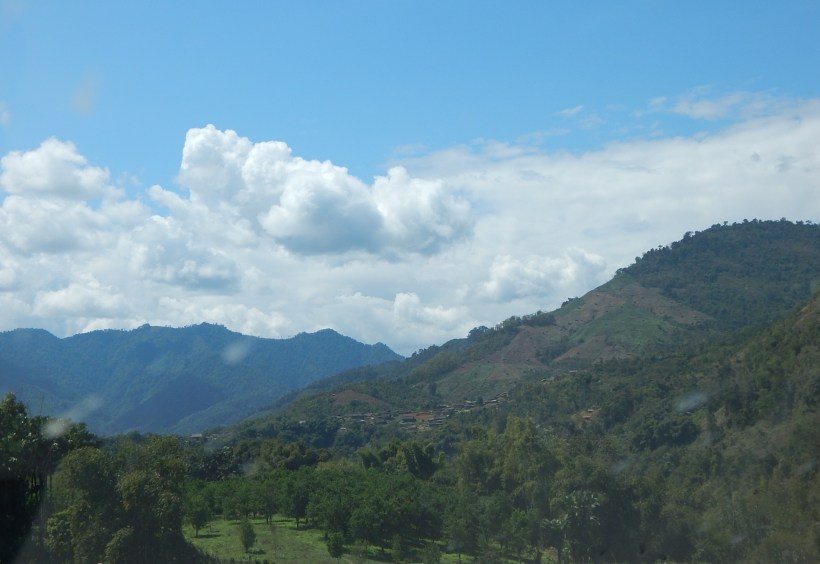

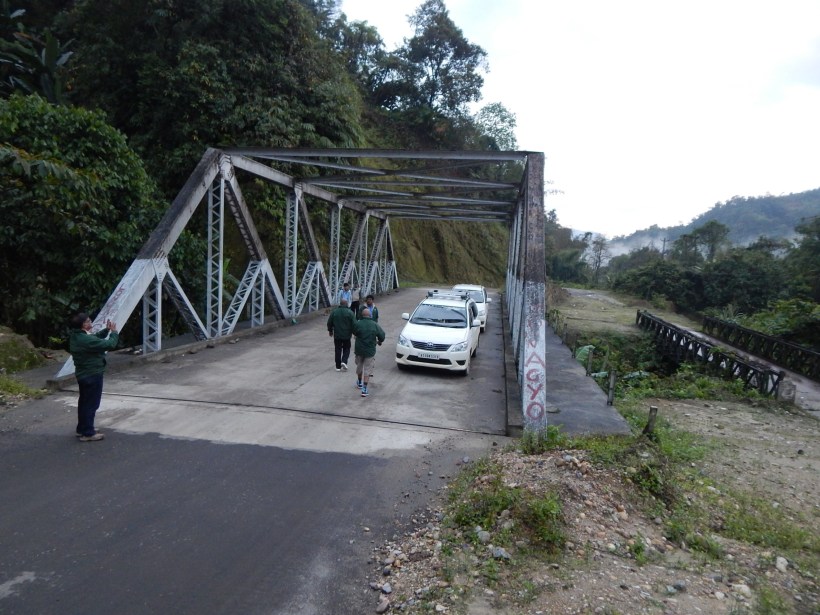
We stopped at a small town, called Basar, for tea and breakfast. Even though the facilities were basic, they served us fresh, tasty local food. We continued our journey towards Along (Aalo) and passed through some small villages and settlements occasionally.
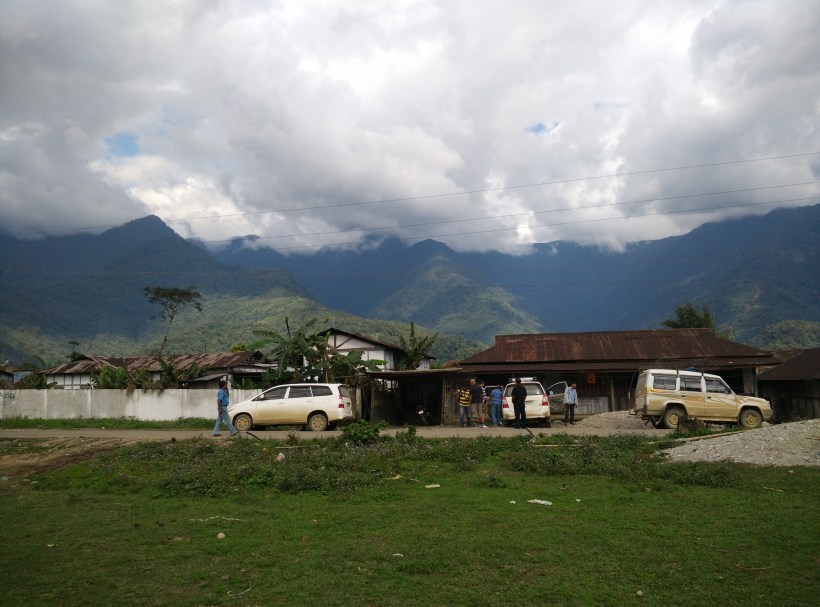
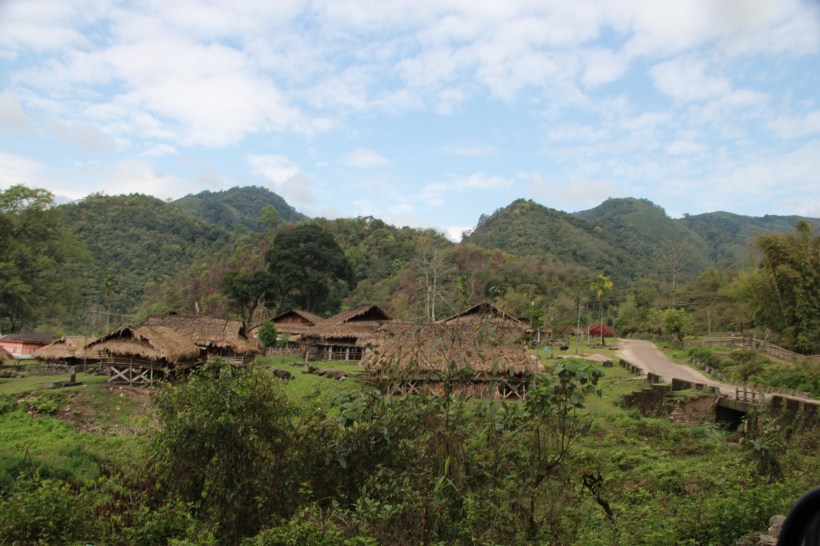
Most of the villages we crossed seemed very clean compared to the villages we have seen in the other states. The villagers were seen well dressed and generally seemed to be very content and happy.

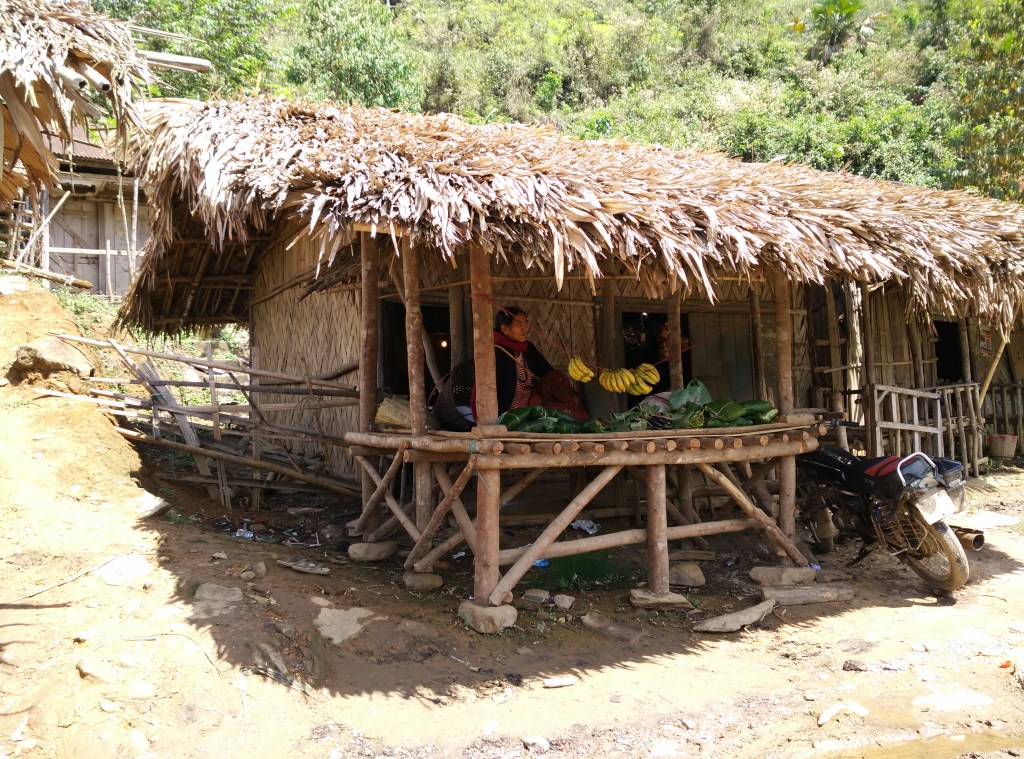
A large number of the small houses and shops in Arunachal are on stilts; constructed with local, natural elements. In remote village markets, everything is wrapped in leaf, totally eco-friendly.
We did not enter Aalo town, but continued straight to Mechuka, because we would be staying in this town during our return journey.
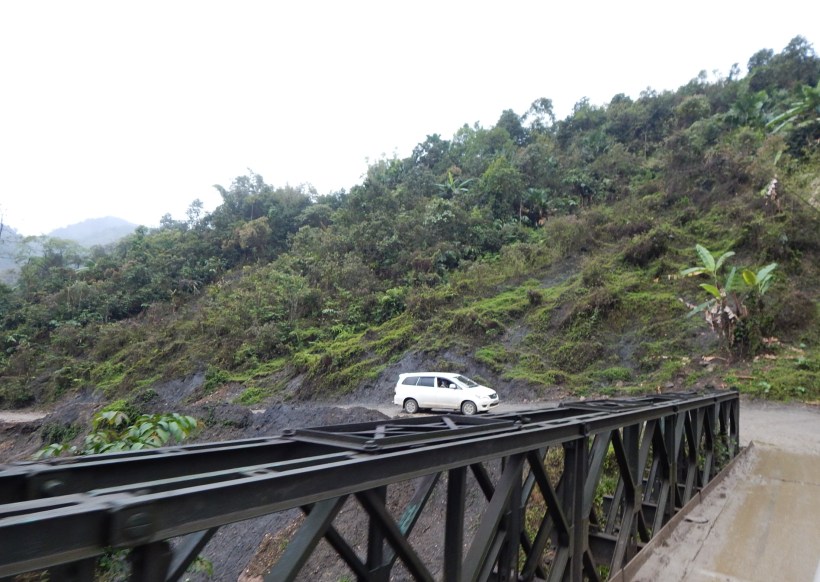
The road from Aalo started to climb and after the village Kaying, there came so many twists and turns. The scenery changed gradually and the terrain got densely forested. The noisy streams came gushing down the sides to cross the road under metallic bridges.
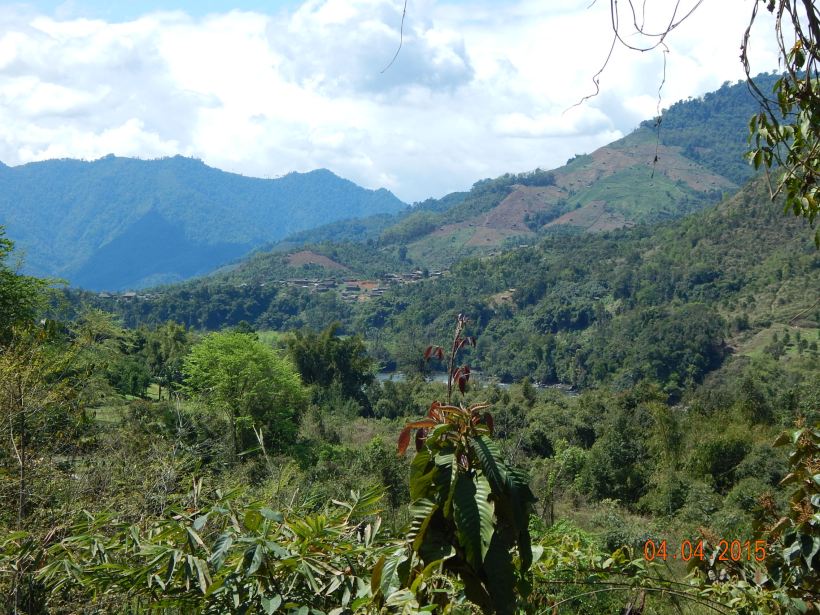
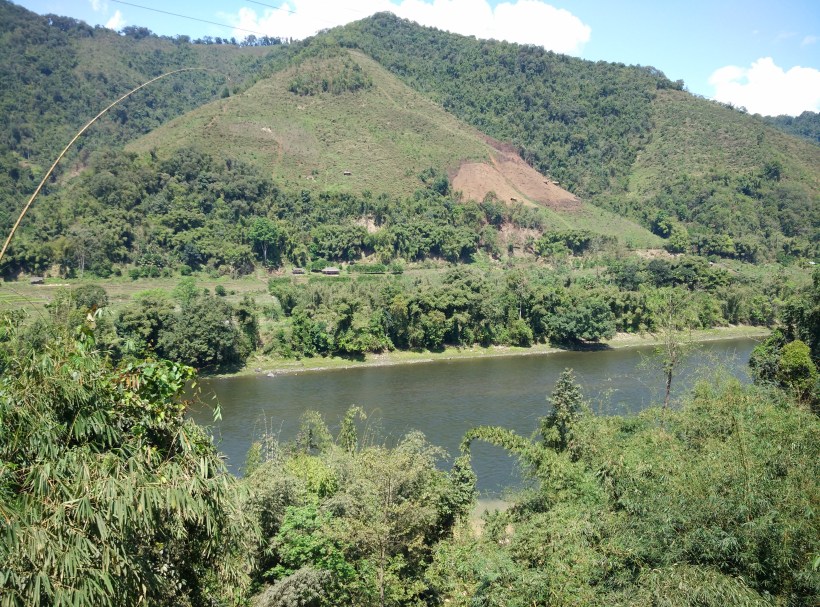
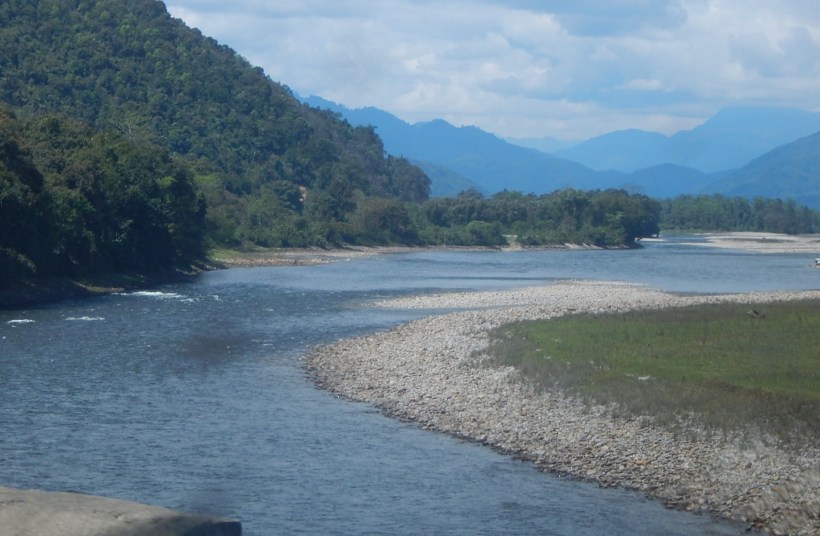
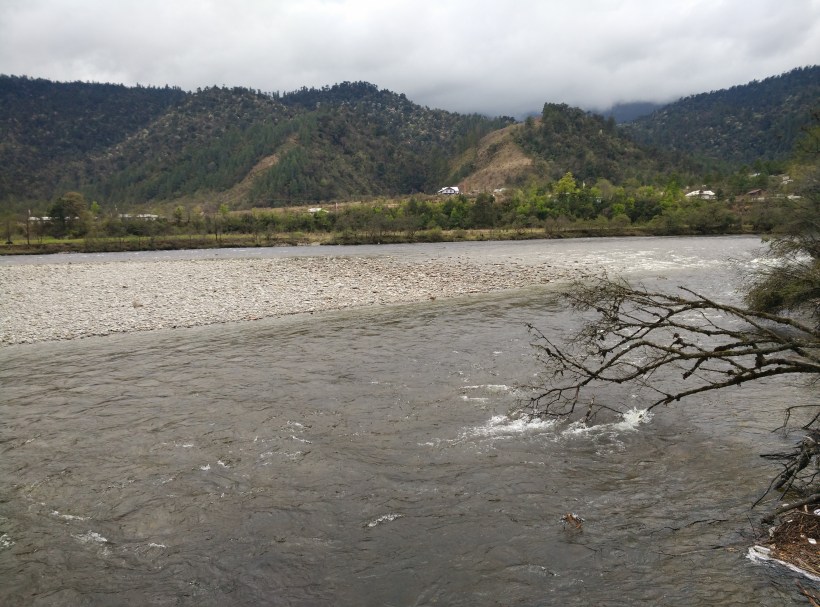
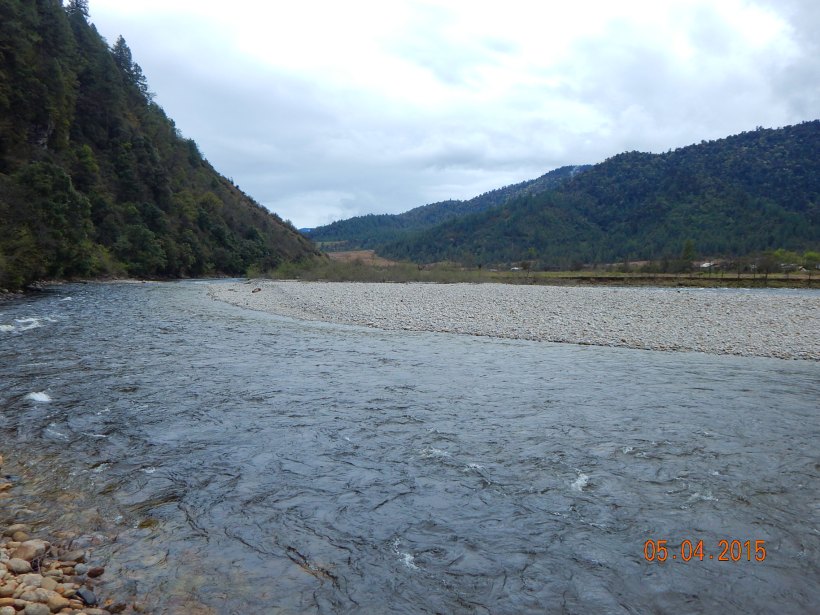
The Siyom River on the right side of the road with its blue coloured water, white sand and pebbles on the banks, together with the backdrop of huge green mountains, looked very beautiful.
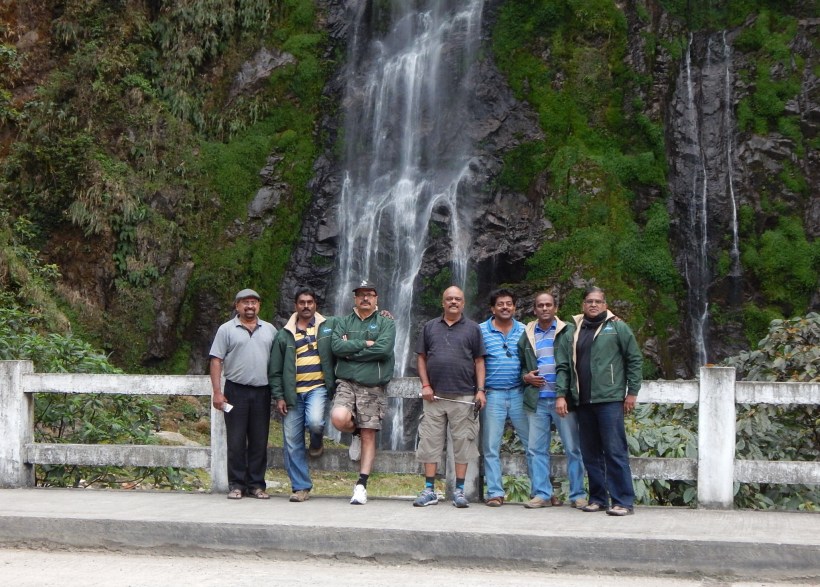
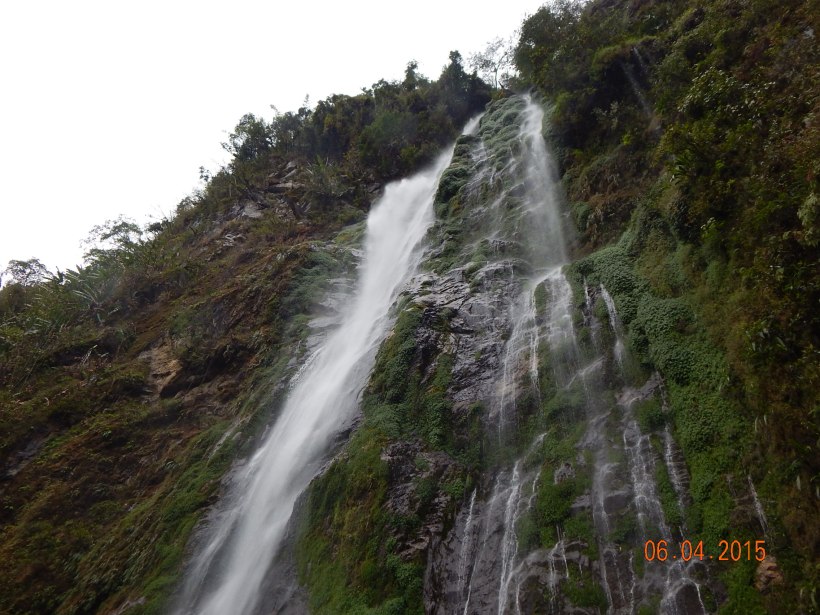
We came across a beautiful, immensely tall waterfall just by the side of the road – the Siko Dido, which prompted us to stop for taking pictures.
Until this time, we had not calculated the average time of travel, we were just happily moving along. The average distance we covered was only 20-25 kilometers per hour. Considering the bad roads ahead, we suddenly noticed that we would be reaching Mechuka much later than expected. So, we didn’t stop for any more photo shoots.
We had tea from a village called Tato by about 5 PM. By 5.30 PM, it was almost dark and after that, the road was empty – we didn’t see any vehicles or even human beings. Only a few Mithuns were seen occasionally on the road.
We finally reached Mechuka by about 8 PM, in pitch darkness, and we did not get much of an idea of the place. We had taken about 15 hours to cover the distance of 330 km from Likabali to Mechuka, which gives a fair idea about the terrain and road condition. We couldn’t locate the Circuit House where we had booked our accommodation and there was no one in the vicinity to ask. We got out of the cars to discuss what to do and found that it was pretty cold out there. Since there was no network coverage, our phones were useless too.
We decided to move around and search for some hotels or home stays to stay for the night. After about 20 minutes of frantic search, we suddenly saw a couple sitting in front of their house. We asked them for help and told them about our situation. They informed us that due to the breakdown of Diesel Generators feeding power supply to the village, every shops, hotels and Guest Houses have closed by 6 PM. However, they agreed to help us to locate some kind of accommodation for the night. After mutually discussing for a few minutes, they came with us in our vehicle. With their guidance, we first went to the Circuit House and found that it was locked and nobody was available there. The couple then guided us to a home stay known to them which could accommodate our group of seven people. It was also closed and there was also no sign of anyone there. They knocked at the doors and called the owner – Mr. Norbu Naksang – by name, requesting for help. Soon he opened the doors holding a lantern, and agreed to accommodate us at their `Potala Home Stay’, understanding our desperate situation. Mr. Norbu asked whether we had any food and on hearing our reply, agreed to make something to eat within an hour. For this, he had to go out and collect provisions by getting a shop opened in the middle of the night. Meanwhile, we thanked and happily dropped the couple back to their house. This was the second time the Goddess of Luck favoring us during the trip. We were quite impressed with the warmth of hospitality and the helpful attitude of the villagers towards strangers like us. By the time we unpacked our luggage and freshened up after the tiring journey, our hosts had kept the dinner ready at the dining table.
Day 3 : April 5, 2015 : Mechuka
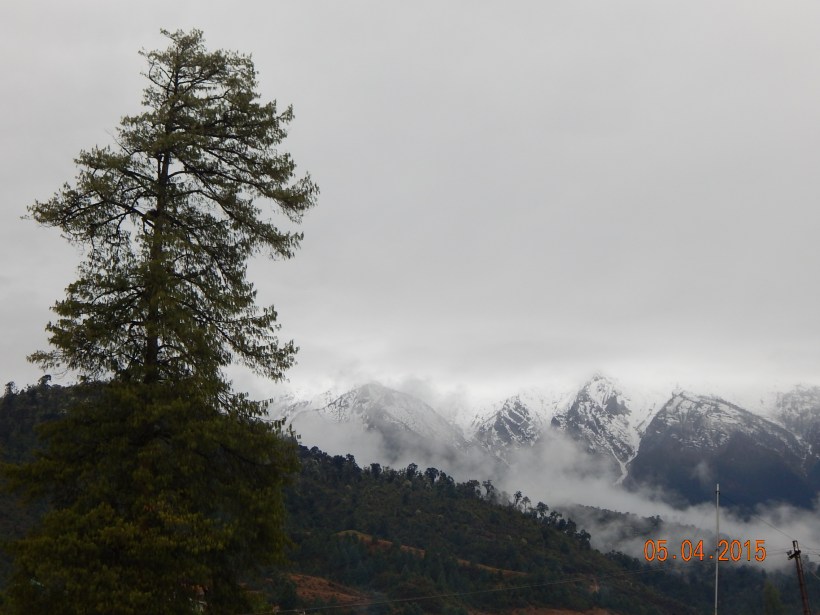
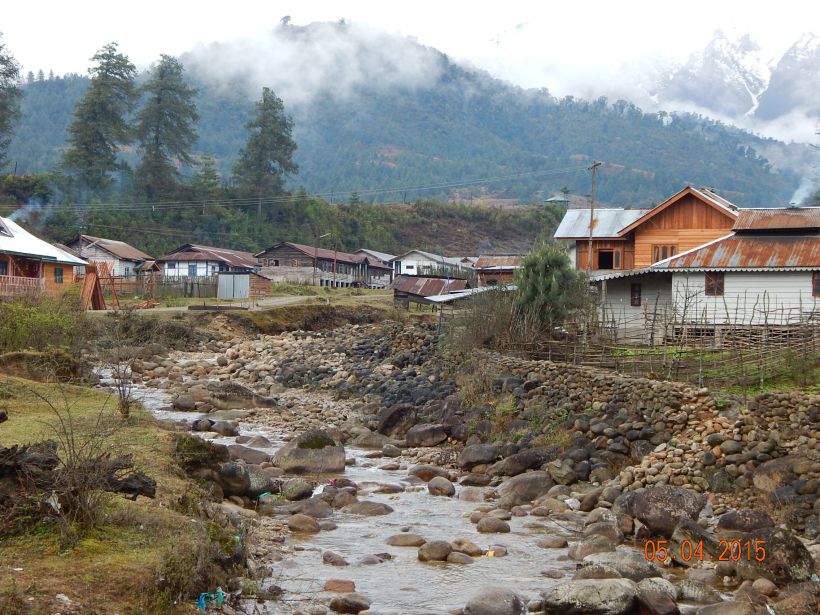
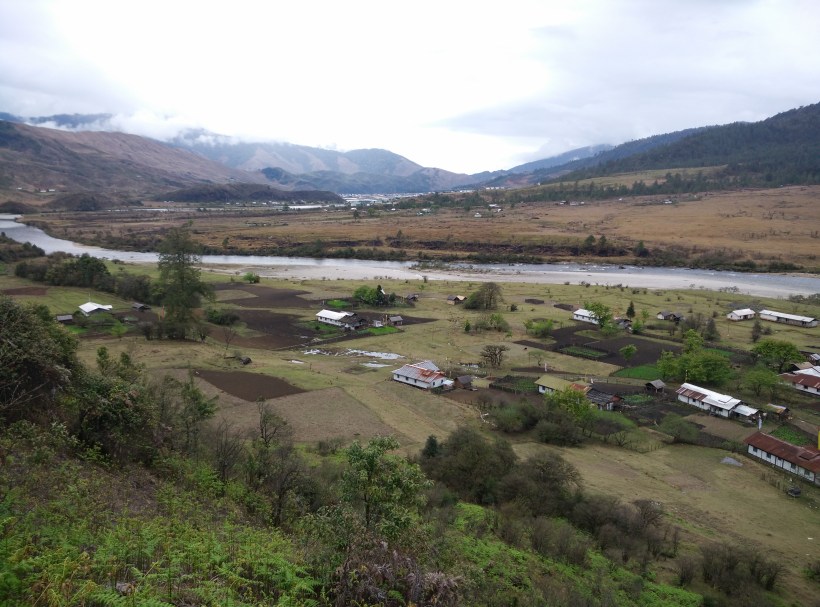
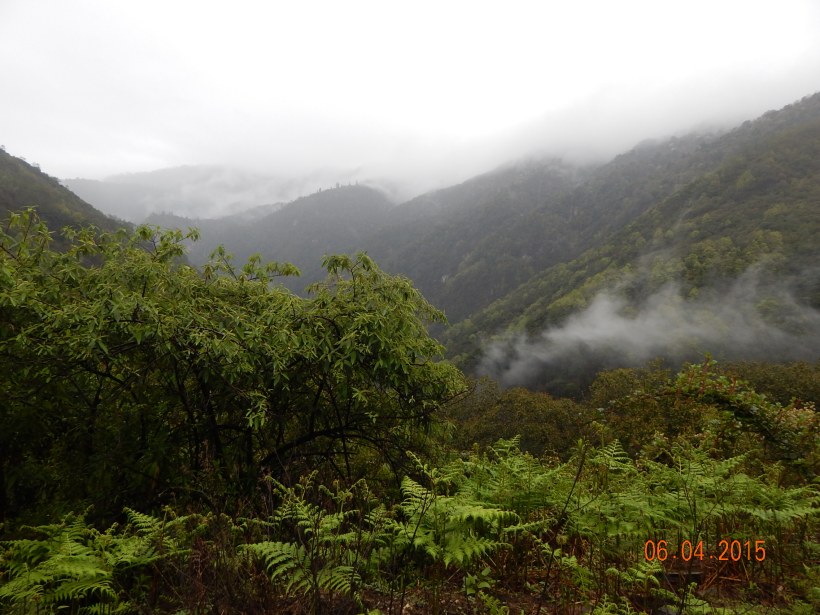
We woke up to a pleasant and cool morning at the beautiful village of Mechuka, surrounded by hills; some far away mountains were snow-capped. Dense patches of mist hung about the folds of the mountains.
After a cup of tea, we walked around the village lazily. The power cut didn’t affect the village and the villagers seem to indulge in their normal day to day activities. We were told that some parts of the Generator had been taken to a faraway town for repairs. Considering the limited infrastructure facilities and logistics, the village was going to be without electricity for a long time. But who cares, other than the busy and demanding tourists..
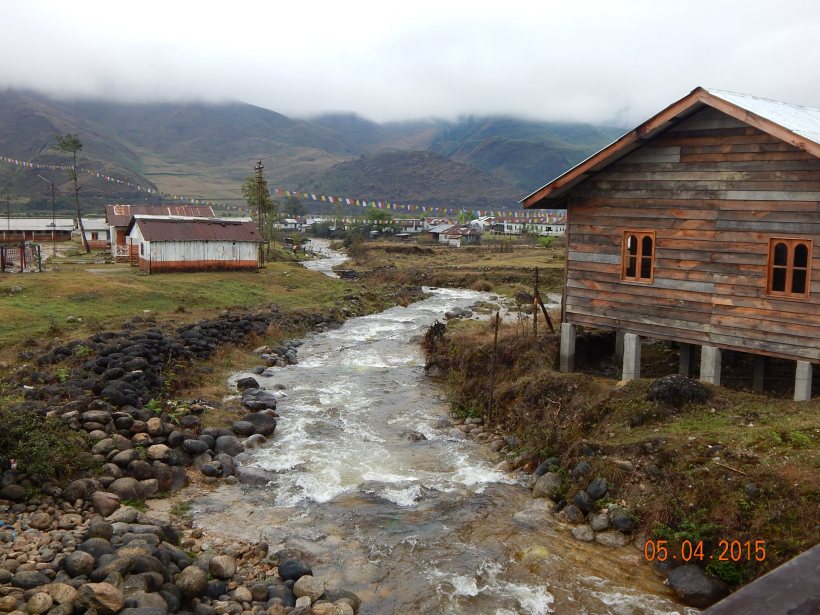
There was a stream with clear water passing through the village. Small buildings, some of them made of wood, spread across the valley between mountains, gave a special charm to the village.
Some random pictures from the Village…
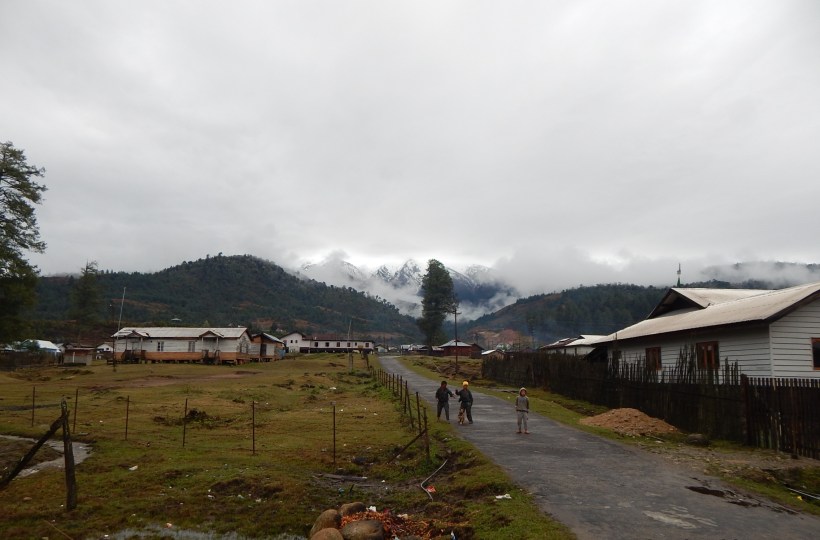
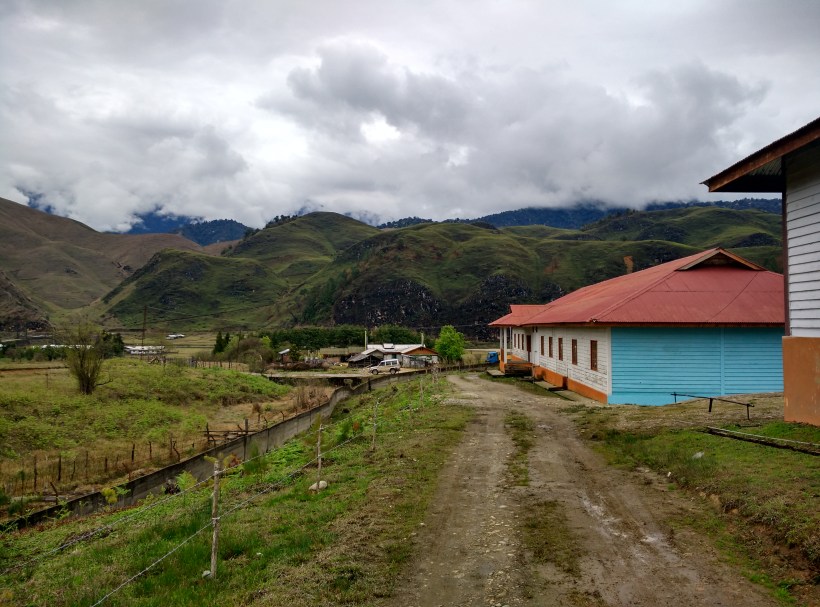
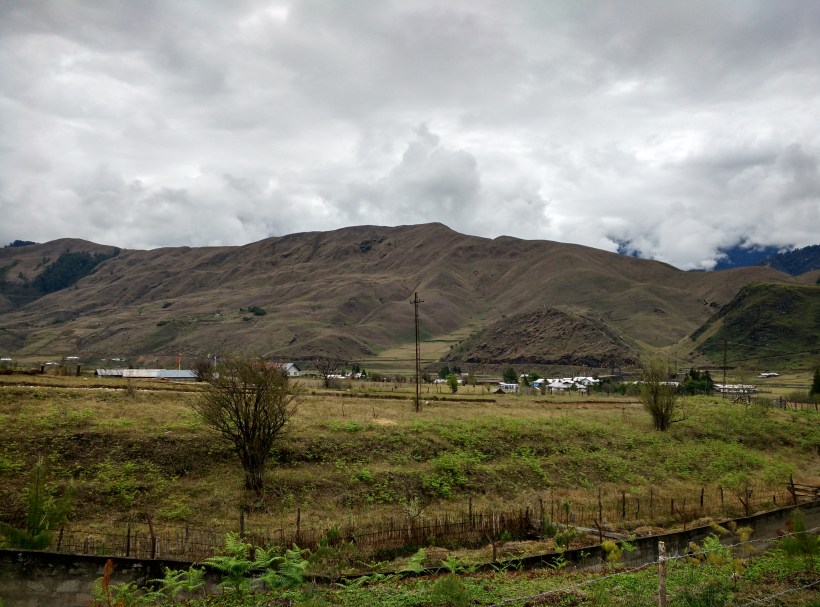

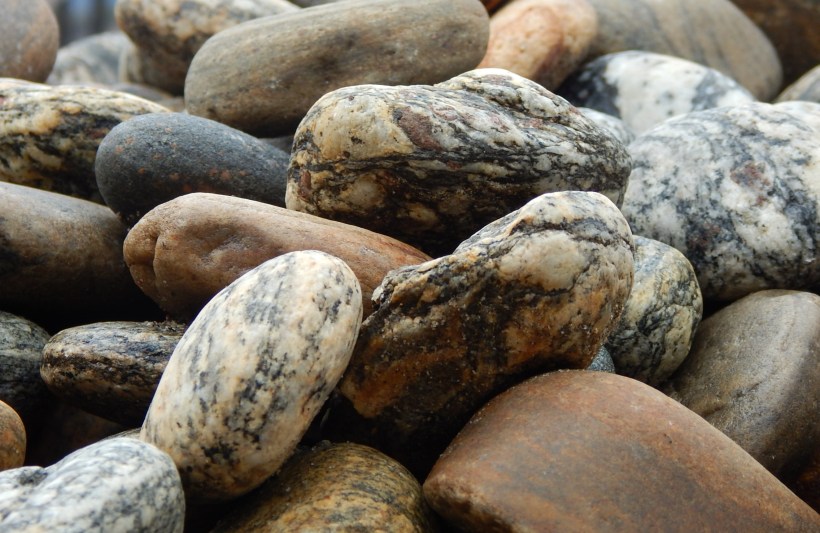
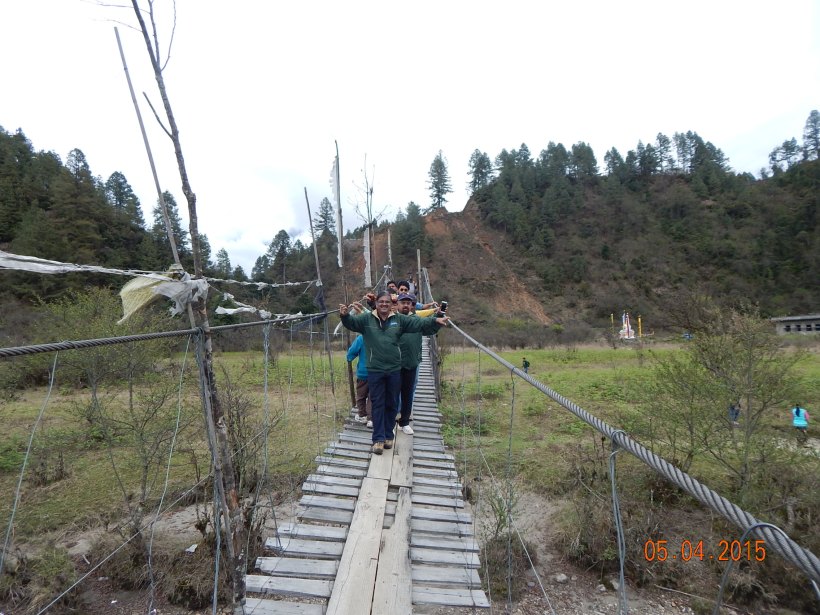
After breakfast, we set out to visit Samten Yongcha Gompa, a few kilometers away from the village. This Gompa, situated on a hill top, is supposed to be more than 400 years old. After parking the cars at the foothill, we crossed the river through a hanging bridge and trekked for about an hour to reach the top of the hill, approximately 500 feet above.
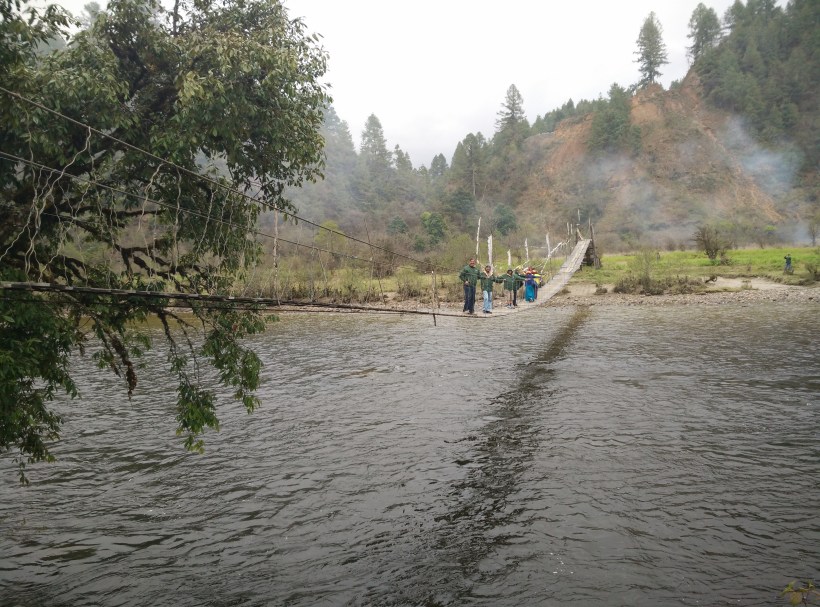
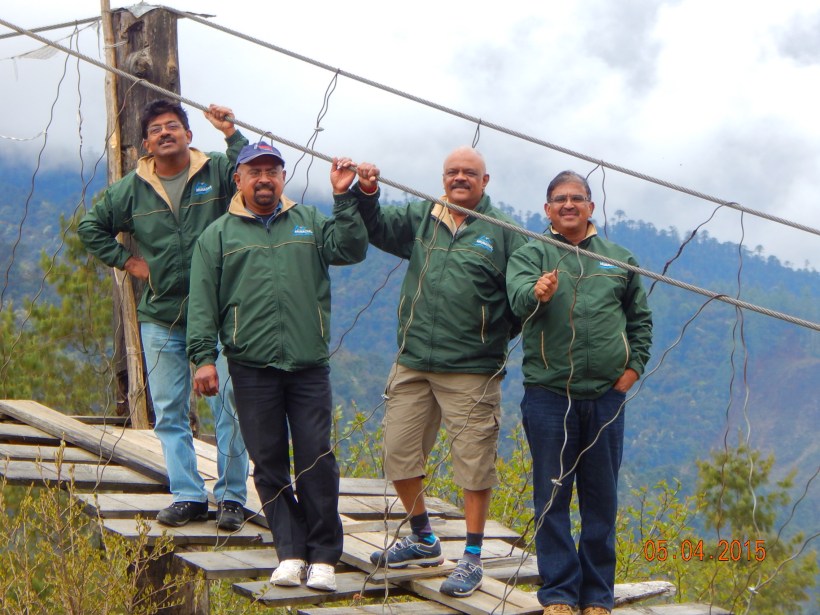
The trekking path provided us with beautiful views and we kept on clicking pictures, which slowed down our progress a bit.
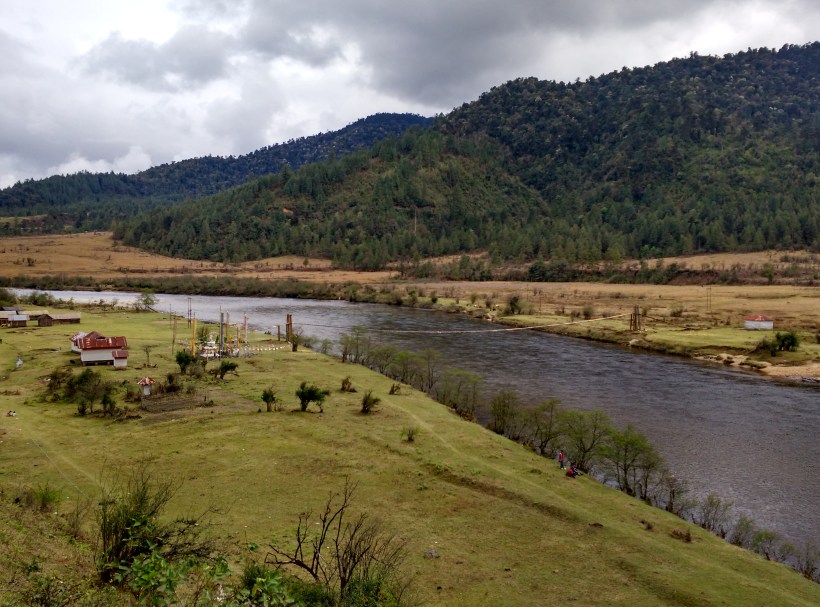
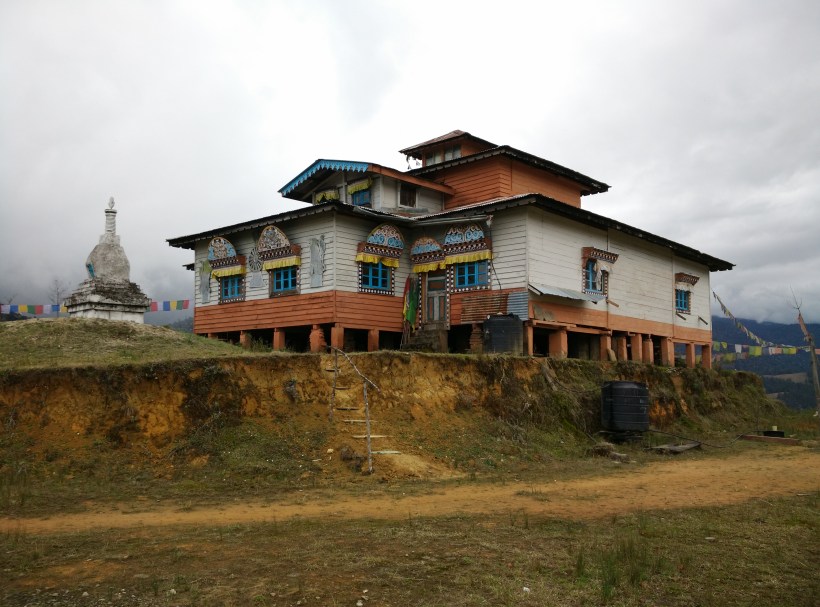
The ancient Gompa was almost well maintained, though there were no signs of large number of visitors, as seen in other such places. This two storied Gompa had a collection of carvings, sculptures, ancient statues and scary guardian deities.
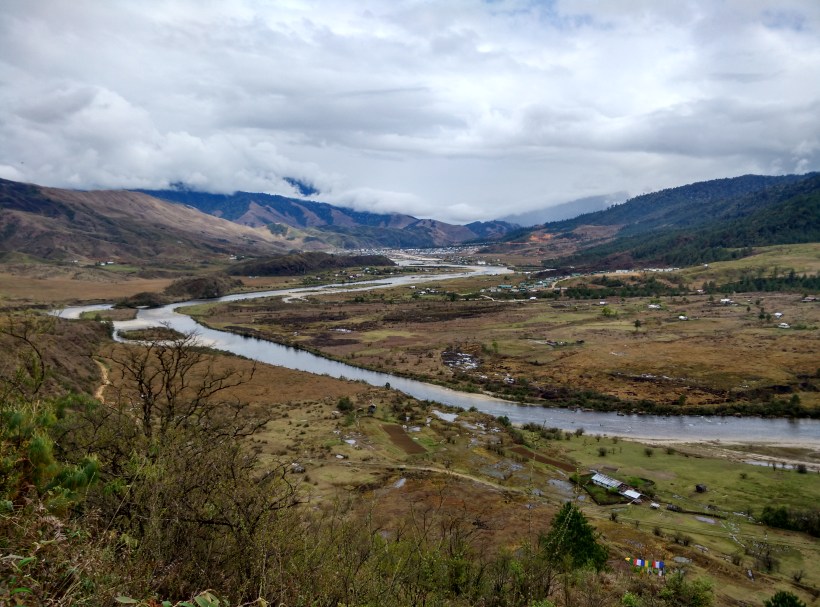
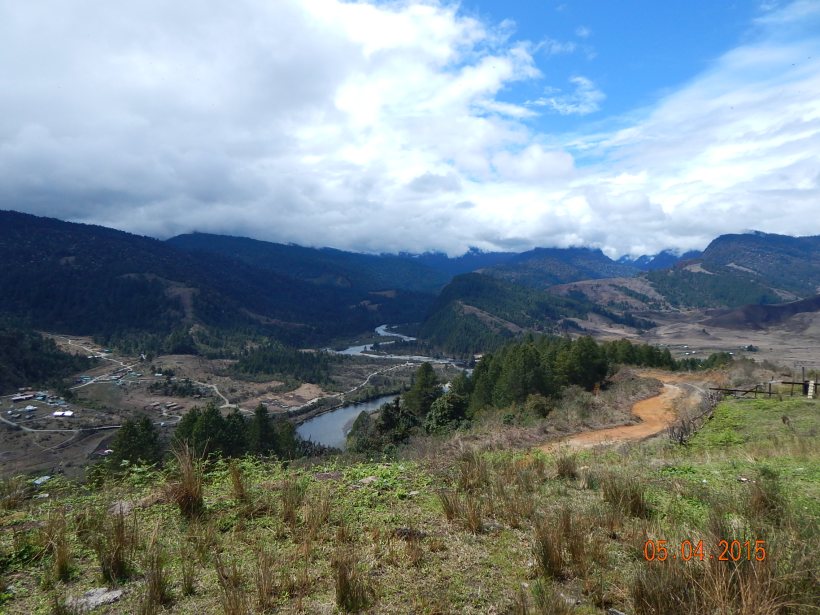
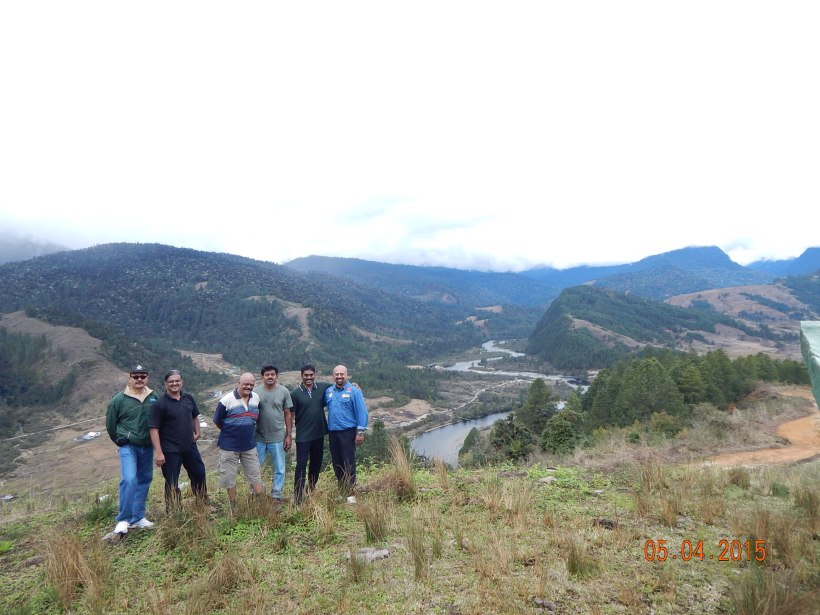
The view from the top of the hill was fantastic, all around. The mountains, valley and the river Siyom flowing calmly through the valley combined to provide a magnificent view.
There was a local festival `Dhotung’ celebrated at the shrine on the foothill and we saw lot of villagers assembled there for prayers and offerings. They were eager to share food and `Apang’ (rice wine) between themselves and the visitors.
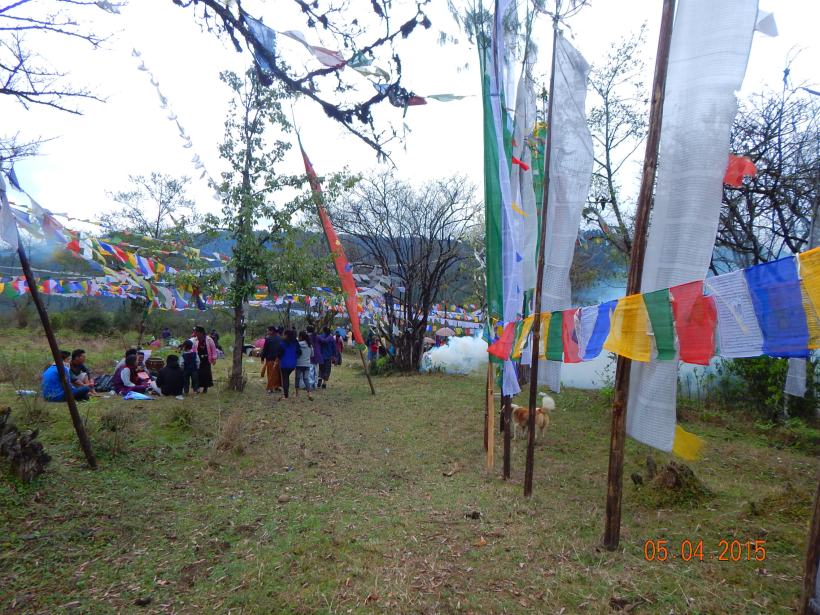
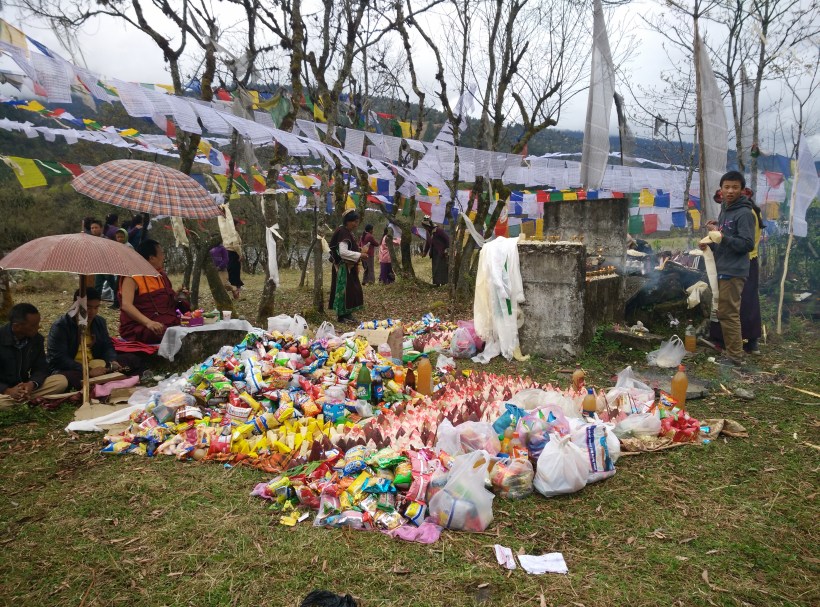
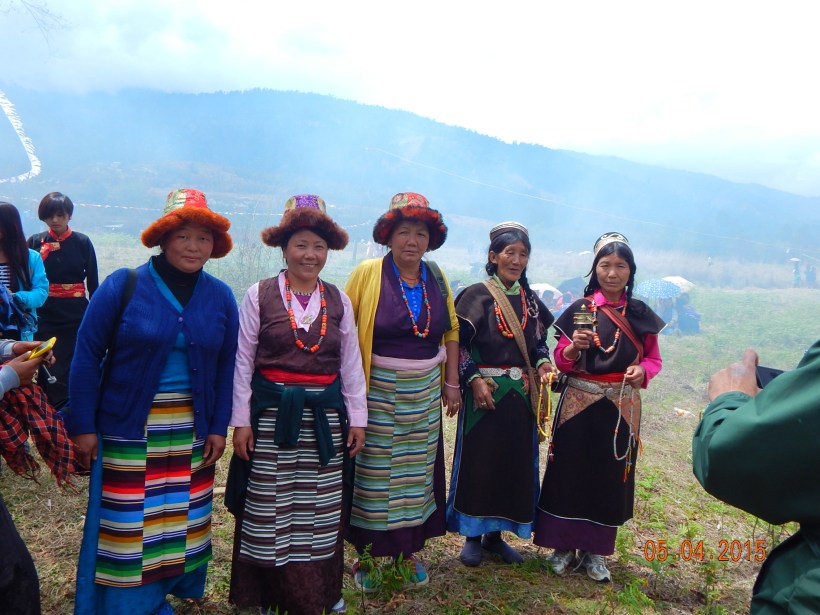
We spent some time witnessing their rituals, crossed the river and returned to the village.
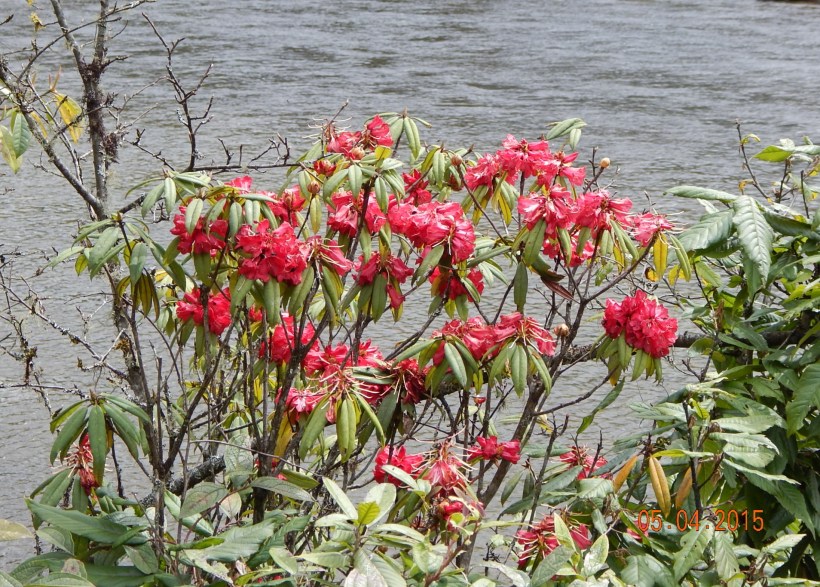
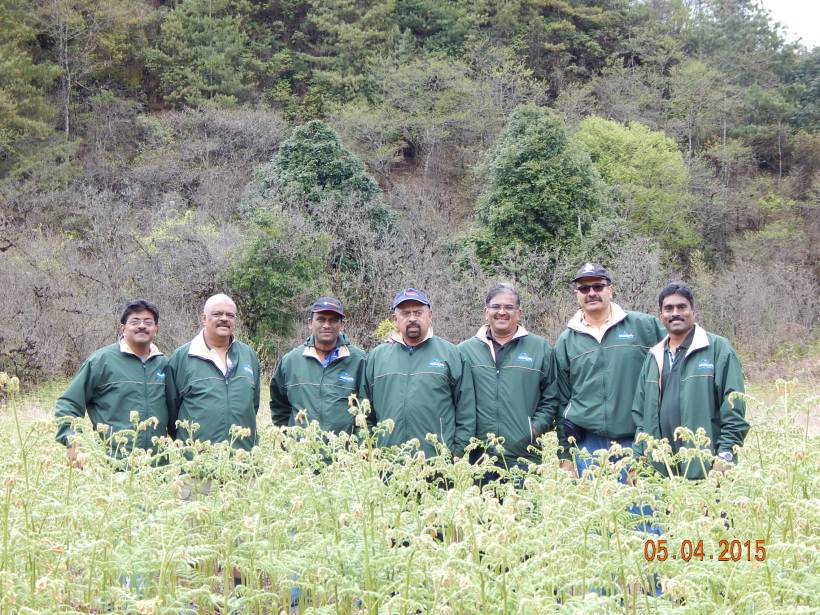
After lunch, we went on a short drive to Yarlung, which had a military base and a helipad.
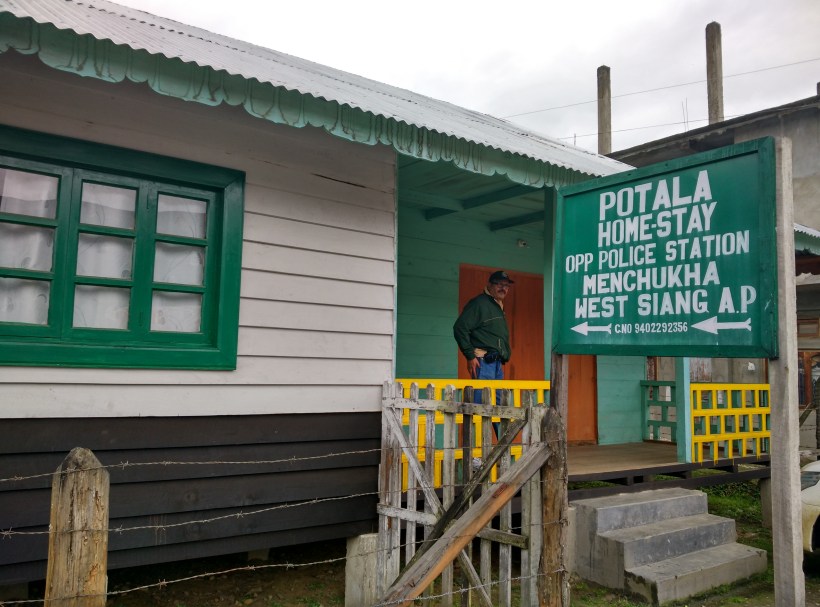
After the evening tea, we checked out of Potala Home Stay and bid farewell to the wonderful hosts, who provided food and shelter for us the previous night. We would certainly have stayed with them for another night, but they had a booking with some other guests; so we had no choice. We had located the Circuit House where we had initially booked our accommodation for the two nights at Mechuka. We re-confirmed the booking and checked in there. We enjoyed a peaceful evening in the village, had a nice dinner at the Circuit House and slept early. We were fully satisfied with our brief stay at that beautiful mountain village.
Day 4 : April 6 : Mechuka – Along (180 kM)
We started our return journey from Mechuka, after a quick breakfast from the Circuit House. After about half an hour, we had to stop on the way because the road was blocked by a tree which was uprooted during the previous night.
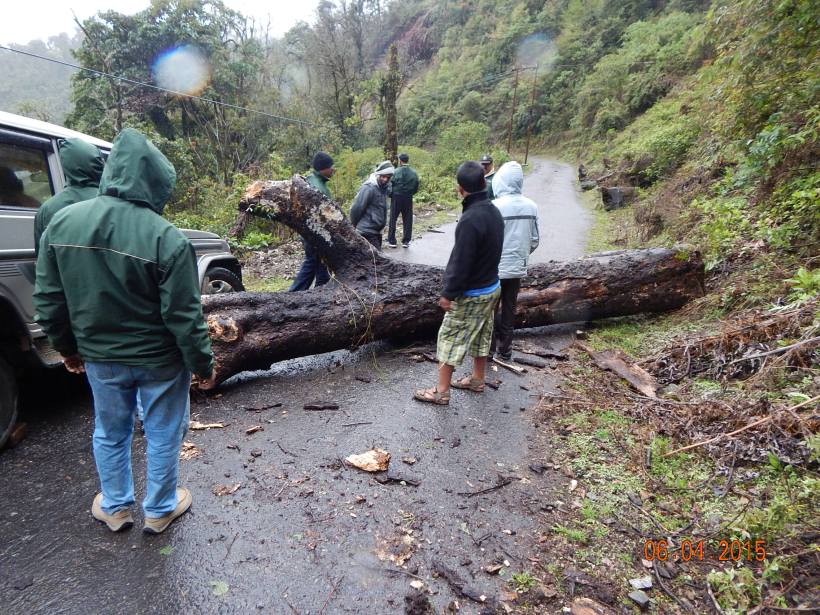
A few men were working to clear the road for traffic and we joined hands with them.
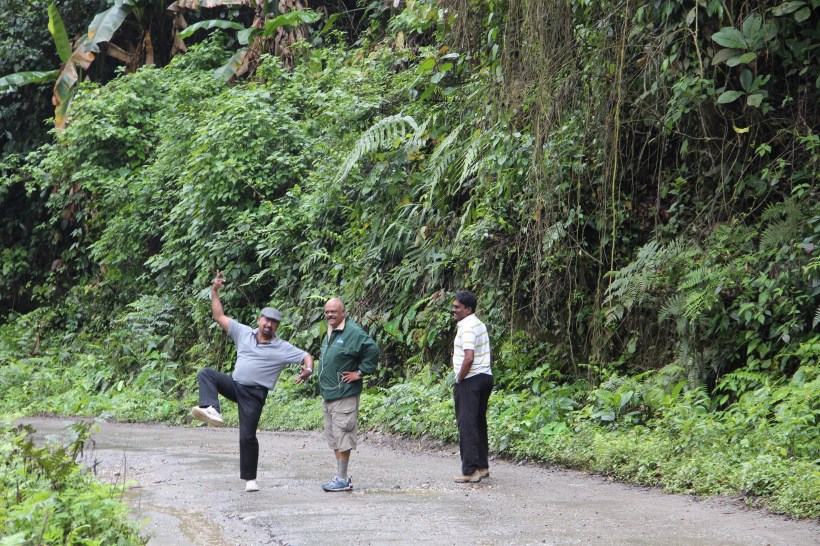
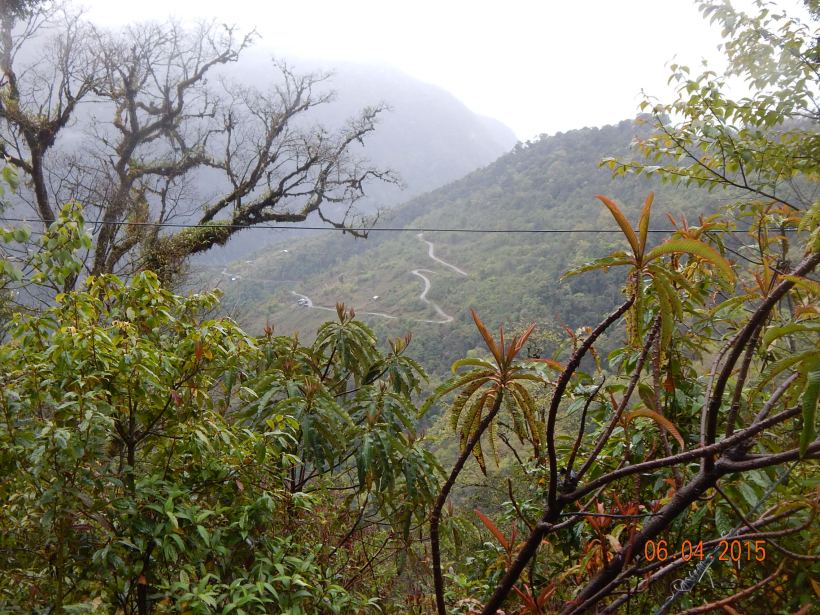
After the short break, we continued our journey to Aalo, through the same road we used for the onward journey to Mechuka. The sight of the cliffsides we negotiated in pitch darkness the other day, made us nervous.
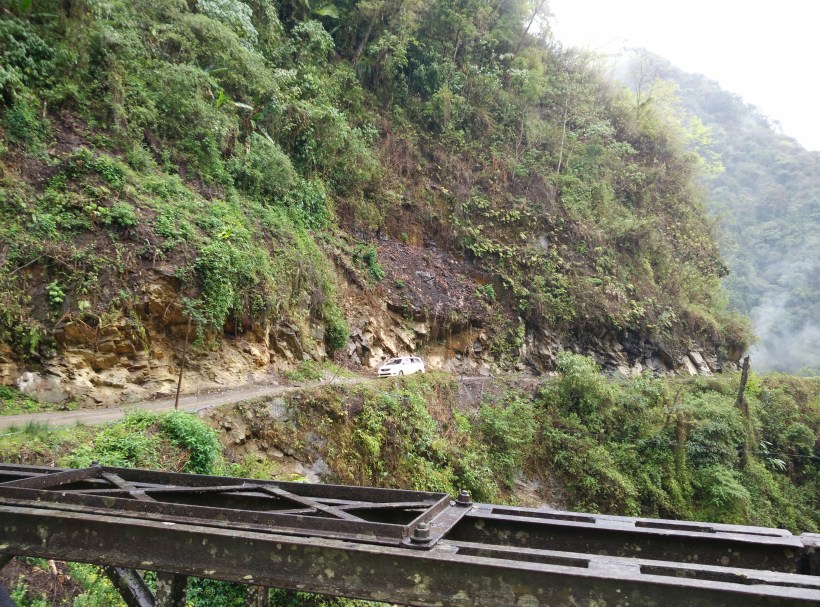
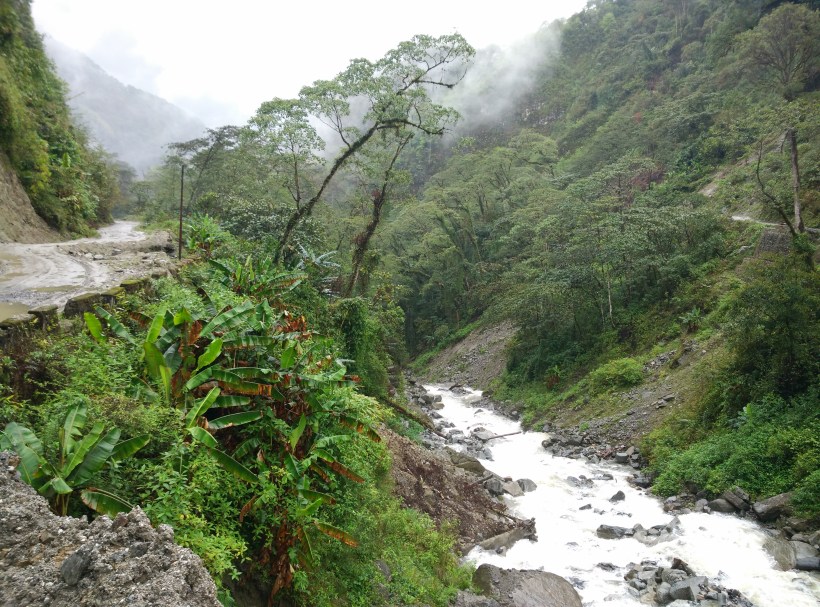
We stopped at a few more places for taking photos, which we had missed during the last few hours of our journey to Mechuka.
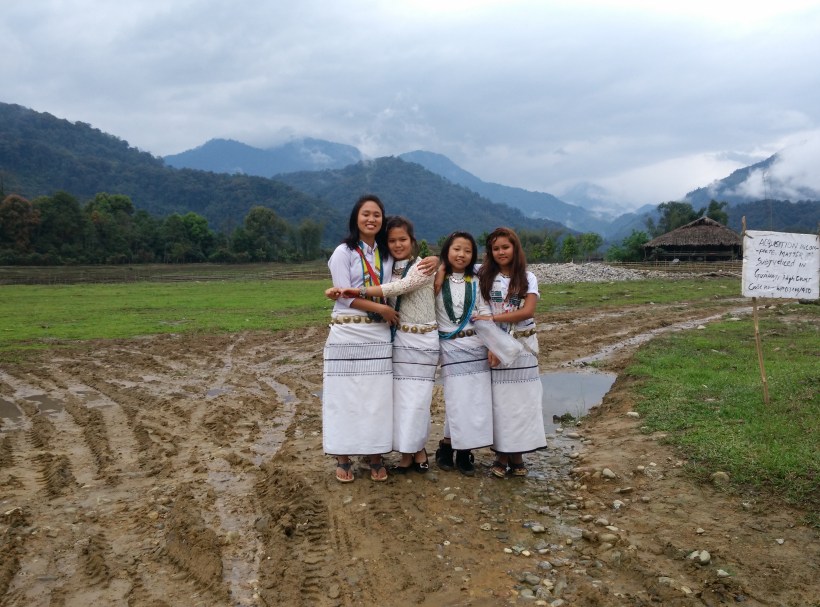
We saw a few girls dressed in traditional white festival costumes in a village and requested them to pose for a photo, which they agreed happily.
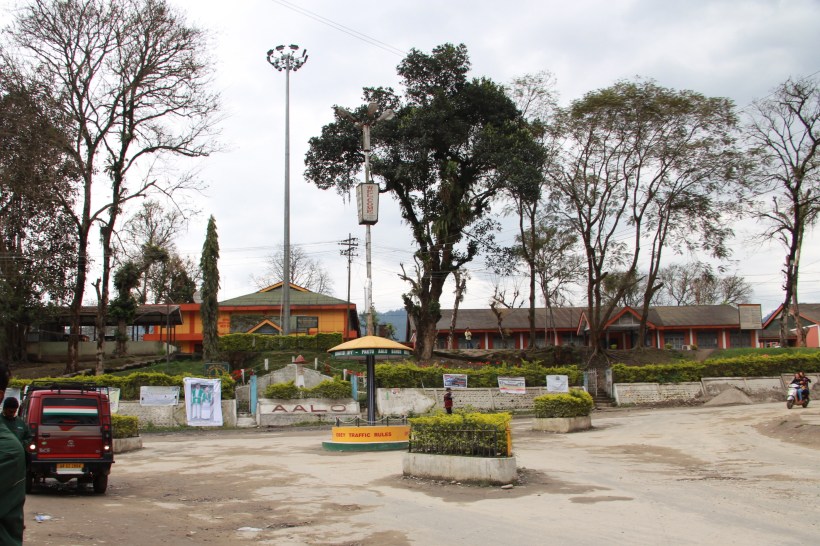
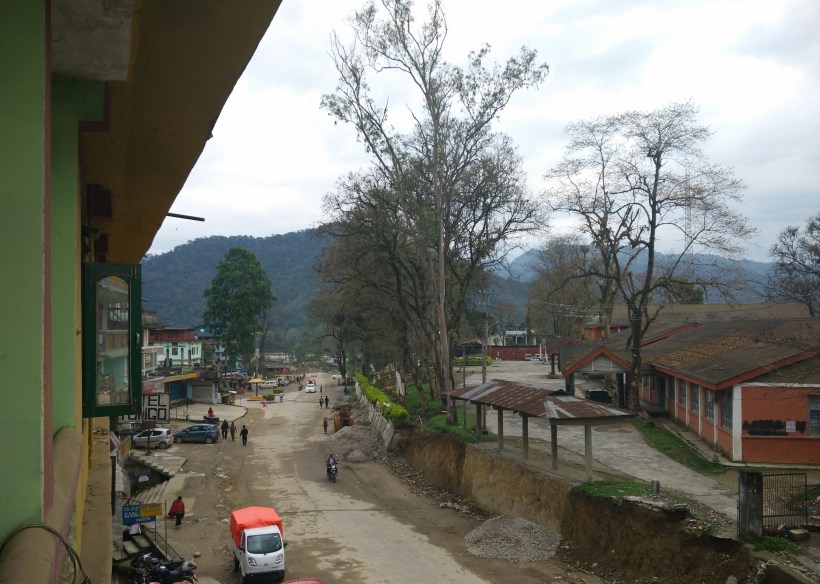
We reached Aalo by about 4 PM and checked into a hotel in town. Aalo is a major town in Arunachal. People from the higher villages come down to Aalo once a month for purchases.
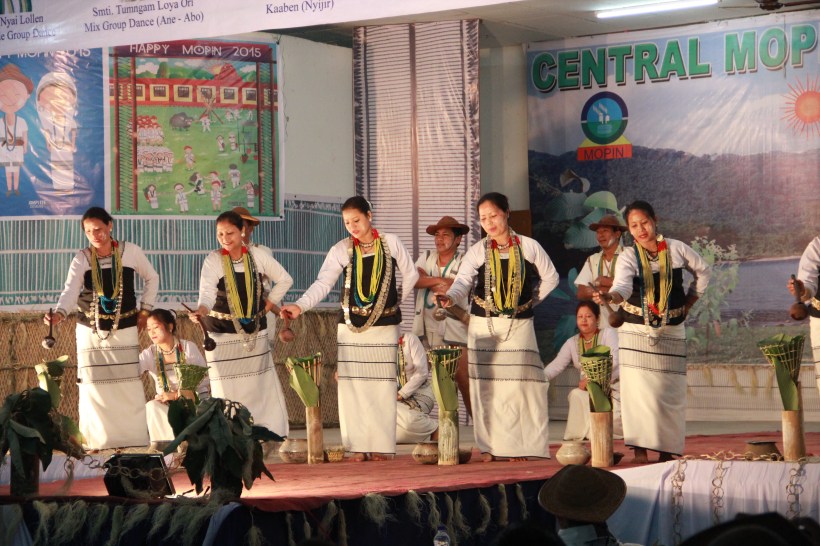
`Mopin’ the harvest festival of the Galo tribe of Arunachal, was being celebrated on 6th and 7th of April, on a large scale at Aalo. A grand cultural program was organized by the district administration at Aalo, and we didn’t miss the opportunity to witness the celebrations.
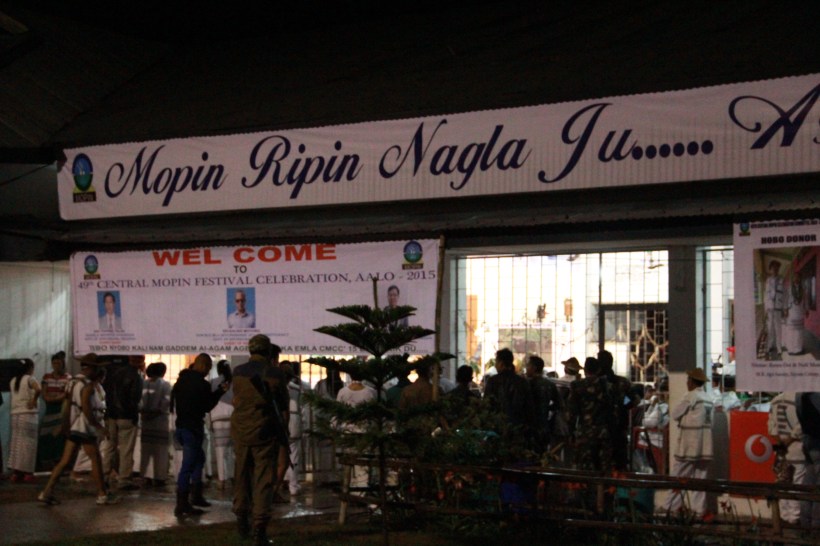
White seemed to be the dominant colour of Mopin. Men and women wore special white decorated dresses for the festival. Smearing white rice flour on the cheeks to symbolize purity, harmony and love was a general custom they followed.

We met the nice gentleman who was in charge of the venue, who happily welcomed us inside and explained the history of the festival. We were even allowed inside the `kitchen’ where the special delicacies were prepared by womenfolk, as a community effort. They were so happy to entertain the special visitors from Southern India. `Ithi’, a type of boiled rice pancake covered in a local leaf and `Apang’ the rice wine were the two delicacies which they offered to us.
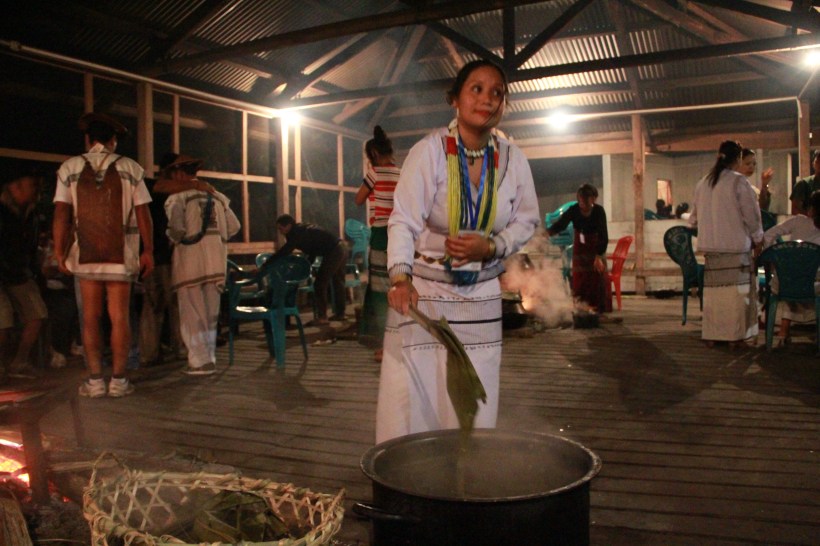
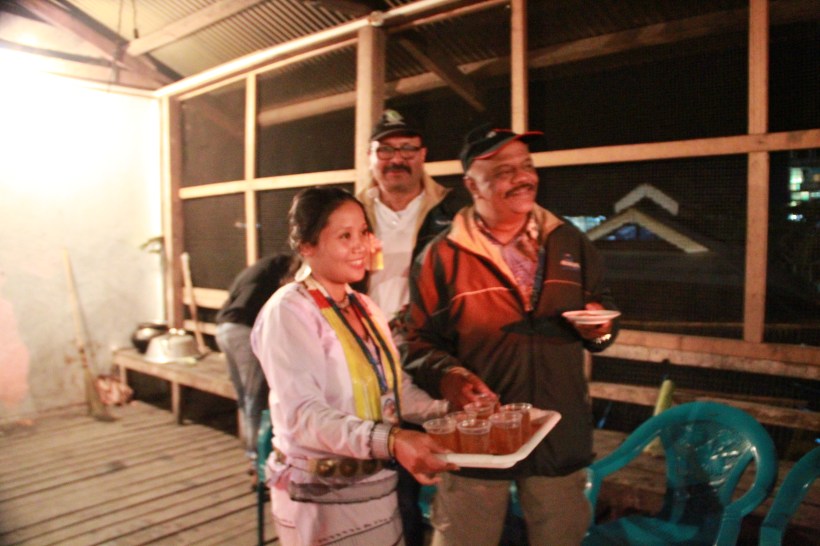
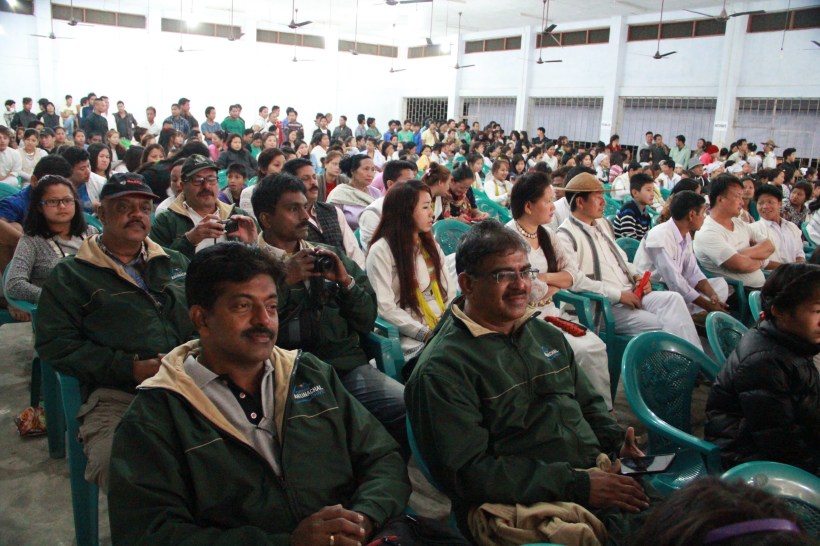
Various cultural programs, with artists dressed in traditional costumes were being staged in the auditorium, in front of a cheering crowd. We sat with them and enjoyed the songs and dances.
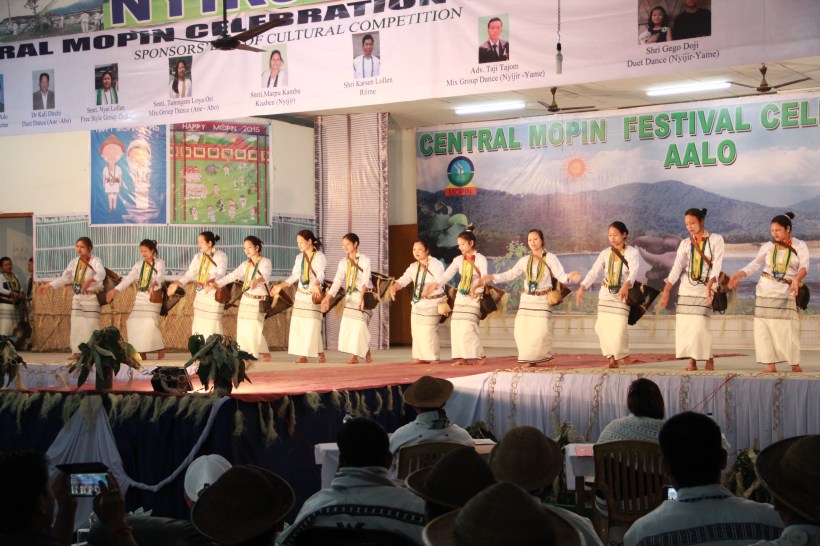
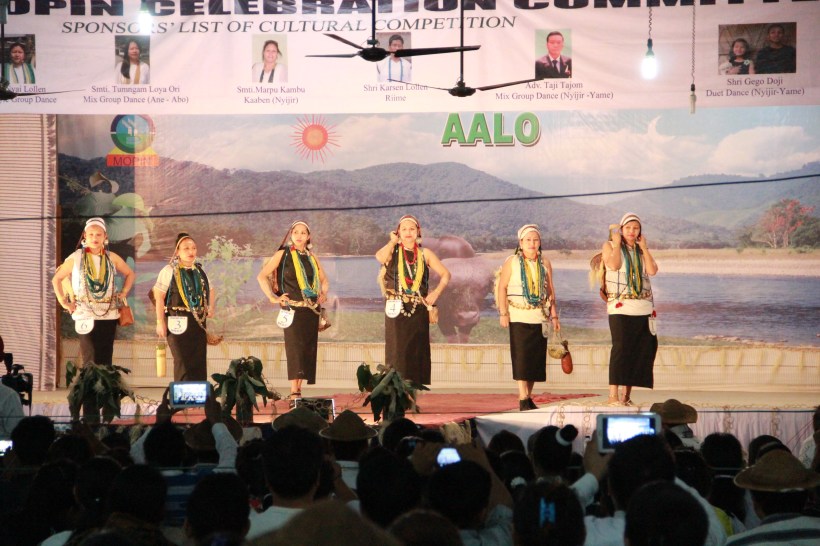
The rhythmic and elegant movements of the `Popir’ dancers in large groups, accompanied by soft music, was the highlight of the program. The fact that household utensils and appliances made of bamboo were extensively used for the dances, showed their close connection with the environment. We were told that the festival was originally celebrated within their households, and later on, evolved into a community event.
It was a wonderful evening, well spent.
Day 5 : April 7 : Along – Pasighat (100 kM)
We explored the town leisurely, after the morning tea and returned to the hotel after a long morning walk. We checked out from the hotel after breakfast and started our journey to Pasighat.
We expected that the roads might be better compared to the previous days, but it was not so. We had to cross landslide locations where the roads were damaged.
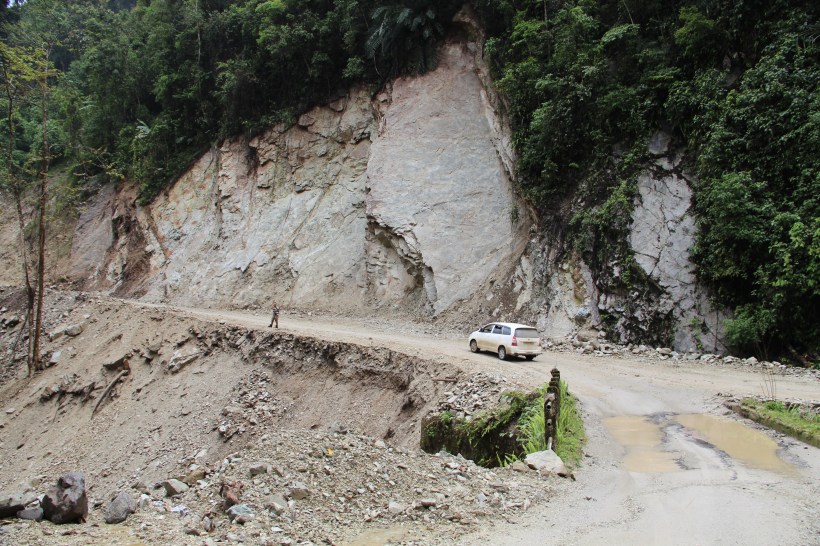
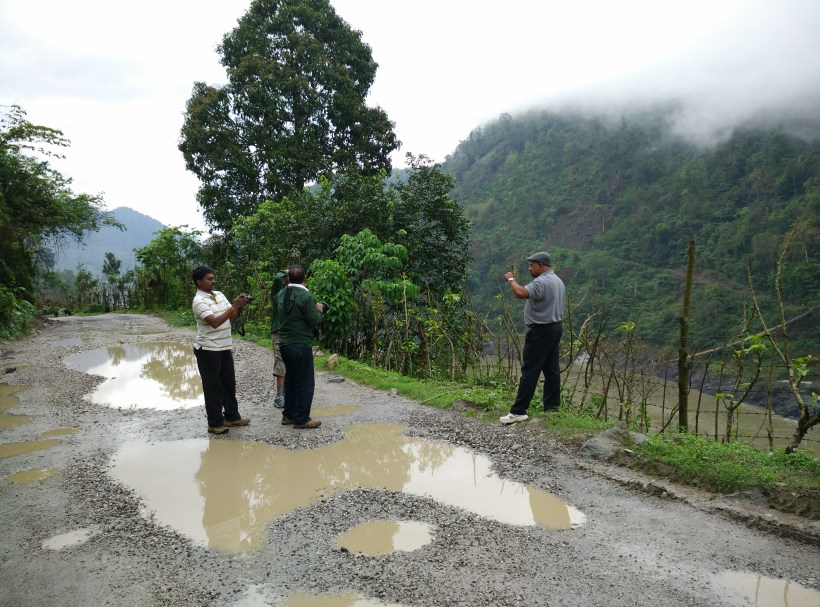
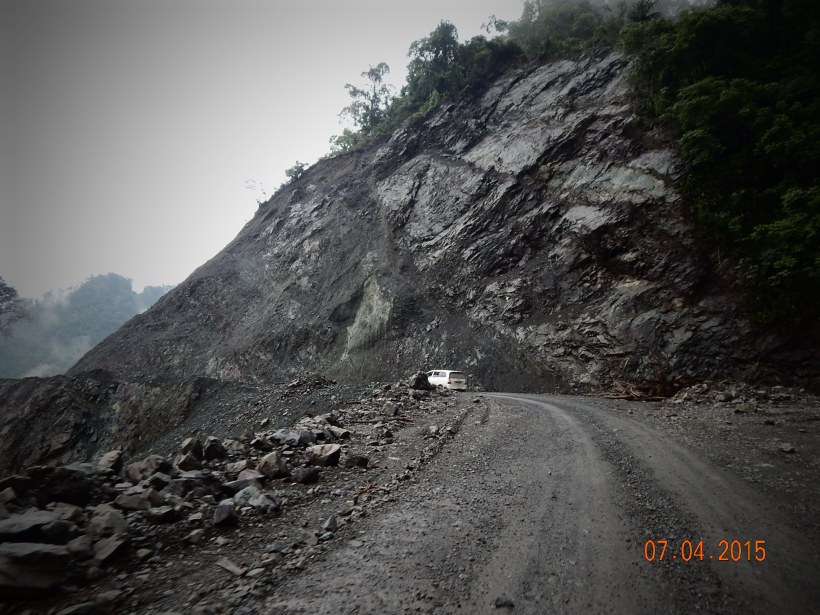
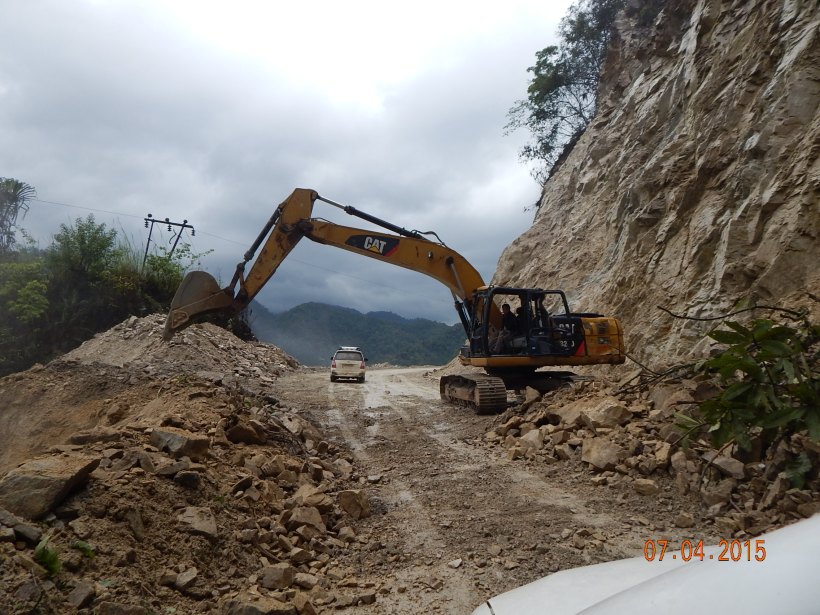
The Border Roads Organization (BRO) was still working to clear the road.
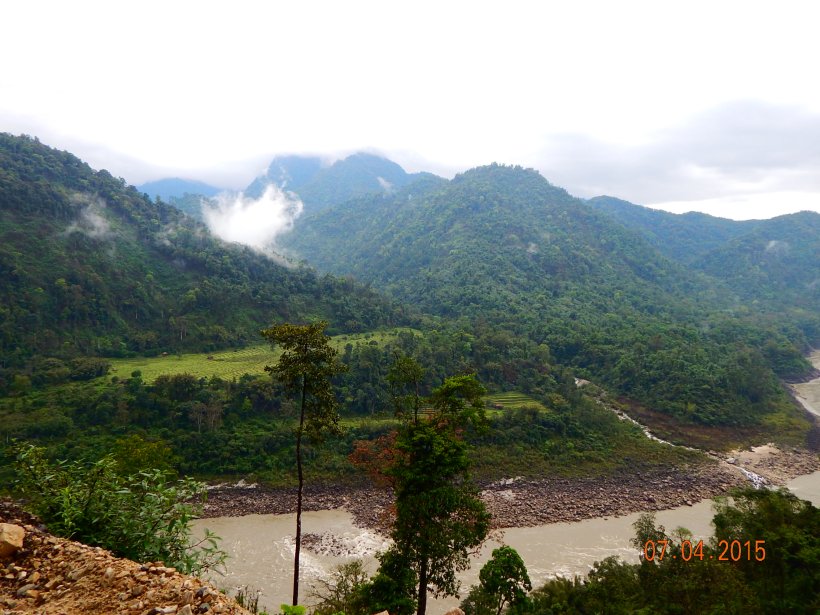
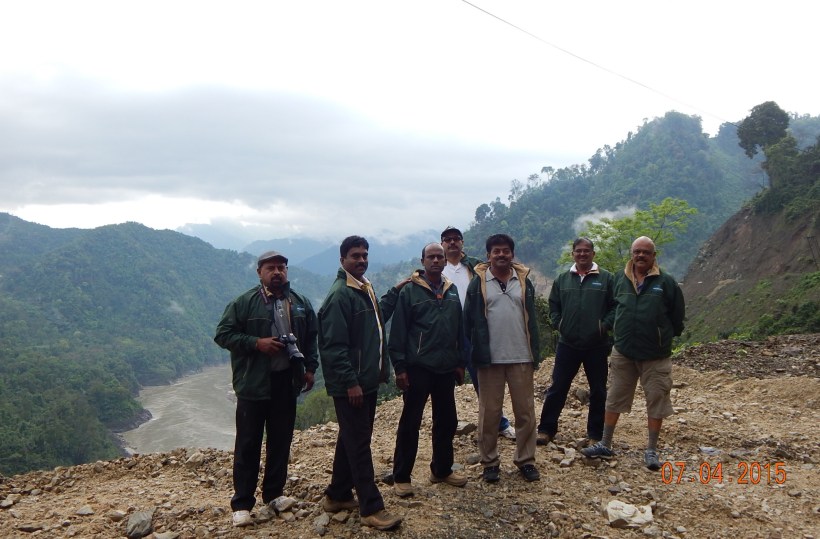
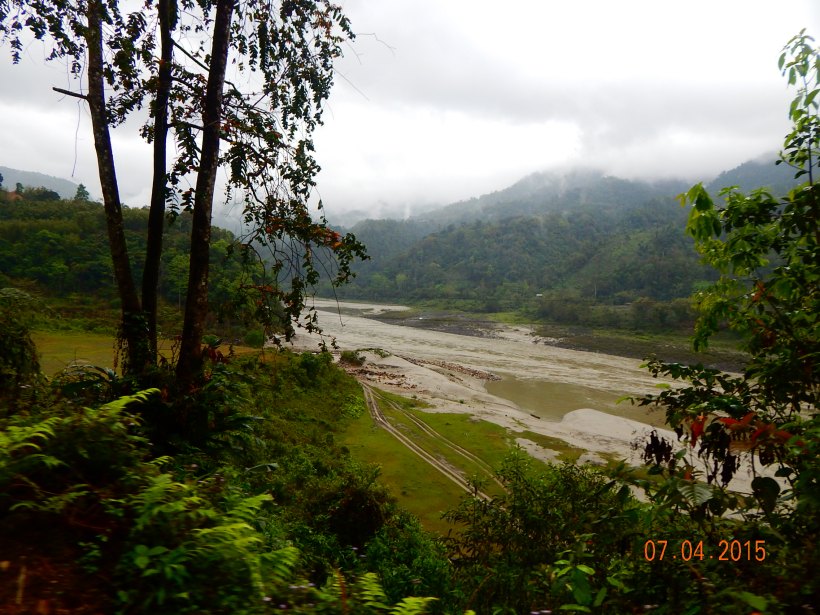
The river Siyong flowing right along most part of the road from Aalo to Pasighat eventually joins the mighty Brahmaputra.
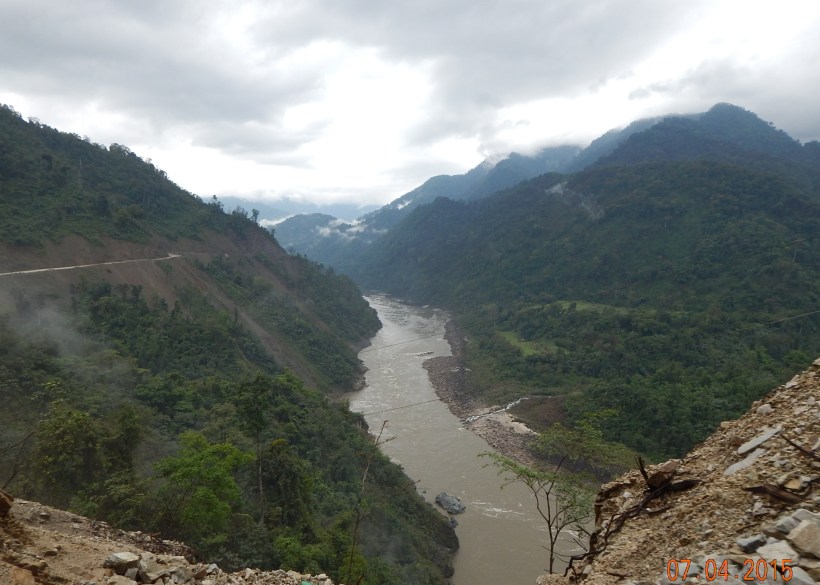
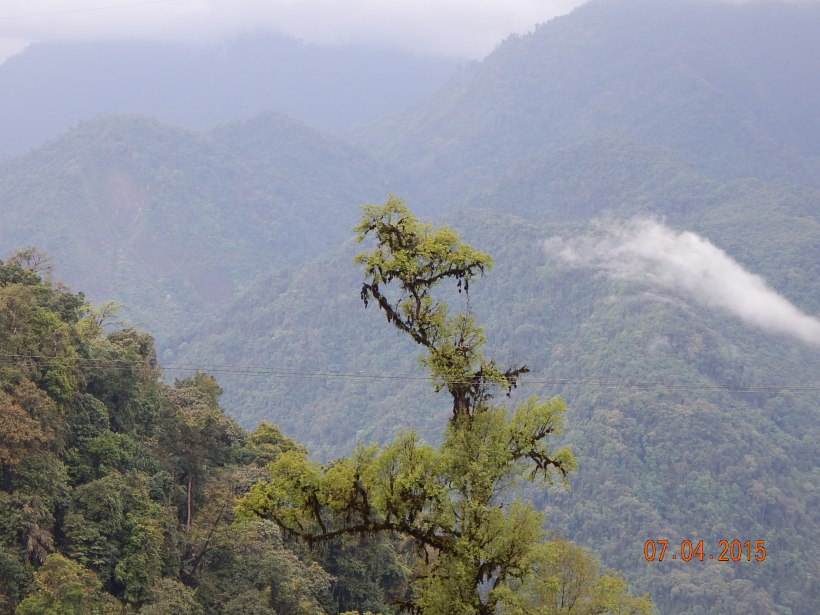
Before reaching Pasighat, we had a magnificent view of the flat river basin from a high point of the road.
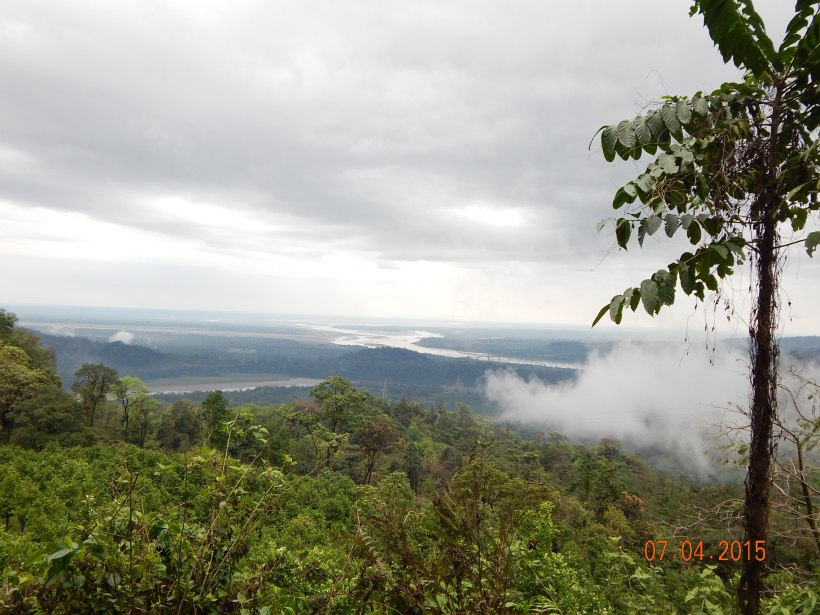
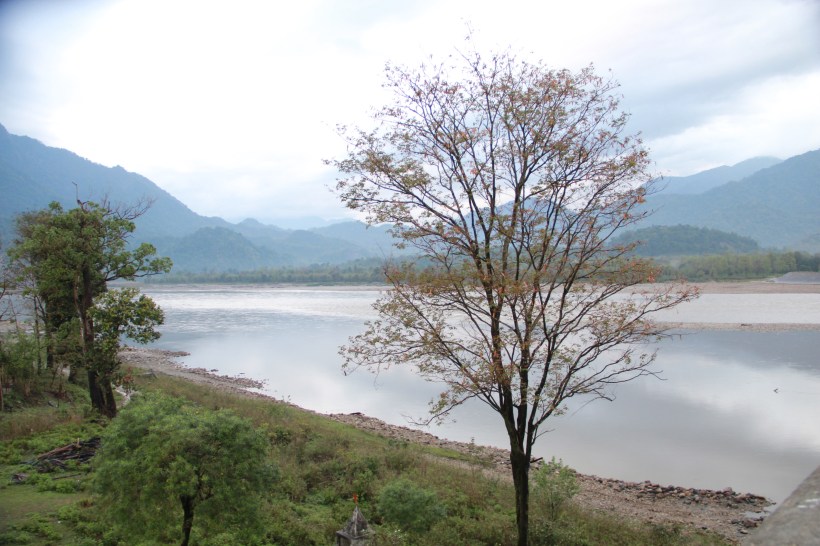
The journey through the broken mountain roads finally came to an end and we reached our destination by evening.
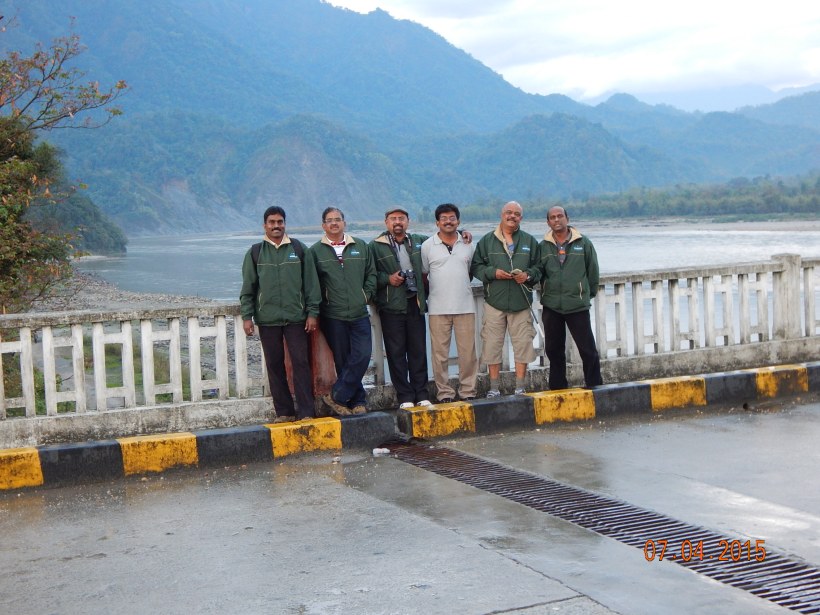
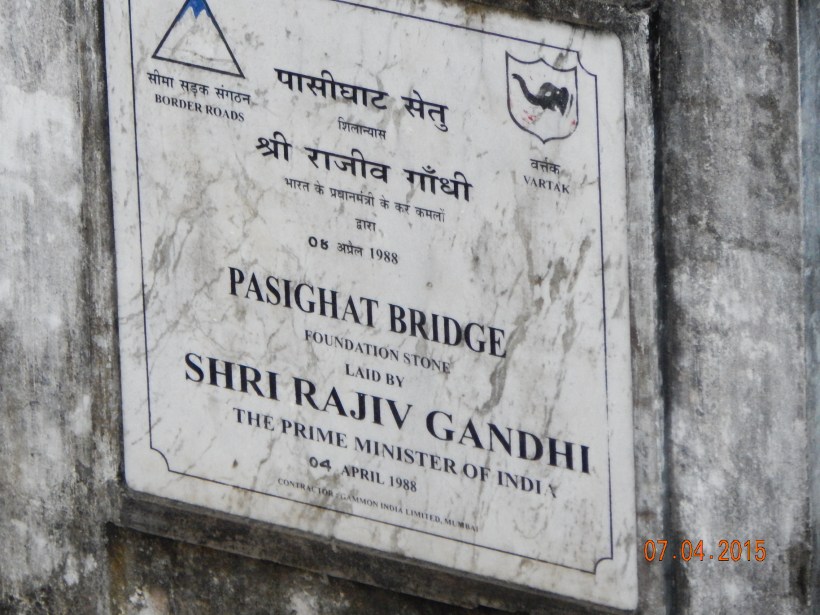
Soon after reaching Pasighat, we came to know that the roads to Tezu and Walong, the next two sessions of our trip, were closed for traffic, because of major landslides. We couldn’t enjoy the Mopin Festival at Pasighat because of this set back.
With heavy hearts, we returned to our hotel rooms and held discussions about the other possibilities for the next two days.
To be continued…
 Nostalgia EE 84