
By PRATAP KUMAR M S
“If it weren’t for the rocks in its bed, the stream would have no song”
Carl Perkins
It is one thing to be caught in the turbulence of a river and another to sit on its banks and enjoy its flow, one provides an adrenaline rush and the other soothes the nerve.
The following morning we realized that we were at a location surrounded by alpines. Since we had booked the entire hotel, we had the place to ourselves. The song of the early morning birds, the greenery that encompassed the area, and above all the fast flowing river which could be viewed from our balconies, the whole ambience had a calming effect.
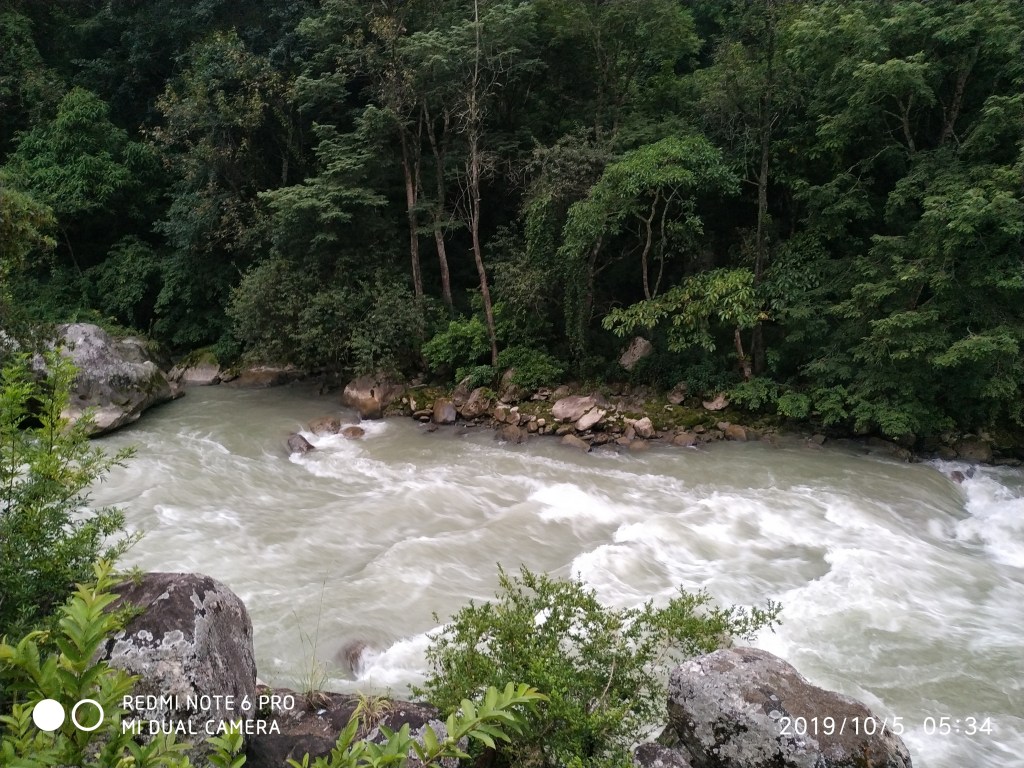
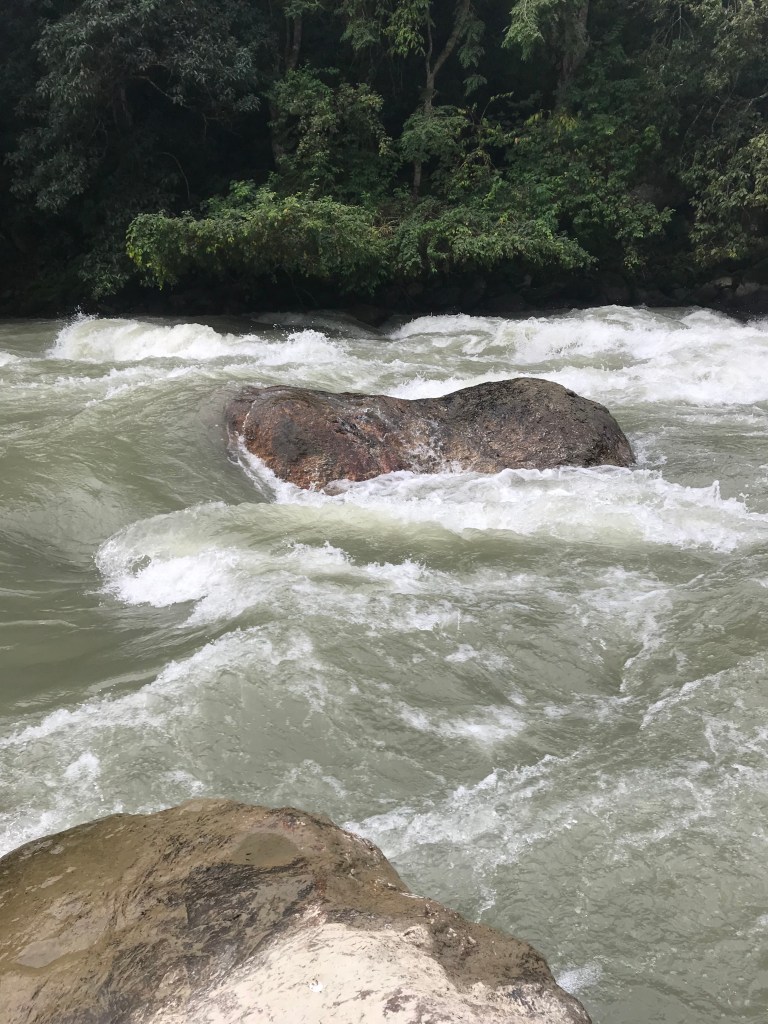
We walked to the banks of the river and the view was majestic. The river Dangchu was in full flow and seemed to be in a hurry to reach its destination. Huge black rocks of various shapes and sizes protruded in between and the white river struck them rapidly along its course, displaying its power. Ferocious and beautiful at the same time, one cannot get away from the wild attraction of this raving mountain river. The thick forest on the other side provided the perfect back drop for the whole show and we couldn’t ask for more. Although it was very early in the morning, many of us gathered around this scenic spot. Some of us chose a comfortable location on one of the huge rocks, sat there and enjoyed the music of the river. Anil Raj came with his music box and old songs, creating the right mood for the occasion. Some others preferred solitude, trying to get tuned with this bounty of nature.
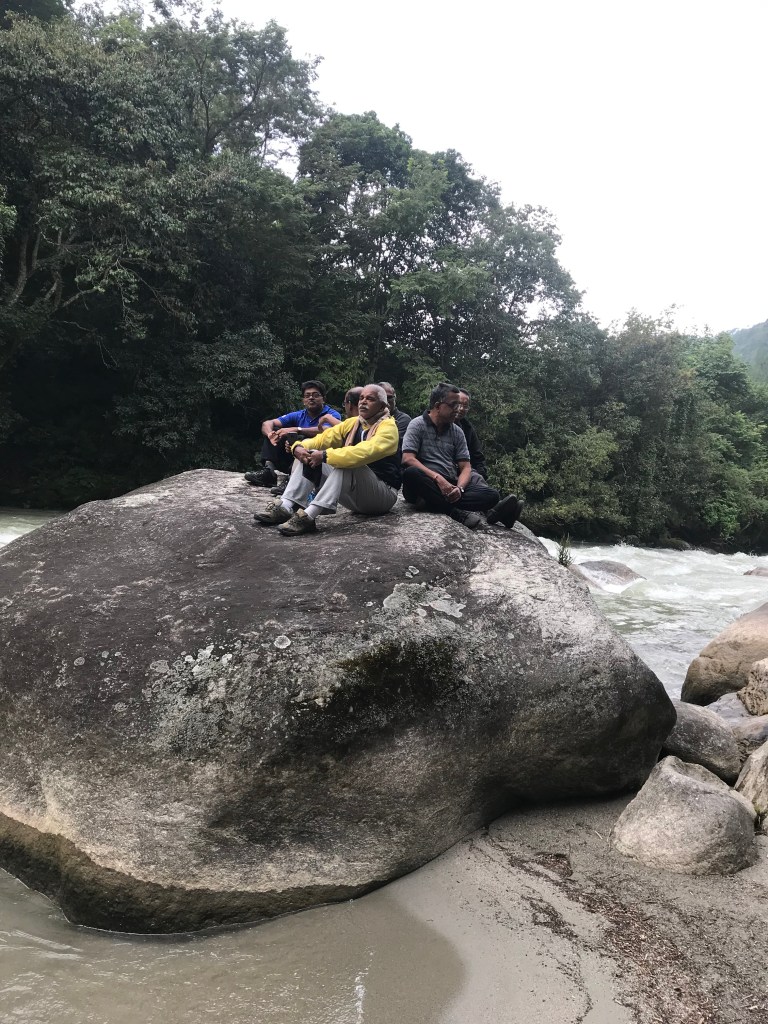
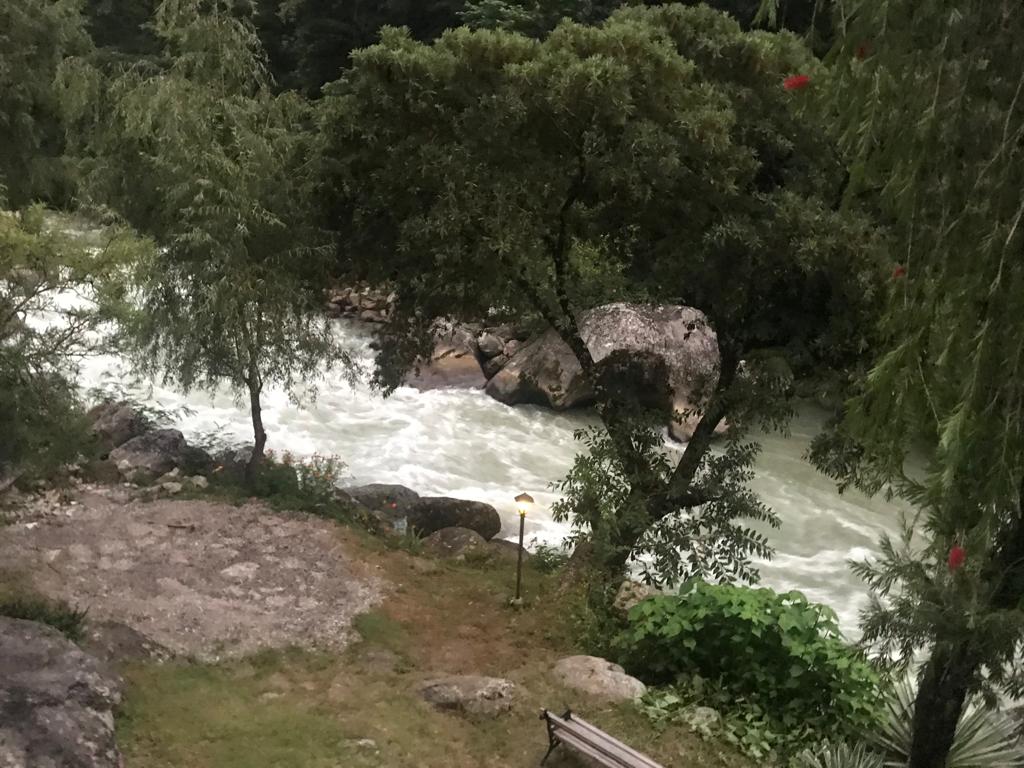
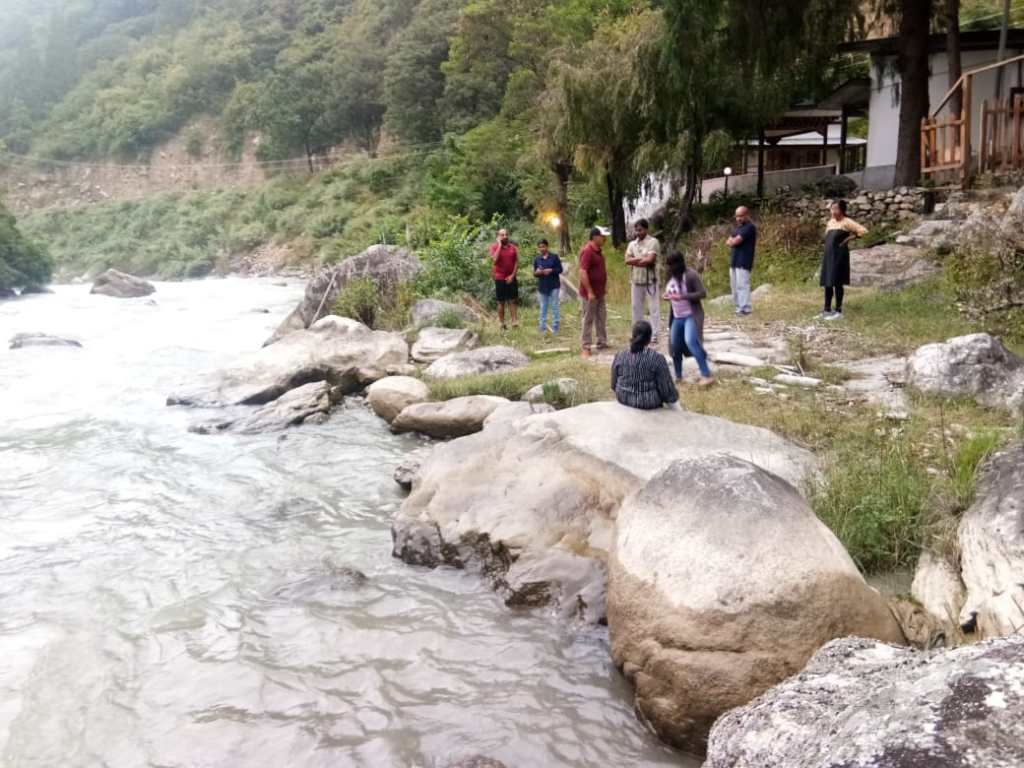
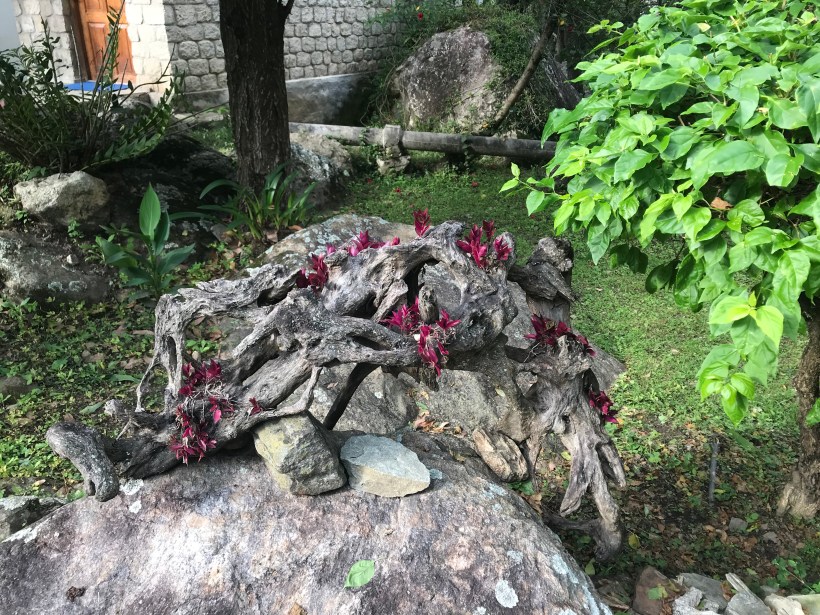
We were truly in the lap of nature. We stretched our starting time and ultimately at around 10:30 AM reluctantly left the place.
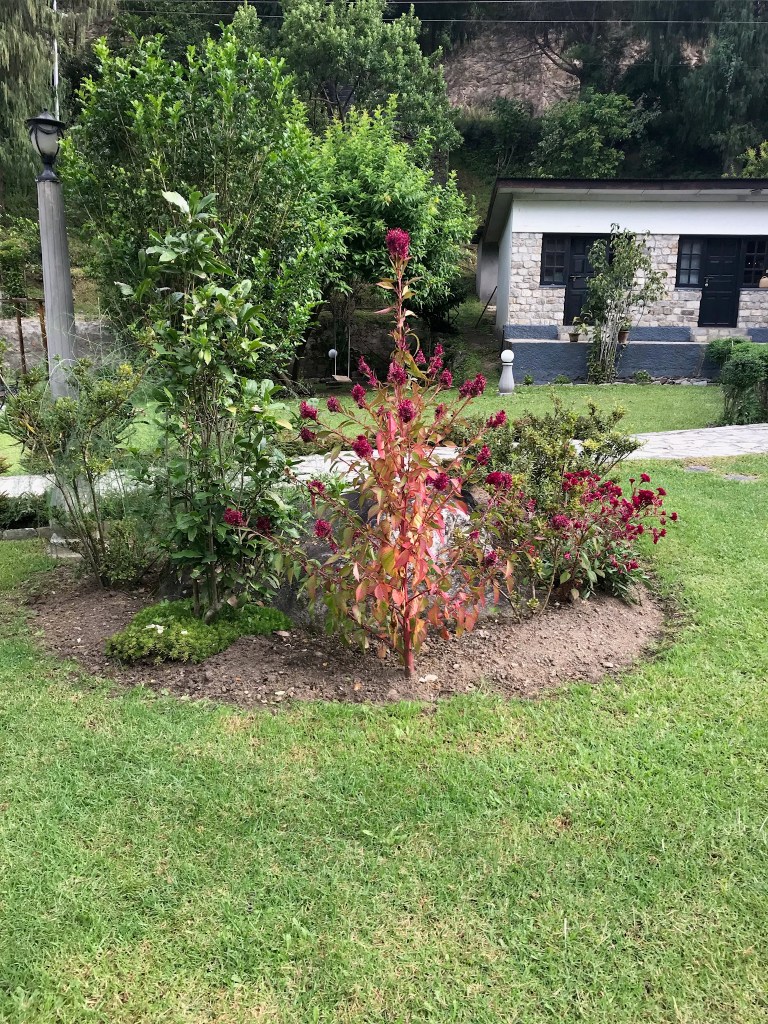

Punaka>>>>>Paro
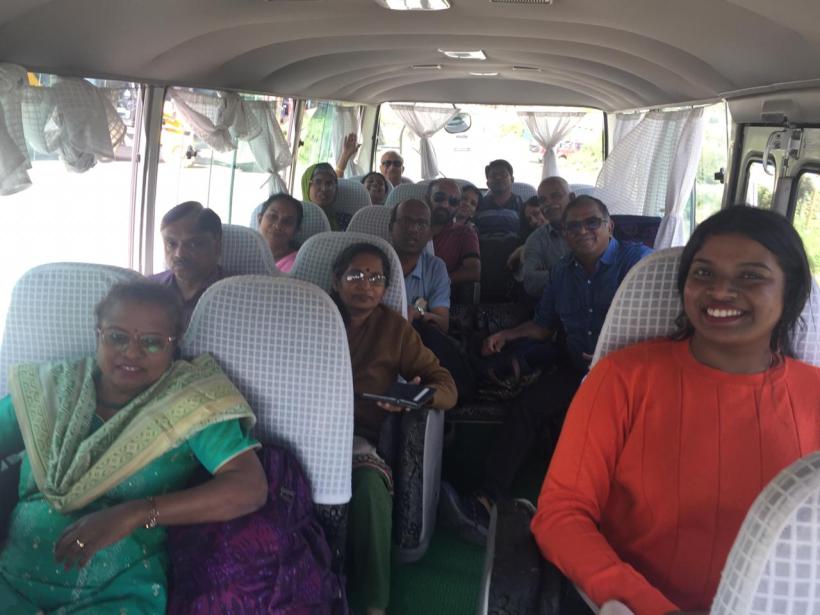
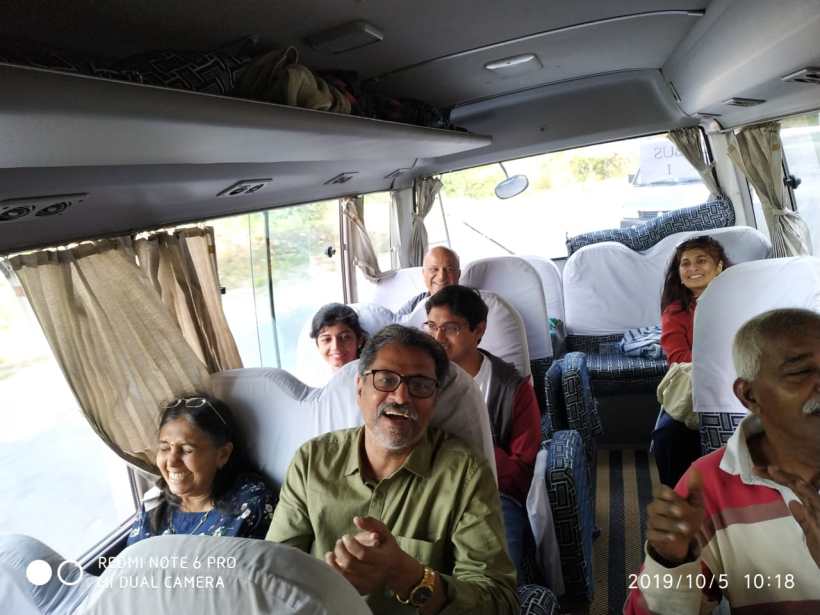
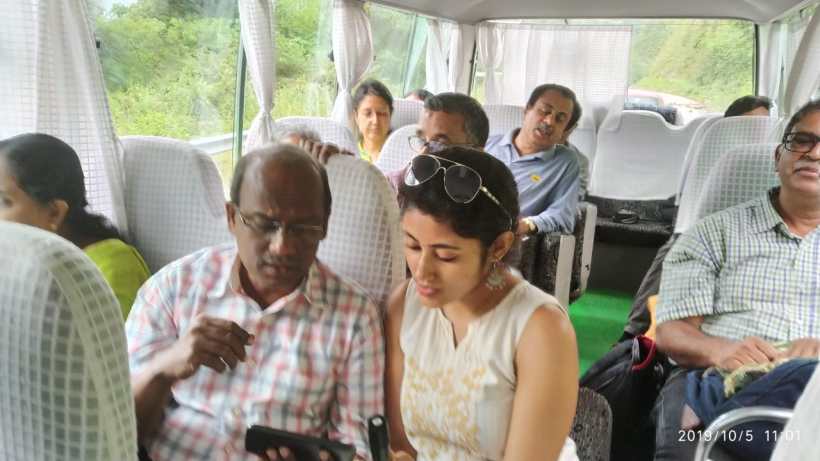
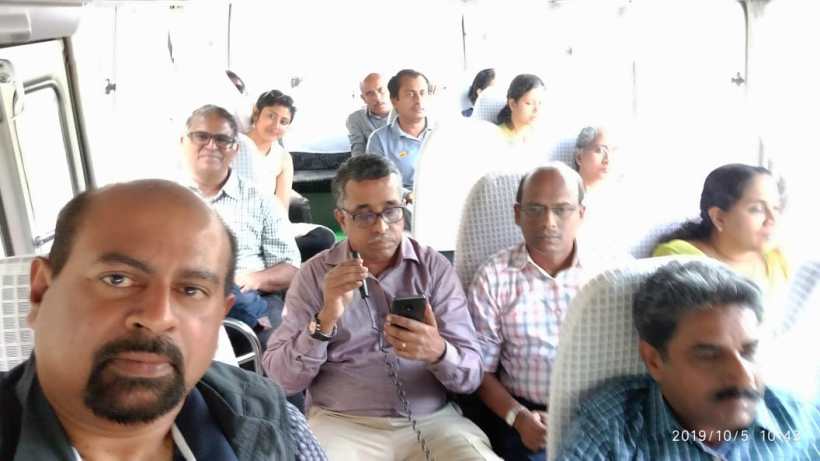
The journey to Paro is about 130Km and takes around 4hrs due to the rough terrain. The morning experience had lifted our spirits & Ganamela’s started in buses. We cruised along witnessing some more scenic locations of this beautiful country.
Tachog Lhakhang
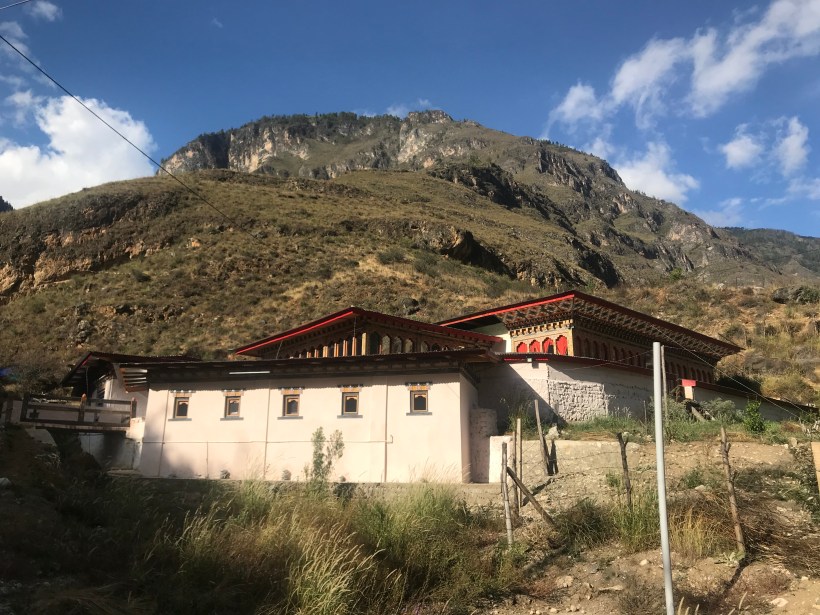
As we entered Paro after lunch we could spot this elusive monastery from a distance. Our bus stopped at the main road and we went down to have a view of this monastery. Tachog Lhakhang means “Temple of the hill of the excellent horse, to reach the monastery one has to cross a 500 year old iron bridge over the river Chhu. A Tibetan Architect Thangton Gyalpo who is credited to have built 55 such bridges in Tibet,Bhutan and India made this bridge sometime in 1430.The ancient bridge is padlocked and we used a modern wooden bridge to cross over to the other side. Rows of prayer flags of different shapes were fluttering along the bridge.

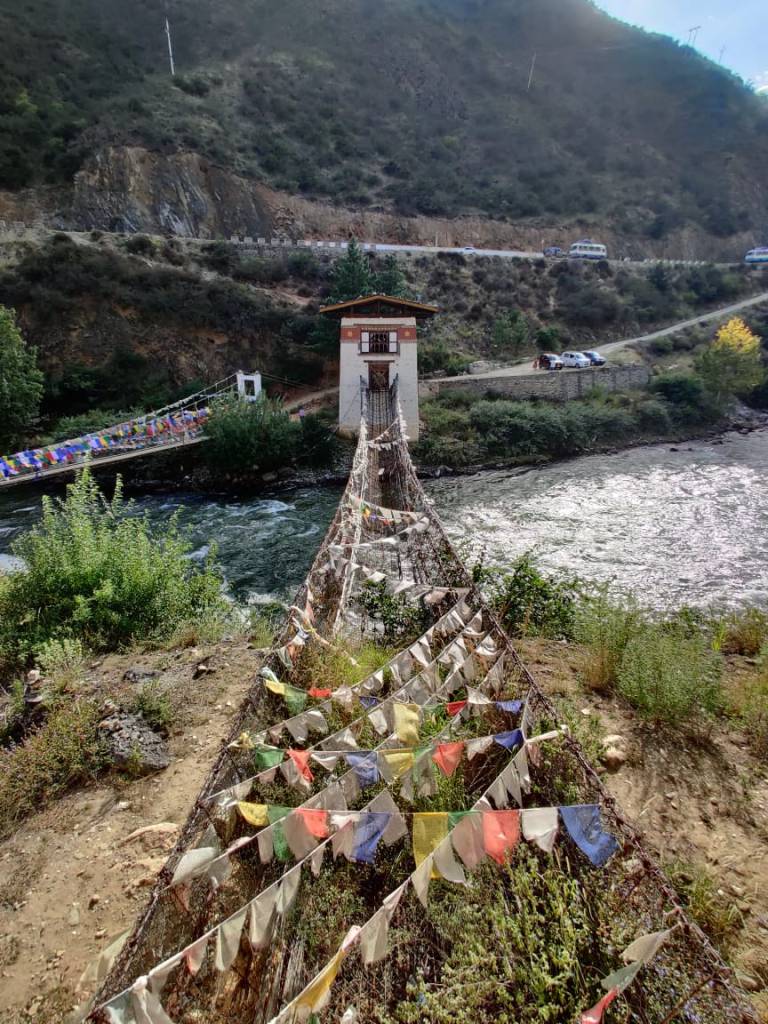
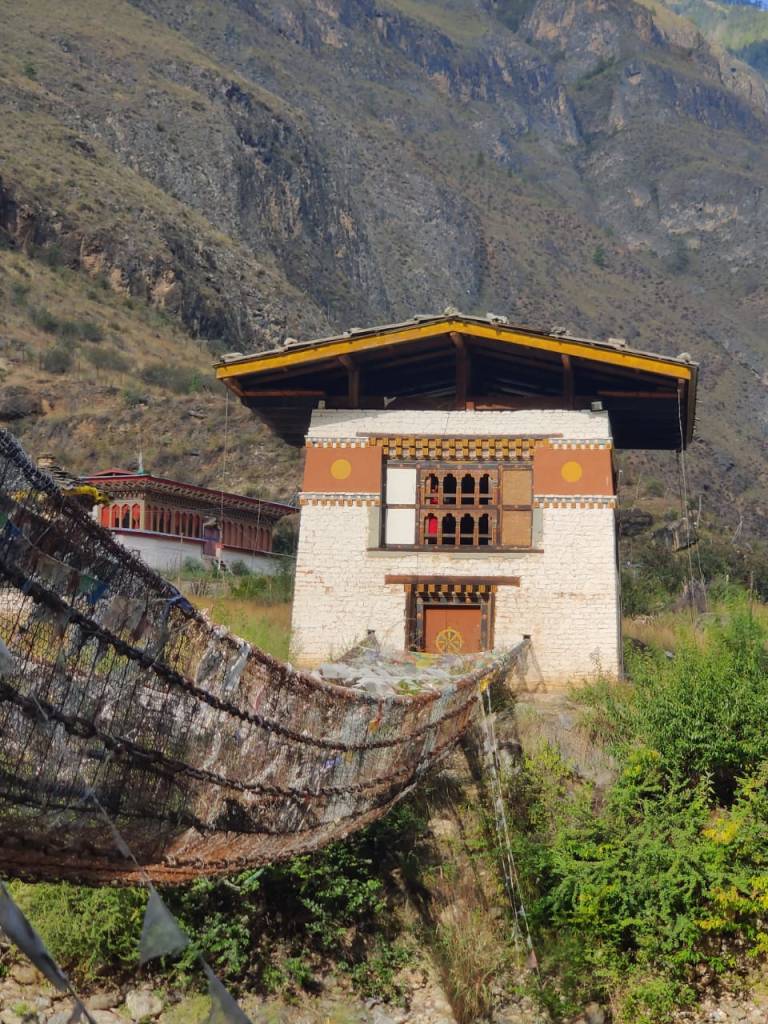
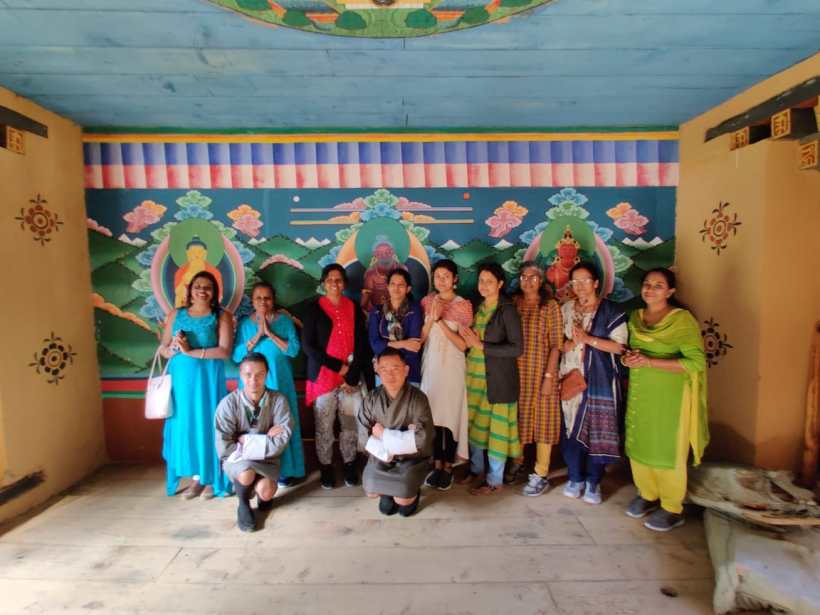
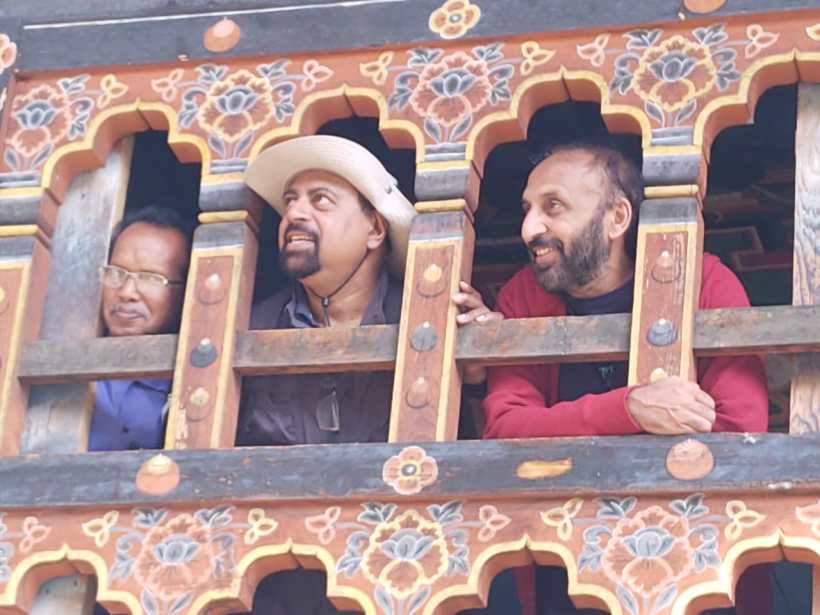
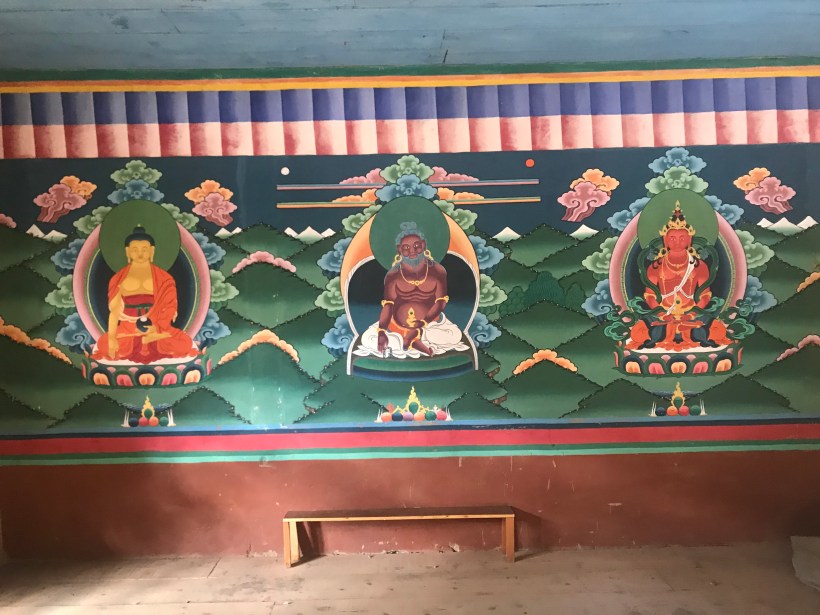
The tower on the other side looked deserted. We entered and climbed a narrow stair case to the first floor. The first floor housed a mini shrine whose walls were adorned with paintings of Buddhist monks .Thangto Gyalpo occupied the centre spot. Outside a set of prayer wheels encircled the monastery with a cave nearby. A small climb took us to a spot from where we could get a nice view of the area.

Cham-Masked Dance of Bhutan
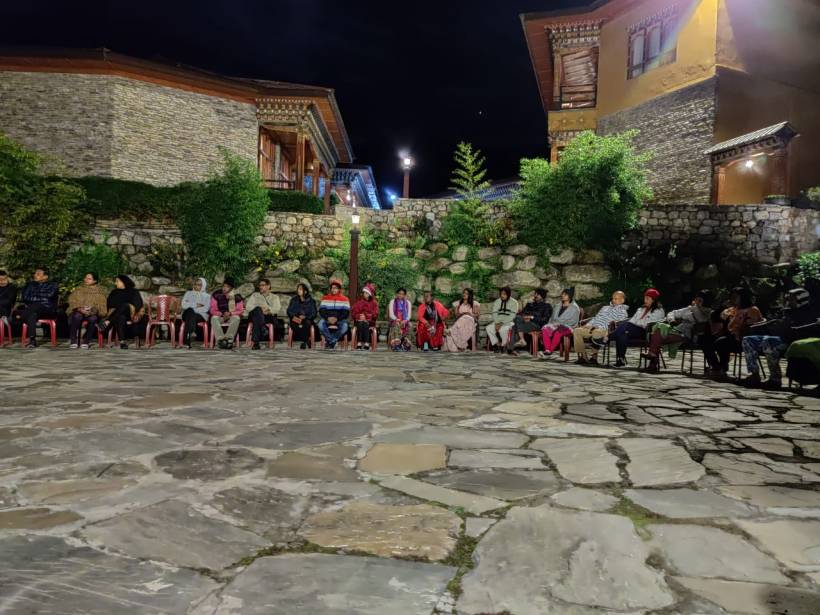
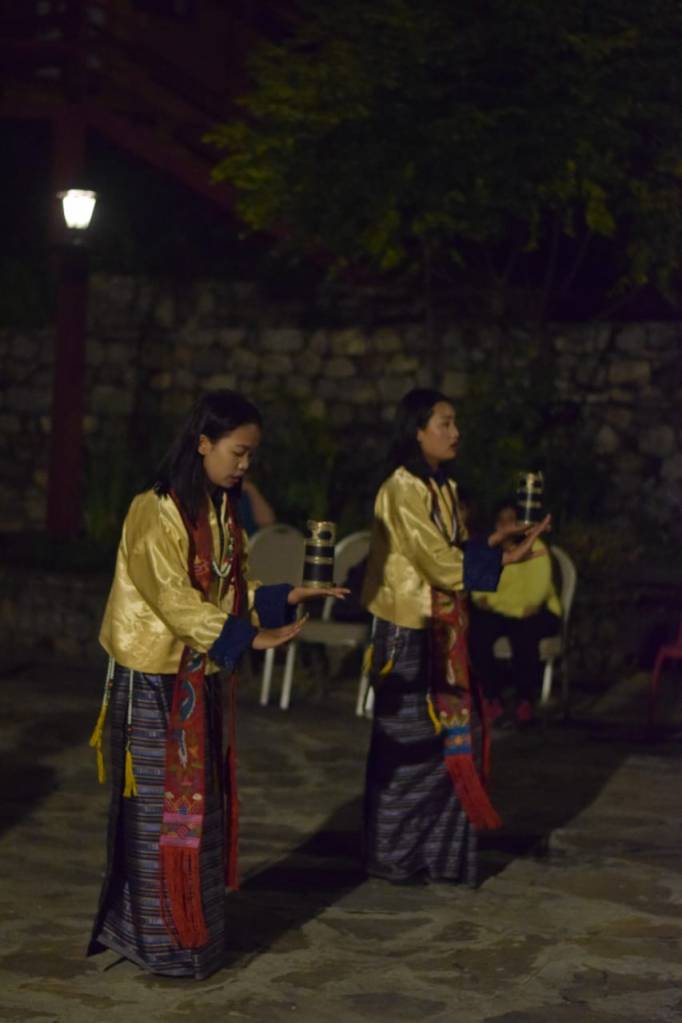
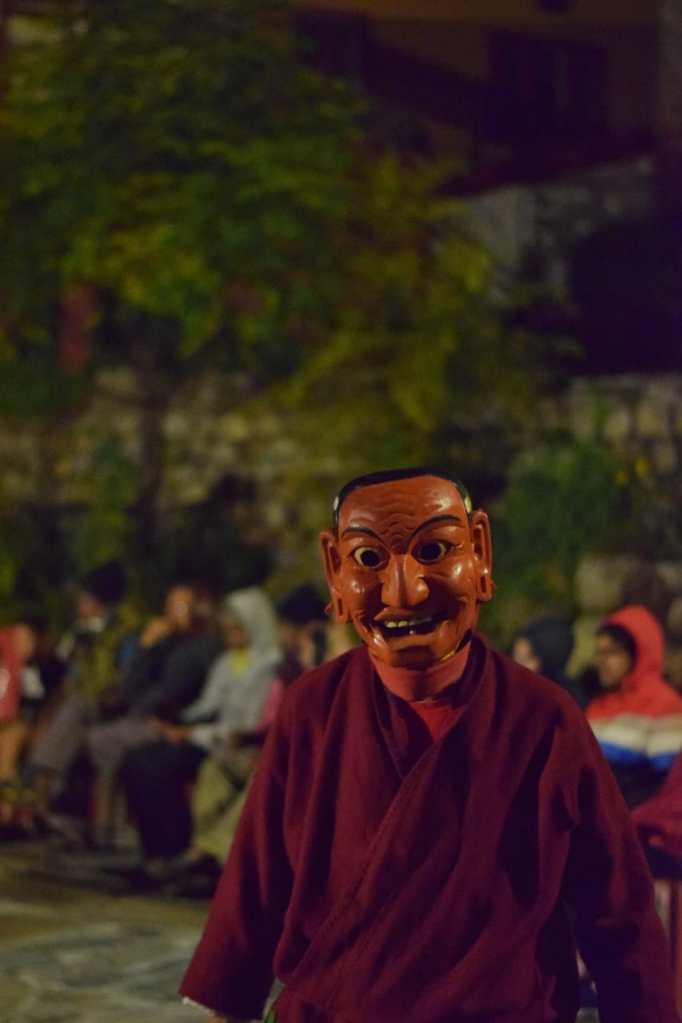
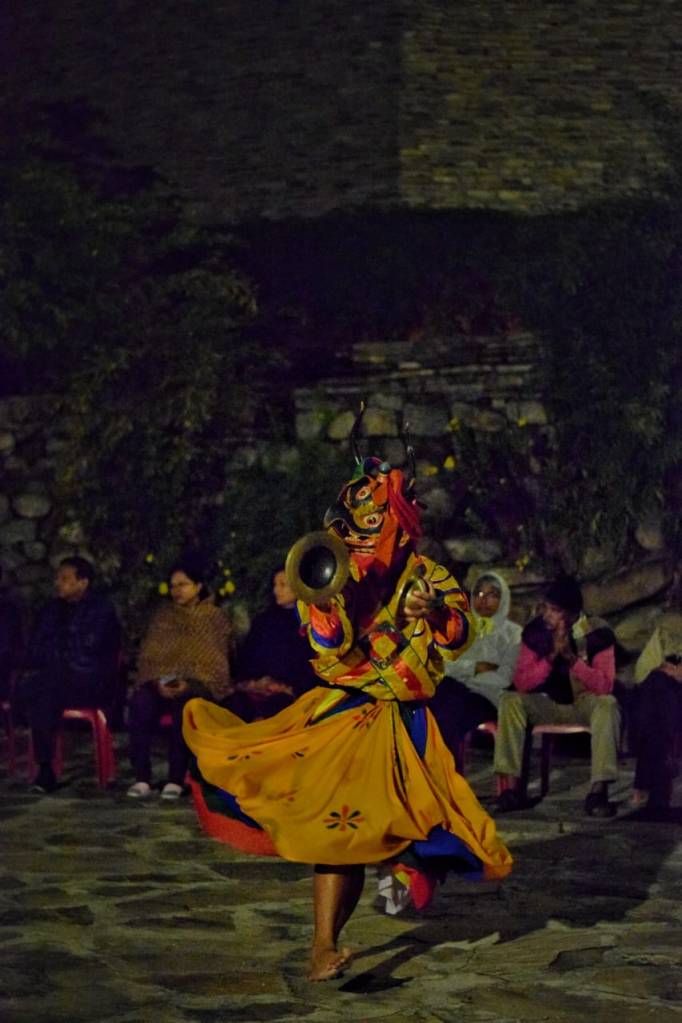
At around 5:30 PM we reached Paro and checked in at Tenzling resort. We quickly freshened up and gathered for the cultural programme of the evening. Masked Dance performances are an integral part of the culture of Bhutan. Men and women in traditional attire danced in perfect rhythm to music. Men wore different masks, displayed acrobatic moves and played cymbals. At one point we all became part of the dance by holding hands and joining them. All of us appreciated the energy and vibrancy of these dancers. The next day promised an adventure of a different kind and we retired early.
Tiger’s Nest
The next day our group was divided into two. One group went for a hike to Tiger’s nest and the other group visited Chele La Pass (the highest motorable point of Bhutan located at a height of about 13000 feet). I was part of the Tiger’s nest group.
Taktsang Dzonkha or Tiger’s Nest Monastery is located on the side of a cliff at about 10,000 feet above the sea level and is one of the more picturesque spots of Bhutan. Not an easy place to reach as one has to either hike all the way or go on a mule which are available on rent up to halfway. We decided to climb all the way. The one way route is about 4.3 km and takes about 3 hours to reach the summit. But the journey to this iconic landmark left us speechless. Legends mention Guru Rinpoche was carried from Tibet to this location on the back of a Tigress hence the name.
We reached the base of the mountain at around 8AM. Stalls selling souvenirs and crafts occupied the base. Here we were offered crafted wooden walking sticks on rent. From the gate we walked past a few fields to reach the base of the cliff. From here one gets the first distant view of the Tiger’s nest. It looked like a small box precariously perching on the sides of a huge cliff.
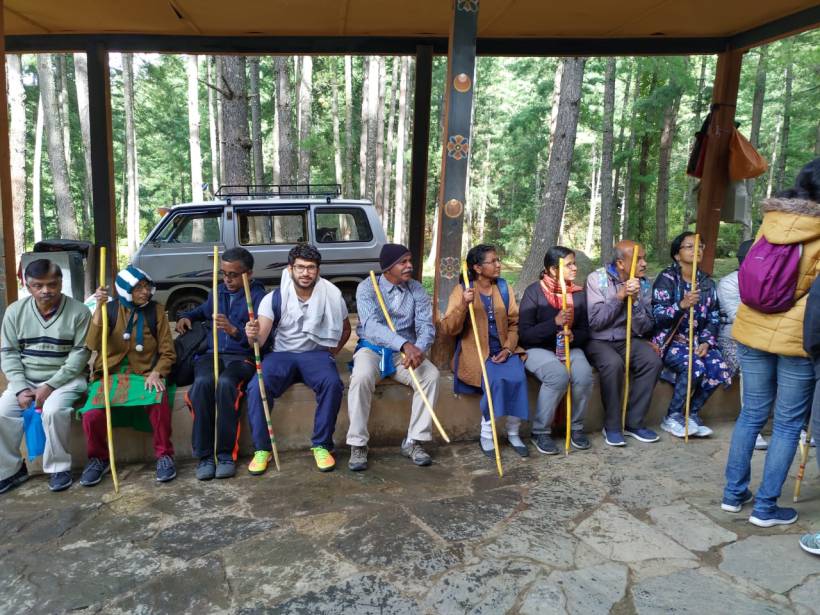
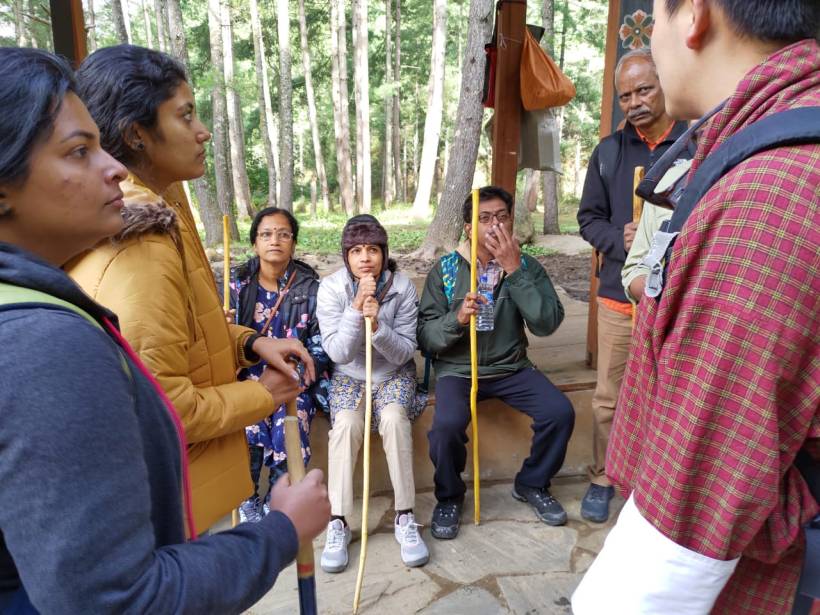
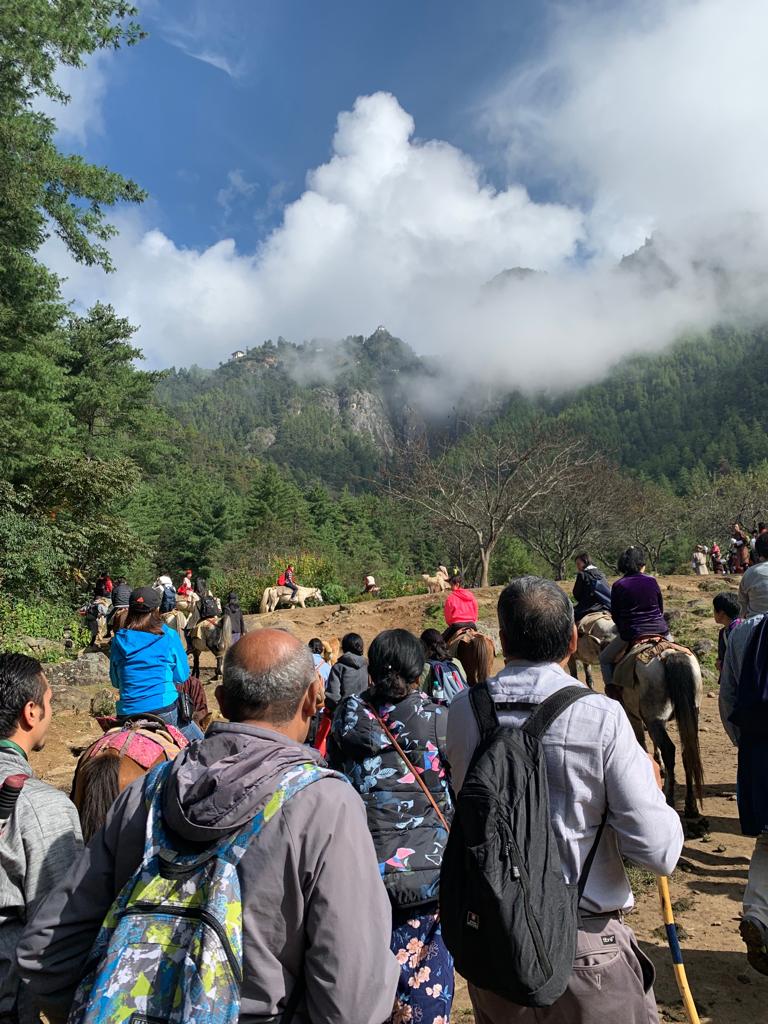
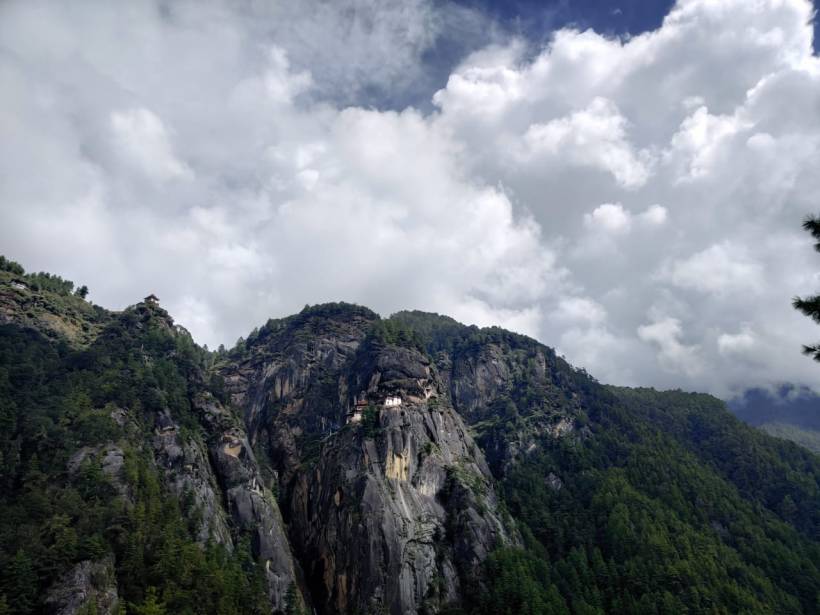
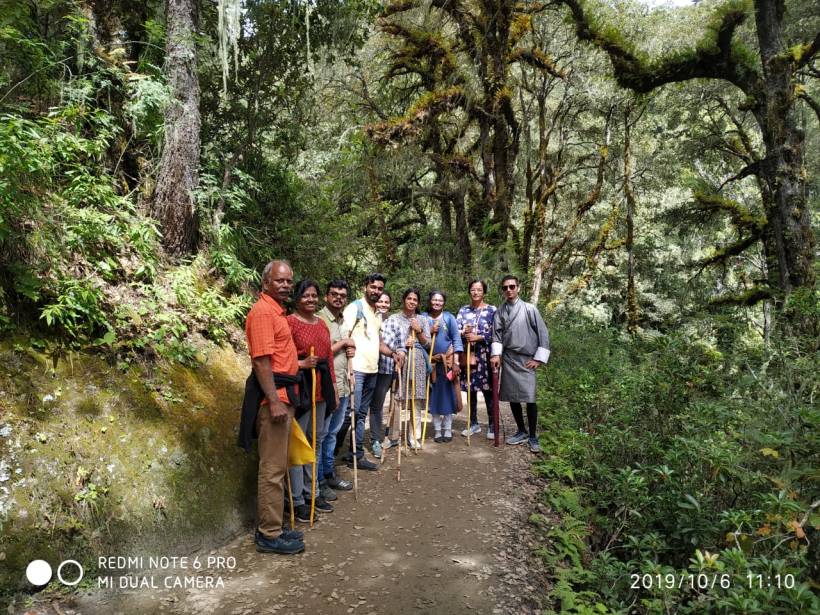
The ground sloped upwards from here and the actual hike started. We slowly started our climb following this gradual incline. On either sides were tall pine and Cypress trees making a great back drop to the climb. However the muddy and slippery path and the occasional mules which passed us spraying dust, made our climb slow and difficult. Our guides were helping us in all ways by encouraging us and giving us tips on how to climb. The first half an hour was the most difficult part as our body was getting acclimatized to the heights and the hike. Occasionally we encountered steep slopes but the path twisted between the trees making these slopes easier to climb. Some earlier trekkers had carved their path by cutting through the next bend, but these shortcuts were sharper and narrower. .At some locations we took these short routes. The wooden poles proved handy at these spots. Along the way one gets a view of numerous prayer flags and some exquisite views of the valley. We took short breaks after every 10-15 minutes to catch our breath and drink water and continued. Rocky the oldest amongst us proved to be the fittest as well, as he raced ahead of all of us along with the youngsters.
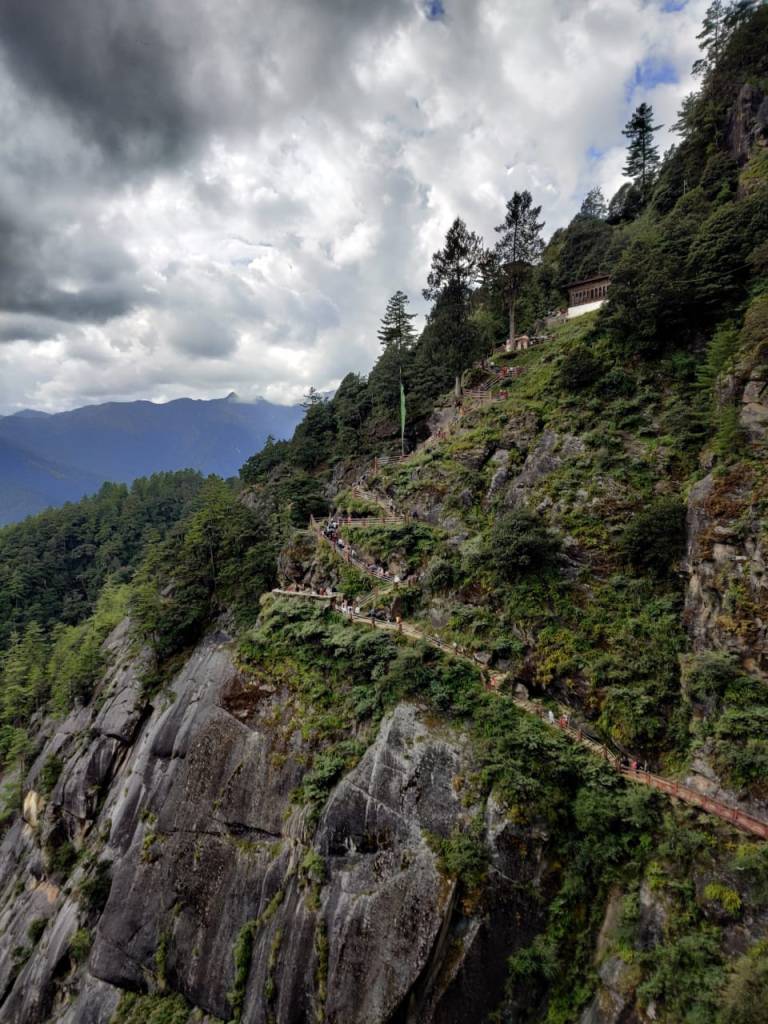
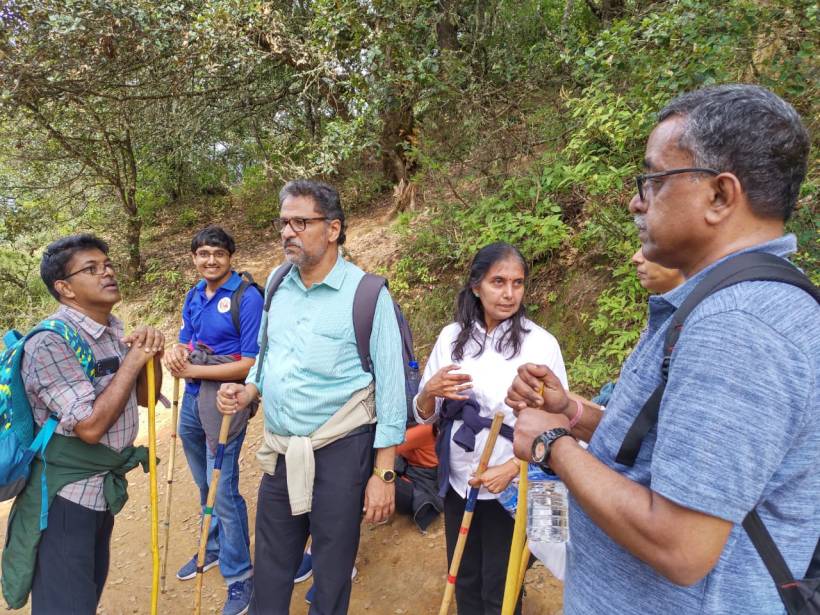
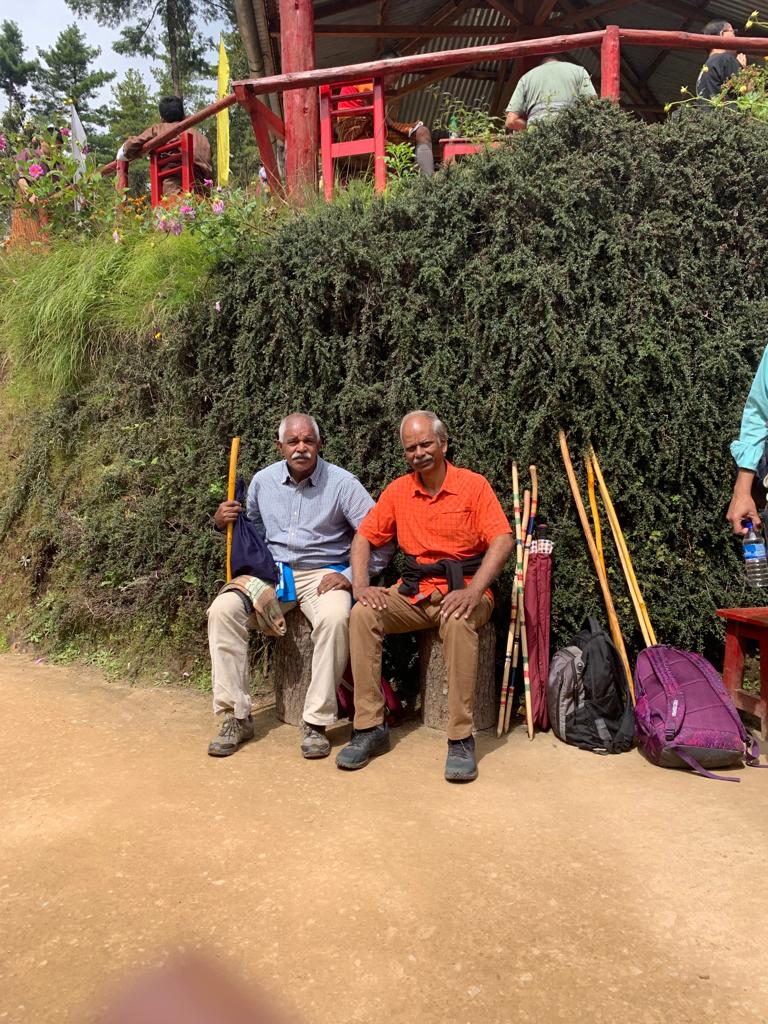
After about 90 minutes of tough hiking we reached a point where there was a cafeteria. We sat down for some time and had a few refreshments. This was the half way point. Tiger’s nest looked closer now and the view was clearer. Clumps of Wispy clouds hovered over the peak and some of them blessed the cliffs by touching its forehead before continuing their journey.
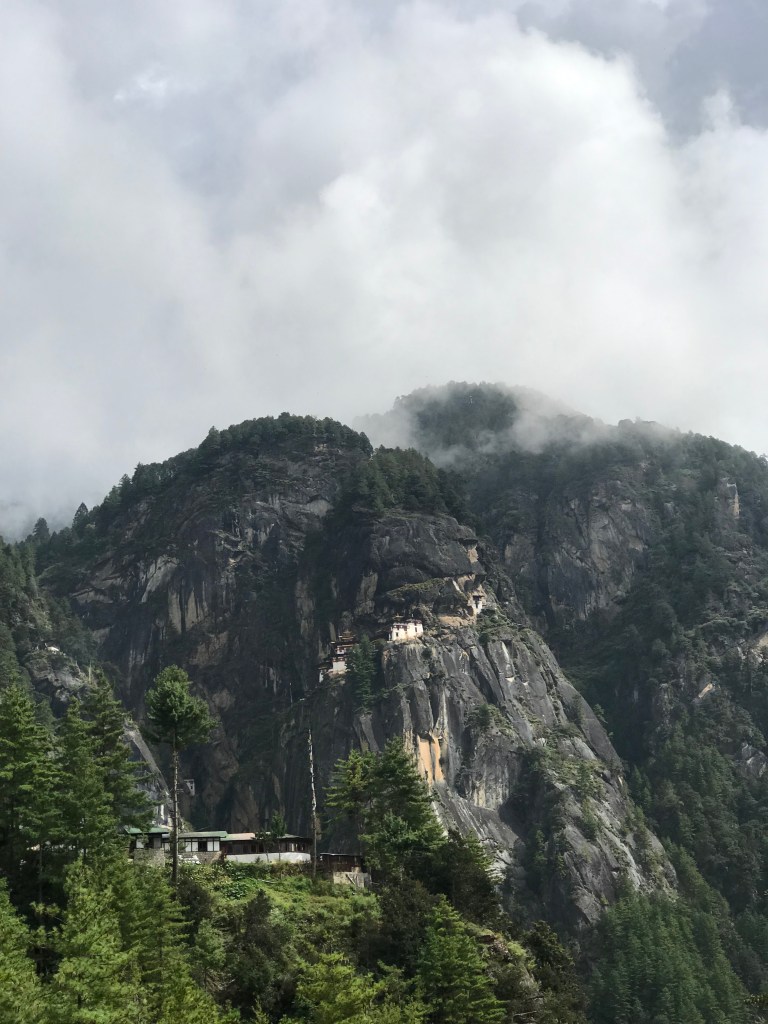
Tiger’s Nest below us
The climb became less difficult, probably because we were getting familiar with the terrain. Another hour had passed and the Tiger’s nest was getting closer and closer. The entire sky was studded with multicoloured prayer flags giving us a feeling that we are almost there, when all of a sudden it disappeared from the view. However, after a few bends, we reached a platform from where we could see it directly in front of us. We were at a height and the Tigers Nest was at a level below us. A steep descend and a pool with some more steps separated us from the destination. This is called the 2nd view point, the point from which many pictures of this iconic monument are taken.
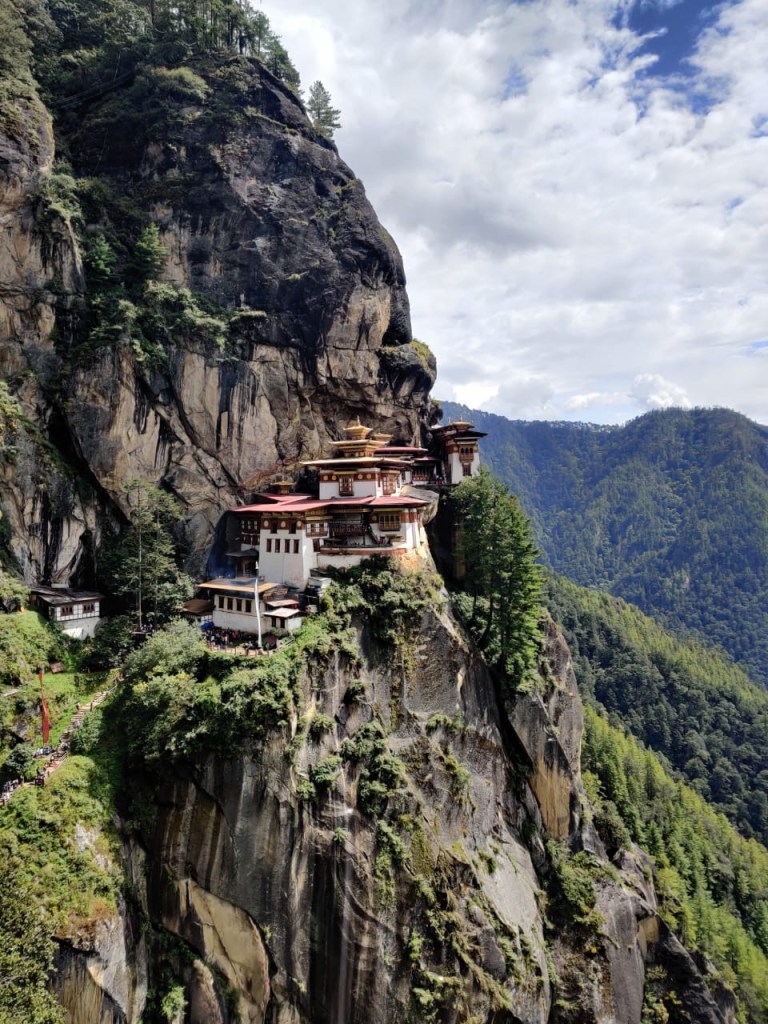
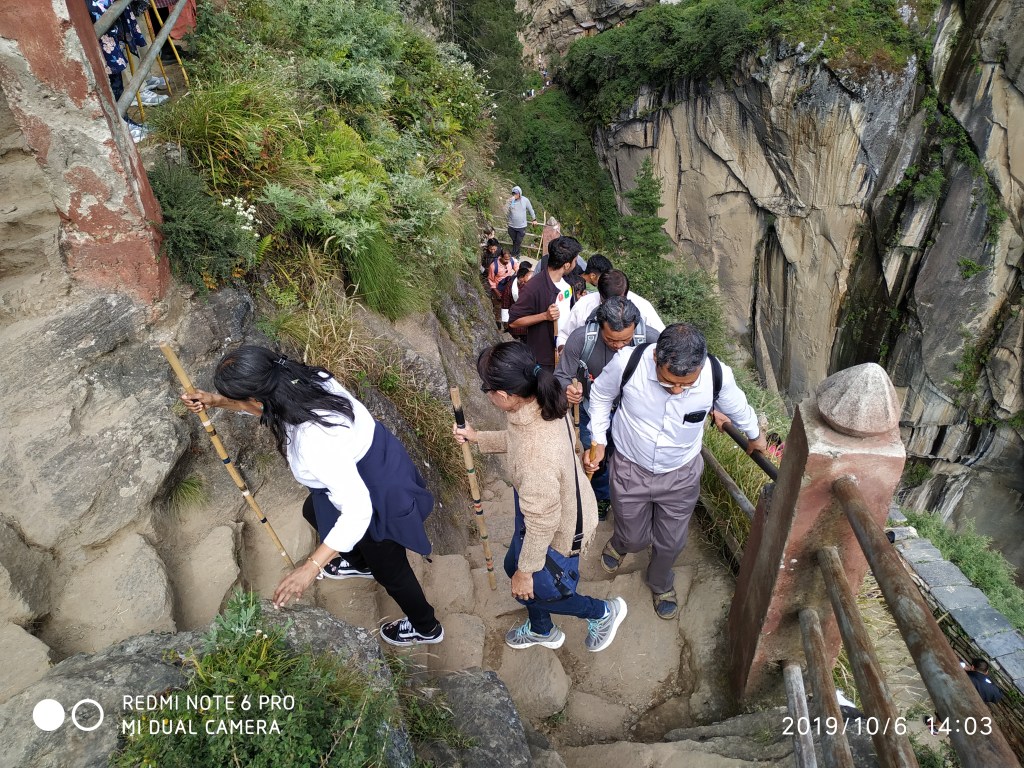
Final Push
The last part of the climb was a gruelling endurance test. We were tired and burned out, but we descended 500 steps and reached a landing near a waterfall which gave us a cooling effect. We huffed and puffed our way and climbed another 300 steps and crossed the wooden bridge and reached the “ Tiger’s Nest”. The feeling of ultimate triumph took over our fatigue and we were in a surreal world. The whole climb took 3.5 hours.
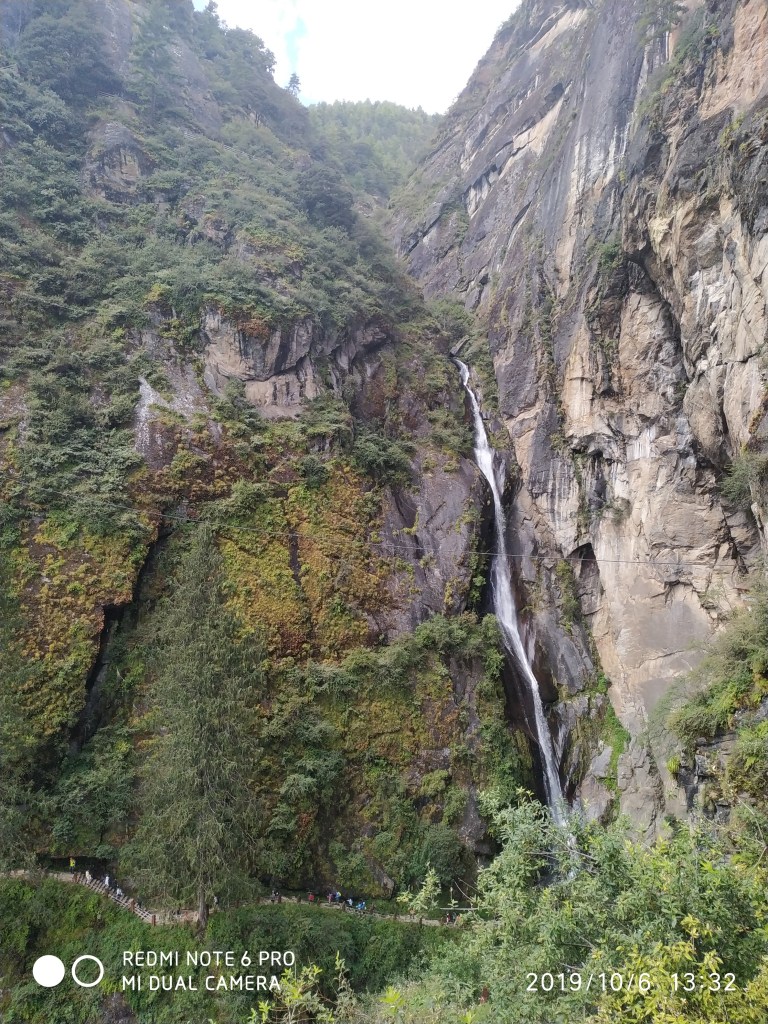
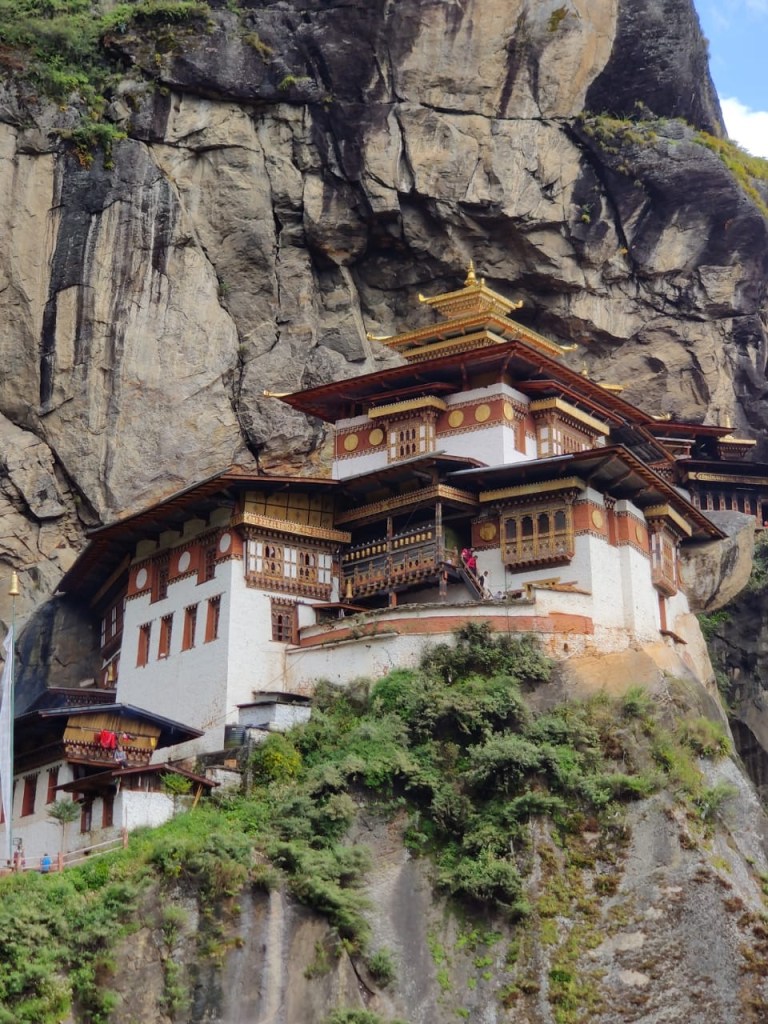
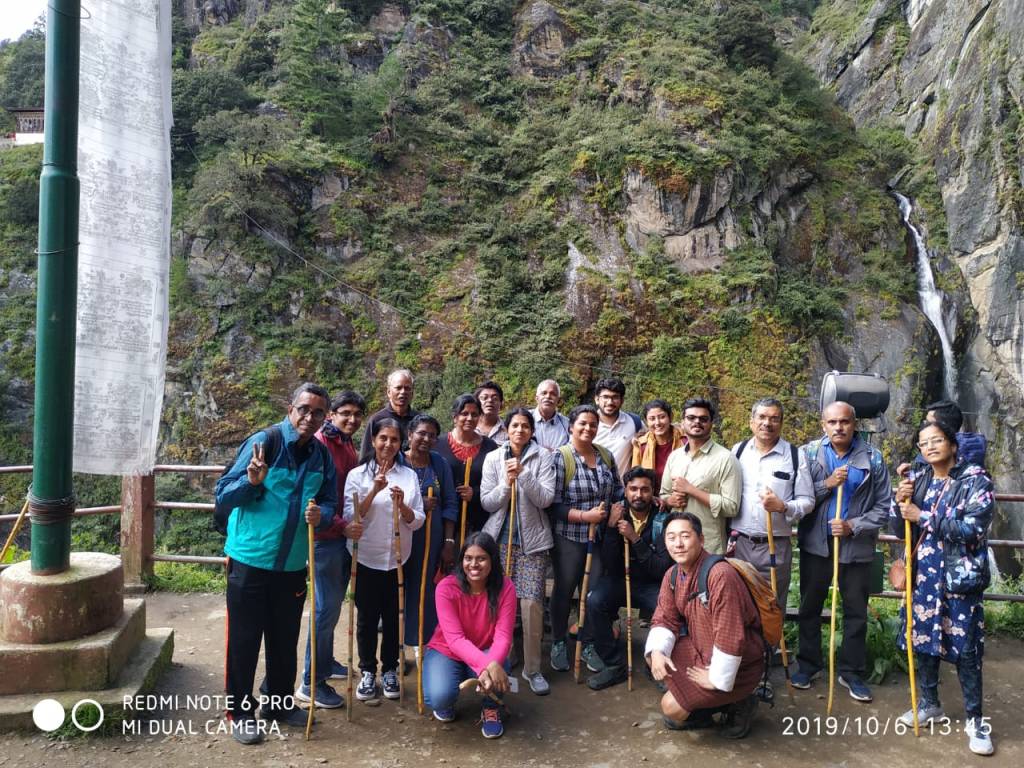
Inside the Nest
We left our belongings outside and entered the monastery. Once inside a different level of tranquility took over and the outside world became alien to us. The long dark stone corridors opened out onto small shrines and meditation spots. The main Shrine was dedicated to Guru Rinpoche or Padmasambhava. Buddha statues warmly light by butter lamps and candles, fantastic fescos and vibrant murals occupied these areas. A heady scent of incense filled the air. There was a room in the temple premises where butter lamps are lit by devotees in memory of their deceased loved ones. The light of the lamp is set to guide the departed soul, paving the path for a peaceful journey onward. Many of us performed this ritual. Having spent almost an hour inside we started our descent.
The descent was faster as we hiked back the way we came. An entire day was spent on the hike but it was worth the effort. Some of us went for a hot stone bath to relax and wind down after a demanding day. Fresh river water is poured in to a wooden bath tub mixed with medicinal leaves. The water is heated using river stones that are roasted in the fire in another chamber. The holes in the chamber allow the heat to be transferred onto the bath tub. We soaked for about half an hour and came out refreshed.
Che le Pass
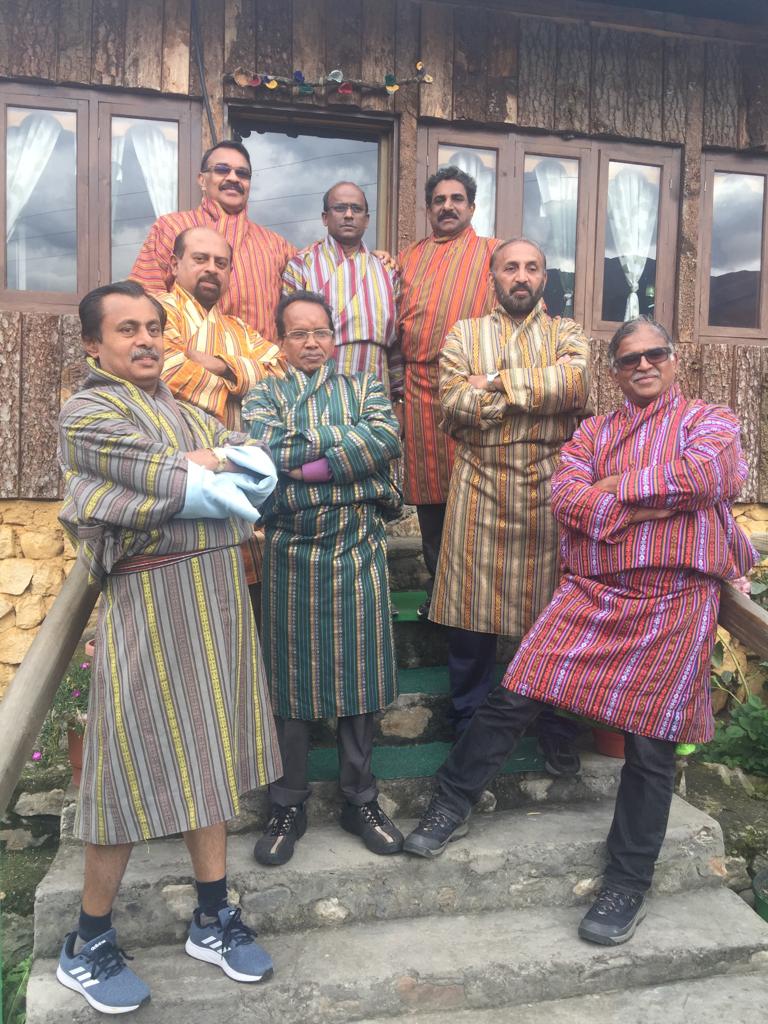
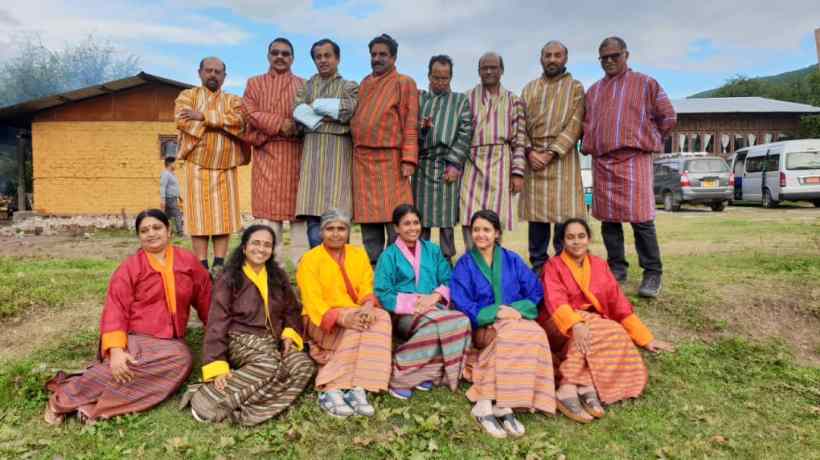
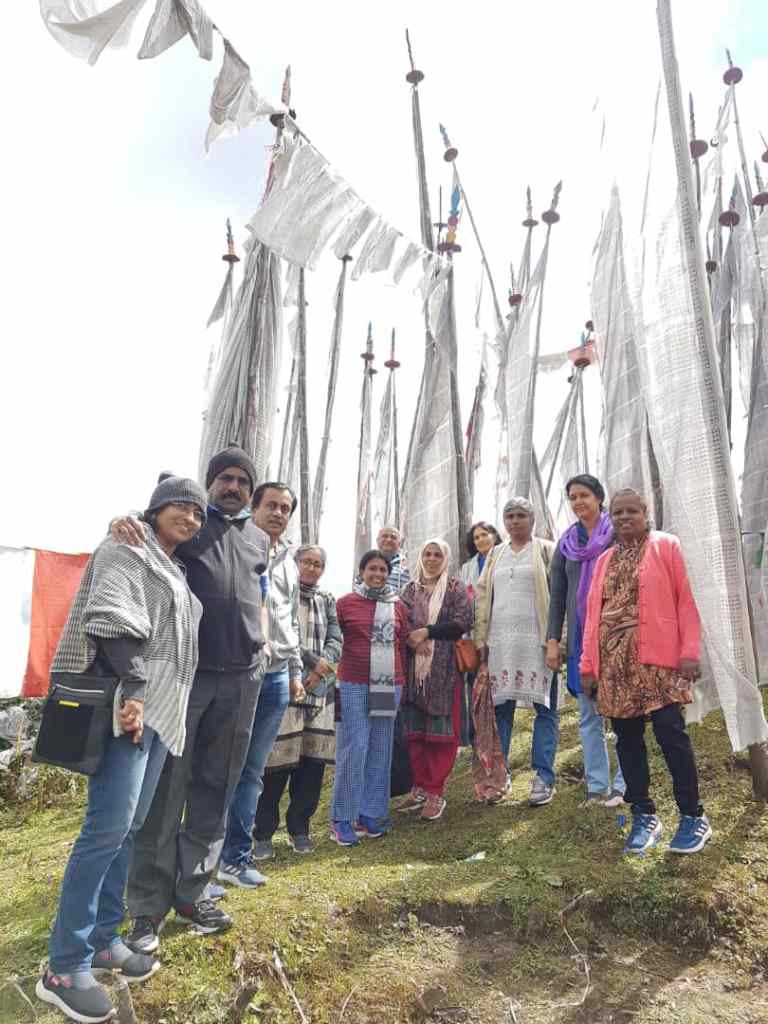
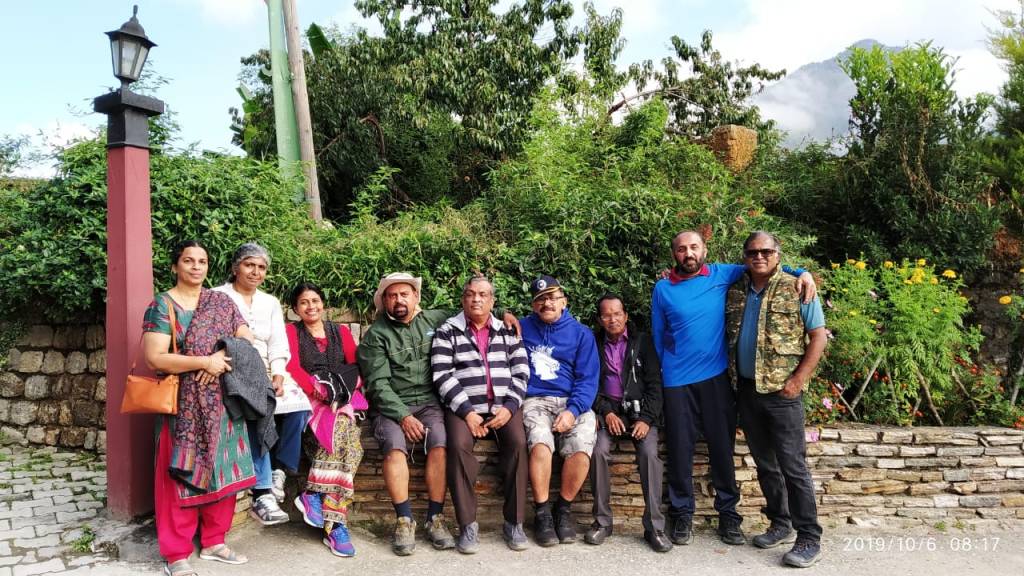
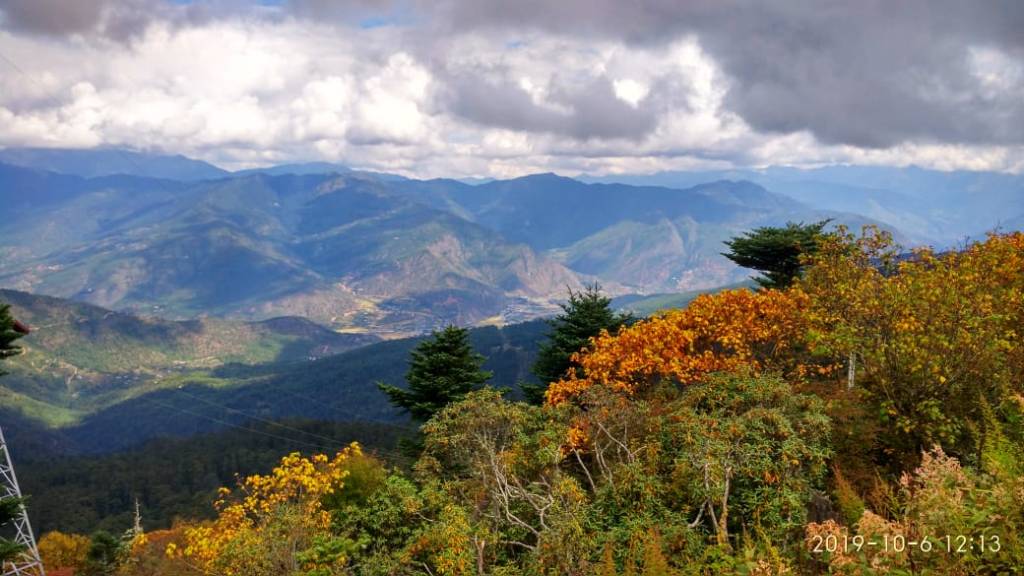
Our friends who visited Che Le Pass described their experience as one of their best. As one can see from their photos the place had many exotic scenic spots and the views were magical. They had their share of fun too wearing the traditional dress of Bhutan.
Cultural Meet
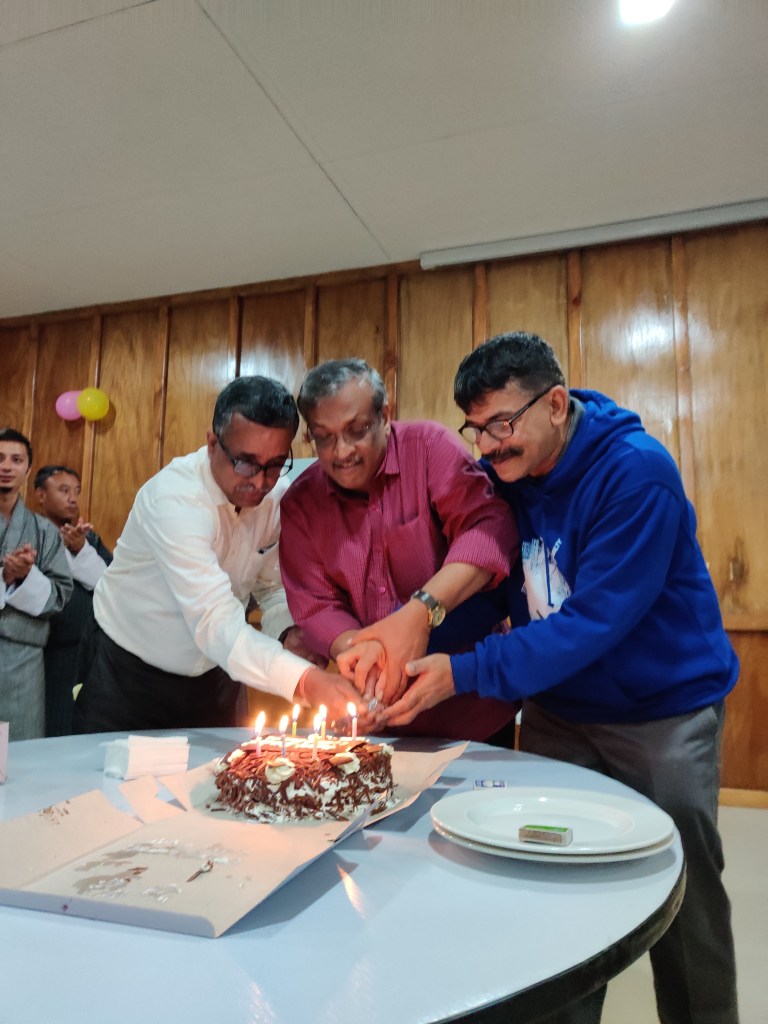
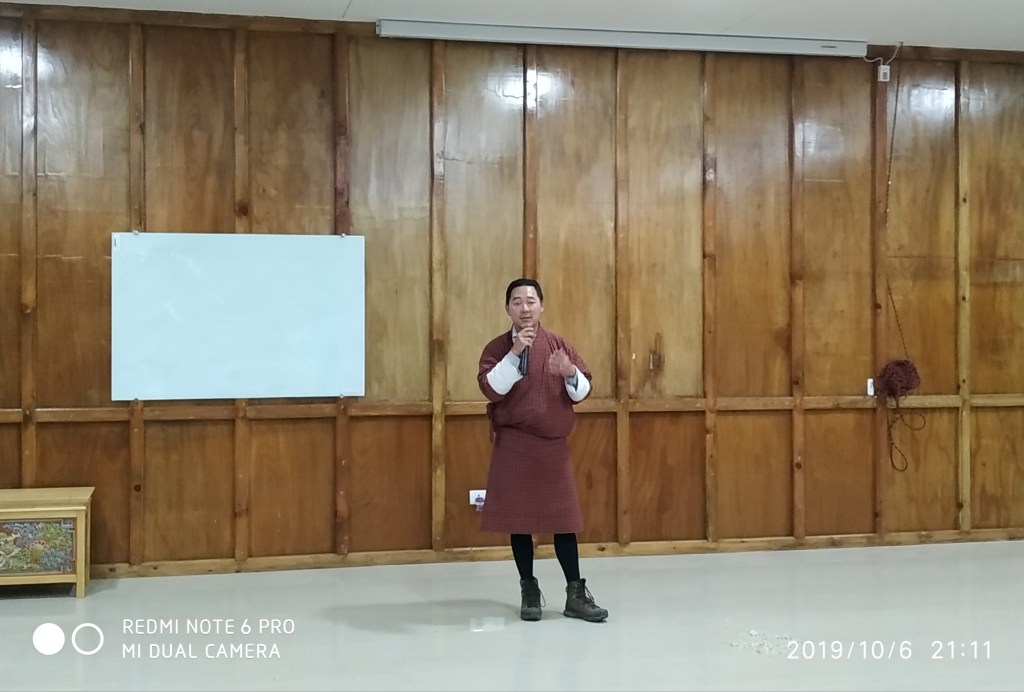
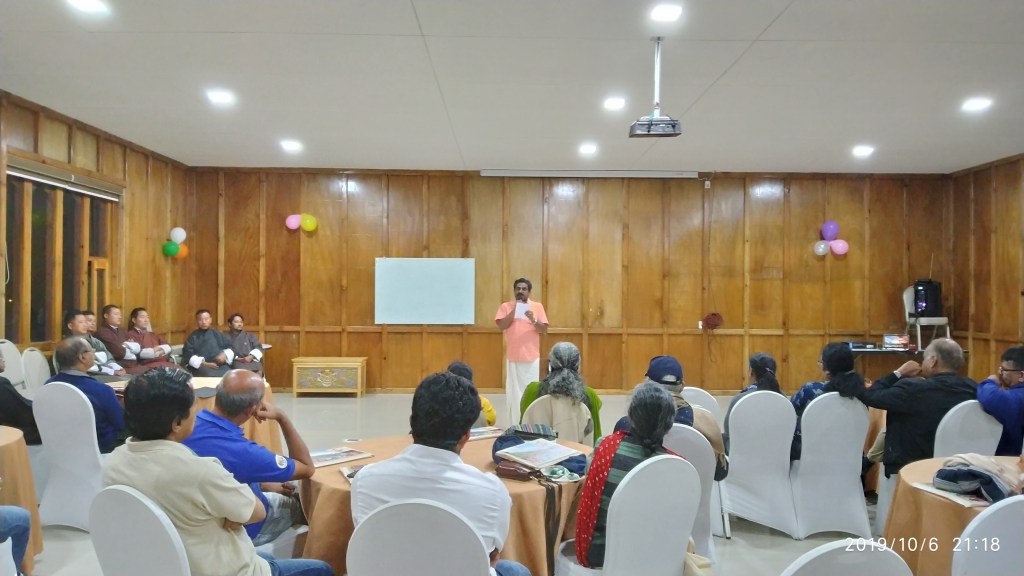
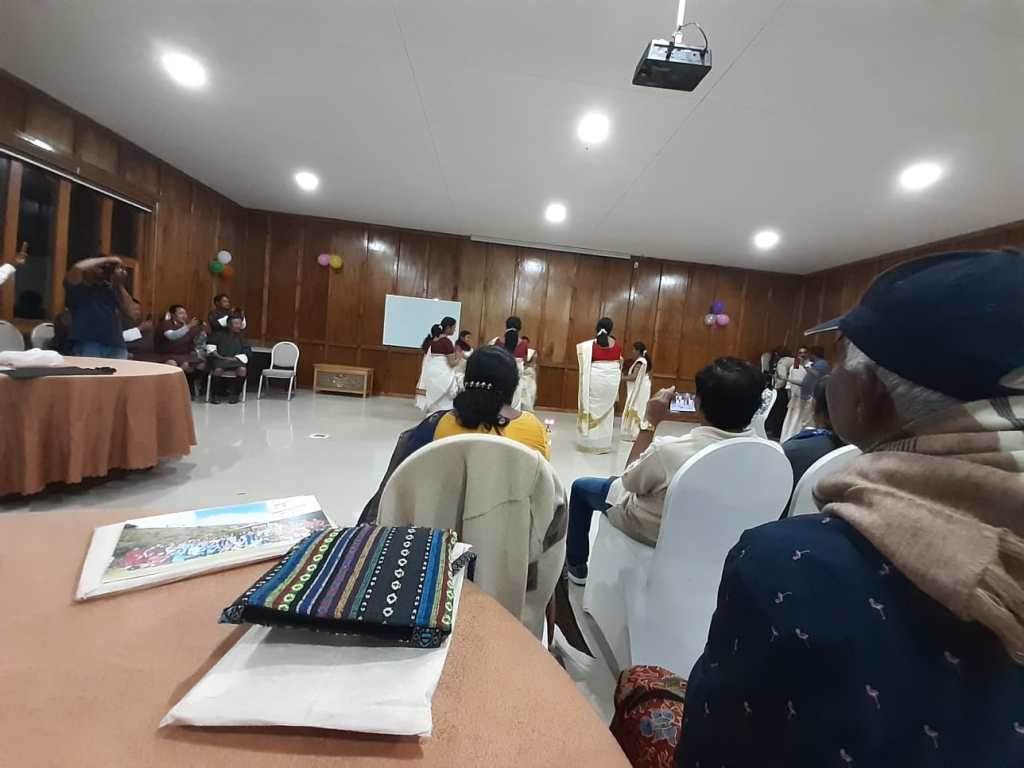
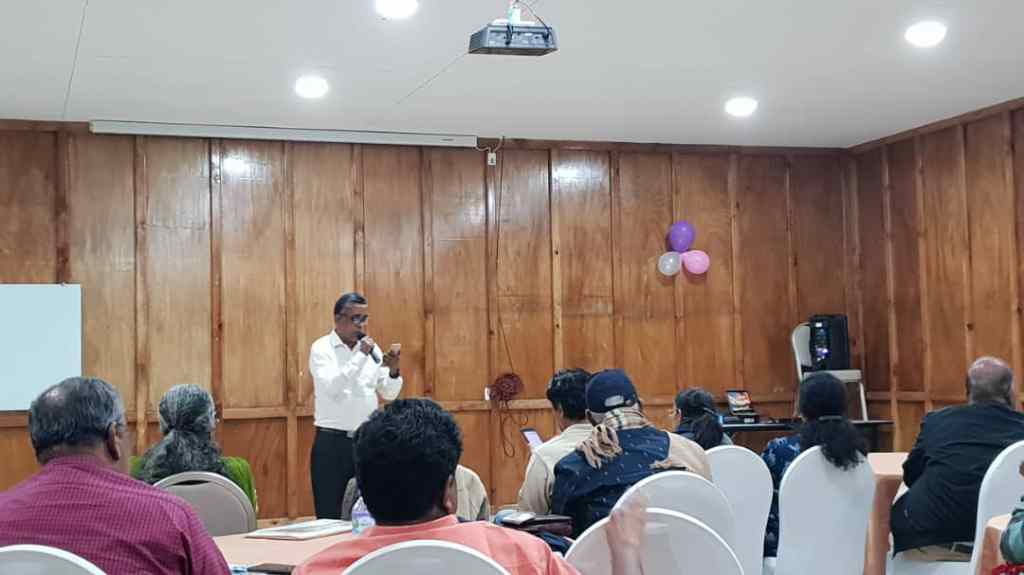
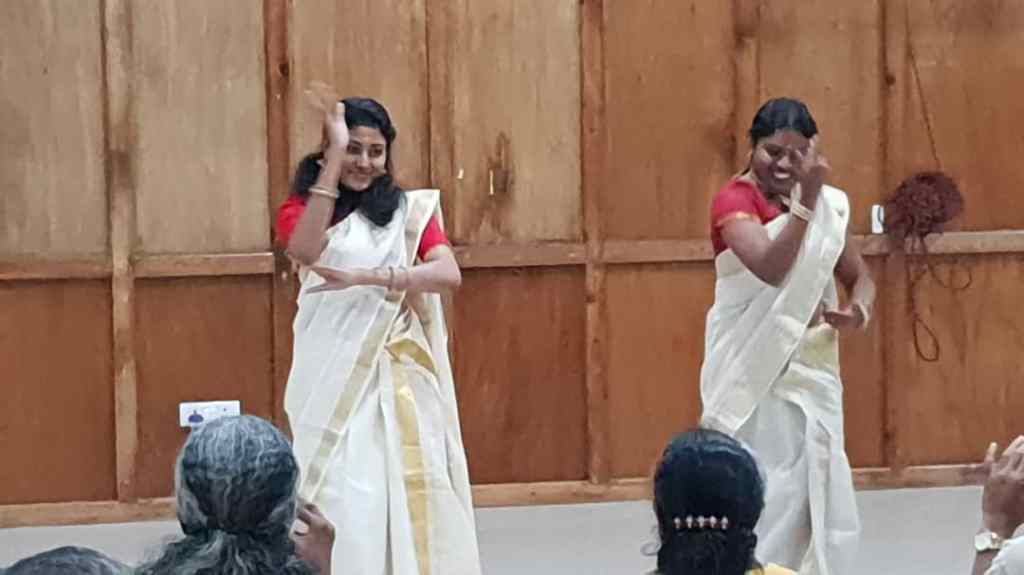
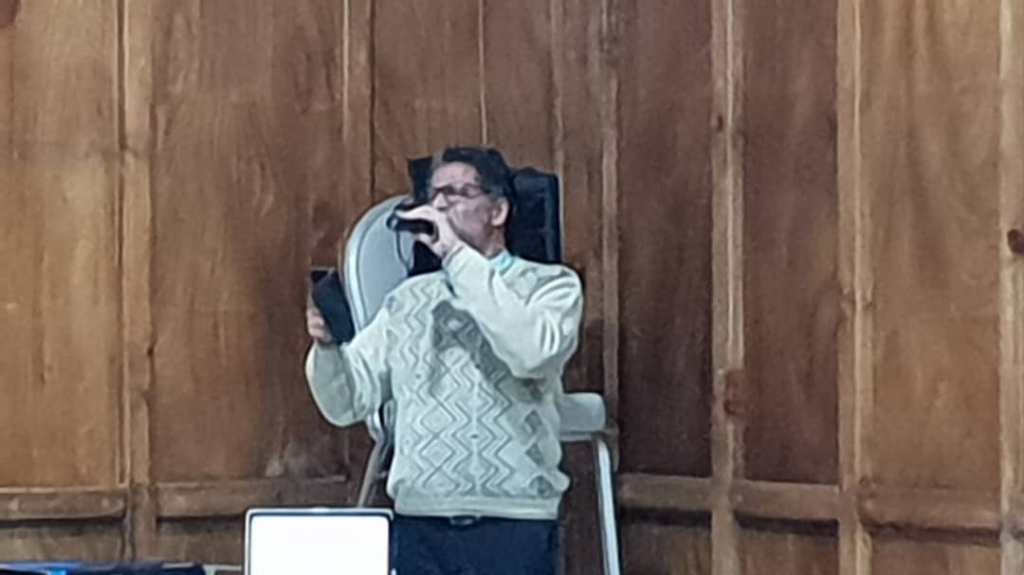
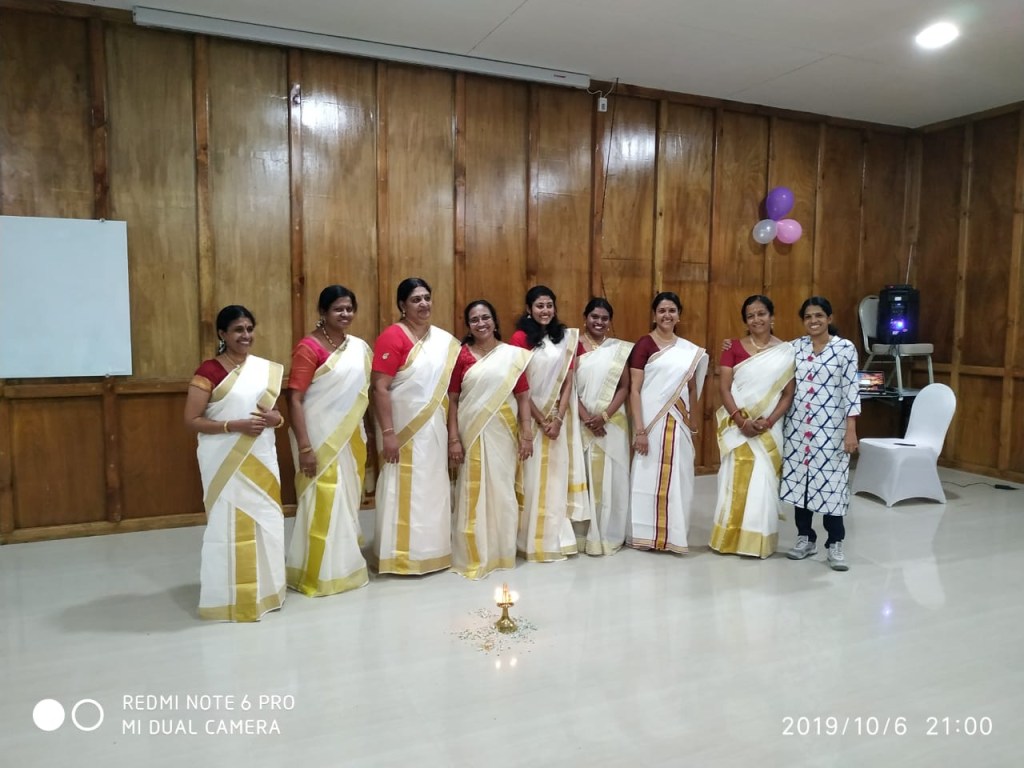
Back at the resort we assembled for a Cultural evening. It was also Sone’s birthday and my Pirannal. Fazal’s birthday was due the following week. The event started with all three of us jointly cutting a birthday cake. We distributed gifts to all our three guides as a token of our appreciation for their excellent service. Our cultural programme started with a poetry recital by ACK. This was followed by the long awaited Thiruvathirakali. The performers in traditional dress enthralled the audience with their graceful movements and perfect execution of this dance form. This was followed by another scintillating dance performance by our youngsters Harsha, Devika & Arvind. The trio thrilled the audience with their agile moves and steps. Many melodious songs from our singers followed and we had an unforgettable evening.

Bye Bye Bhutan
The next day morning after breakfast, it was time to bid farewell to this beautiful land of mountains. As we were going towards the airport, we were filled with mixed emotions…. a sense of contentment with a tinge of sadness. Our guide was singing a Bhutanese song which meant “Come back again”. echoing our thoughts.
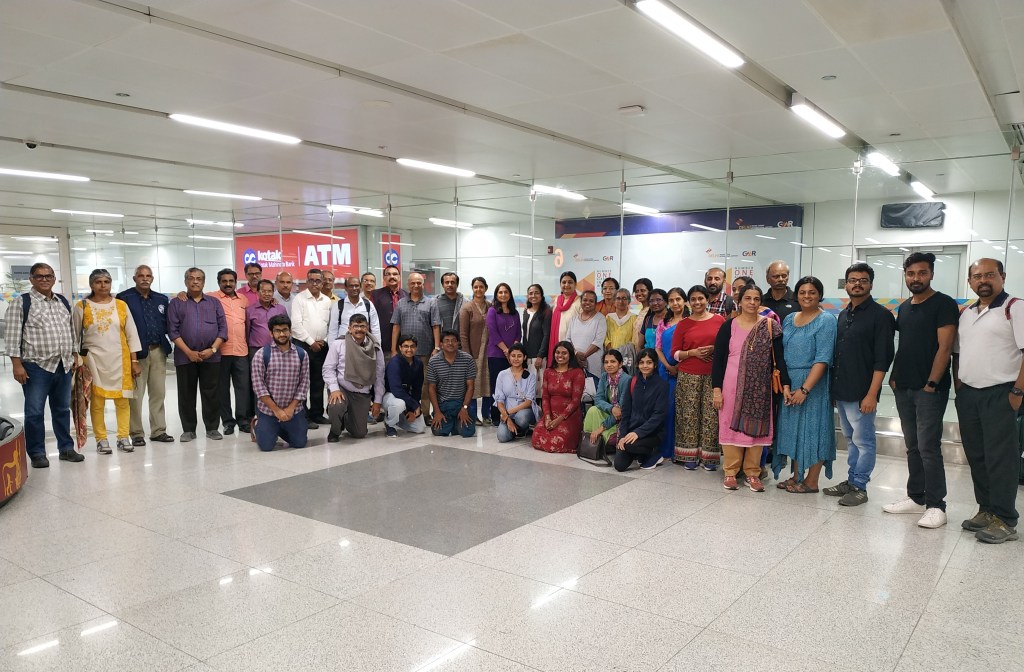
Back in Delhi we departed after a group photo with memories of an amazing get together.
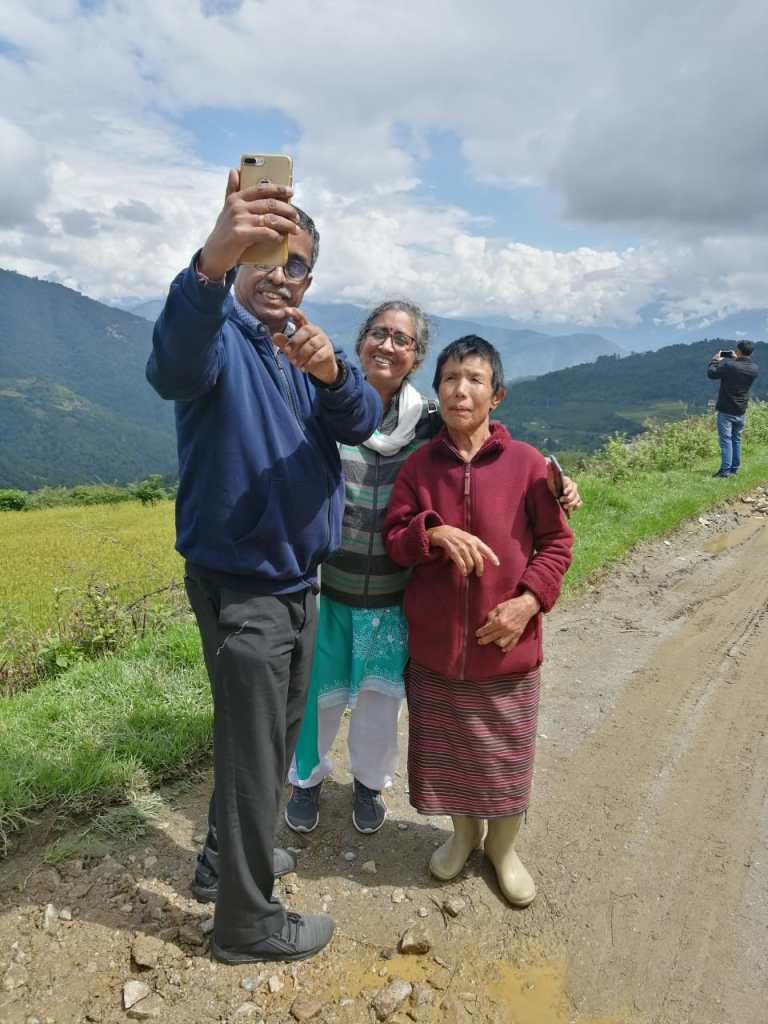
This remains as one of my best trips with a treasure trove of colourful reminiscences.
 Nostalgia EE 84