
by JAYAPRAKASH P
EAST SIKKIM
East Sikkim is a district that occupies the south-east corner of Sikkim, with its headquarters at Gangtok, the state capital. It shares borders with China and Bhutan. Hence, the Indian Army considers it as a sensitive area. The Army is in control over most of the areas east of Gangtok where visitors are restricted; only a few places are open to tourists. The mountain pass, Nathu La was part of the ancient silk route which connected Lhasa to India. Zuluk and Nathang Valley are also important tourist attractions in East Sikkim.
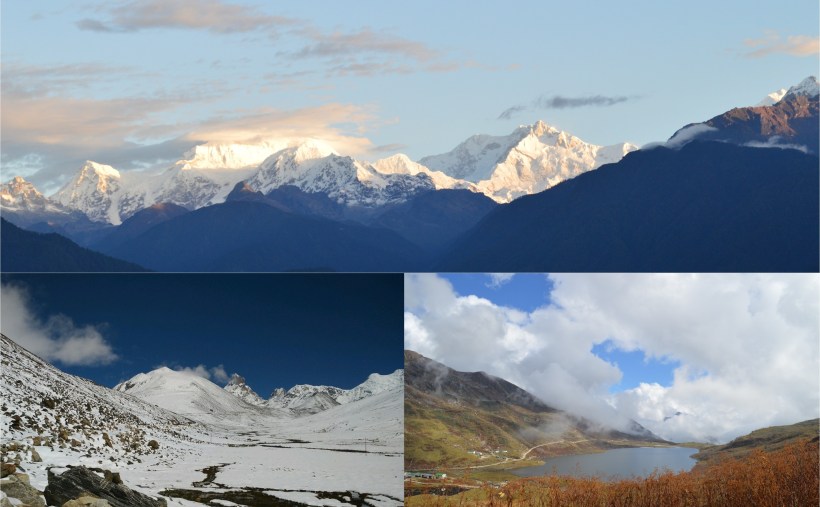
October 15, 2016 : Lachung – Chungthang – Mangan – Samdong – Gangtok (110 km, 7 hrs)
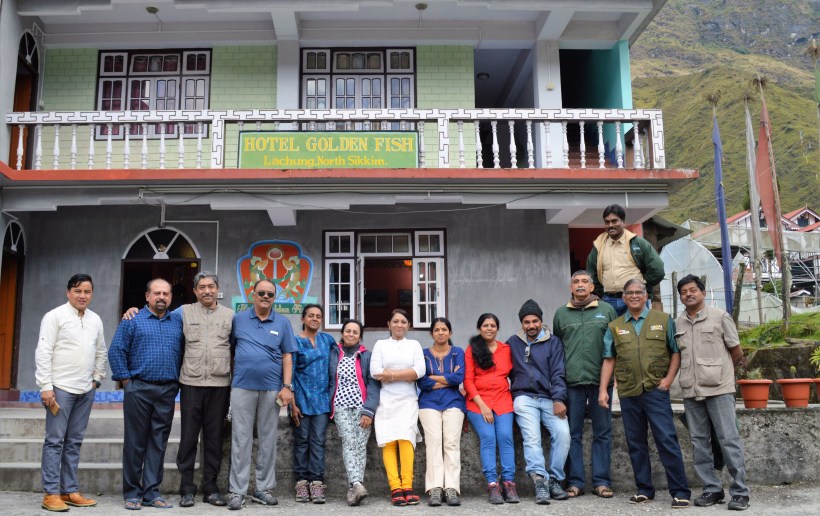
We checked out of Hotel Golden Fish, Lachung after breakfast and took a group photo with our host.
We had to return through the same route we travelled to North Sikkim, ie, via Chungthang, Mangan and Dikchu. Shortly after passing Beechu, we came across the tall, lean waterfall Bhewma, where the mist and morning sun together formed a rainbow in the waterfall.
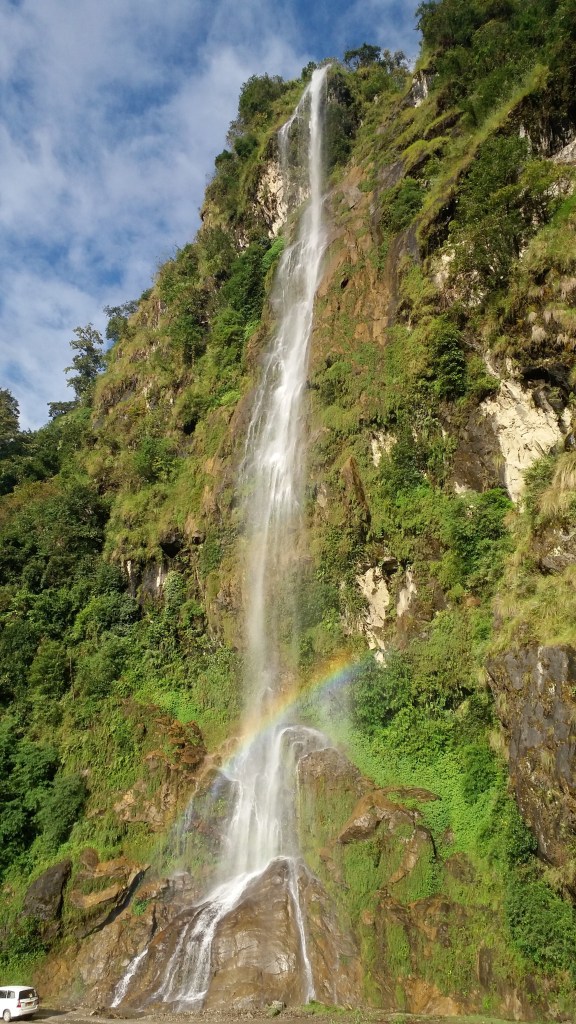
Somehow, we missed this beautiful waterfall on our onward journey to Lachung. The locals aptly call this waterfall `Amithab Bachchan Falls’ !
Since we had an idea about the road conditions, we knew we could make it to Gangtok by noon. When we reached the small town Mangan, we searched for a tyre shop and were lucky to find one shop where the Innova’s tyre was available. After discussing with the Car Rental Agency, we bought a new tyre for the car. Now we could resume our journey a bit relaxed and once we crossed Dikchu, we could gain some speed because of the better road surface. We left the Singtam – Dikchu Road at Samdong and took a left turn to Gangtok.
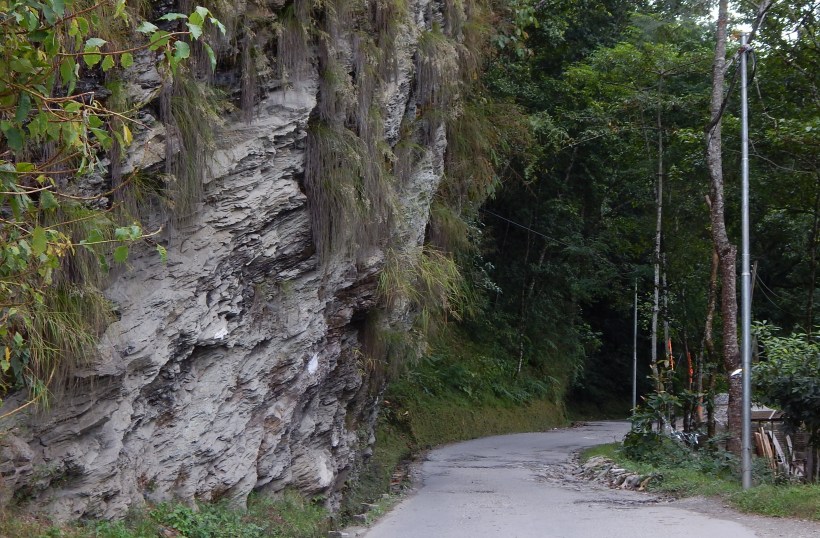
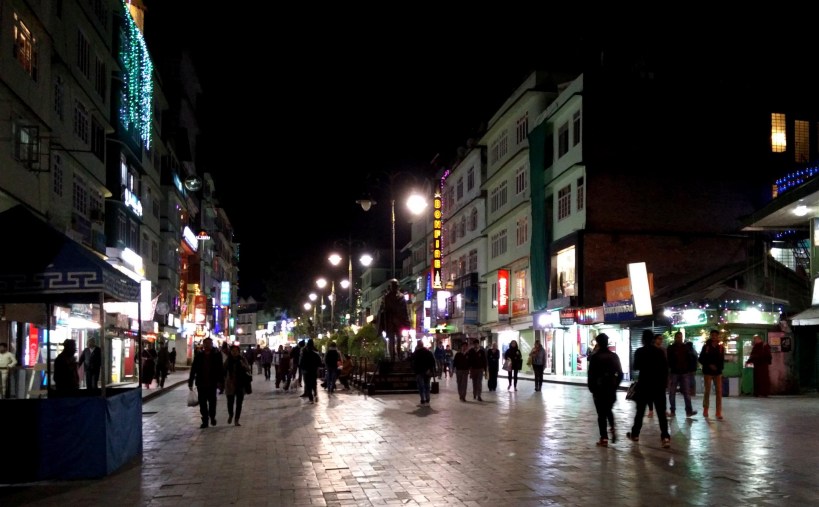
We drove without many stops aiming to reach our destination by lunch time. Even though the popular `Tashi View point’ was only a small detour from our route, we skipped the place which is famous for the Kanchenjunga views since we had already seen it in Pelling. There were a few waterfalls like Butterfly falls and Bakthang falls, but we didn’t stop at these places because we had already seen much bigger waterfalls all through this trip. We reached Gangtok, spotted a nice restaurant and enjoyed a tasty lunch. We then checked into the Army Guest House, which was ideally located on a hill top. Later in the evening, we visited M G Marg, the popular shopping area, where vehicles are not allowed. In contrast to our previous few days in Sikkim, this place was busy with a large crowd.
October 16, 2016 : Gangtok – Nathu La – Kupup – Zuluk – Nimachen (130 km, 8 hours)
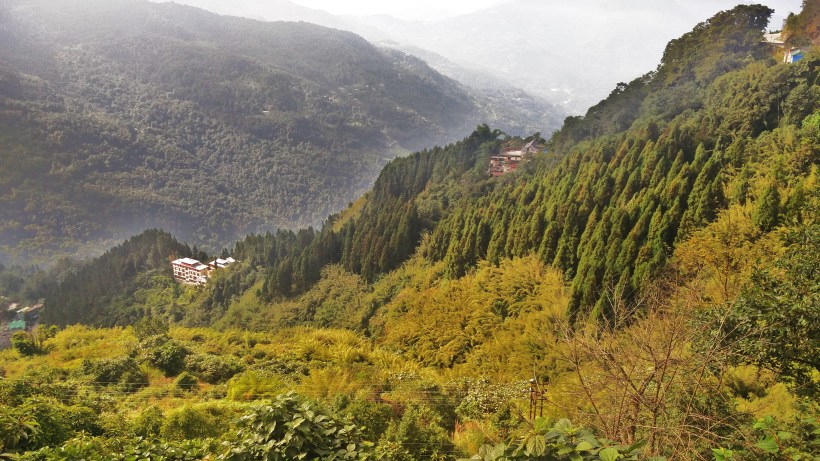
The view from the Army Guest House was beautiful – almost a bird’s eye view of the Capital city. A few of us went for a short morning walk and had the opportunity to enjoy the great views.
After a heavy breakfast, we checked out from the Guest House and headed to visit the India-China border, Nathu La (La means mountain pass). At the Army check-post at the outskirts of Gangtok, our permit papers were checked. Only a limited number of vehicles are allowed to Nathula in a day, as decided by the Army. So we tried to reach the check post on time and waited there for about half an hour to get our vehicles cleared. Being an important defense location, the road was well maintained.
After driving for about an hour from the check post, we reached Tsongmo Lake. Most of the tourists visiting Nathu La, stop here for a tea break and the customary photo session.
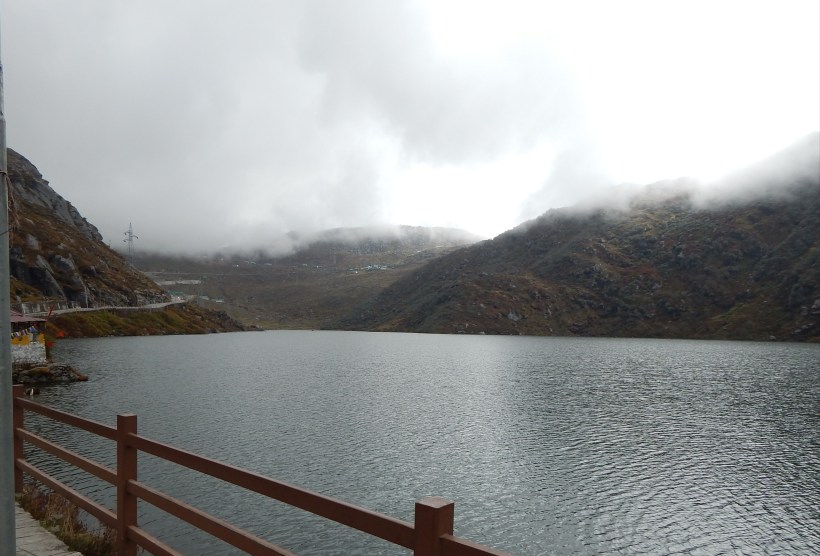
The misty surroundings of the lake and the mountains in the background presented an ideal location for photos.
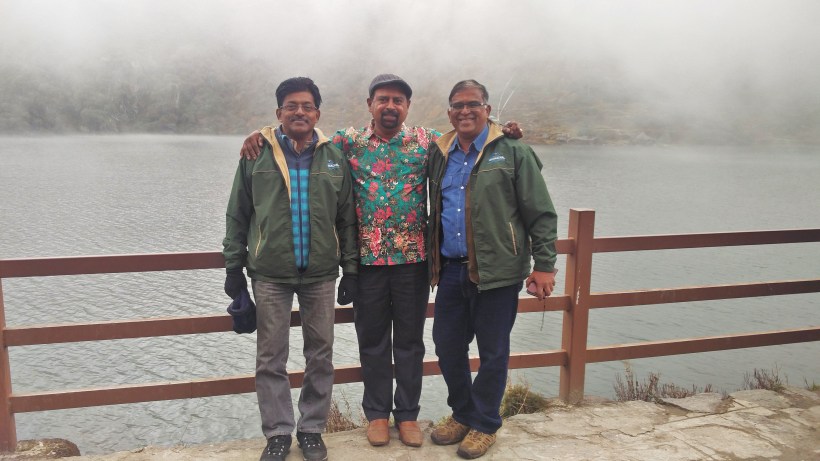
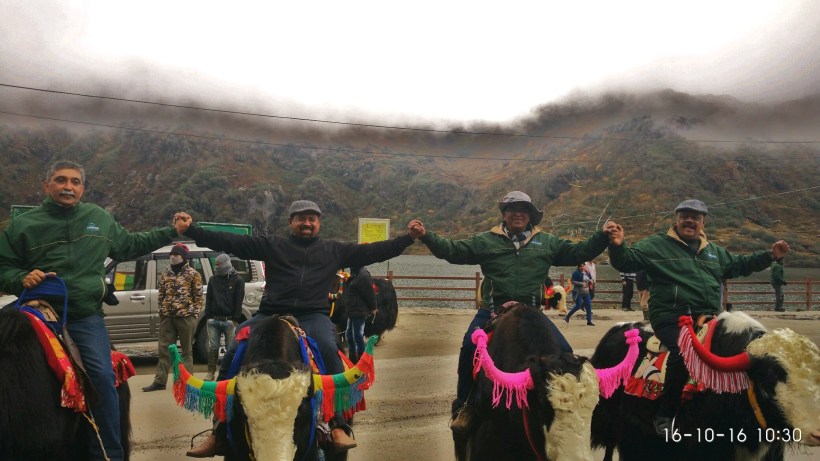
Yak ride was an added attraction there, and a few of us `rode the yak’ and posed for photos. It was pretty cold out there and after the photo shoot, all of us rushed to the local vendor selling hot masala tea.
The gradual climb to Nathu La, at an altitude of about 12,000 ft. was smooth and we reached there by about 12 noon. We were briefed by the army personnel about the rules to be strictly followed at the border check post. Photography is strictly prohibited since you stand close to the border gates of India and China. At our side of the border, we can see the tricolor, and on the other side the Chinese flag. There is a designated spot away from the border gate, where tourists can take photos, but the Chinese Army Post is not visible from there.
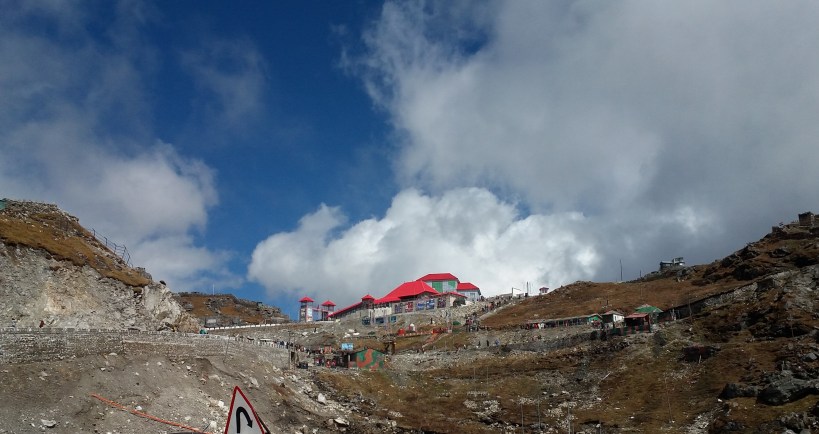
An Indian Army Post, severely damaged during the Sino-Indian War of 1967 (Nathu La Clash) is preserved as a memorial by the Indian Army. A big salute to the Indian Defense Forces for serving the nation in such tough conditions.
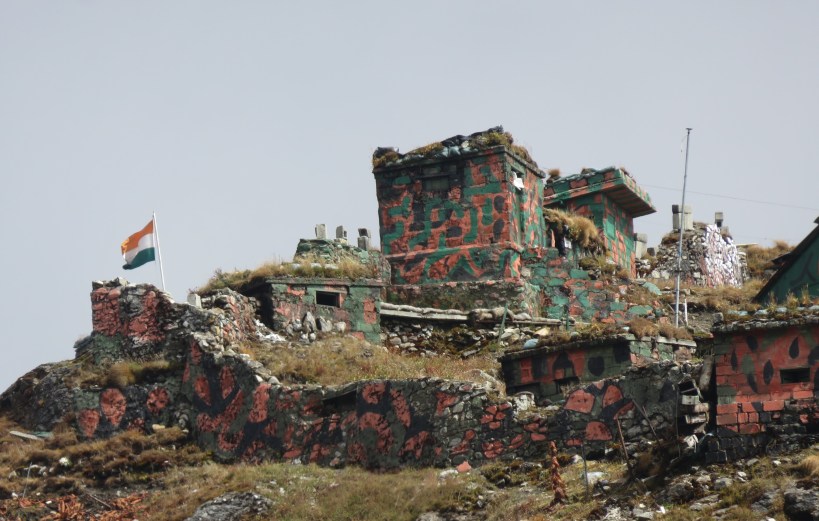
We then continued our journey through the “old silk route” towards Kupup. We spent some time enjoying Army hospitality at the Sherathang War Memorial and Ganju Lama War Museum, located on the way.
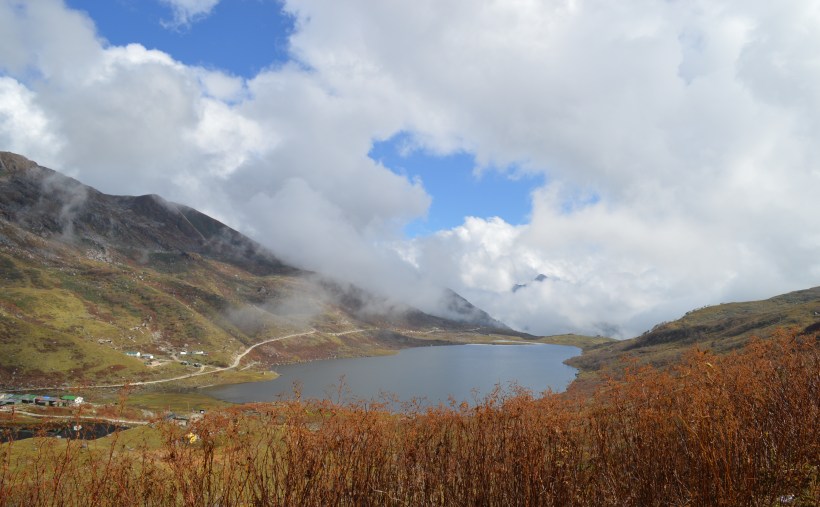
A little further ahead was the small but beautiful lake Hangu, set against the backdrop of mountains.
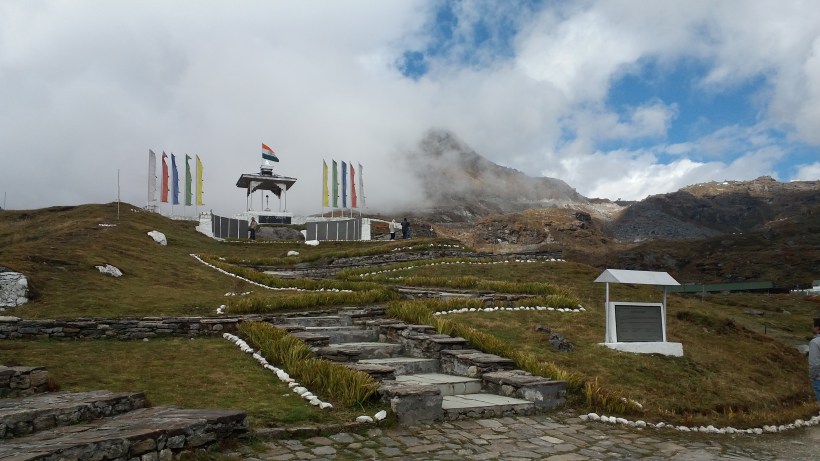
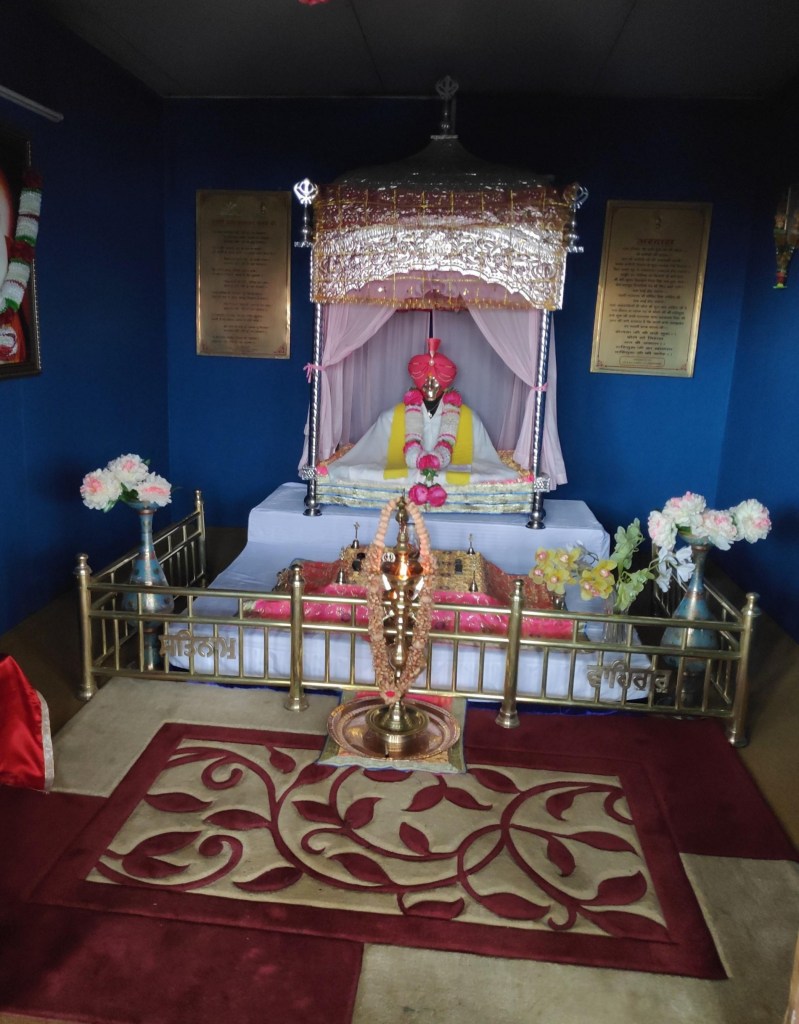
We then stopped at Harbhajan Singh Mandir (Baba Mandir), built by the 23rd Punjab Regiment, in memory of Sepoy Harbhajan Singh of the Indian Army. We were told that he slipped and fell down from a cliff into a stream while leading a Mule Convoy and died, in the year 1968. The soldiers believe that the `Baba’ will protect them in the difficult terrain under the harsh climate.
Every year in October, on the occasion of the Infantry day, a wreath laying ceremony is held here to honor the brave soldiers who laid down their lives for the country. There was heavy military presence in the region.
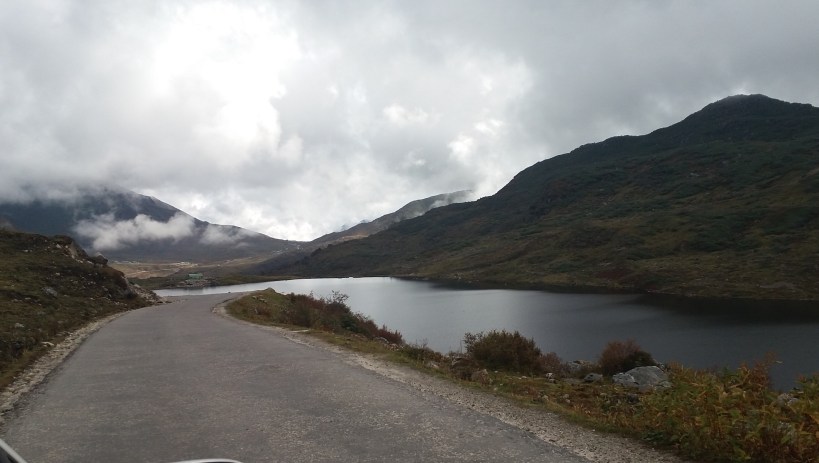
We continued driving through the road alongside lake Hangu for some distance. Soon we reached the little town Kupup, where we could find a small eatery. This region of Tukla valley had a mostly barren landscape, something similar to that of Ladakh.
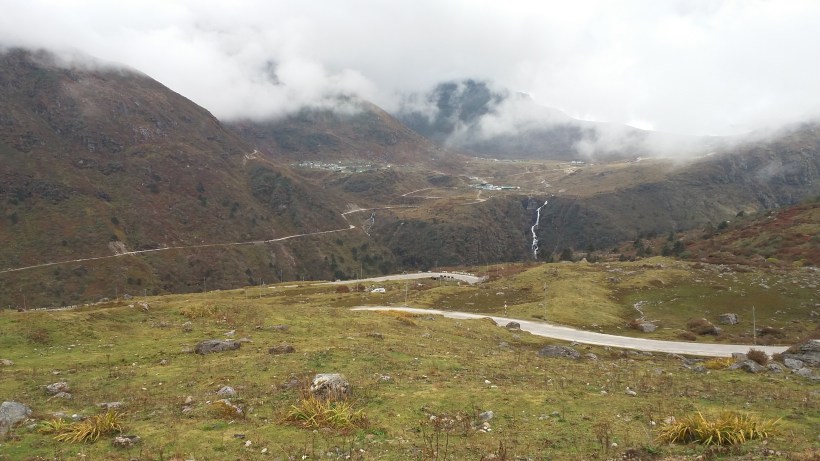
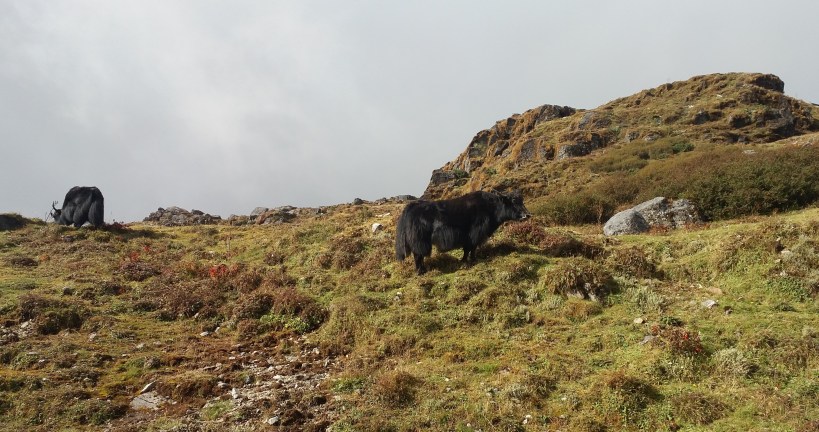
But, as we progressed further towards Nathang valley the landscape changed and colourful vegetation appeared. We saw many Yaks peacefully grazing near the road.
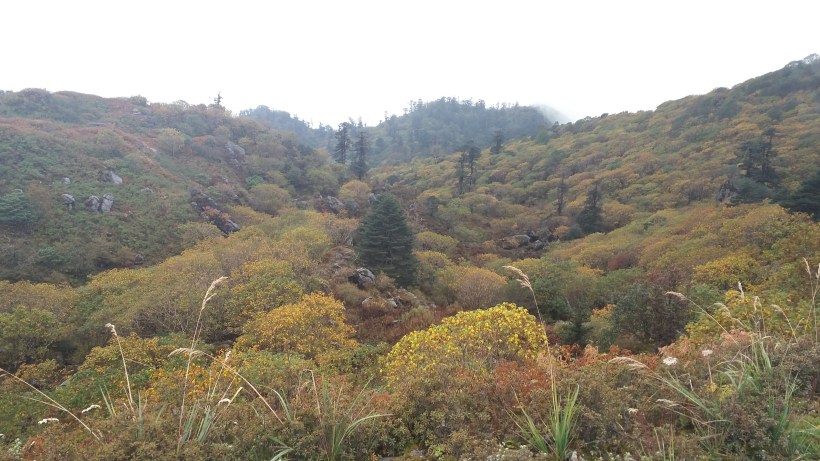
Shortly, we reached Thambi View Point, the famous tourist spot, but the clouds and mist prevented us from enjoying the views. We waited for about 15 to20 minutes, but since the visibility dropped to about 30 metres, we resumed our journey towards Zuluk.
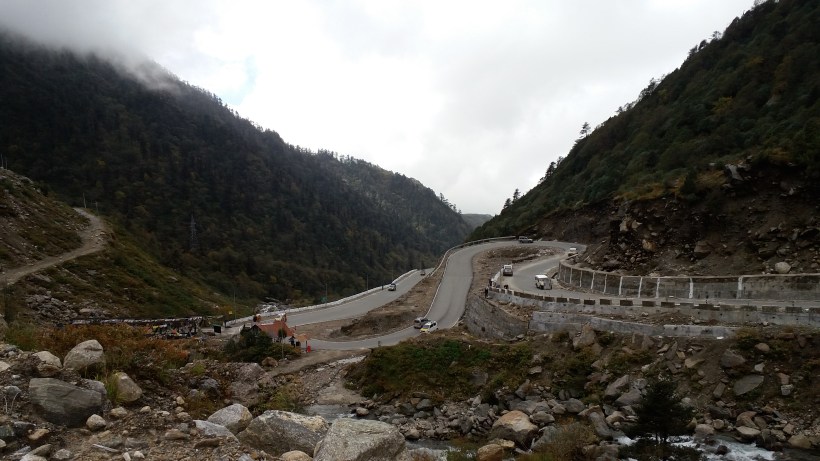
Zuluk is a very popular tourist destination in Sikkim, with breathtaking views of mountains and valleys. The numerous hairpin bends, called Zuluk Loops, which can be seen from the ‘bird’s eye view point’, painted an unbelievable picture.
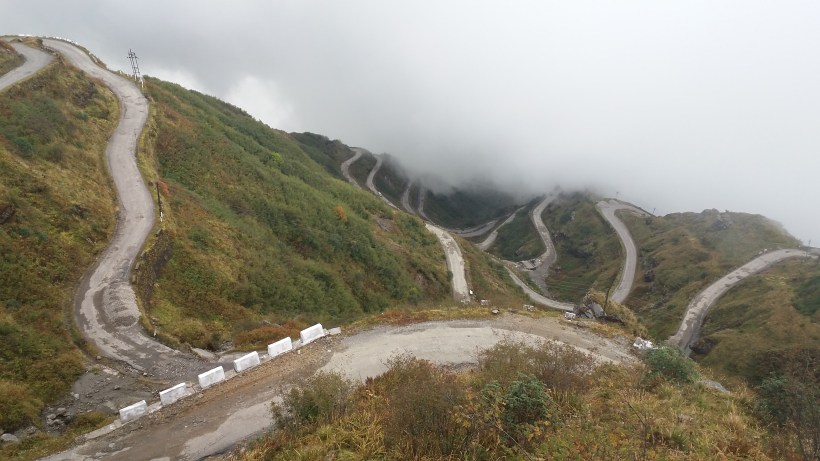
Though it was still a bit misty, visibility improved a lot and we could click a few pictures. We took a small tea break in the town and enjoyed the cool weather.
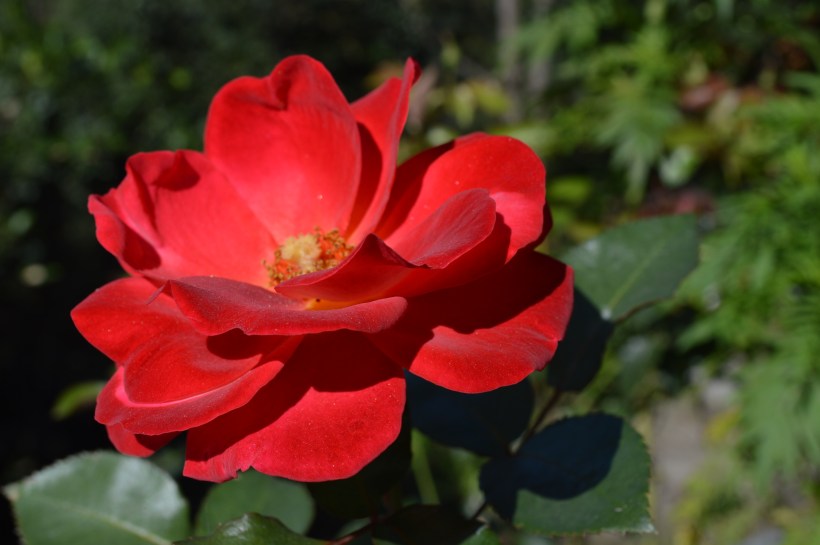
Our accommodation for the night was booked at Blue Sky Homestay, Nimachen, a little further down. The Blue Sky Homestay was owned and operated by the family of Gyatso Sherpa. They were very friendly and keen to make our stay very comfortable. They had a well maintained garden with beautiful flowers, in their limited space.
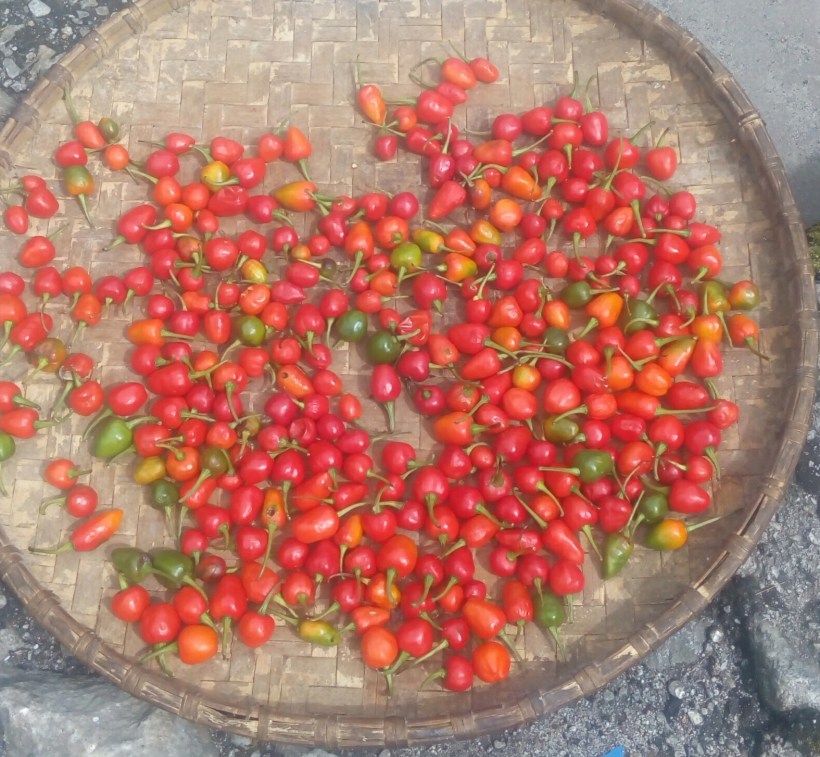
They had kept some chilli near the garden for drying. North East is famous for its highly spicy chilli. We didn’t have the courage to sample one, though we were offered a few.
While they cooked our dinner, we sat with them. They wanted to know more about Kerala and our customs. They also talked to us about their hardships – very few hospitals, no institutes for higher education for their children; most of them go to Delhi. In spite of all these, the Sikkimese are a happy lot. They are hardworking people; you don’t see anybody loitering on the roads. Even the children help in the household chores.
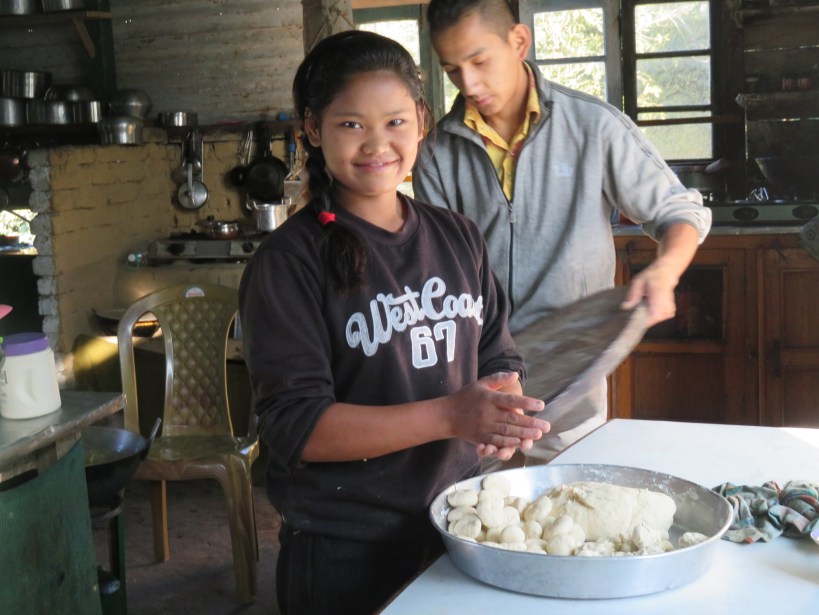
They prepared a sumptuous dinner for us and even set up a small campfire at the roof top.
October 17, 2016 : Nimachen – Rangpo – Melli – Sevoke – Siliguri (120 km, 5 hours)
We woke up fresh in the morning, sat in the balcony sipping a cup of tea, enjoying the great view of mountains.
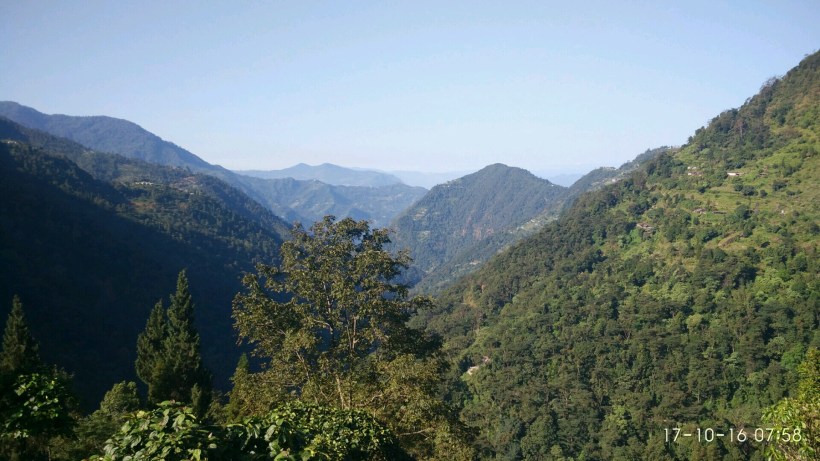
We were on the last day of our drive in Sikkim, and it brought mixed emotions. After a nice breakfast, we bid farewell to the Sherpa family and checked out.
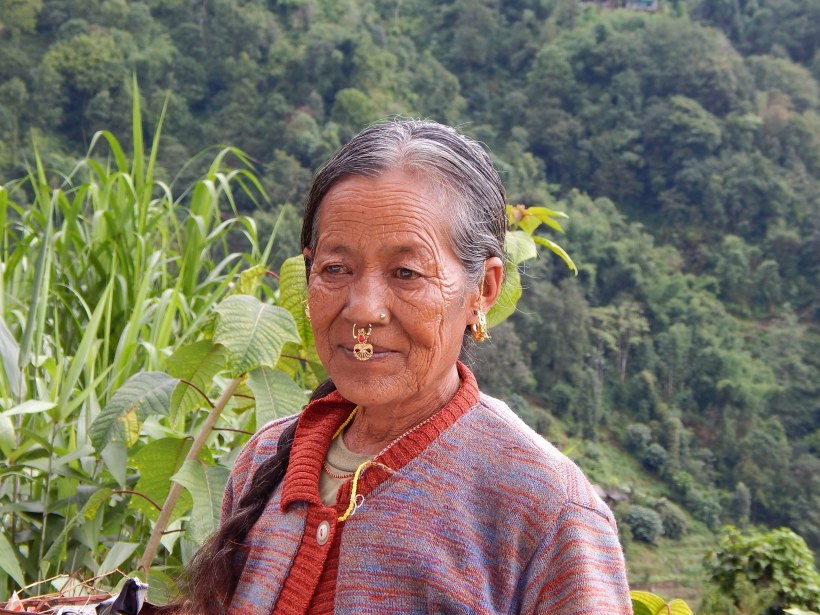
We met a pleasant old lady in traditional attire selling vegetables and fruits near the homestay. We bought some fruits and had a brief chat with her.
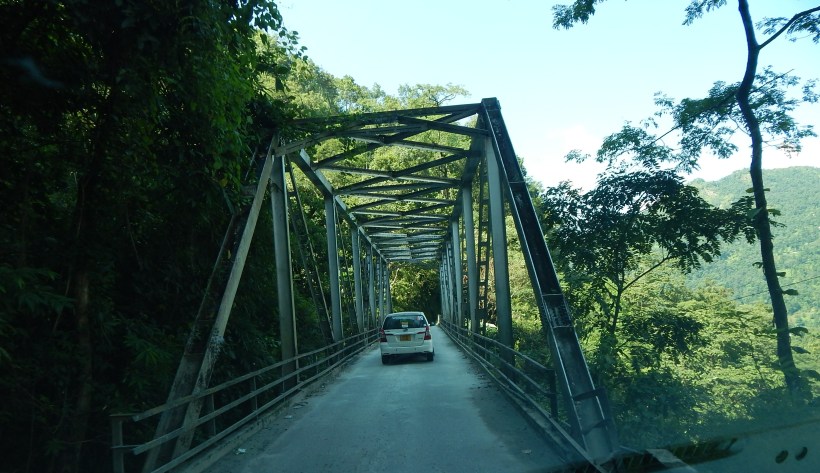
We drove towards Melli through Rangpo, enjoying the cool weather and the beautiful scenery. The road condition was fairly good and we made quick progress.
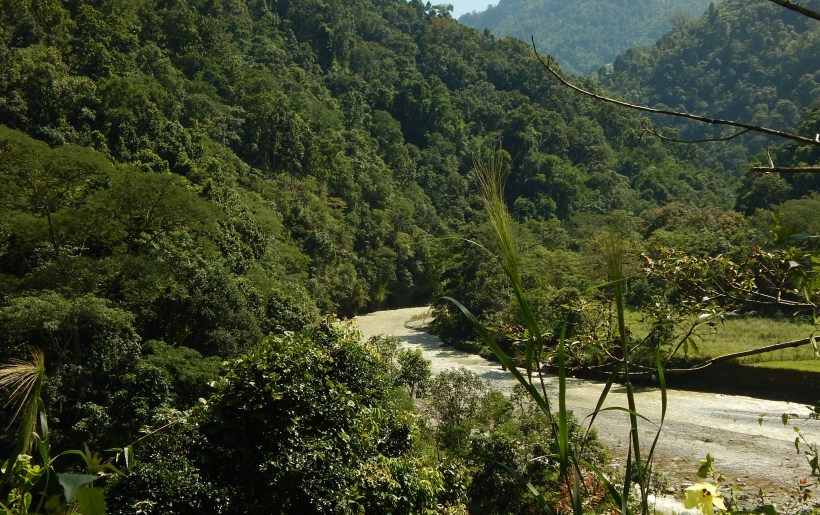
The drive from Rangpo to Melli was fantastic, through lush green hills and the beautiful river Teesta flowing alongside the road.
From Melli to Siliguri, we drove through the same road that we took for the onward journey and didn’t stop anywhere other than for a short tea break at Teesta Bazar. We reached Siliguri and had lunch at a modern Dhaba at the outskirts of the Town.
Half of the team had booked return flight tickets from Bagdogra the next morning. The others were proceeding to Kolkatta to return the vehicles and then board their return flights from Kolkatta. After dropping us at the Army Guest House at Bagdogra, they bid farewell to us and continued driving towards Kolkatta.
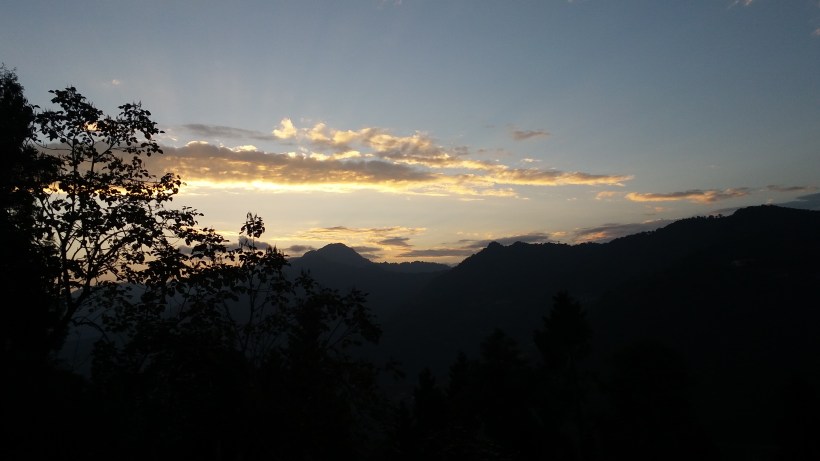
We spent a relaxed evening at the Guest House and enjoyed a nice dinner at the Officer’s club.
October 18, 2016 : Bagdogra – Bangalore
We checked out from the Army Guest House after breakfast and hired a taxi to the airport. The return journey from Bagdogra to Bangalore via Kolkatta was un-eventful and we reached Bangalore by evening. The remaining members of the team reached Bangalore 2 days later, after spending an extra day at Kolkatta enjoying the Durga Pooja festval.
It was a thrilling journey through and through – narrow roads around mountains, waterfalls at every turn, treacherous water crossings, boulders that block the roads, totally unpredictable with landslides that can happen any moment. But we had to turn back only once from our planned destination – Gurudongmar Lake; we were able to make it to the rest.
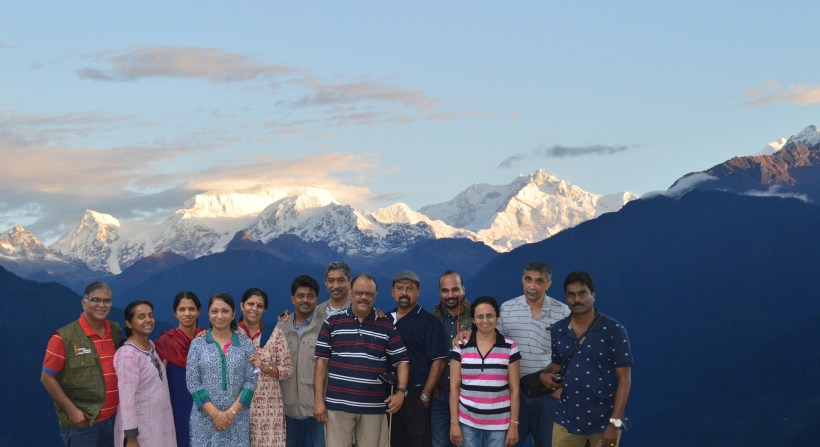
We were really fortunate to catch the view of the great Kanchenjunga in all its glory, golden hued in the dawn. Many a traveller had waited for days and returned without catching even a glimpse. Also driving to the Zero Point through piles of snow and experiencing the Zero Point itself blanketed in snow, was a surreal moment in our trip.
We left with fond memories of a land and its people – both bold and beautiful.
 Nostalgia EE 84