
by JAYAPRAKASH P
NORTH SIKKIM
North Sikkim is the largest of the four districts of Sikkim, with its headquarters in Mangan. Numerous waterfalls extending across the main road make the trip to North Sikkim extremely picturesque. But landslides are very common in this region due to various reasons – the steepness of the valleys, melting of the snow beds on top of the mountains and the erosive action of the rains. However, because of the exquisite scenic beauty, lots of tourists visit the region overcoming all sorts of hardship. Unfortunately, this is creating a major conservation issue in the fragile ecosystem.
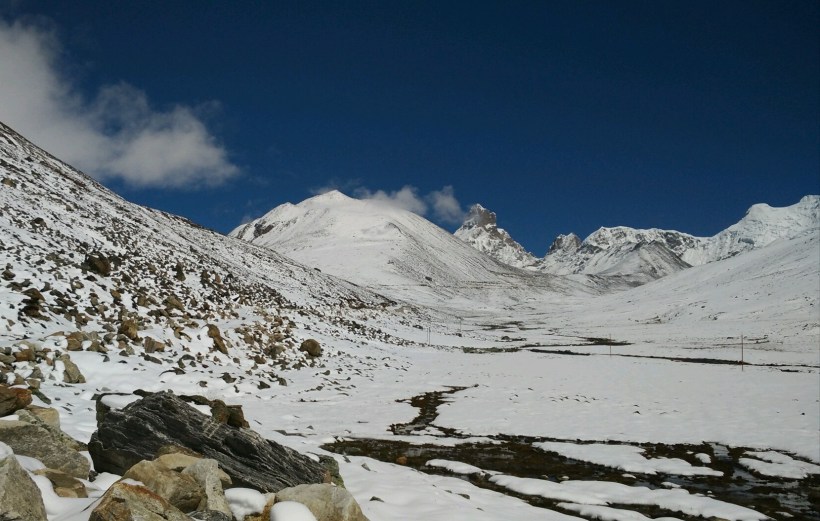
October 12, 2016 : Ravangla – Dikchu – Mangan – Chungthang – Lachen (130 km, 8 hrs)
After spending two wonderful days in West Sikkim, it was time for our journey to North Sikkim. We got ready at Hotel Rain Drop and had an early breakfast thanks to our hosts. Our destination for the day was Lachen, and we knew that the roads up North are totally unpredictable. We checked out of the hotel by 8.15 AM and started our journey through the winding roads. The road surface was good – we crossed the hairpin bends at Tokdey with ease and joined the Singtam – Dikchu Road at Makha, earlier than expected.
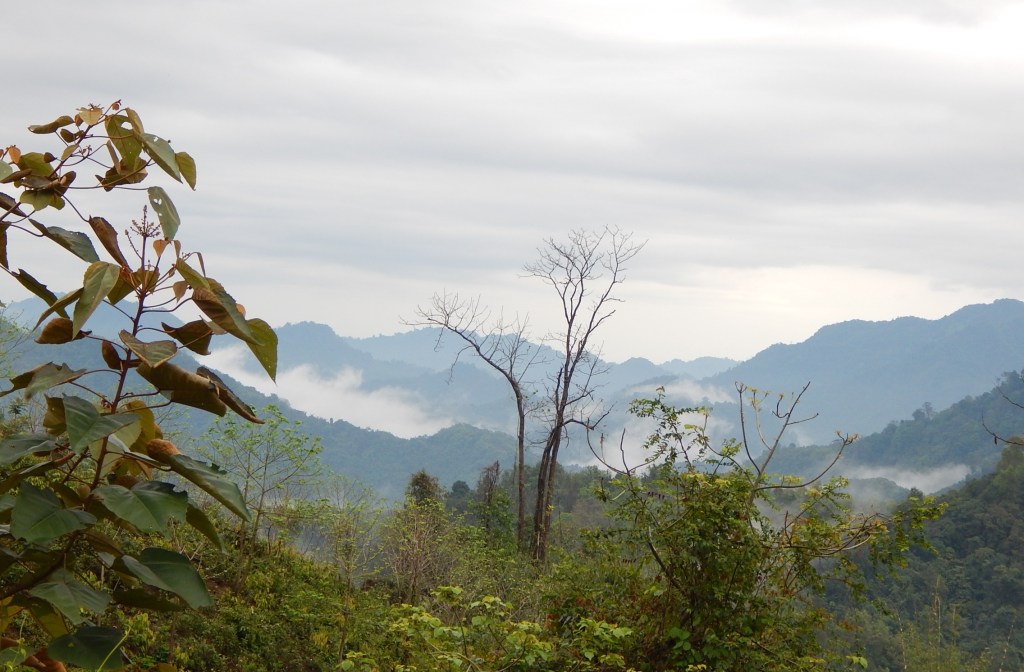
As we approached Dikchu, the road surface lost its quality and we had to slow down. Waterfalls continuing as streams that cross the road under the bridges were common in that region. We had our lunch at Mangan, the next town.
As we gained altitude, it became more and more foggy and our progress became very slow. The mist and moisture from the small waterfalls made the nearby road slushy, causing traffic jams at a few places.
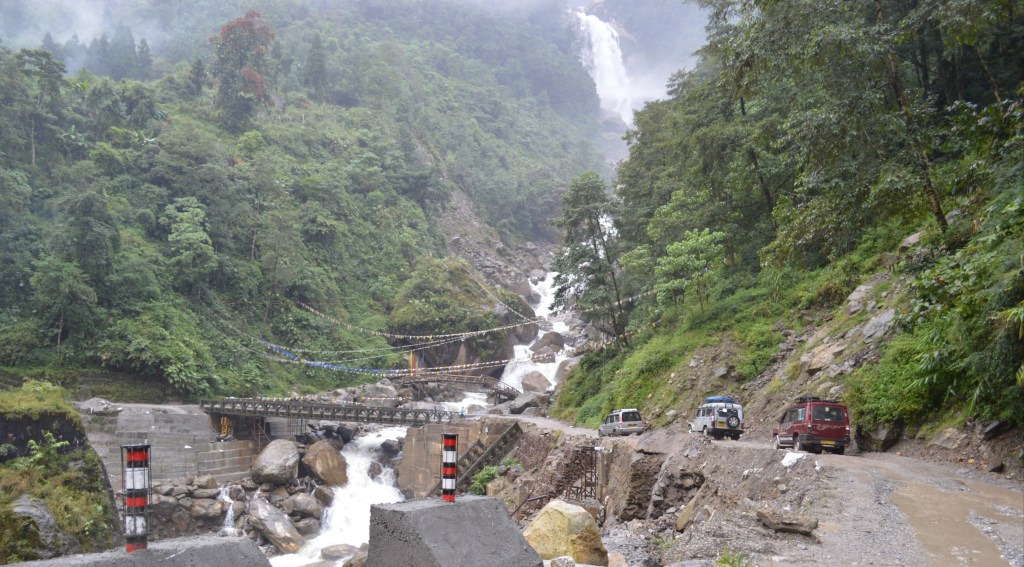
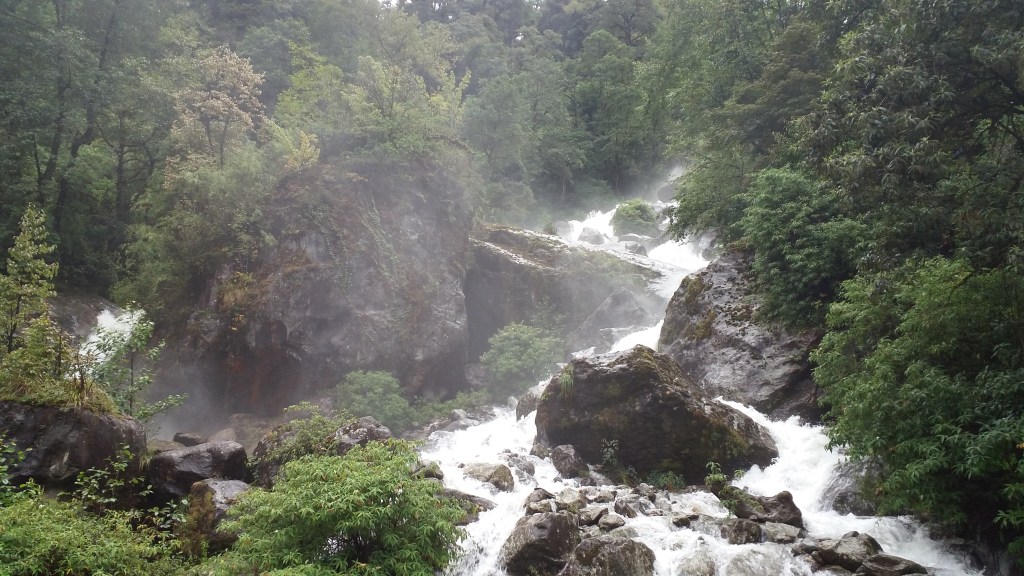
The next important town Chungthang is situated at the confluence of the rivers Lachen and Lachung, which combine to form Teesta river. The Indian Army has a major base here, with medical facilities for all the North Sikkim units. We reached Chungthang Army base by evening where we collected our Inner Line Permits and enjoyed the Tea and snacks served by them. The army officials warned us about the road conditions and advised us to take the utmost care at water crossings on the road ahead. At Chungthang check post, our permits were verified and we were given permission to proceed further to Lachen, with a warning about a landslide that had recently happened near Lachen. We stopped at a place to click the photo of a turbulent stream, flowing through the rocks and spraying water into fine particles that looked like fog.
An hour after we left the check post, the driver of a jeep coming from Lachen warned us that our type of cars can’t reach Lachen because of a major water crossing. We decided to try our luck and continued our drive through the fragile stretch of road.
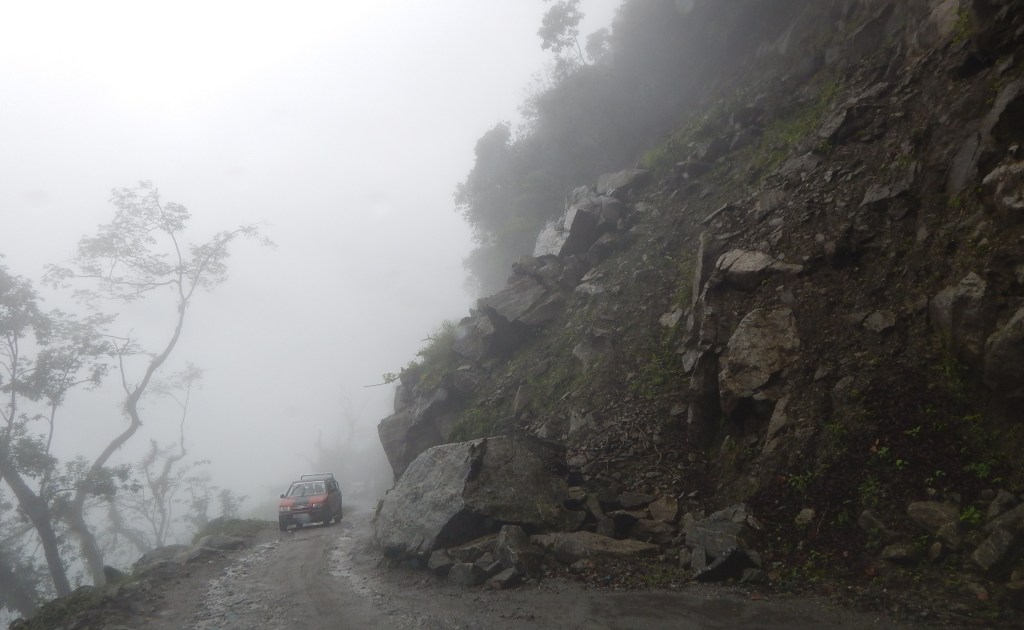
The visibility was poor because of heavy fog and we reached the water crossing when it was just getting dark. We stopped and observed some bigger vehicles crossing the roaring stream and identified a relatively safe path. A few of our team members got out, walked through the ice cold water and guided the vehicles. All three cars crossed the rushing water with only some minor underbody scratches and we were happy. Our happiness didn’t last long as we were stopped by Army a few hundred meters before our destination – there was a landslide and the traffic was closed. Our hotel manager had tried to contact us earlier to update the situation, but there was no network coverage for any of us. Finally we got a call from him when we were frantically trying to locate a place of stay for the night. To our relief, he arranged 4 rooms for us at the only available place we could reach, Hotel NOR-LHA and managed to get us some food too. Since the road ahead was closed by the Army, we had to cancel our drive to the beautiful Gurudongmar Lake, which was our plan for the next day.
October 13, 2016 : Lachen – Chungthang – Khedum – Lachung (48 km, 3 hours)
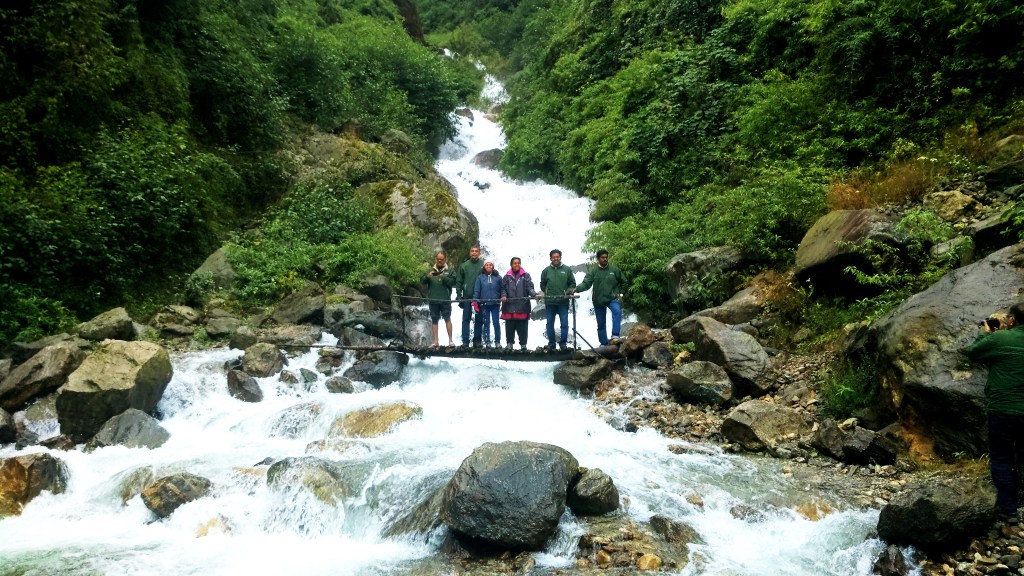
Lachen is a small town in North Sikkim at an altitude of 9022 feet and it was freezing cold. We woke up a bit late and came out of the blankets lazily. Managed to go for a short walk and saw a few snow covered peaks nearby. We could hear the sound of gushing water at the landslide location, but the Army had put a barricade on the road which prevented us from having a look. The hotel owner was kind enough to give us a decent breakfast at such a short notice with their limited resources and we thanked him for his hospitality. With a heavy heart, thinking about the missed opportunity to enjoy the beauty of the high altitude lake, we retraced our tracks to Chungthang. When we reached the water crossing that we had struggled to cross the previous evening, we found that the water level had come down, and we stopped the cars for a photo shoot.
After a while, we had to stop to attend to the second tyre puncture for the same car that had the same issue at Pelling. Since we had enough time, it was not a concern and we resumed our journey after replacing the tyre.
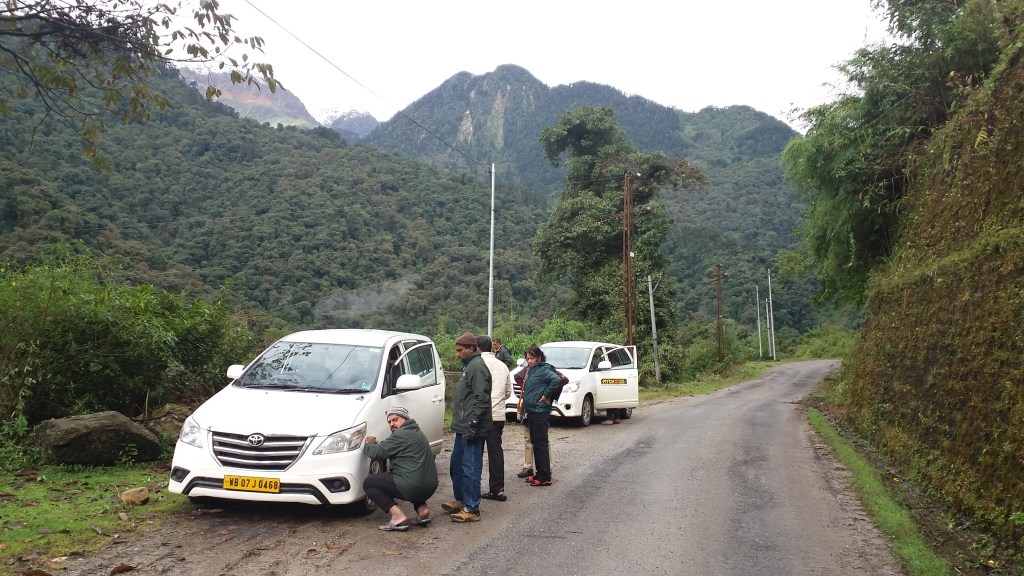
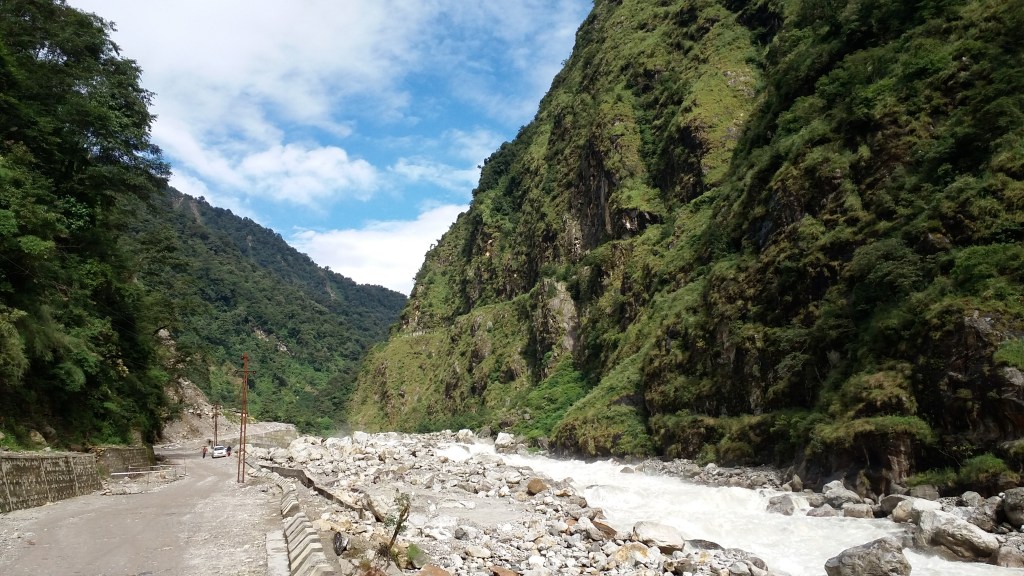
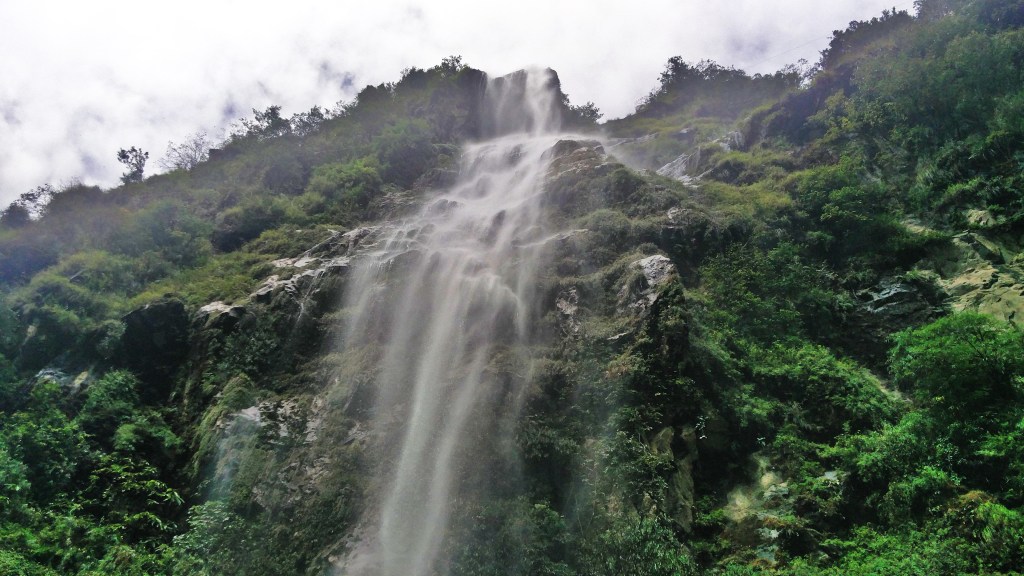
We got the punctured tyre repaired at Chungthang town and continued our journey to Lachung. We found many waterfalls on the way, some near the road and some far away.
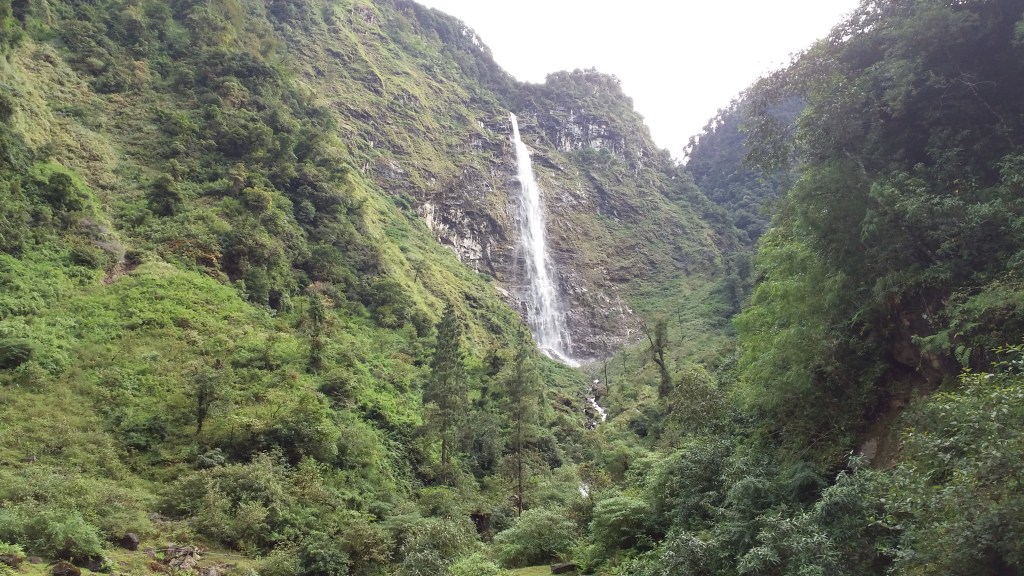
The entire route was very scenic, which prompted us to stop frequently and click pictures of mountains, rivers and waterfalls.
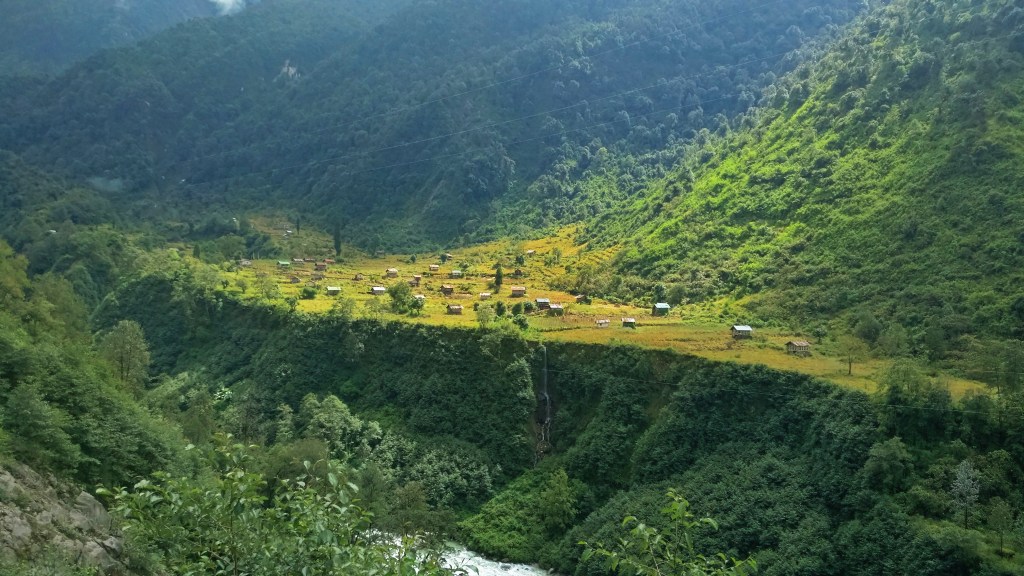
A set of small cottage like buildings constructed at the foothill of a mountain, overlooking a river caught our attention. Since it was a bit far off from the road, we couldn’t make out if it was a camping site or a settlement. But it looked quite attractive from the road.
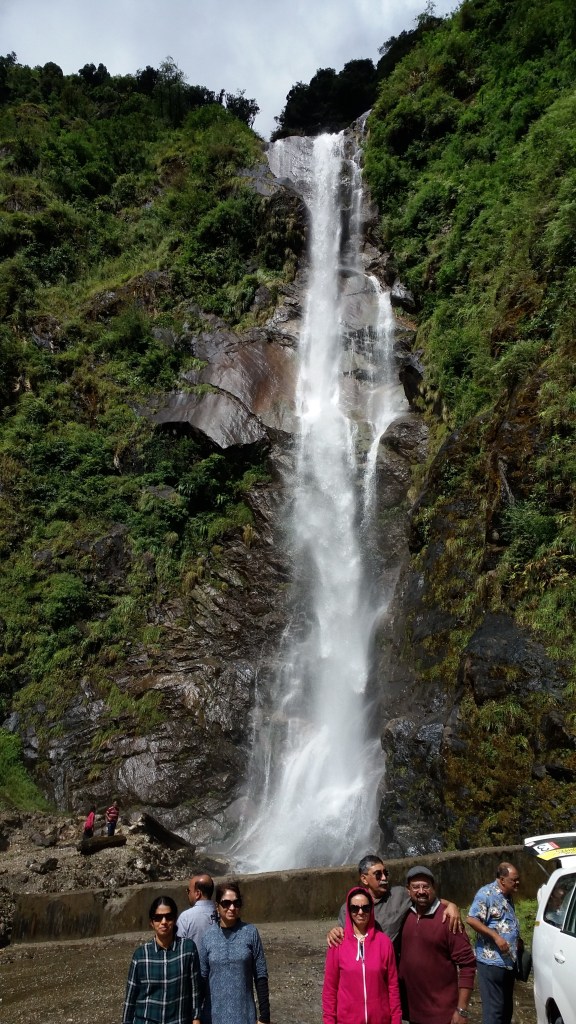
The most popular among the water falls in that region was the Bhim Nala Falls, which was an ideal spot for photography.
Lachung is a mountain village at an altitude of 9600 feet, located close to the Tibetan border. Before the Chinese occupation of Tibet, Lachung (meaning small pass) was a trading post between Sikkim and Tibet. Lachung is considered to be the most picturesque village of Sikkim.
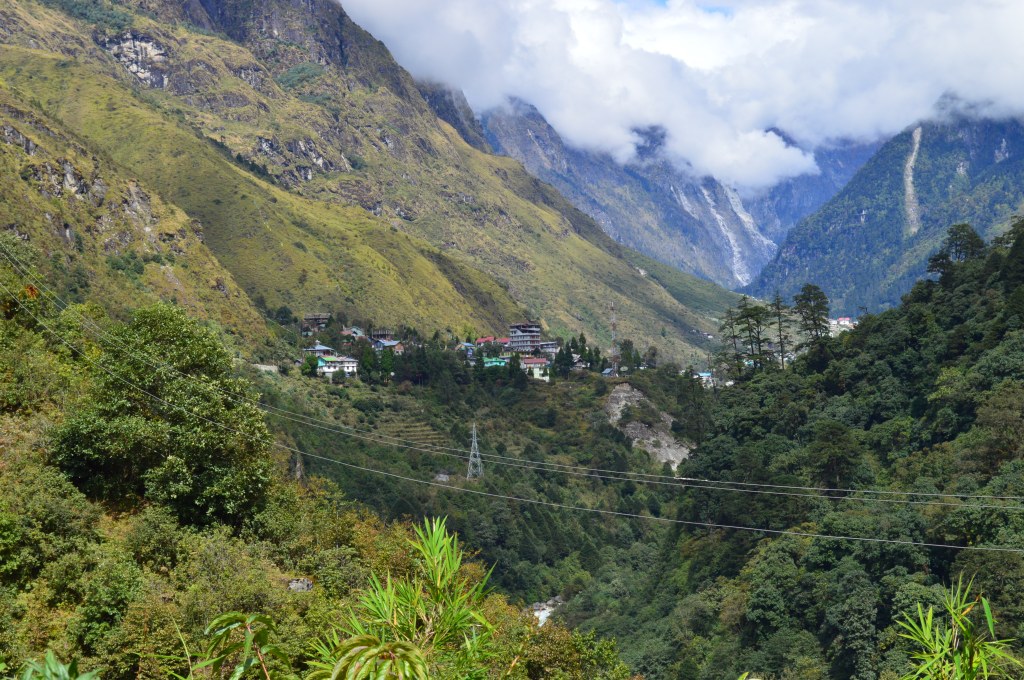
Just before we reached our destination, we got a fantastic view of the village perched high on the mountain and the river Lachung flowing through the valley.
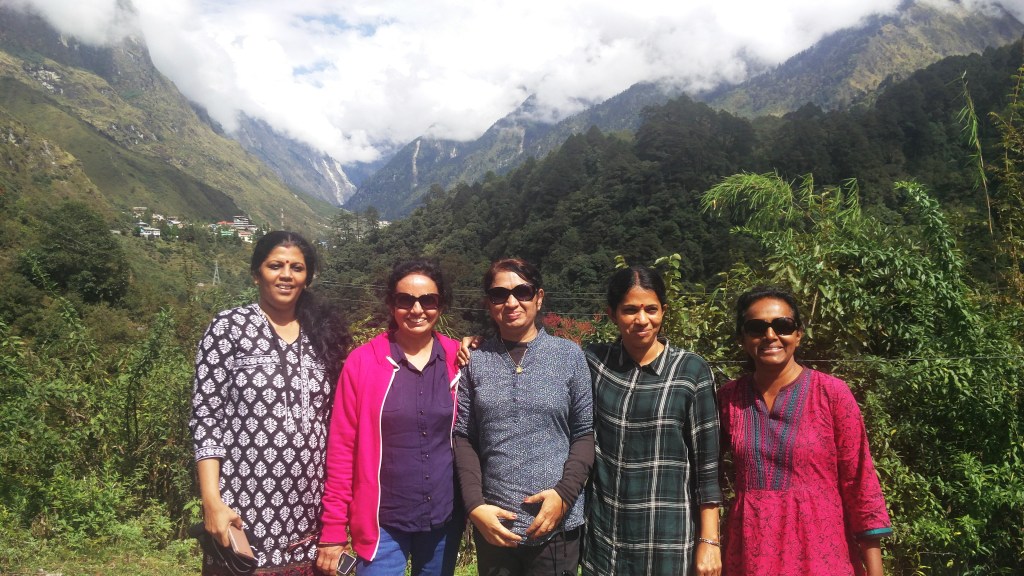
We reached Hotel Golden Fish reserved for our two days’ stay in Lachung, by 12 noon. They did not expect us for lunch, but on our request, prepared a quick lunch and served within an hour.
We decided to drive to the beautiful Yumthang Valley in the afternoon. In the initial few kilometers, we gained more altitude and the gradual ascend brought us to the Army Check Post, where our Permits were verified.
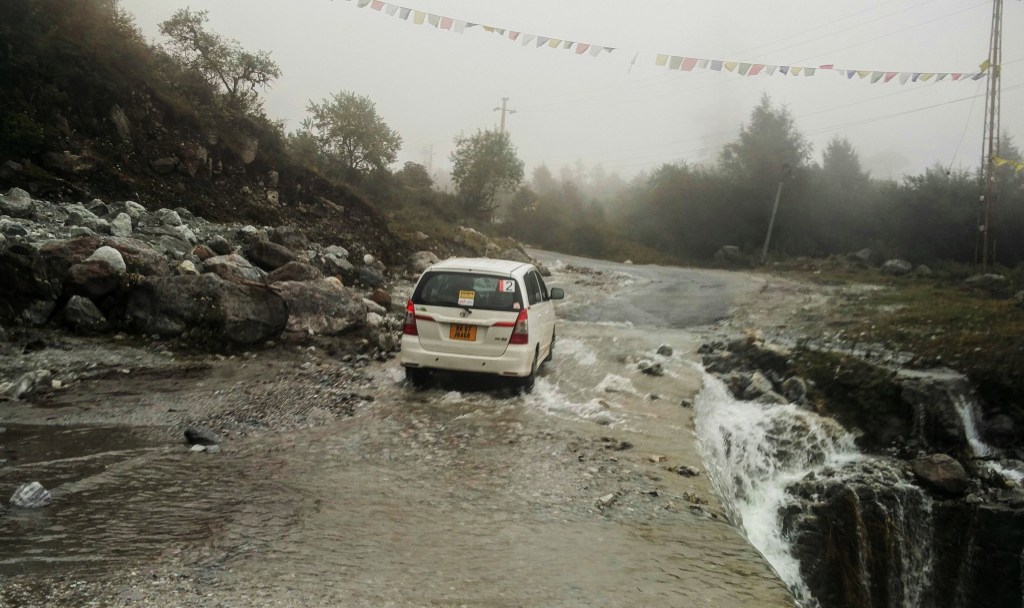
The road was typical of a remote Himalayan region with water crossings and unstable surface. But there was a serene natural beauty everywhere and the Yumthang valley was especially so.
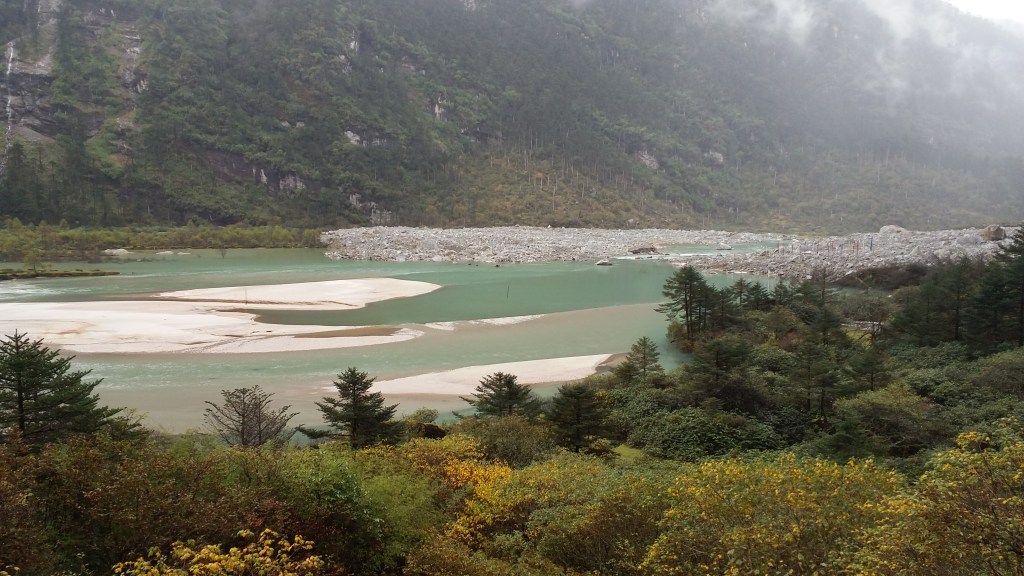
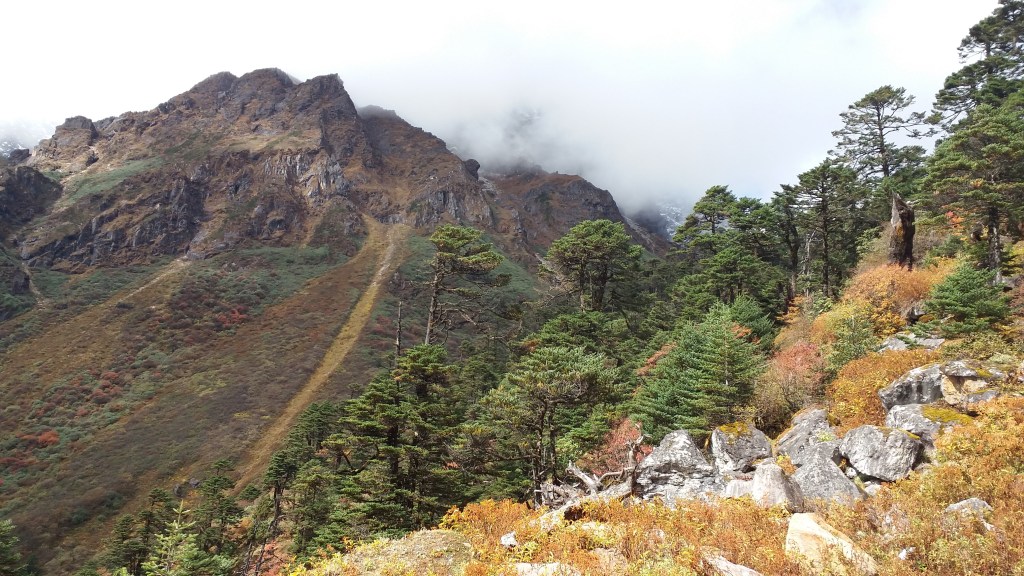
The Lachung river with placid green water and the surrounding mountains with a variety of flowers presented a stunning picture. We got out of the vehicles at many places, enjoyed the scenery and clicked photos.
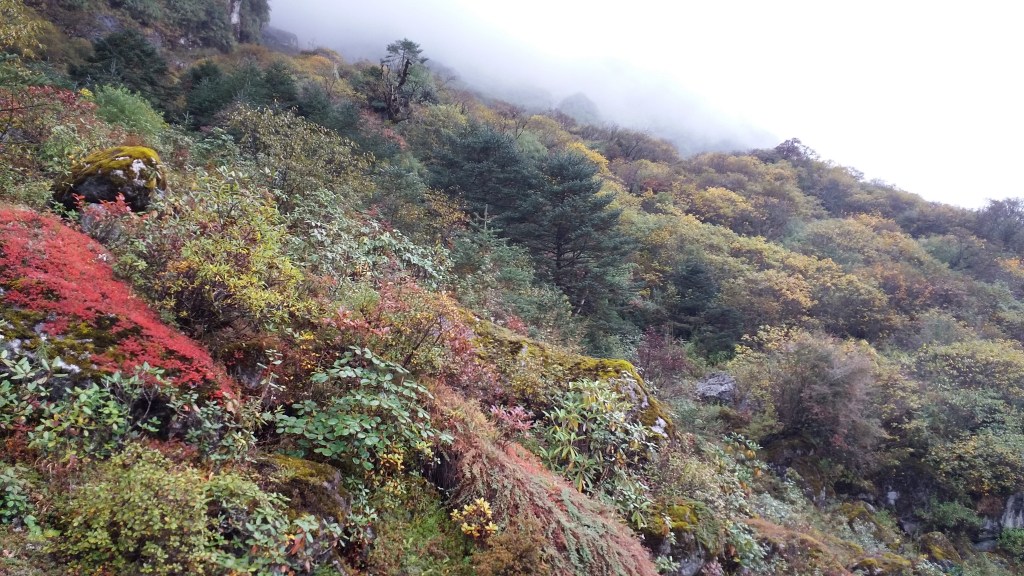
Yumthang valley is famous for Rhododendrons and wild flowers. The best season to visit this valley is from March to mid-June, when thousands of colourful flowers are in full bloom. In October, we could get to see only a few of the flowers, but even that was beautiful in the scenic background.
There was a signboard – `Hot water springs’ that directed us to a building with parking area for the cars. Though we were not sure whether it was the real Sulphur Hot Spring found in the Himalayan region, some of us had a dip in the hot water. We returned to the hotel before getting dark and enjoyed a tasty dinner.
October 14, 2016 : Lachung – Yumthang – Zero point – Lachung (105 km, 7 hours)
As we were getting ready for our drive to Zero point, we were shocked to find the third flat tyre for the same car. We replaced the flat tyre with the spare, but decided not to take the same car for the drive, considering the terrain. We hired a local cab and were happy to find that the owner cum driver was a retired soldier, who entertained us on the way with anecdotes of the history of the place. One of our cars followed the cab and the soldier’s experience in the region proved to be a real help for the entire team. The Zero point is close to the India – China border and this entire region is under control of the Indian Army. There were two check posts, one at the entrance to the Yumthang valley and the other before the Zero point, which we had to cross before 9.30AM and 11 AM respectively. We reached the check posts on time; the Army verified our Inner Line Permits and granted permission to enter. A few kilometers ahead, the road turned into a narrow track running between broken rocks and stones.
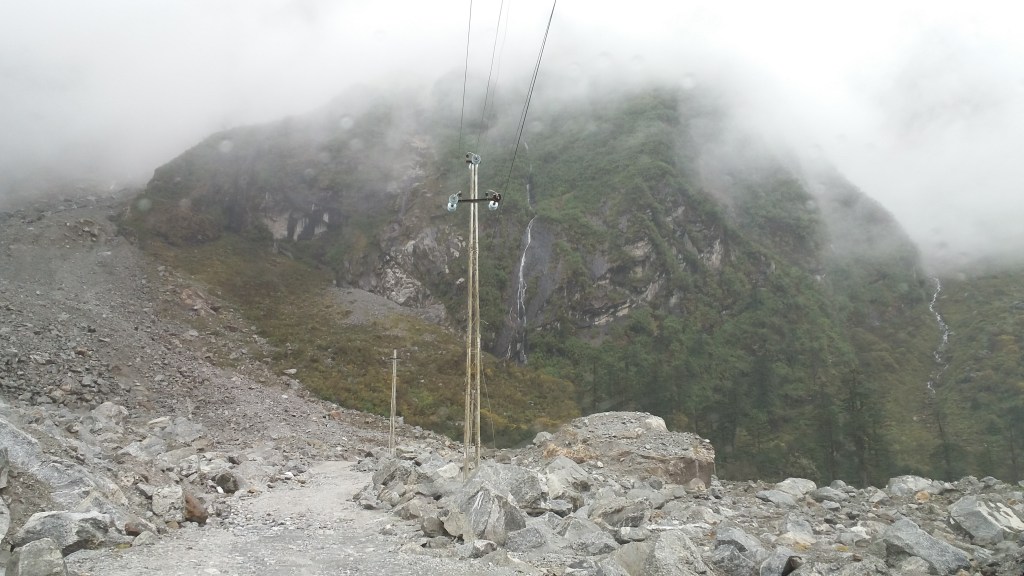
Our driver told us that there was a devastating landslide two years back when a significant part of the mountain collapsed, covering the road with huge rocks and soil. B.R.O. (Border Roads Organization) had to work continuously for a few weeks to remove the debris and clear the road for traffic.
We had driven a few kilometers into the Yumthang valley the previous day and had a wonderful experience. We drove through the same route and then further into the beautiful valley, stopping frequently to click pictures.
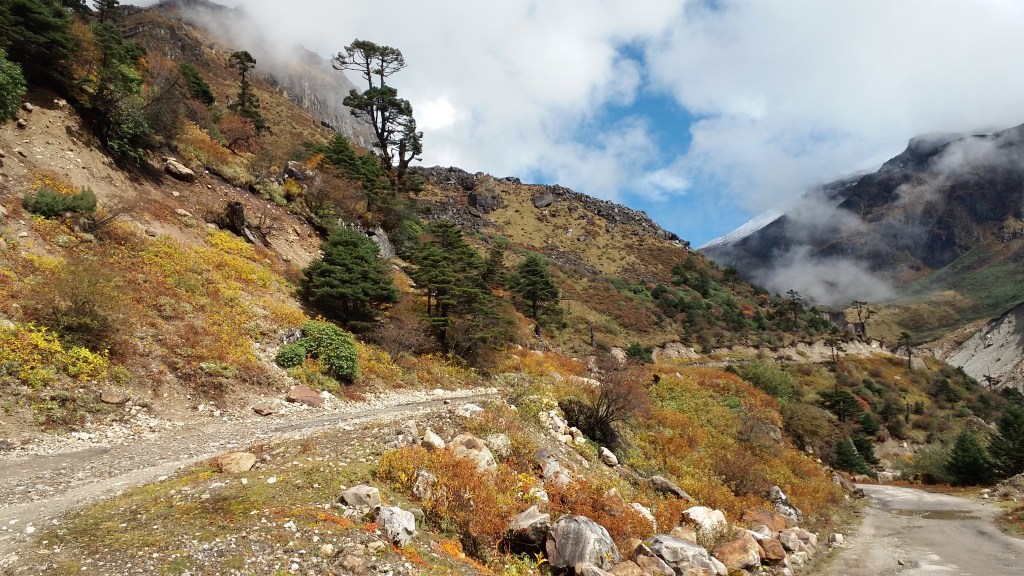
The approach to Yumesamdong village in Yumthang valley can definitely be rated as one of the most picturesque locations in our trip.
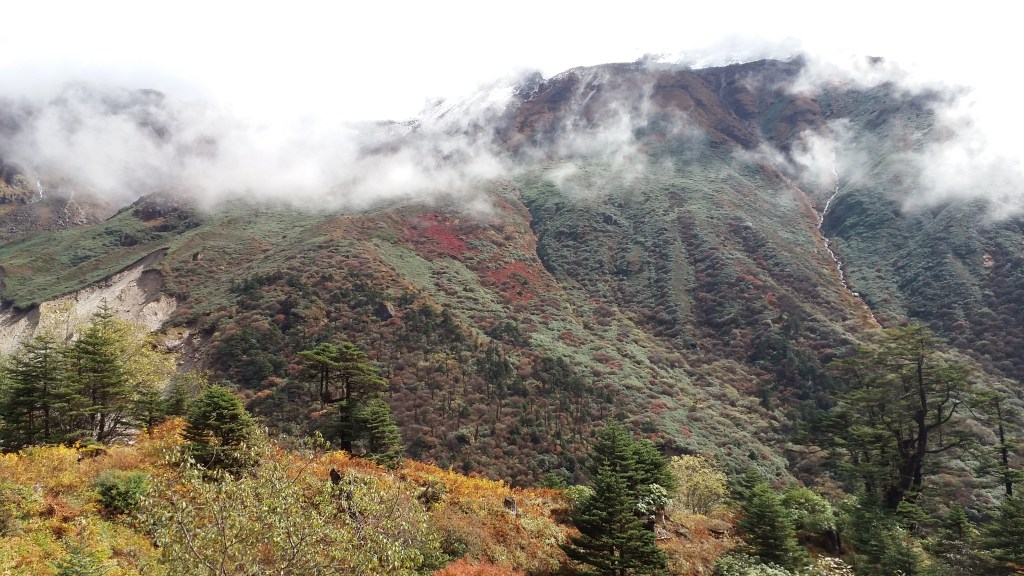
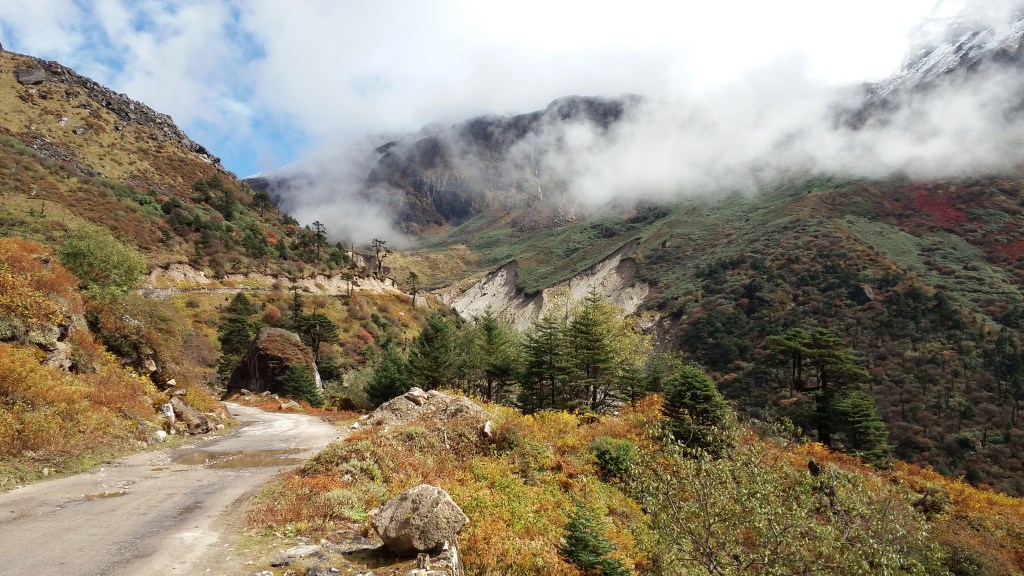
Soon we reached the famous view point from where we could enjoy the fantastic view of the valley together with Lachung river and the winding roads.
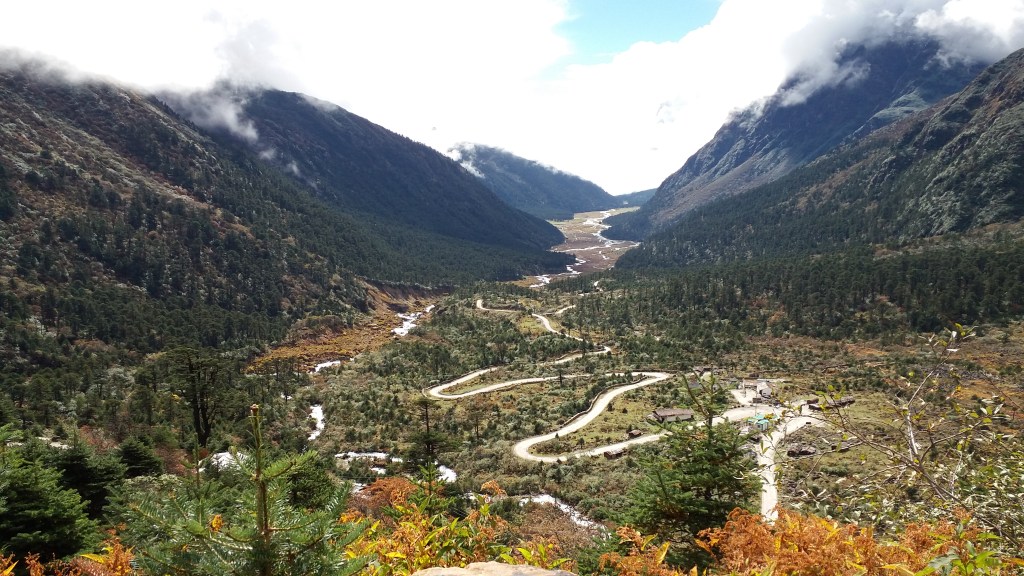
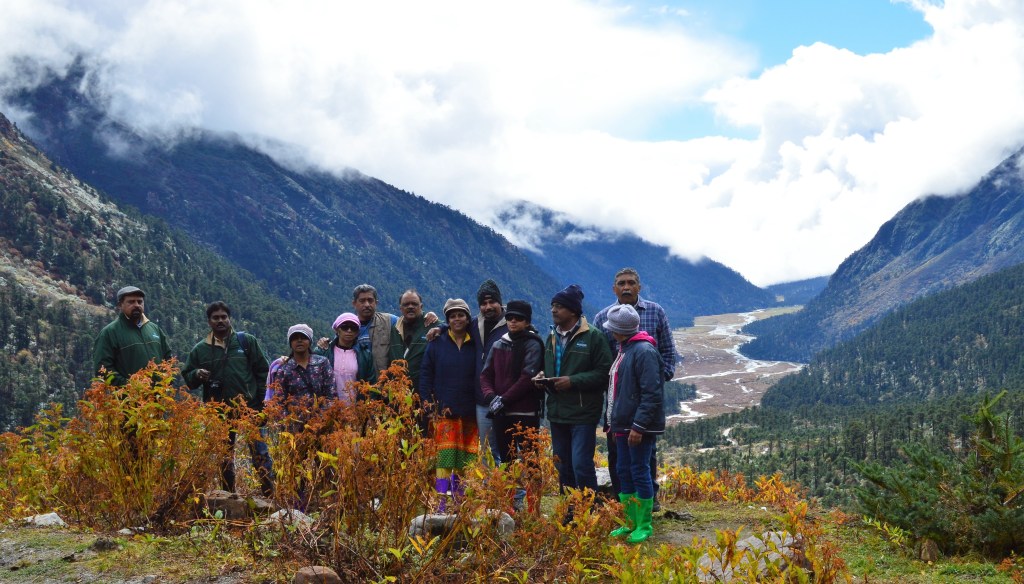
At Yumesamdong, there are a few shops selling clothes, antiques, tea, snacks and even liquor. Here you will also get snow boots, gloves, and jackets for rent. We took boots and gloves as advised by our driver and proceeded towards the zero point.
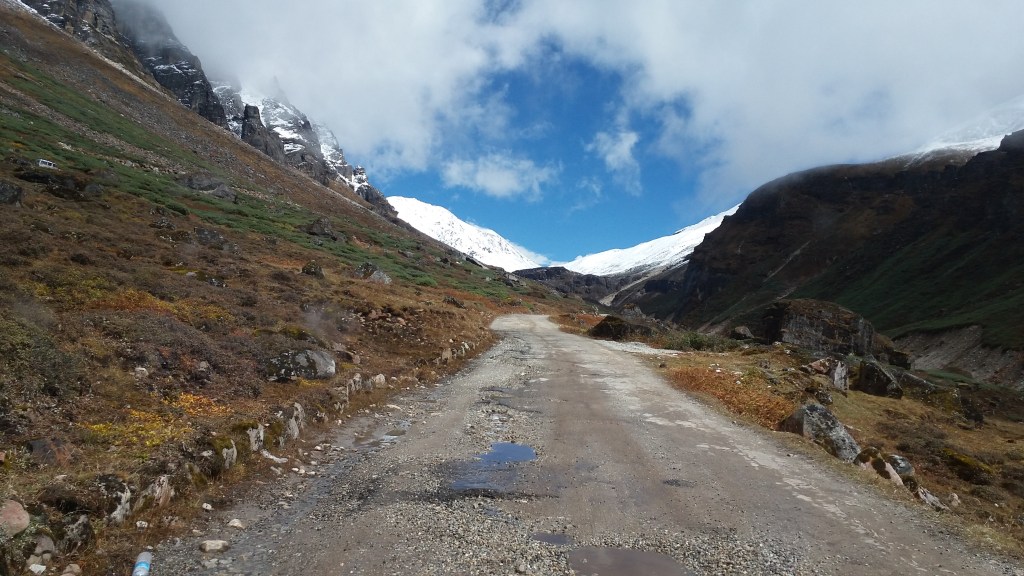
We spotted snowcapped mountains at a distance and as we moved on, the presence of snow increased.
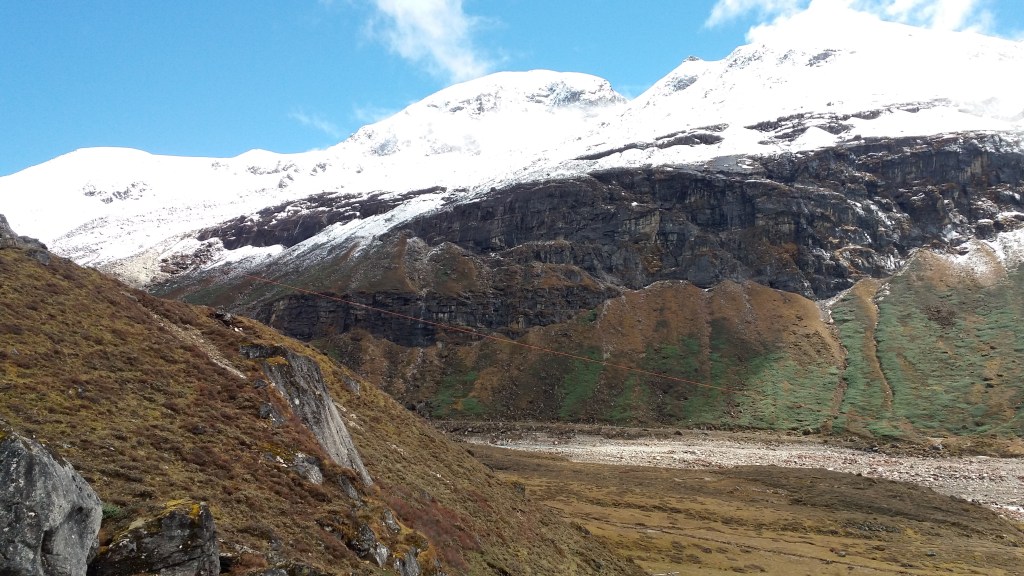
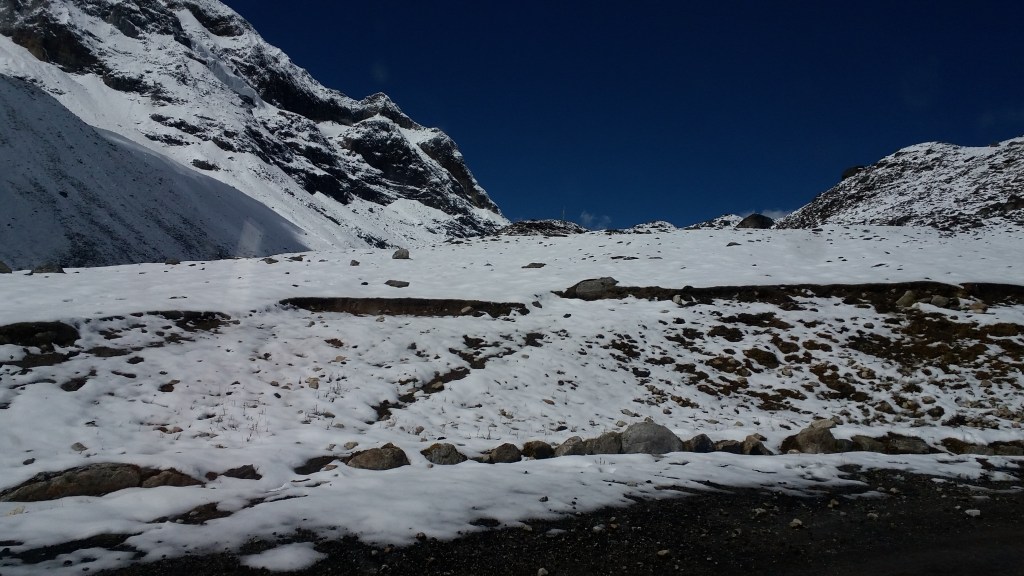
Soon, as we gained more altitude, we saw the road ahead covered with snow.
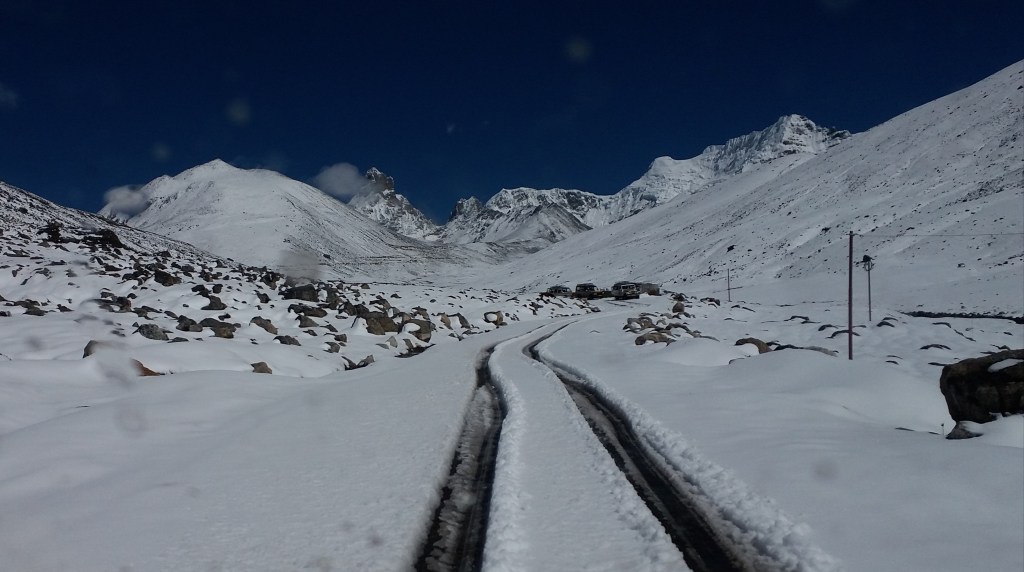
Driving through the snow was a thrilling experience and when we reached Zero point, the entire area was covered with snow.
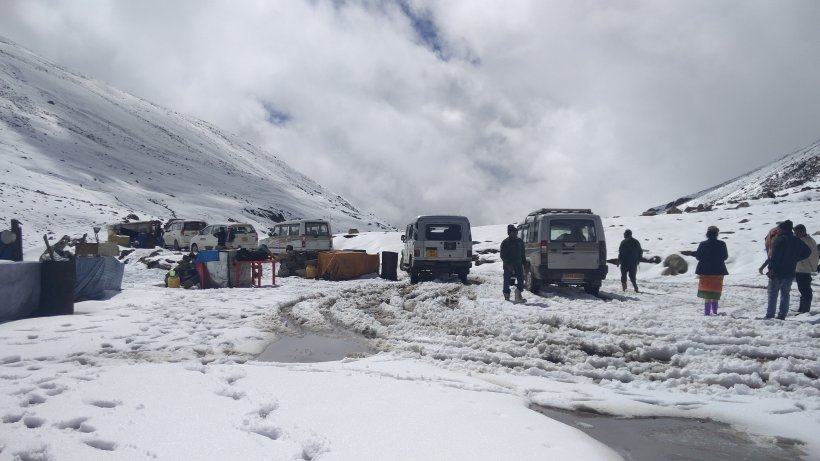
For a few of us, it was the first encounter with snow and soon we were like kids playing with the snow.
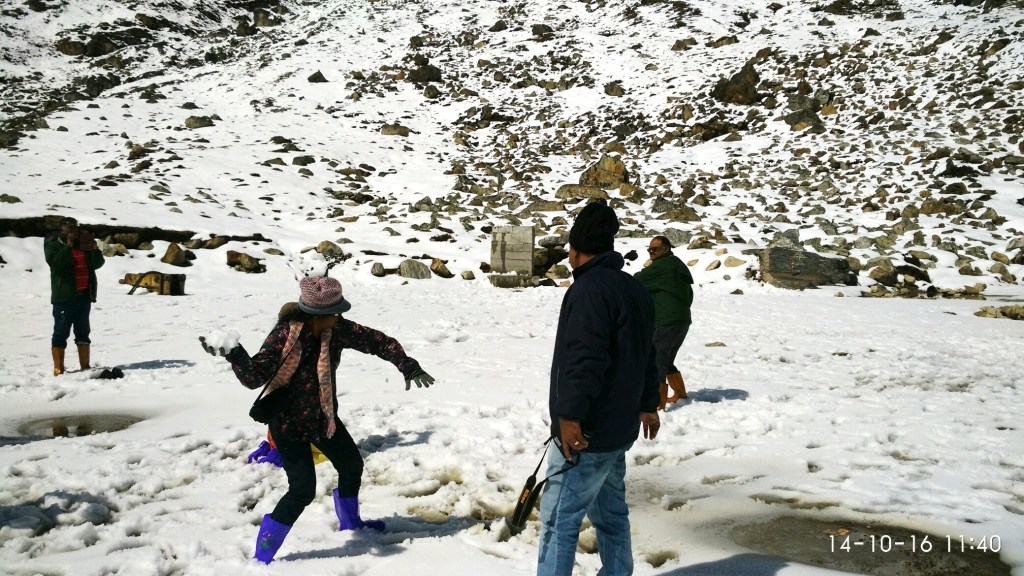
There were a few other vehicles with tourists and a lady selling hot tea and Maggie, who was surrounded by customers. We found the hot masala tea very tasty in that climate.
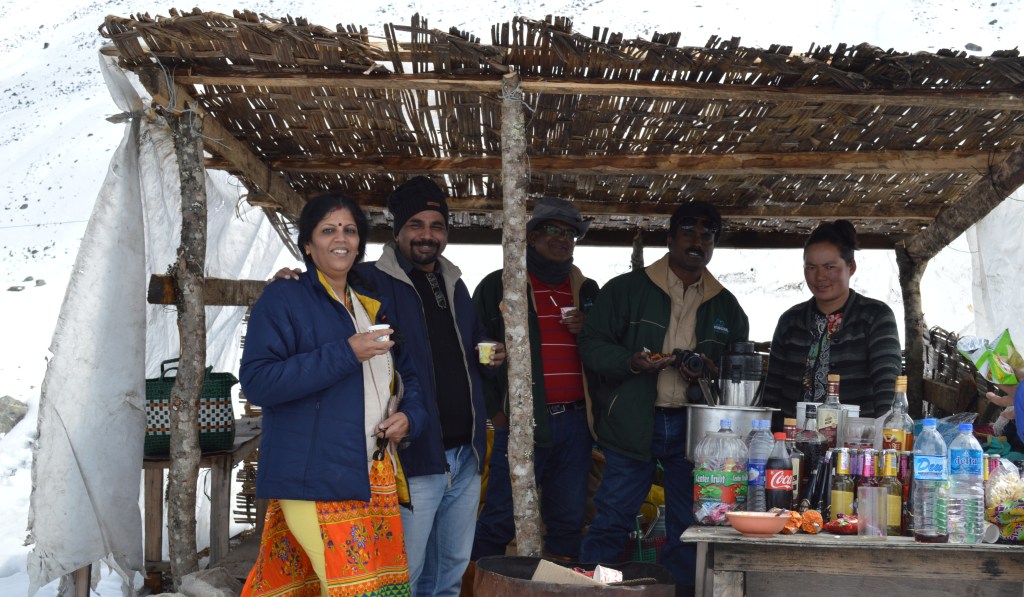
The altitude of over 15,500 feet and the temperature of about 1 to 2 degree C caused headache and discomfort to some of our members and we decided to leave Zero point after about an hour.
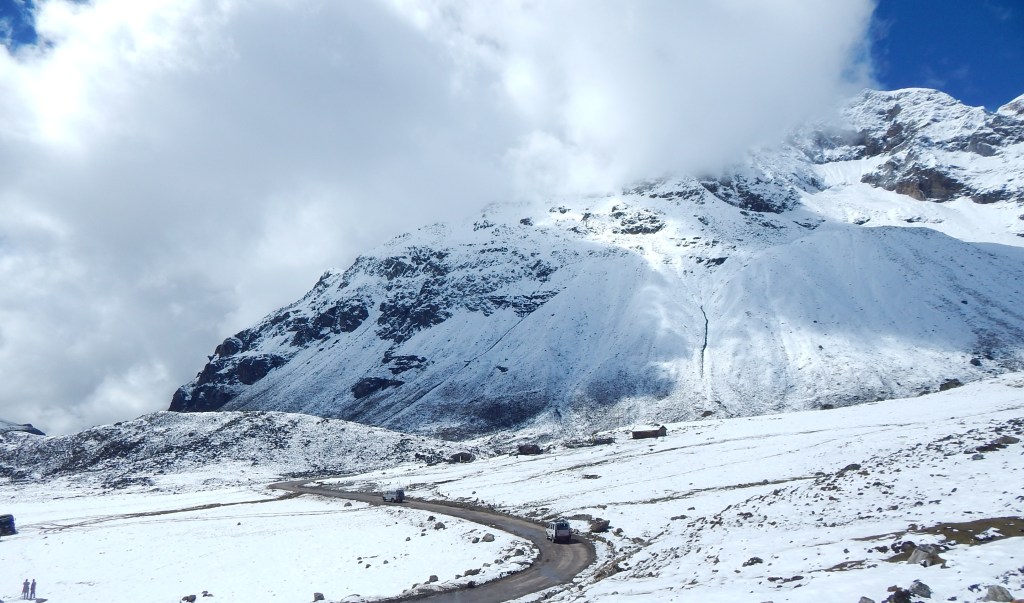
We returned the snow boots and gloves at the shop at Yumesamdong and spent some time there, enjoying the hot Momos and Tea.
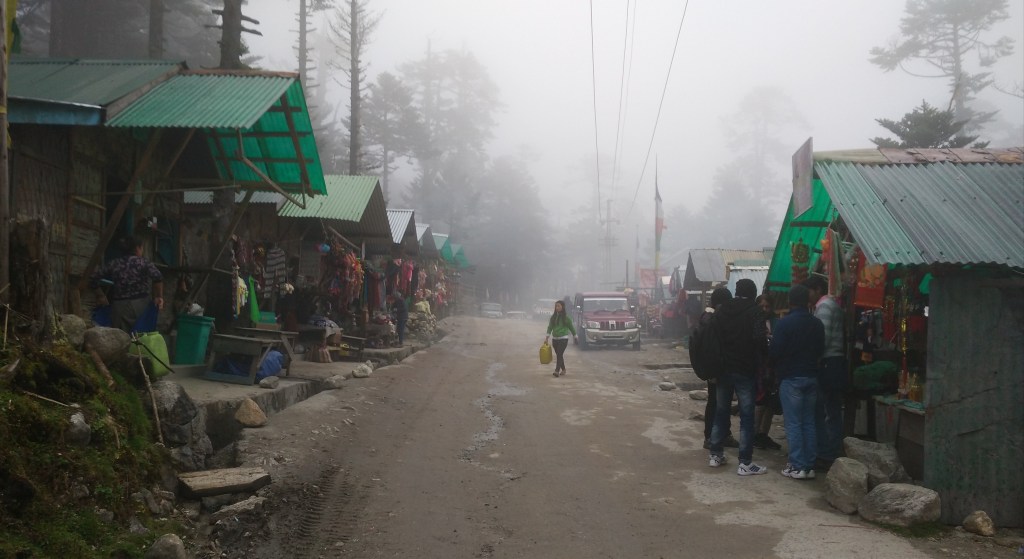
We returned to our hotel at Lachung after stopping at a few places on the way at Yumthang valley, for taking photos.
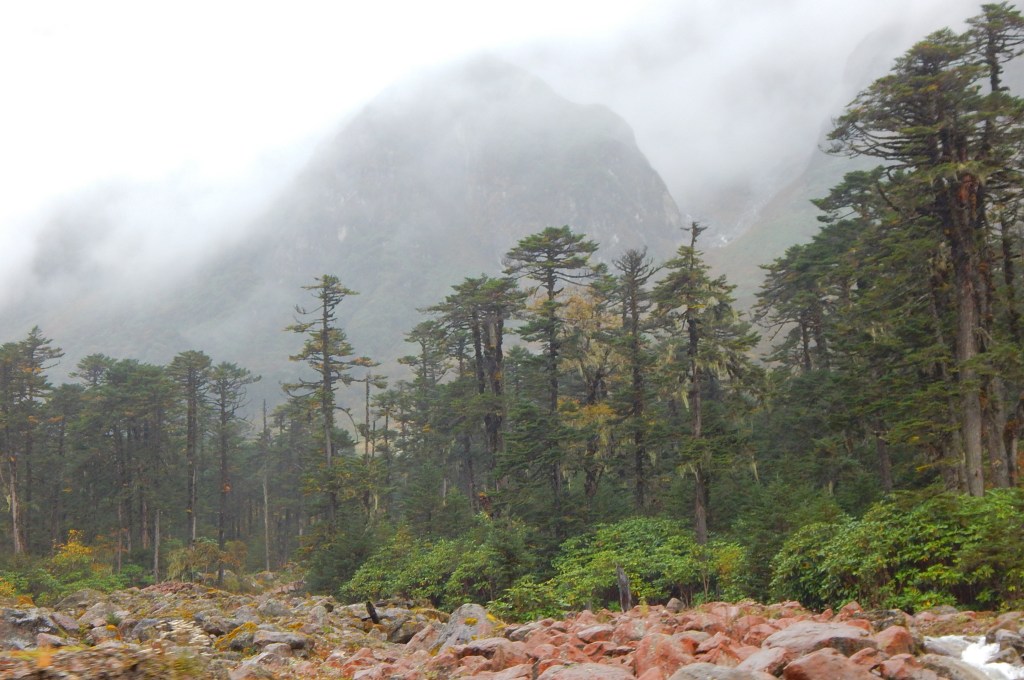
Since it was very cold in the evening, we didn’t go out again, instead had a long session of discussions and had dinner. We would be leaving North Sikkim the next day to proceed to our next destination; East Sikkim.
Continued… Part 3 : East Sikkim
 Nostalgia EE 84