
by JAYAPRAKASH P
Three years past an unforgettable trip to Ladakh, our group’s desire for travel to new destinations was at a high. The Ladakh Drive was a bit dangerous to go with our families, but this time around, we decided, it was surely going to be a family trip. The Himalayan Mountains have a special charm – every time you visit the hills, it feels like the first time. Some of us had already covered Arunachal and so the destination narrowed down to Sikkim, the beautiful and serene mountain state in the North-East. Sikkim is unique in many ways – it has some of the highest mountain peaks, pristine lakes, dense forests and roaring streams. Nowhere in the world is the elevation as varying as in Sikkim – from 200 to about 8600 meters above sea level, which provides Sikkim with its incomparable range of flora and fauna.
PART 1 – WEST SIKKIM
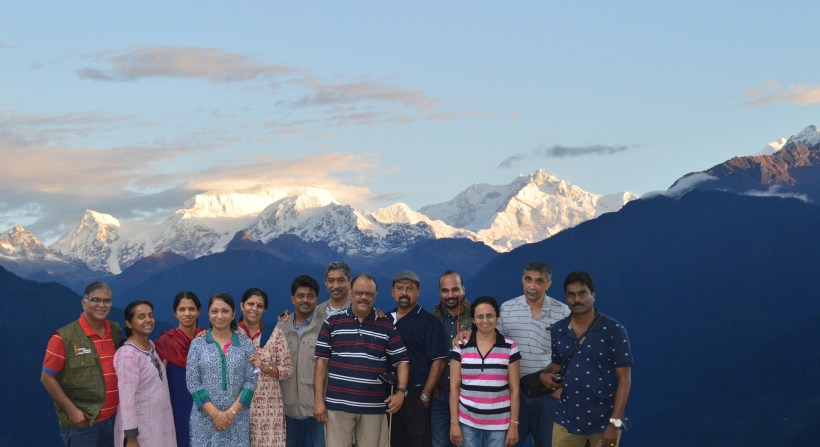
As before, my role was charting out a feasible tour plan; the route, the accommodations, the time schedule. Long nights, searching the internet followed and a 9 day plan was drawn up with our eyes set on the snowcapped mountains and wildflowers of Sikkim. There were 13 members in our group, which included five couples. We planned to drive ourselves and to save time; we decided to avail the Self Drive Cars from `ORIX – My Choice’, Kolkatta. We booked 3 Toyota Innova Cars, considering comfort and reliability. A techie-turned Tour Organizer from North – East, Mr. Pranay Gautham, who was a colleague of my cousin earlier, helped us out by arranging Hotel Bookings and giving suggestions based on our drive plan. He also arranged the initial Entry Permits, which saved our time at the Sikkim Entry Check Post. But to enter restricted areas in North and East Sikkim, Inner Line Permits were required and our team member Suresh, working with DRDO, managed to get it through his defense contacts.
Thus, on 6th October 2016, we (Tomy and myself, Jayaprakash) started our journey from Cochin and reached Kolkatta by evening. Fenwick, Ninan, Satheesan and Sandeep arrived from Bangalore shortly afterwards and we checked in to the Airport Guest House. Since it was Durga Pooja time, we hired an Ambassador taxi and took a tour of the city before dinner. Most of the buildings were decorated and illuminated with colour bulbs, with a festive spirit all around.
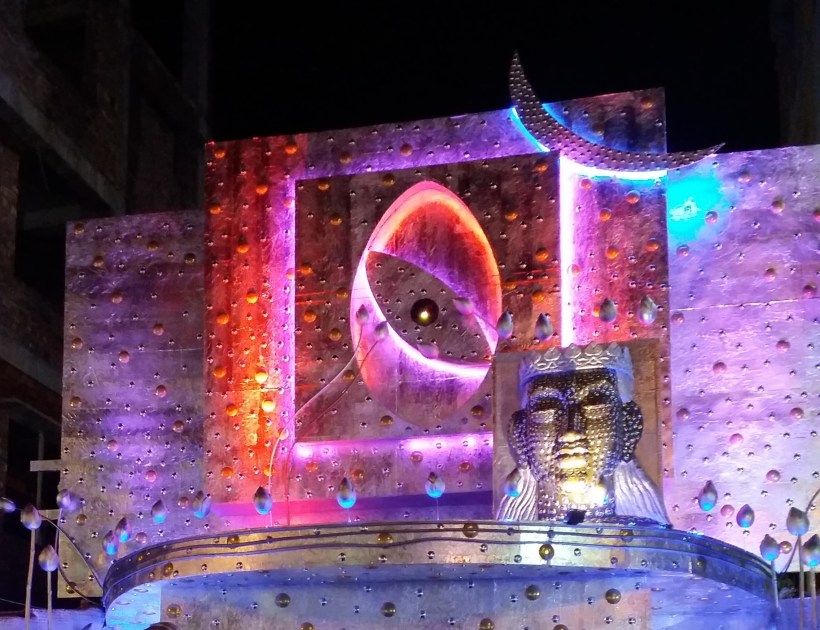
We returned to the Guest Hose, reviewed the drive plan once again and retired late.
October 7, 2016 : Kolkata – Barthman – Moregram – Farakka – Malda (330km, 10 hours)
We woke up by 6.30AM and after freshening up with a cup of Tea, checked out of the Guest House. We reached the office of ORIX just before 8 AM and completed all formalities within an hour. The three Innova cars were handed over to us by 9 AM, and the six of us started our journey from Kolkatta. Ninan, with his many years of experience in Kolkatta, guided us out of the busy city before the rush hours.

The Kolkatta – Siliguri (Bagdogra) stretch is considered to be totally unpredictable because of poor road conditions and traffic jams. You cannot estimate the driving time which could be anything above 10 hours. We chose the Kolkatta – Durgapur Express Highway to Bardhman and had a late breakfast at a way side restaurant.
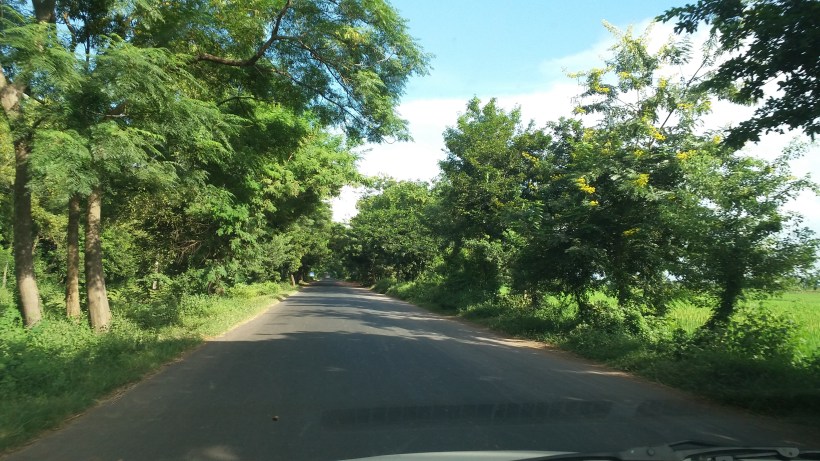
We left the Express way at Bardhman and took the Moregram – Farakka route to Malda. The State Highway SH 7 was really good in the beginning with decent tarmac and trees on both sides of the road. But the road conditions deteriorated gradually and our pace slowed down drastically, as the `highway’ passed through busy villages.
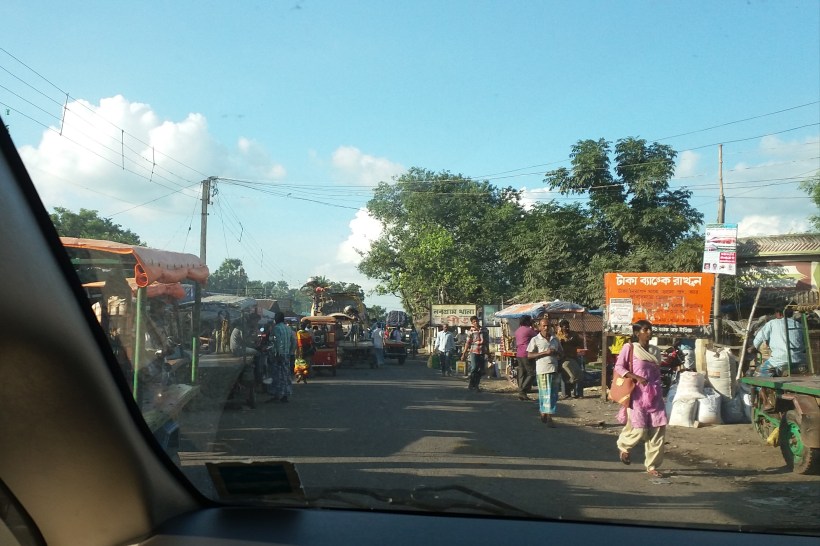
At a junction where the Google Maps got us confused, we approached two local men for information and talked to them in our broken Hindi. We were surprised by the clear answer in Malayalam – that guy had been working in a Plywood factory in Perumbavoor, Kerala for more than 10 years and had just come to his village for the Durga Pooja holidays.
We had our lunch at a road side Dhaba and continued our journey through broken roads with occasional good stretches. We reached Farakka Bridge by evening and were advised by the Indian Army to move slowly in the queue without switching ON the headlamps or sounding horn. This place is close to Bangladesh border and the Army is in control of that area. We reached Malda by 7PM and decided to stay for the night at Hotel Golden Park, seen right on the highway, which looked decent enough and had satisfactory ratings in the internet.
October 8, 2016 : Malda – Raiganj – Botolbari – Dhantola – Siliguri (240km, 7 hours)
We started from the hotel after breakfast by 8.00AM. We chose the Raiganj – Botolbari – Dhantola – Islampur route, and drove through interior West Bengal. The road conditions were satisfactory till Raiganj, but afterwards the road widening work slowed down our progress. At Botolbari, we took a right turn to Sirnia, leaving the NH 12 highway. Though it was a narrow road, the surface was good and we could gain some momentum.
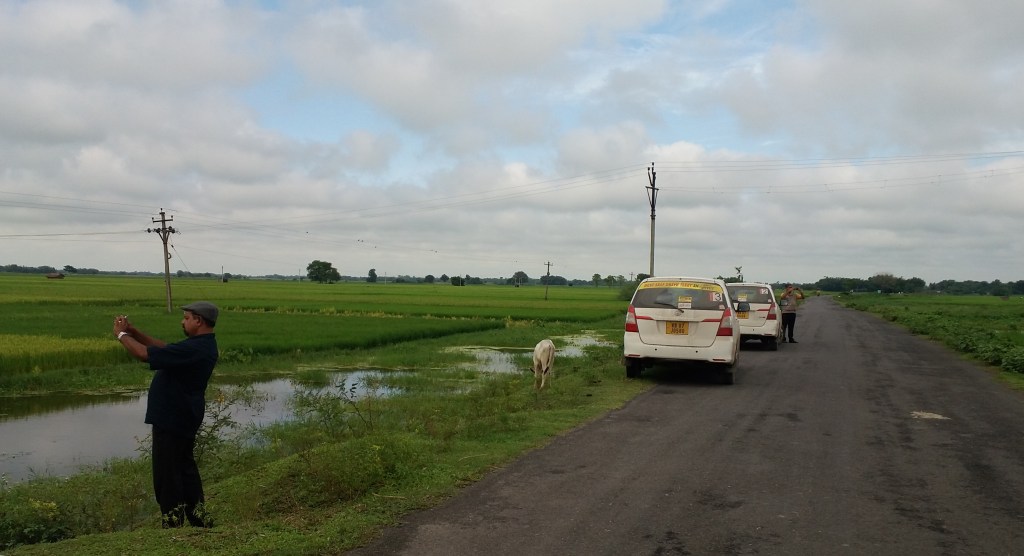
We had to take a small detour as advised by the Police because of some violence and agitation in the next village. We stopped for a short break at a local tea shop and had a chat with the villagers. The pathetic situation of the villages surprised us – not even the basic facilities for the villagers who were struggling to move on with life. We are really lucky to live in Kerala. We continued our drive and after an hour or so, joined the Purnea – Siliguri Highway (NH 27) at Dhantola. This highway, NH 27 was a proper 4 lane highway, to our relief, and we gained some pace. We reached Bagdogra Airport just after 2 PM and picked up the two ladies, Bimol and Viji, flying in from Kochi via Delhi. The other members of the team (Ravichander, Suresh, Revati, Nirmala and Shirley) had already arrived from Bangalore by 12.45 PM. They had checked in to Hotel Debjyoti, Siliguri, and we joined them, following their directions. The restaurant at the hotel was good and we enjoyed a late lunch, thanks to their good service. Later, we got our cars washed at the hotel and had a thorough check-up before the long drive to the mountains the following day. In the meantime, the ladies enjoyed local shopping in the nearby areas. Long discussions followed during dinner time at the restaurant about the next few days’ schedule, since a few of our members were not aware of the details.
October 9, 2016 : Siliguri – Sevoke – Melli – Legship – Geyzing – Pelling (140km, 8 hours)
After a quick breakfast from the restaurant, we checked out of Hotel Debjyoti by about 9 AM and started our journey to Pelling.
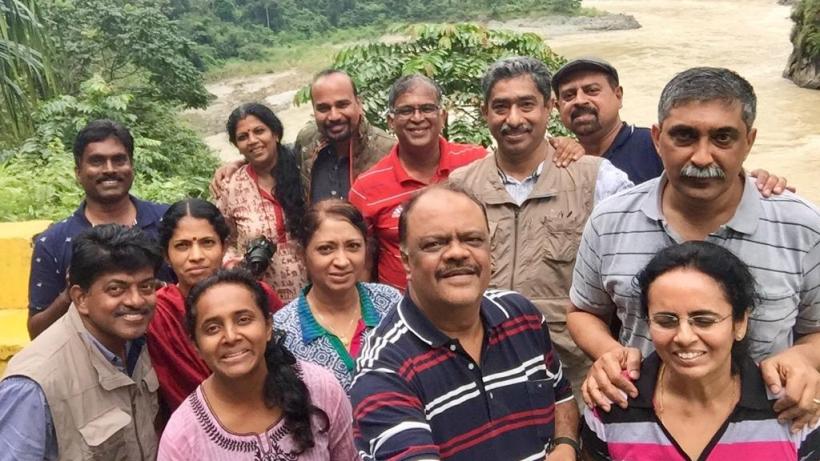
Soon the greenery and the natural beauty of the Sevoke forest region greeted us. The winding roads and fresh air erased all the bad memories of the previous two days’ drive. The river Teesta welcomed us at Sevoke, and gave us company by flowing alongside the road till Melli, the West Bengal – Sikkim border.
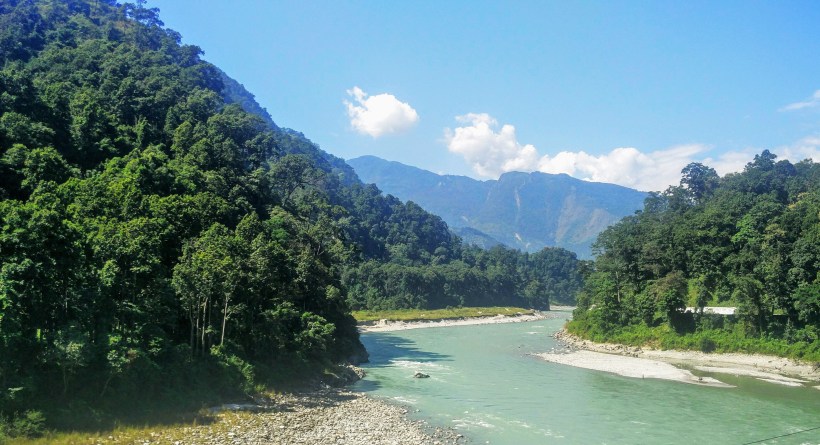
We were compelled to stop at many locations to click photos of the lush green mountains, rivers and valleys. At the Sikkim border check post at Melli, our permit and vehicle documents were verified and Entry Seal was affixed on our permit. The security staff at the check post briefed us with the general guidelines for driving into the beautiful state of Sikkim and wished us a nice and safe journey.
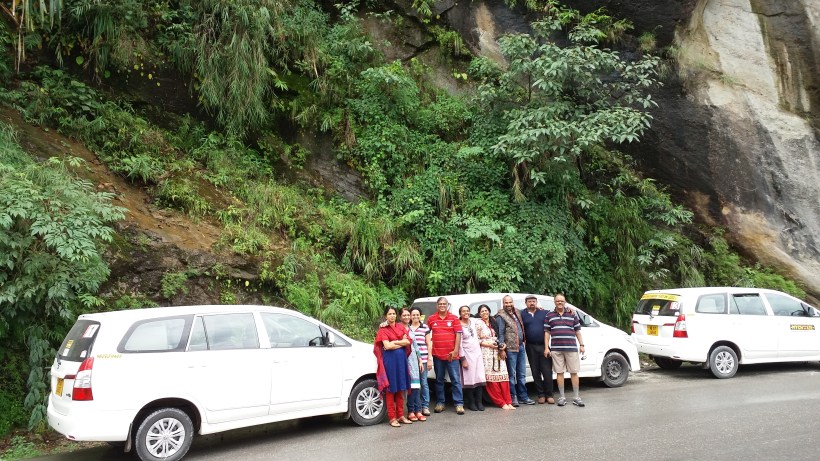
A sharp left turn after the border took us to the small town of Jorethang, where we had our lunch. After a break of about an hour, we continued our drive through the narrow but decent road and found another river Rangeet flowing alongside the road till Legship. From Legship, the road to the right will go to Ravangla and the one to the left, which we took, to Pelling. The 16 KM road from Legship to Geyzing with so many hairpin bends was in a pathetic condition. Rough and broken roads together with slush formed because of the previous day’s rain made our progress very slow. However, the beautiful views of mountains, valleys and vibrant streams compensated for the rough ride.
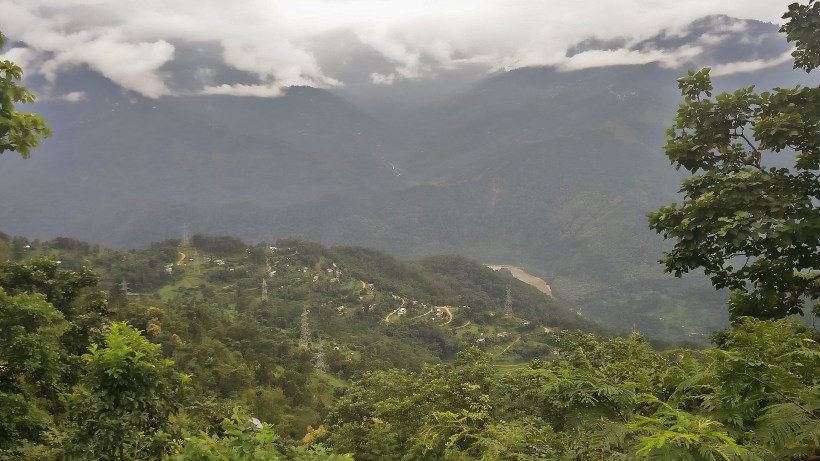
After Geyzing, the steep inclined road via Sakyong had a decent tarmac, but the steep gradient and the presence of fog posed a great challenge to the drivers. We had to drive our cars continuously on first and second gears for about 7 km. At one point, we got a distant view of Pelling town that brought some relief to all.
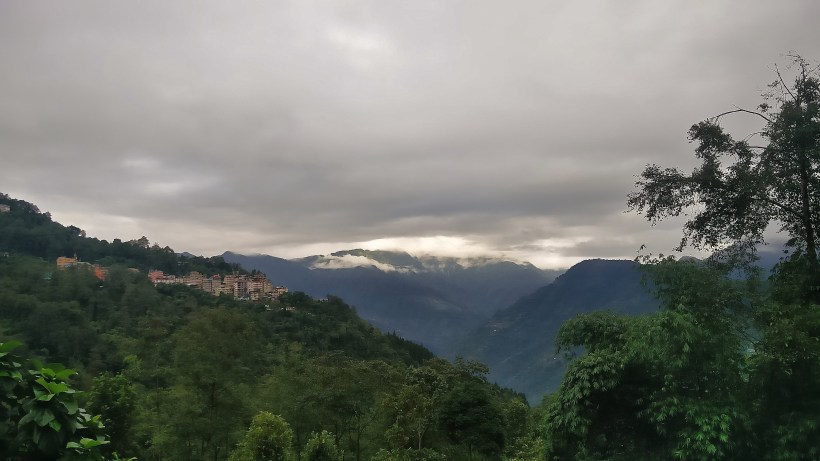
We reached the beautiful town of Pelling by evening and checked into Hotel Rabdentse Residency. The unique feature of this little mountain town is that the Kanchenjunga range is visible from almost all parts of the town, on a clear day. Our hotel was spread at different levels below the road and we had to climb down the stairs to reach our rooms. The hotel staff showed us the dedicated parking area and even though they were very helpful, unloading the luggage and bringing it into our rooms was a real struggle. We checked into our rooms and enjoyed the tea and snacks served by them in the dining area. From the balcony, the breathtaking view of the mighty mountains all around was a real treat to the eyes. However, clouds prevented us from spotting Mount Kanchenjunga, the third highest mountain peak in the world, after Mount Everest and Mount K2. At 8586 meters above sea level, it is the highest mountain peak in India. Later in the evening, we had a stroll around the town and were impressed with the clean surroundings without any litter. There were no traffic jams which are usual in all touristy hill stations – everyone seemed to be totally relaxed.
October 10, 2016 : Pelling sight seeing
The hotel manager had told us the previous day that Mount Kanchenjunga can be seen from most of the rooms, if it’s not cloudy. I woke up early to find that it was a cloudy day with lot of fog. We were not lucky that day, but since we had one more day at Pelling, we kept our hopes alive. It was a cold morning and most of our friends didn’t get out of the bed till it was bright daylight. After enjoying the hot tea, we slowly got ready and had a leisurely breakfast.
The hotel manager briefed us about the places to visit in and around Pelling and we made a plan with his guidance. We set out to visit Yuksom, the ancient capital of Sikkim, which had great historic importance.
The road from Pelling to Yuksom was well maintained. We really enjoyed the drive through the misty, winding roads.
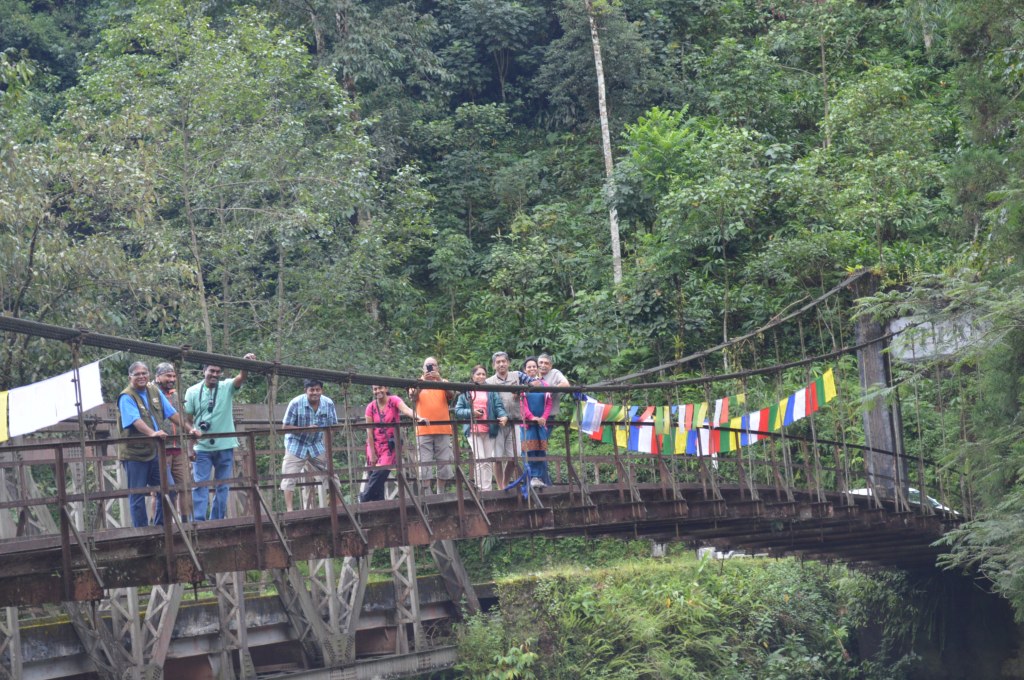
There were many small waterfalls and a suspension bridge at Rimbi on the way to Yuksom.
Rimbi Waterfalls is located near Darap Village and is a popular tourist spot.
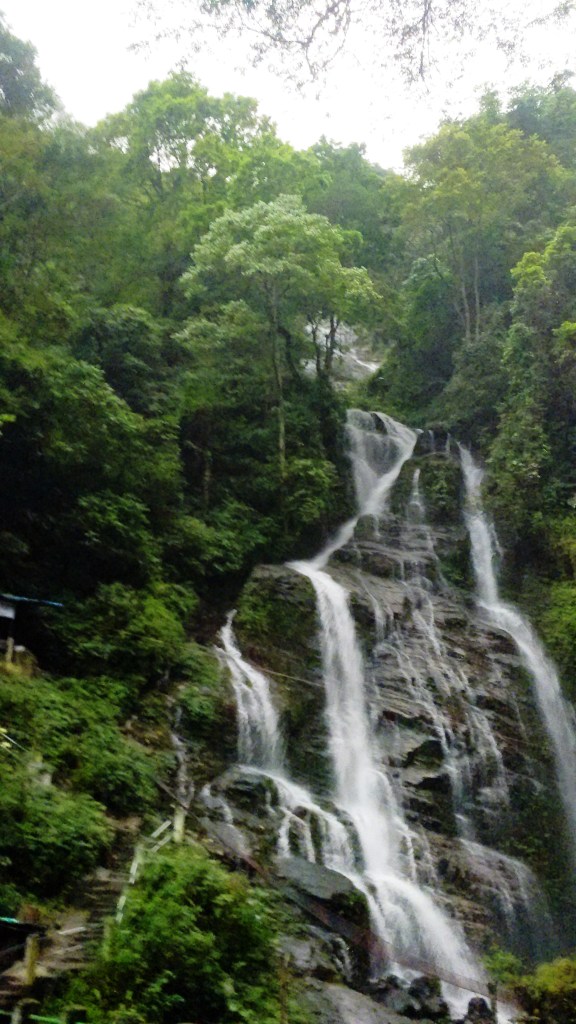
We continued our journey and reached the famous Kanchenjunga Falls. It was a big, beautiful waterfall with clean surroundings.
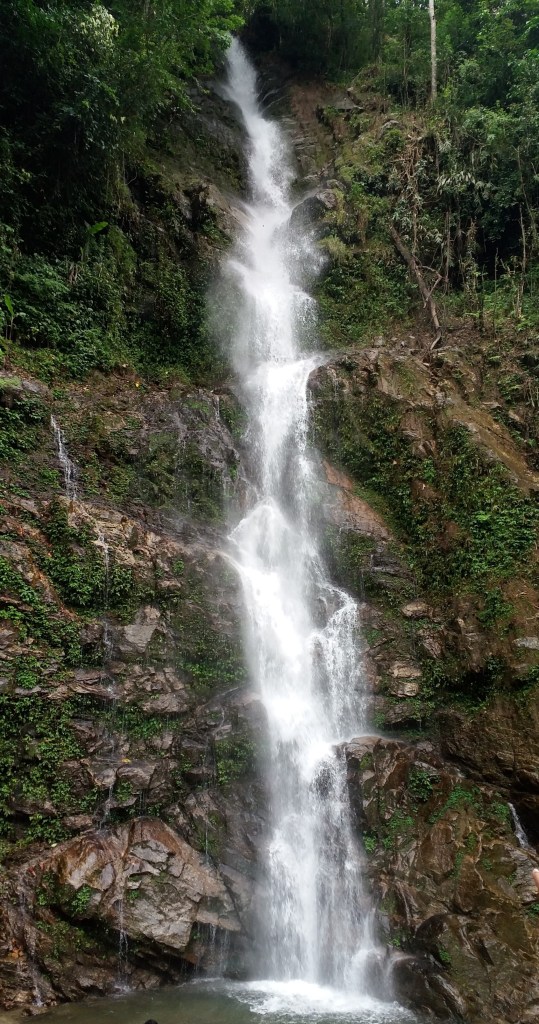
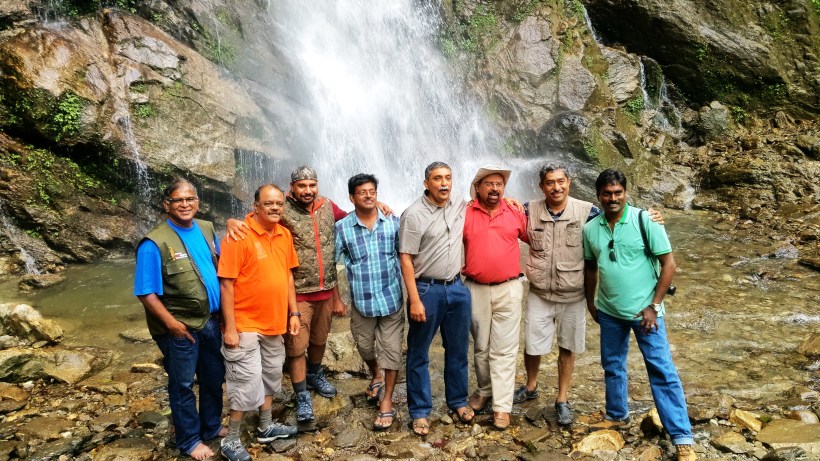
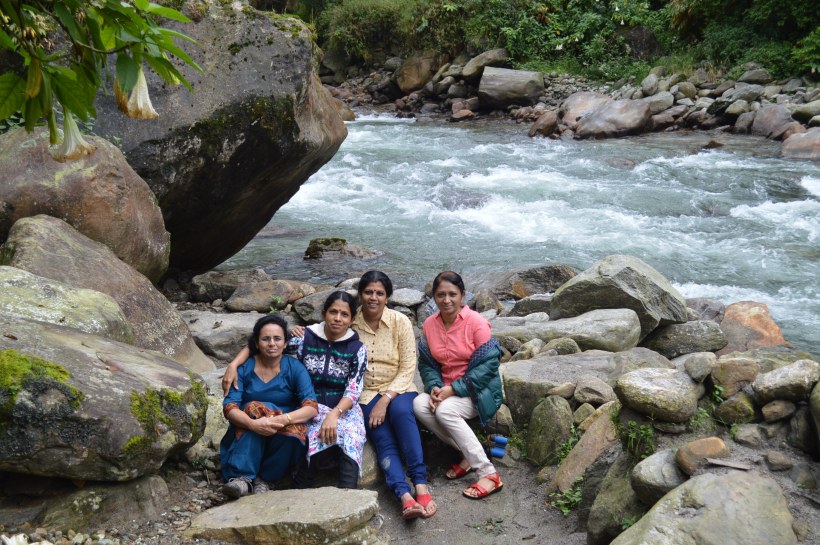
We had a long photo session here since we were the only visitors at that time.
We resumed our drive and soon reached Yuksom. The Coronation Throne of Norbugang was the main attraction in Yuksom.
The two Lamas from Western and Southern corner of Sikkim and the third Lama from the North (Tibet) came together to strengthen their hold on Sikkim and to propagate Buddhism, at this place `Yuksom’ meaning the meeting point of the three learned monks (Lamas). They were looking for someone who could be crowned as the religious head of Sikkim. They consulted revered saints Padmasambhava and Guru Rinpoche and finally arrived at present day Gangtok where they found Phuntshog and brought him back to Yuksom. The great historical event of the crowning ceremony of Phuntshog took place in AD 1641 and he was given the title of `first Chogyal’ of Sikkim. The kingship was established and Phuntshog was responsible for setting up the first capital at Yuksom. The influence of Tibet is very evident in Sikkim.
A wall like structure known as Norbugang Chorten erected after the coronation ceremony remains here and the Buddhists consider this as one of their most important pilgrimage sites.
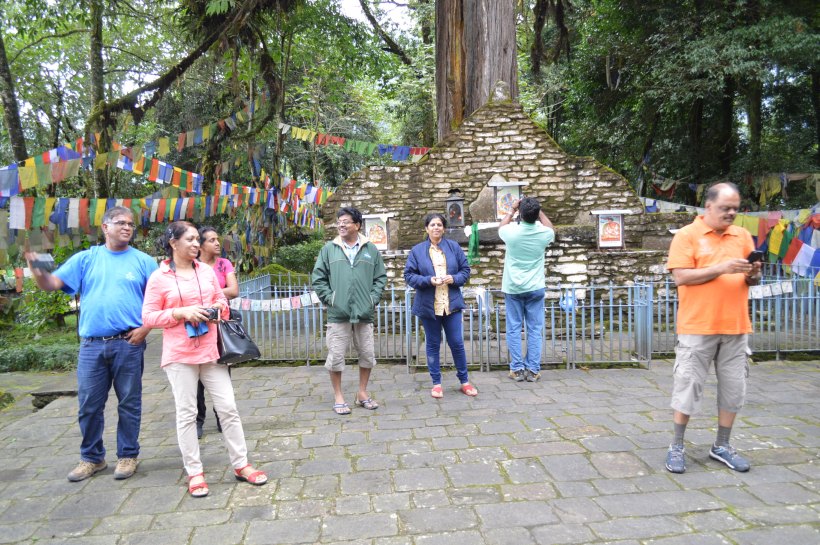
An old and huge pine tree with its trunk mostly covered with mosses and dark with age looms above the throne. The Coronation Throne is now looked after by Archaeological Survey of India.
There was another popular tourist spot suggested by the hotel manager – Rabdentse Ruins – the remains of the Palace of the former Kingdom of Sikkim, now maintained by the Archaeological Survey of India. We skipped this, because the 1.5 Km walk from the entrance to the site of the ruins on a steep and slippery stone pathway, seemed risky.
We enjoyed a late lunch at the famous Kabur Restaurant in Pelling, which was perfectly located with awesome views of the valley. They served great food – Thenduk and Thupka, accompanied by local garlic bread. Thenduk, the hand pulled noodle soup, was perfectly apt for the cold weather. We came back to the hotel and had an evening stroll in the beautiful town once again since we would be leaving Pelling the next day. The hotel manager advised us to get up at 4 am in the morning so as to enjoy the real beauty of the snowcapped mountains. So I set the alarm at 4 am and slipped under the thick blankets, not sure about what will happen the next day.
October 11, 2016 : Pelling – Legship – Kewzing – Bakhim – Ravangla (50 km, 2 hours)
When the alarm beeped at 4 AM and I came back to my senses, I immediately rushed to the window. I was overjoyed – over the distance, there stood Mount Kanchenjunga in all its magnificence. Luckily, there were no clouds; the snow covered peak was clearly visible.
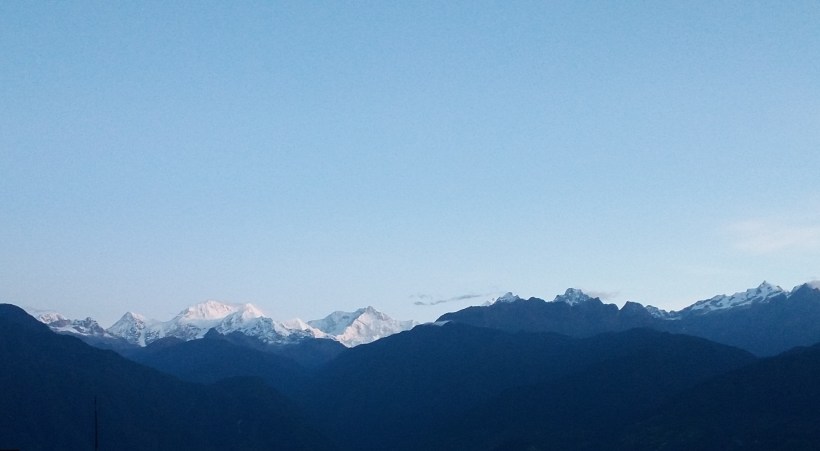
I immediately alerted our friends, and within a few minutes, everyone came out, without even freshening up and rushed to the specific spot suggested by the hotel manager. Wow ! What a stunning view it was.
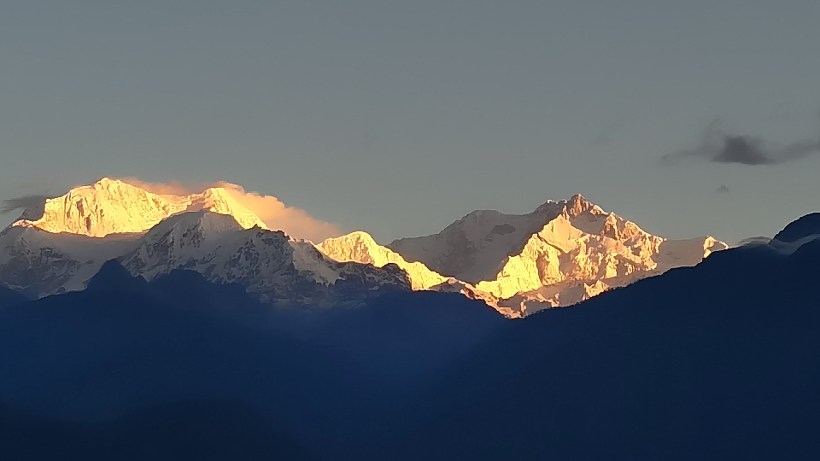
The early morning sun painted a golden glow to the snow peak and the colour began to change gradually. The clouds were kind enough to delay the curtains and we were lucky to enjoy the beauty and click some wonderful pictures.
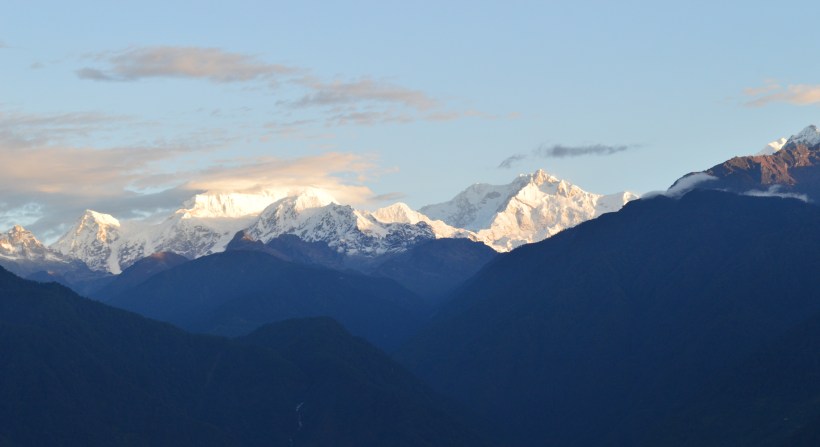
We quickly freshened up, had a cup of tea and went for a morning walk, thrilled by the great start of the day. We were rewarded with the breathtaking view of the mighty mountains and valleys seen from another vantage point.

After breakfast, we proceeded to the car park for the routine check-up of the vehicles and found that one of the cars had a flat tyre. We replaced the flat tyre with the spare and decided to repair the punctured tyre at the nearest repair shop. We then proceeded to visit a few more tourist places near Pelling, and the first one was Changey Falls (Sangay).
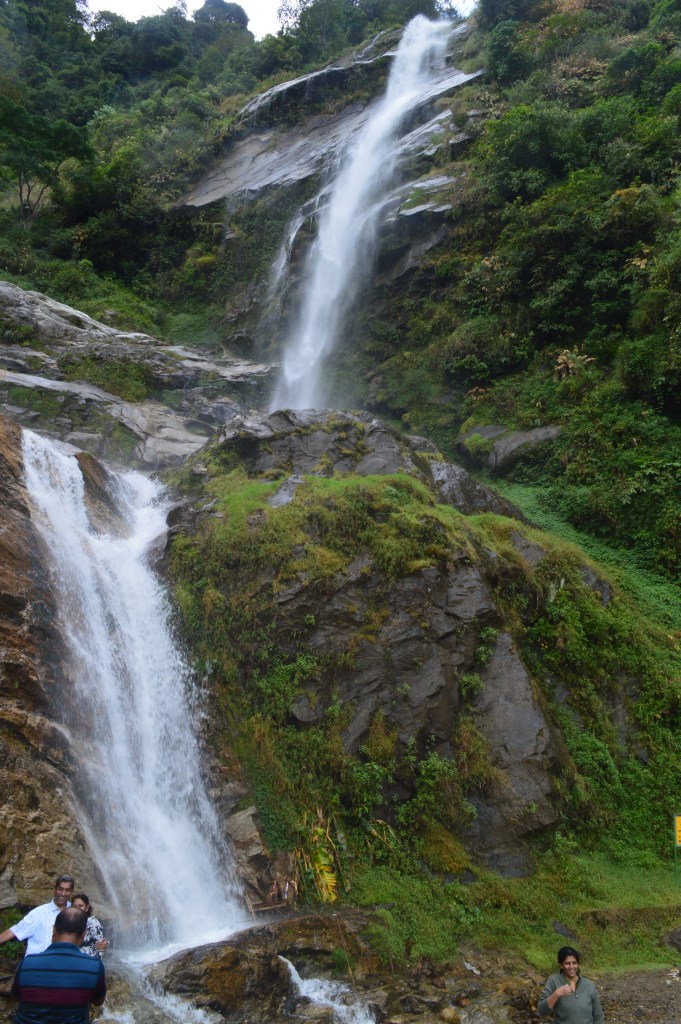
There are two parts to the fall, one is seen from the road, but the larger and more impressive part is hidden behind a rock. We walked around and enjoyed the scene.
The next destination was Singshore Bridge, located at a short distance from Dentam village. This is the highest bridge of Sikkim and is a very popular tourist destination in West Sikkim.
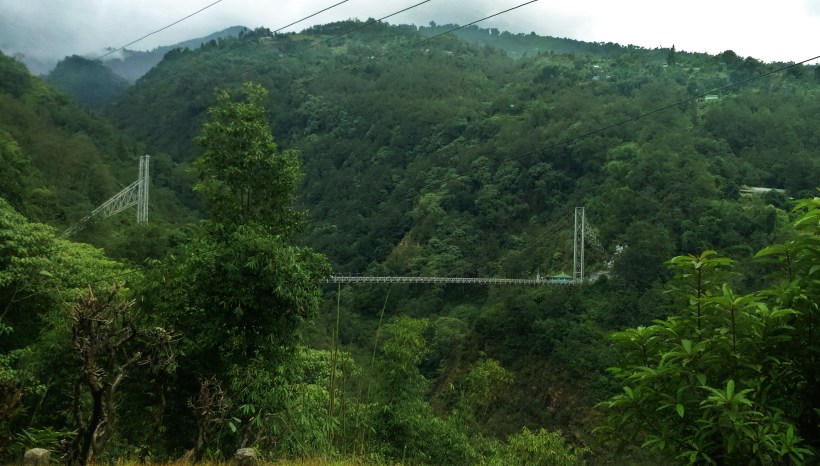
We retraced our tracks to Pelling and reached our hotel by noon. Mount Kanchenjunga was still visible from the hotel balcony, even though it was misty and partially cloudy. We didn’t miss the opportunity to click a few more pictures before Kanchenjunga went hiding behind the clouds.
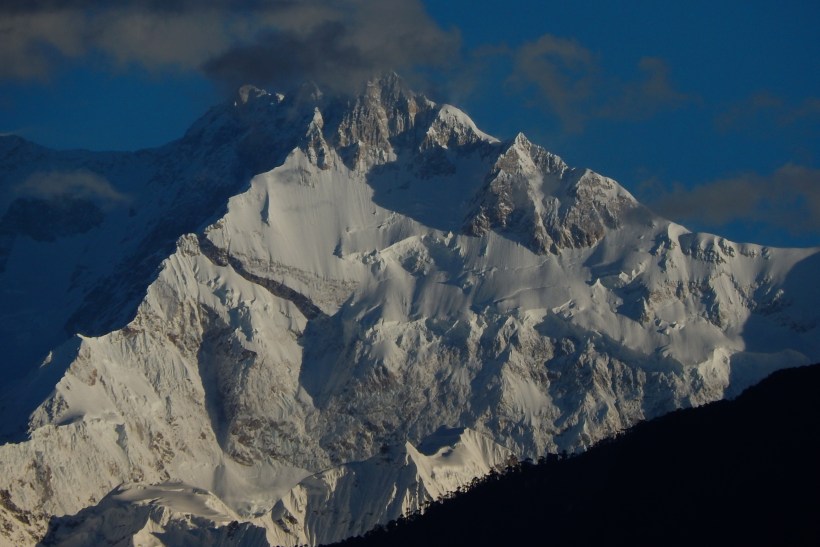
We had already packed our bags in the morning and after a quick freshening up, checked out from the hotel.
We were impressed by the ambience and service of Kabur Restaurant and decided to have our lunch there, before leaving Pelling town. They didn’t disappoint us. We then proceeded to visit Pemayangtse Monastery, the third oldest monastery in Sikkim.
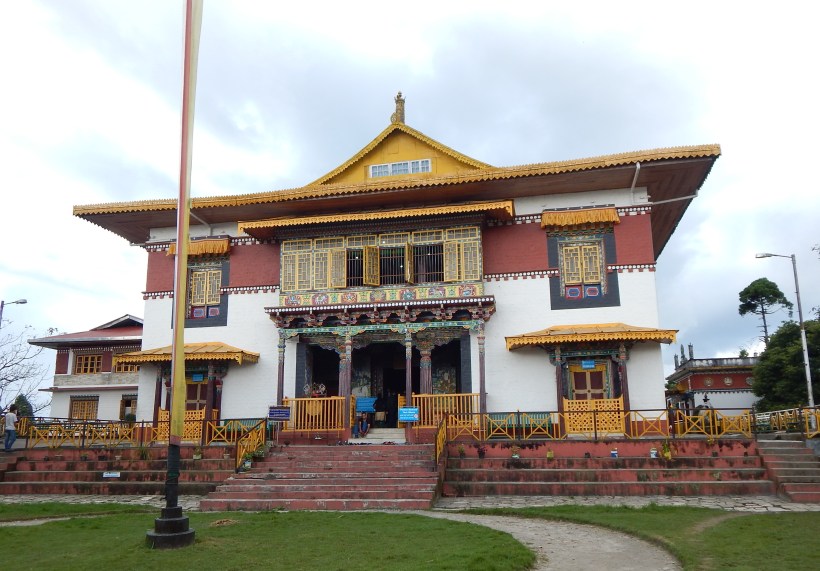
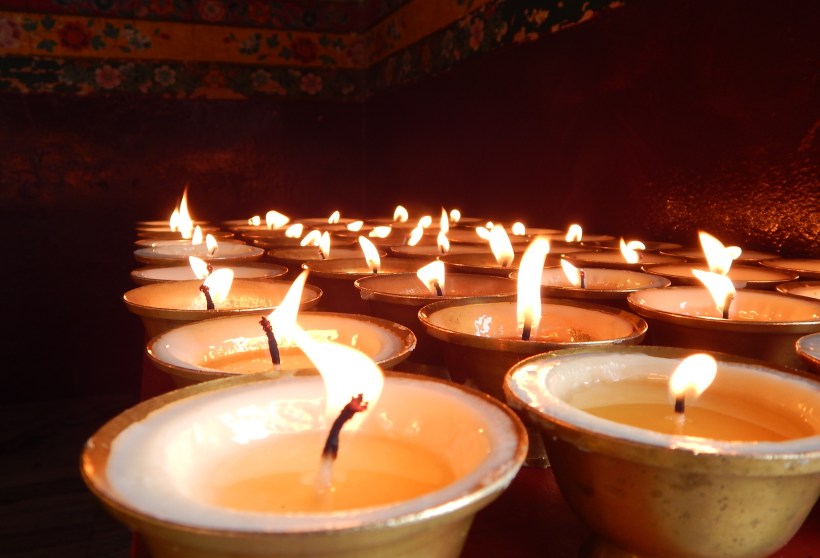
The monastery had beautiful idols, statues and paintings dating to 17th/ 18th century and it is said to have been designed for the “pure monks”. The large number of lamps glowing inside the peaceful monastery was a divine sight.
Sikkim Tourism is unique – they are proud of their clean, green heritage. All tourist locations have easily-accessible dustbins and clean toilets.
After the two wonderful days in Pelling, we slowly proceeded to our next destination Ravangla, which was only about 50km away.
As we approached Ravangla, the tall pine trees on the side of the road and the dense mist surrounding the trees and valley presented a wonderful view. The proximity to Maenam Wildlife Sanctuary brings different species of Himalayan birds and this place is said to be a haven for birds and birdwatchers alike. The famous Budha Park (Tathagata Tsal) with a big statue of Lord Buddha perched at the top of a hill comes into view as you approach the town. We checked into Hotel Rain Drop which was ideally located, to give us magnificent views of the valley. The stay at this newly opened hotel was really comfortable. We didn’t visit the Budha Park crowded with tourists, but instead walked leisurely along the nearby village roads.
Back at the hotel we had our dinner, we were all now looking forward to the next leg of our journey – North Sikkim.
Continued… Part 2 : North Sikkim
 Nostalgia EE 84
Well written
Definitely inspiring
LikeLike